 Chuckanut Exterior
 Window Replacement Built for the Larrabee Climate
Homes in the Larrabee area, tucked along Chuckanut Bay in Whatcom County, deal with a combination of weather stresses that most window manufacturers' warranty language never really accounts for. Salt-laden air off the bay, wind-driven rain that comes in sideways during winter storms, and a shady, moisture-heavy tree canopy that keeps everything damp longer than it should be. Windows here don't fail because of one bad storm. They fail slowly, from years of moisture finding its way into places it was never supposed to go.
A window replacement in this part of Chuckanut isn't just a swap of old glass for new. It's an opportunity to correct whatever the original installation got wrong, and to choose materials and details that actually hold up to this specific environment rather than a generic Pacific Northwest average.
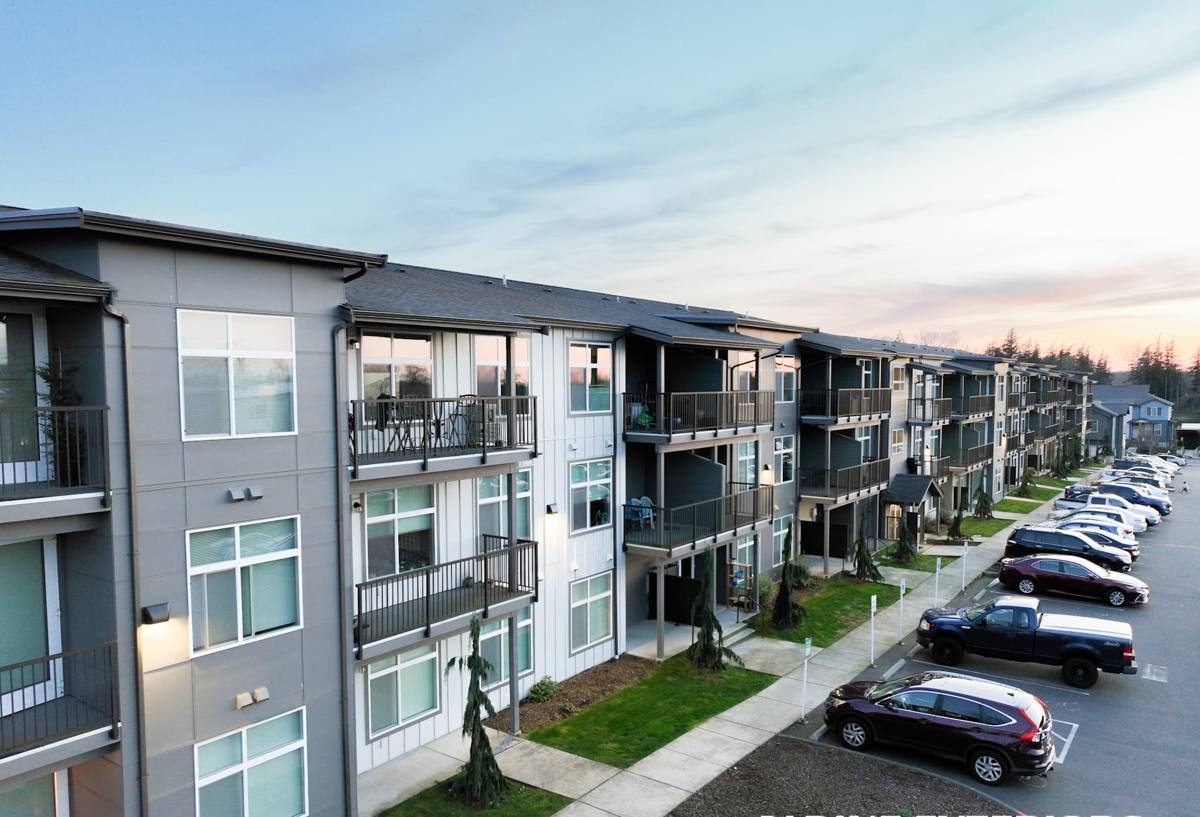
What Makes Larrabee Different From a Typical Whatcom County Job
Every coastal Whatcom County property deals with rain. Larrabee's situation is a bit more specific:
- Salt air exposure — proximity to Chuckanut Bay means airborne salt settles on frames, hardware, and fasteners, accelerating corrosion on anything not rated for it.
- Driving rain — wind off the water pushes rain horizontally against west- and south-facing walls, putting far more pressure on flashing and seals than a calm, straight-down rain ever would.
- Long moss season — dense tree cover and slow-drying conditions mean moss and algae get a foothold on sills, trim, and low-slope surfaces for much of the year, holding moisture against the window assembly long after the rain has stopped.
None of these are dramatic on their own. Together, over ten or fifteen years, they're exactly the combination that rots sills, delaminates cladding, and lets water travel behind trim into wall framing.
Signs a Larrabee Home's Windows Are Due for Replacement
Because moisture damage here tends to hide behind trim and under sills, it's worth checking more than just "does the window still open." Look for:
- Soft or spongy wood at the sill or bottom corners of the frame
- Persistent moss, algae, or dark streaking on the frame or nearby siding that keeps coming back after cleaning
- Condensation building up between panes, or fogging that won't clear — a sign the seal has failed
- Visible gaps, cracked caulk, or daylight around the frame when checked from inside
- Corroded or stiff hardware — cranks, locks, or hinges that grind or won't hold
- Noticeable drafts or a cold wall around the window opening in winter
- Paint or finish that's peeling specifically around the window, even if the rest of the wall looks fine
One or two of these can often be repaired. Several at once, especially on the same window, usually means the frame itself is compromised and repair is just delaying the inevitable.
What a Correct Installation Actually Involves
Flashing and Water Management Come First
The window itself is rarely the reason a window "leaks." Almost always, it's the flashing, sealant, or drainage detailing around it. In a driving-rain environment like Larrabee, we pay particular attention to:
- Proper sill pan flashing that directs any water that gets past the window back out, rather than letting it pool and soak into the framing
- Correct shingle-lap sequencing of flashing tape and building wrap, so water always sheds downward and outward, never behind the layer below it
- Sealant used only where it's designed to manage water, never as a substitute for proper flashing — sealant fails; flashing shouldn't have to rely on it
Material Choices That Handle Salt Air and Moss
Frame material matters more here than in a drier, inland part of Whatcom County. Salt air accelerates corrosion on unprotected metal hardware, and constant dampness gives moss and mildew more time to work on anything porous.
| Frame Material | How It Handles This Climate | Maintenance Considerations |
|---|---|---|
| Vinyl | Won't rot or corrode; handles moisture well | Low maintenance, but check weep holes stay clear of moss and debris |
| Fiberglass | Very stable in temperature swings and moisture; strong against salt air | Low maintenance, higher upfront cost than vinyl |
| Wood (unclad) | Attractive, but most vulnerable to sustained dampness and moss growth | Requires regular refinishing and inspection, especially on shaded exposures |
| Wood-clad (vinyl or aluminum exterior) | Good option where wood interior trim is wanted with better exterior protection | Cladding must be properly detailed at joints or moisture gets trapped behind it |
| Aluminum | Strong, but conducts cold and can corrode if hardware isn't marine-grade near the bay | Look for thermally broken frames and corrosion-resistant fasteners |
We don't push one material as the universal answer. The right choice depends on the specific wall's sun and wind exposure, how shaded it is, and what the homeowner wants to maintain long-term. What we won't do is install a wood or wood-clad product without discussing the added upkeep it needs in a shaded, damp Larrabee exposure — that's a trade-off we'd rather explain upfront than have someone discover in year six.
Glass and Weatherstripping Details Worth Getting Right
Low-E glass helps manage the temperature swings common in Whatcom County, keeping heat in during winter and reducing solar gain in summer. For homes with heavier moss and shade exposure, we also look closely at weep hole placement and size — clogged weeps are one of the most common, and most preventable, causes of water sitting inside a frame it should be draining out of.
Our Process for a Larrabee Window Replacement
- On-site assessment — we check each window's exposure (sun, wind, tree cover), current condition, and how water has been moving around it historically.
- Honest scope — we tell you which windows need full replacement versus which could be repaired, and why, without padding the job.
- Material selection — we walk through frame and glass options suited to that specific wall's exposure, not a one-size answer for the whole house.
- Removal and inspection — once the old window is out, we inspect the rough opening and sill for hidden rot or prior water damage before anything new goes in.
- Correct flashing and installation — sill pan, flashing sequencing, insulation, and sealant applied in the right order, not shortcuts that look fine at closing but fail in year three.
- Final check — operation, seal, and finish are checked before we consider the job done.
Cost Factors for Window Replacement in Larrabee
Costs vary by window size, material, and how much flashing or trim repair is needed once the old window comes out. Rather than quote a flat number, here's what actually moves the price:
| Factor | Why It Affects Cost |
|---|---|
| Frame material (vinyl vs. fiberglass vs. wood-clad) | Material cost and long-term maintenance needs differ significantly |
| Full-frame vs. insert replacement | Full-frame replaces flashing and trim too; insert reuses the existing frame if it's sound |
| Hidden rot at the sill or framing | Discovered only once the old window is removed; adds repair time and material |
| Window size and configuration | Larger units, casements, and custom shapes cost more than standard double-hung sizes |
| Glass package | Upgraded Low-E coatings or gas fills add cost but improve comfort and efficiency |
| Number of windows done at once | Bundling multiple windows in one visit typically reduces per-window labor cost |
We give a written estimate that breaks these factors out so you know exactly what you're paying for, not just a lump sum.
Permits and Energy Code in Whatcom County
Window replacement in Whatcom County generally falls under the Washington State Energy Code, which sets minimum performance standards for U-factor and, in some cases, solar heat gain. Depending on the scope of the job and whether structural framing is altered, a permit may be required. We handle that determination and the paperwork as part of the job so it isn't something the homeowner has to chase down separately.
Why Local Experience in Larrabee Matters
A crew that mostly works drier, inland jobs can still install a window that looks fine on day one. The difference shows up two or three winters later, when flashing detailing that would've been adequate somewhere with less wind-driven rain starts letting water in around a Larrabee-facing wall. Working this stretch of Chuckanut regularly means knowing which exposures need extra attention to flashing and drainage, which material choices hold up against salt air without excessive upkeep, and where moss tends to build up fastest so weep holes and drainage paths get placed to stay clear. It's less about a different product and more about not treating every wall the same when the weather clearly doesn't.
If your windows in Larrabee are showing any of the signs above, or you're just planning ahead, we're happy to take a look and give you a straightforward, no-pressure estimate. Use the form below to get started.