 Chuckanut Exterior
 Roofing Along Chuckanut Drive Takes a Different Kind of Beating
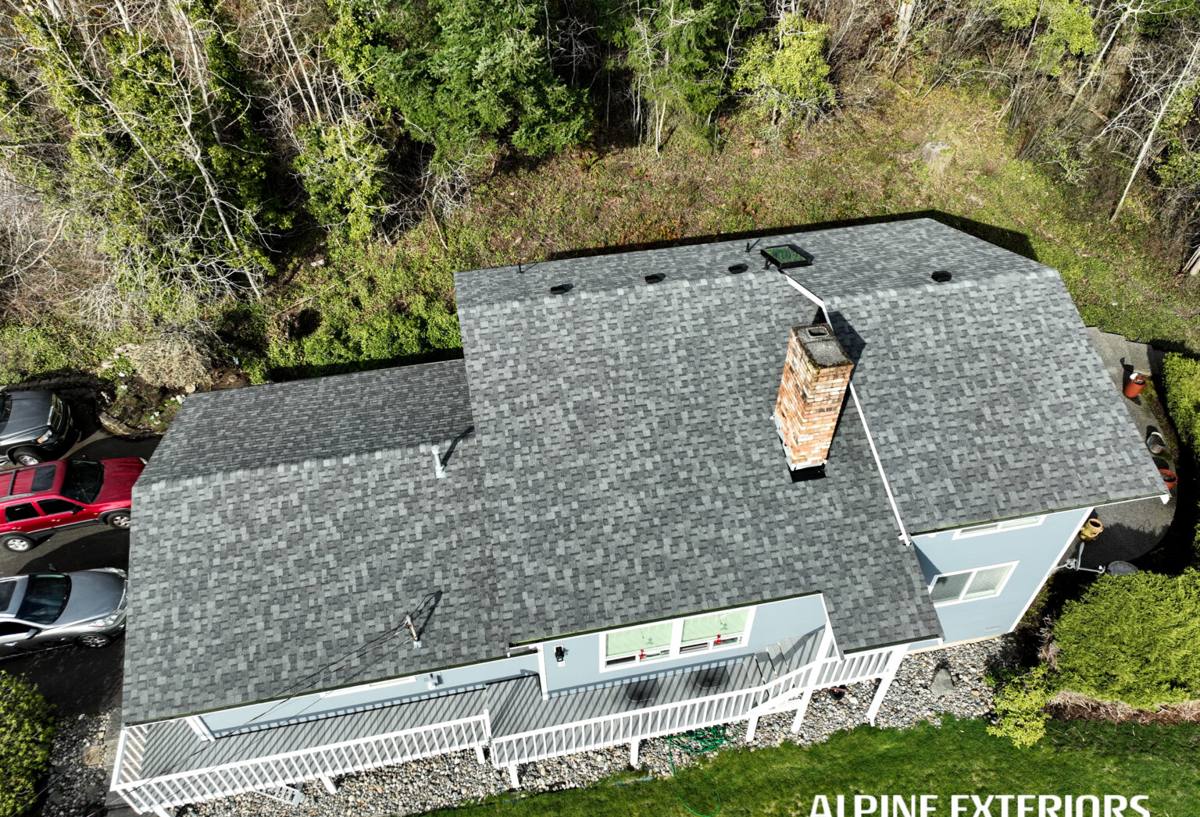
Homes tucked into the Larrabee area, along the wooded slopes and shoreline near Chuckanut Drive, deal with a roofing environment that's noticeably harder on materials than a typical inland Whatcom County neighborhood. You've got salt-laden air drifting up off the water, dense evergreen canopy dropping needles and shading roof planes year-round, and storms that come in sideways off the Sound rather than falling straight down. Add the long, damp moss season that this part of Washington is known for, and a roof here ages differently than one ten miles inland.
That doesn't mean Larrabee roofs fail faster across the board. It means the failure points are different, and a repair crew that doesn't account for salt exposure, shade patterns, and wind-driven rain will end up chasing the same leak twice. This page focuses specifically on roof repair for homes in and around Larrabee — what tends to go wrong, what a correct fix actually involves, and why local experience with this exact stretch of coastline matters.
What the Local Climate Does to a Roof
Salt Air and Metal Fatigue
Proximity to Chuckanut Bay and Samish Bay means airborne salt settles on flashing, fasteners, gutters, and any exposed metal on the roof. Over time this accelerates corrosion, especially on lower-grade galvanized fasteners and unprotected flashing seams. A nail head that rusts through loses its grip on the shingle around it, and a corroded flashing seam is one of the most common hidden leak sources we find on repair calls in this area.
Driving Rain and Wind Exposure
Chuckanut's terrain funnels wind off the water in a way that pushes rain sideways and up under roof edges, rather than letting gravity do the work. That means roof features that are fine in a calm rainstorm — eave edges, valleys, and step flashing along walls — take on water in a Larrabee storm that a more sheltered roof wouldn't see. Repairs here have to assume wind-driven water intrusion, not just straight-down rain.
Moss, Shade, and Organic Buildup
The tree cover that makes this area beautiful also keeps roof surfaces shaded and damp for long stretches, especially on north-facing slopes. That's ideal moss and lichen habitat. Moss holds moisture against the roofing material, works its way under shingle tabs as it grows, and can lift edges enough to let wind-driven rain in behind them. Left unchecked through a full moss season, it does real structural damage to the roofing surface, not just cosmetic staining.
Common Repair Issues We See in Larrabee
- Corroded or failing flashing around chimneys, skylights, and wall intersections
- Moss-lifted shingle tabs and granule loss on shaded, north-facing roof planes
- Wind-driven rain intrusion at eaves, rakes, and valleys during winter storms
- Fastener backout and corrosion on older galvanized nails
- Debris-clogged valleys and gutters from heavy needle and leaf drop
- Soft decking or staining in attic spaces from slow, long-term leaks that went unnoticed
What a Correct Roof Repair Actually Involves
A roof repair that holds up in this environment starts with figuring out the real source of the problem, not just patching where the water showed up inside the house. Water travels along the underlayment and framing before it drips through a ceiling, so the visible stain is often several feet from the actual entry point. We trace it back.
Once we've found the source, the repair itself typically involves:
- Removing and inspecting the damaged roofing material and the layer beneath it, including underlayment and decking, to check for rot or soft spots
- Correcting the root cause — replacing failed flashing, re-sealing a compromised penetration, or addressing a moss-damaged section rather than just covering it
- Rebuilding the water path correctly, with proper shingle or panel overlap, flashing sequencing, and fastener placement suited to coastal exposure
- Matching materials as closely as possible so the repair blends and performs consistently with the surrounding roof
- Clearing moss and debris from the surrounding area so the repaired section isn't immediately sitting under the same conditions that caused the original failure
Skipping any of these steps is how a "fixed" roof leaks again in the same spot two winters later.
Our Process for Larrabee Roof Repair Calls
We keep it straightforward because most homeowners just want the leak stopped and the roof made sound again, without a sales pitch.
- Inspection first. We walk the roof and check the attic where accessible, looking for the actual water path, not just the visible symptom.
- Honest scope. We tell you plainly whether this is a targeted repair, a larger section replacement, or a sign the roof is nearing the end of its useful life. We don't inflate small repairs into full replacements.
- Written estimate before work starts. No surprise charges once we're up on the roof.
- Repair work. Most single-area repairs are completed in a day, weather permitting. Larger flashing or decking repairs may take longer.
- Follow-up check. For repairs tied to moss or debris buildup, we'll flag whether the home would benefit from periodic moss treatment or gutter clearing to prevent a repeat call.
Materials and Fasteners: What Holds Up in Salt Air
Not every roofing component performs the same near the water. Here's how common options compare for durability in a coastal, moss-prone environment like Larrabee:
| Component | Standard Option | Coastal-Rated Option | Why It Matters Here |
|---|---|---|---|
| Fasteners | Electro-galvanized nails | Hot-dip galvanized or stainless | Salt air corrodes standard fasteners faster, leading to loose or leaking shingles |
| Flashing | Basic galvanized steel | Aluminum or coated steel | Reduces pitting and seam failure from salt exposure |
| Underlayment | Standard felt | Synthetic, high-moisture-resistance | Better secondary protection given the region's rain volume and moss-related moisture |
| Sealants | General-purpose roofing sealant | Marine-grade or UV/salt-resistant sealant | Holds up longer against salt air breakdown at penetrations |
We don't push every homeowner toward the most expensive option in each row — for some repairs, standard materials are perfectly reasonable. But on flashing and fasteners specifically, the coastal-rated choice is usually worth the modest upcharge given how much salt exposure shortens the life of standard hardware in this area.
Repair vs. Replacement: What Drives the Decision
Homeowners often ask whether a leak means the whole roof needs replacing. Usually not — but a few factors push the math one way or the other:
| Factor | Leans Toward Repair | Leans Toward Replacement |
|---|---|---|
| Roof age | Under 15-20 years, otherwise sound | Near or past expected material lifespan |
| Damage extent | Localized — one flashing point or section | Widespread granule loss, multiple failed areas |
| Decking condition | Solid, no rot found | Soft or rotted decking in multiple spots |
| Moss history | First significant moss issue, treatable | Years of untreated moss damage across the roof |
| Typical cost range | Roughly a few hundred to a couple thousand dollars for a targeted repair | A full roof cost, quoted separately after inspection |
We'll always start with the repair conversation and only recommend replacement when the inspection genuinely supports it.
Signs It's Time to Call for a Repair
- Visible moss or thick lichen growth, especially on shaded roof planes
- Shingle tabs that look lifted, curled, or cracked
- Granules collecting in gutters or at downspout outlets
- Water stains or discoloration on interior ceilings, especially after a windy storm
- Daylight visible through the roof deck from inside the attic
- Rust streaks running down from flashing or metal roof penetrations
- Consistently damp or musty smell in an upper-floor room after rain
Catching any of these early is almost always cheaper and less disruptive than waiting until water has reached the interior of the home.
Why a Crew That Already Works Larrabee Makes a Difference
Roof repair isn't one-size-fits-all across Whatcom County. A crew that mostly works drier, more sheltered neighborhoods inland may default to standard materials and miss how much salt exposure and moss pressure a Larrabee roof actually deals with. Working this specific stretch near Chuckanut regularly means we already know to check flashing corrosion first, to expect wind-driven water at the eaves, and to factor in a long moss season when we're deciding what "repaired correctly" looks like — not guessing at it on the first visit.
It also means we're realistic about access. Many homes in this area sit on sloped, wooded lots, and a repair crew needs to plan for that safely and efficiently rather than treating every roof like a flat suburban lot.
Get a Straight Answer on Your Roof
If you're dealing with a leak, visible moss, or storm damage on a Larrabee-area roof, we're happy to come take a look and give you a clear, no-pressure estimate — including whether it's a simple repair or something bigger. Fill out the form below to get started.