 Chuckanut Exterior
 Why Happy Valley Siding Takes More Abuse Than Most
Happy Valley sits close enough to the water that salt air is a daily fact of life on exterior surfaces, not an occasional nuisance. Add Whatcom County's long wet season, the driving rain that comes off winter storms, and the shade and moisture that keep moss thriving for much of the year, and you get a climate that is genuinely hard on siding. Homes here don't fail because owners neglected them — they fail because the wrong product, or a rushed installation, was never built to handle this specific combination of exposures.
Salt-laden air accelerates corrosion on fasteners, trim hardware, and any metal flashing that isn't rated for it. Driving rain — rain that hits siding at an angle instead of falling straight down — finds every gap, seam, and undersized overlap that a calmer climate would never expose. And moss doesn't just grow on roofs; it colonizes north-facing and shaded wall sections, holding moisture against the siding surface for weeks at a time. Siding for Happy Valley has to be evaluated against all three at once, not just against "Pacific Northwest rain" in general.
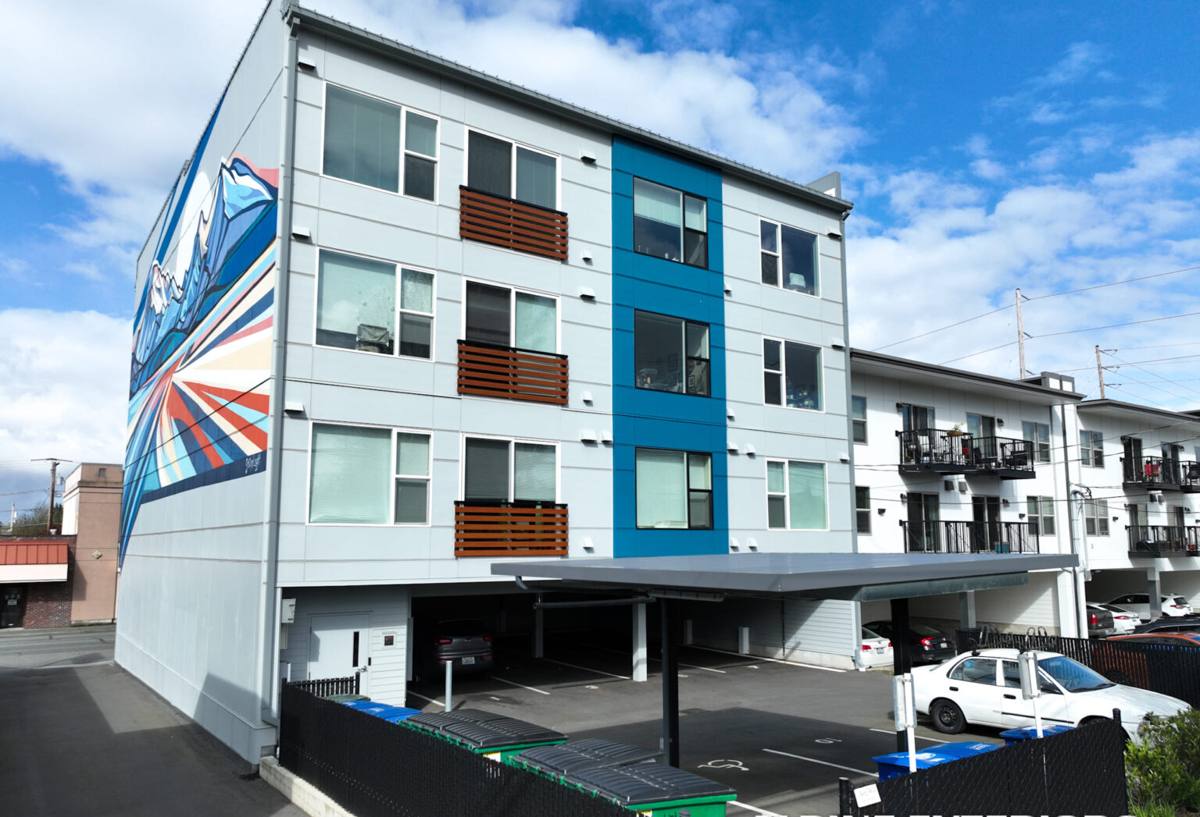
What Correct James Hardie Installation Involves Here
James Hardie fiber cement is engineered to handle moisture-heavy climates, but the product only performs as advertised when it's installed to spec. In a coastal Whatcom County neighborhood like Happy Valley, a handful of details matter more than they would in a drier climate.
Flashing and water management
Every window, door, and roofline intersection needs flashing that actually sheds water away from the wall assembly — not caulk used as a substitute for flashing. Driving rain will find any spot where water is expected to simply run off rather than being physically redirected. A weather-resistant barrier behind the siding, lapped correctly from the bottom up, is what keeps incidental moisture from ever reaching the sheathing.
Fastening and clearances
Fastener spacing, type, and material matter more near salt air. Hardie's installation instructions specify corrosion-resistant fasteners for coastal exposure, and that's not a suggestion to skip — it's the difference between fasteners that hold for decades and ones that streak and weaken in ten years. Clearance from grade, roof lines, and decks also has to meet Hardie's minimums, because tight clearances are exactly where standing moisture and moss get a foothold.
The right HardieZone product for this climate
Hardie engineers its products by climate zone, and homes in this part of Washington fall into the wetter HZ5 zone designation. That means the specific board formulation, not just the brand name, needs to match the region. Using a product engineered for a drier zone because it was cheaper or more available is one of the more common corners cut on coastal jobs — and it's one homeowners have no way to see once the siding is up.
Why This Crew Installs Only James Hardie
We don't install vinyl, LP SmartSide, Cemplank, Allura, primed spruce, or cedar, and we're upfront about why. Vinyl expands, contracts, and can warp under UV and temperature swings, and it doesn't hold up to impact the way fiber cement does. Wood-based and engineered-wood products can perform well for a while, but they depend on an unbroken paint or coating film to keep moisture out — and in a climate with this much sustained dampness and moss growth, that film is under constant stress. Once it's compromised, wood-based substrates absorb water and the clock starts on rot.
James Hardie fiber cement doesn't share that vulnerability. It's non-combustible, dimensionally stable across temperature and humidity swings, and resistant to moisture absorption in a way wood fiber and vinyl simply aren't. The factory-applied ColorPlus finish is baked on under controlled conditions, which gives it better adhesion and fade resistance than field-applied paint — a real advantage in a spot where repainting siding means fighting moss, mildew, and a short dry-weather window every year. We standardized on one product because we'd rather be excellent at installing the right material than average at installing several.
Our Process for a Happy Valley Siding Job
- On-site assessment. We look at current siding condition, trim and flashing details, moss and moisture staining patterns, and any areas showing rot or fastener corrosion — these tell us a lot about how the existing envelope has actually performed.
- Tear-off and sheathing inspection. Old siding comes off and we inspect the sheathing and framing underneath before anything new goes up. Hidden moisture damage gets addressed at this stage, not covered over.
- Weather-resistant barrier and flashing. A properly lapped water-resistive barrier goes on first, followed by flashing at every penetration, window, door, and transition point.
- Hardie installation to spec. Boards or panels go up with correct fastener type, spacing, and clearances, following Hardie's published instructions for this HardieZone designation.
- Trim, caulking, and finish details. Trim work and sealant get applied at the joints Hardie specifies — not as a substitute for flashing, but as the final layer of defense.
- Walkthrough. We go over the finished work with the homeowner and point out anything worth knowing for long-term upkeep.
Choosing the Right Hardie Product Line and Colors
Hardie makes several product profiles, and the right one for a Happy Valley home usually comes down to the home's existing architecture and how much of the wall is exposed to weather versus sheltered.
| Product Line | Typical Use | Notes for This Climate |
|---|---|---|
| HardiePlank Lap Siding | Most common horizontal siding replacement | Widely used profile; pairs well with traditional PNW home styles |
| HardiePanel Vertical Siding | Modern or mixed-material facades, accent walls | Fewer horizontal laps means fewer potential water-entry seams |
| HardieShingle | Shingle-style sections, gables, accents | Popular for matching the shingle look common in this area without wood's moisture risk |
| HardieTrim | Corners, window and door surrounds, fascia | Matched fiber cement trim avoids the mismatch problems of wood trim on fiber cement field siding |
ColorPlus finishes come in a range of factory colors that hold up better in this climate than field-applied paint, since the finish cures under controlled conditions instead of during a narrow window of dry Whatcom County weather. For homeowners who want a specific custom color, primed Hardie board can still be field-painted, though we'll walk through the trade-offs against a ColorPlus finish before making that call.
What Drives the Cost of a Correct Install
Two Happy Valley homes of similar size can land at different price points depending on what's actually involved. We can't quote exact numbers without seeing the house, but here's what moves the estimate:
| Factor | Why It Matters |
|---|---|
| Condition of existing sheathing | Rot or moisture damage found during tear-off adds repair work before new siding can go on |
| Home's wall complexity | Dormers, multiple gables, and cut-up facades take more labor and trim than a simple rectangular wall |
| Product line and profile | Panel, lap, and shingle profiles differ in material and labor cost |
| Finish choice | Factory ColorPlus versus field-primed-and-painted changes both material cost and future maintenance |
| Access and site conditions | Steep lots, limited staging area, or landscaping close to the house can add time |
| Trim and flashing detail work | Full flashing and trim replacement done correctly takes more time than a surface-level reside |
Living With Hardie Siding Through Moss Season
James Hardie siding is far more resistant to moisture-related failure than wood-based or vinyl alternatives, but no siding is entirely maintenance-free in this climate. A little seasonal attention keeps it looking and performing the way it should for the long haul.
- Rinse siding periodically, especially on shaded and north-facing walls where moss and mildew tend to establish first
- Keep gutters clear so overflow doesn't run down the siding face during heavy rain events
- Trim back vegetation and tree limbs that hold moisture against the wall or shade it enough to slow drying
- Check caulking at trim joints and penetrations every year or two, since sealant is a maintenance item even on a well-built wall system
- Watch for any soft spots, staining, or fastener corrosion and address them early rather than waiting
Why Hiring a Crew That Already Works Happy Valley Matters
Siding installation isn't just a product — it's a set of decisions about flashing, fastener choice, clearances, and sequencing that have to be right for the specific exposure a home actually faces. A crew that regularly works Chuckanut-area homes already knows how driving rain behaves against these walls, where moss tends to establish first, and which details get overlooked by installers who treat every job the same regardless of climate. That local pattern recognition is hard to replace with a generic install crew working from a national playbook, no matter how good the underlying product is.
It also means we're not guessing at permitting norms, typical framing conditions in older Whatcom County homes, or how a particular product line has actually performed on nearby houses over time. We install one product because we trust it, and we work one region closely enough to install it correctly, house after house.
If you're weighing a siding replacement for a Happy Valley home, we're happy to take a look and walk you through what correct James Hardie installation would involve for your specific house — no pressure, no obligation. Use the form below to request a free estimate.