 Chuckanut Exterior
 Siding Installation for Columbia Homes in Chuckanut
Homes in the Columbia area sit close enough to the water and the tree line that their siding takes a beating most inland houses never see. Between salt-laden air drifting off the Salish Sea, driving rain that comes in sideways during winter storms, and a moss season that seems to stretch longer every year, exterior walls here are working hard year-round. When it's time to re-side a home in this part of Whatcom County, the material and the installation both matter — and getting either one wrong shows up fast in the form of streaking, soft trim, and premature repainting.
This page focuses on one thing: siding installation for the Columbia neighborhood specifically, what the local climate demands from that work, and how we approach it differently than a crew that only shows up once and leaves.
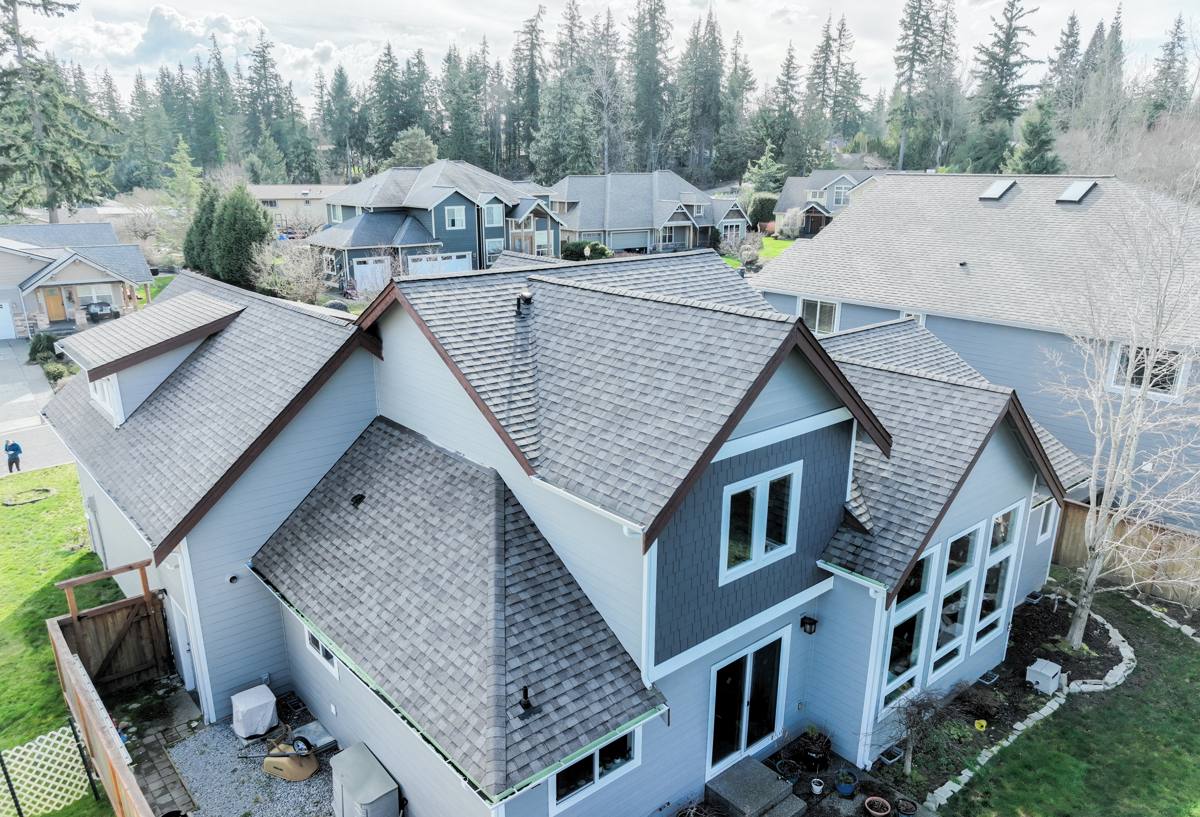
What Columbia's Climate Does to Siding
Every coastal Whatcom County neighborhood deals with moisture, but Columbia's mix of conditions has a few specific effects worth understanding before you choose a product or a contractor.
Salt Air
Airborne salt is corrosive to exposed metal fasteners, flashing, and trim — and it accelerates the breakdown of lower-grade paint finishes. Siding that isn't factory-finished to resist salt exposure tends to chalk, fade, and lose adhesion years ahead of schedule, especially on the sides of the house that face open water or prevailing wind.
Driving Rain
Wind-driven rain doesn't just wet the surface of a wall — it gets pushed sideways and upward into laps, seams, and penetrations that would stay dry in a calmer climate. Siding systems and installation details that work fine in a low-wind region can fail here simply because the water is being forced into places it was never designed to reach.
Moss and Sustained Dampness
Long, mild, wet winters mean moss, algae, and mildew have months to establish themselves on north-facing and shaded walls. Porous or poorly sealed siding gives these organisms something to hold onto, which traps moisture against the substrate and speeds up rot in the wall assembly behind it.
None of this is unusual for this part of the state — but it's exactly why the siding choice and the installation quality matter more here than they would in a drier climate.
Why We Install Only James Hardie Fiber Cement
We standardized on James Hardie fiber cement siding for every home we side, including in Columbia, and we don't install vinyl, LP SmartSide, Cemplank, Allura, primed spruce, or cedar. That's not a marketing position — it's a decision based on how those products perform against this exact climate over the long run.
Fiber cement is non-combustible and dimensionally stable, meaning it doesn't expand and contract with humidity swings the way wood-based products do, and it doesn't soften or warp the way vinyl can under heat and impact. James Hardie's ColorPlus finish is baked on at the factory under controlled conditions, which gives it substantially better resistance to salt exposure, UV fading, and moisture than field-applied paint on site-primed products. Hardie also engineers specific product lines (their "HZ" system) for different climate zones, so the siding specified for a wet, coastal region like ours is built with that exposure in mind from the start.
We're not going to tell you every alternative product is worthless — vinyl is inexpensive and low-maintenance in mild climates, and cedar has real aesthetic appeal. But vinyl can crack and deform under wind-driven debris and doesn't hold paint if you ever want to change the color, wood species require ongoing sealing and repainting to survive constant moisture, and OSB-based products depend heavily on perfect edge-sealing and caulking to keep water out — a single missed detail becomes a swelling problem years later. Given what Columbia's climate does to siding, we'd rather install one product correctly than offer five options and hope the installation covers for a weaker material.
What a Correct Installation Actually Involves
Fiber cement siding is only as good as the assembly it's installed into. A rushed or generic install can undercut even the best material, especially in a wet, wind-exposed climate. Here's what we treat as non-negotiable.
Tear-Off and Sheathing Inspection
Before new siding goes up, we remove the old material and inspect the sheathing underneath for rot, soft spots, or prior water damage — which is common on older homes in wetter neighborhoods where a failing weather barrier went unnoticed for years. Damaged sheathing gets replaced, not covered over.
Water-Resistive Barrier and Flashing
A weather-resistant barrier goes over the sheathing, and every penetration, window, door, and horizontal trim piece gets properly flashed and lapped so water is directed out and down, never trapped behind the cladding. In a driving-rain climate, this layer is doing as much work as the siding itself — it's the backup system if any water gets past the surface.
Fastening and Clearances
James Hardie specifies fastener type, spacing, and placement for a reason — under-fastened or improperly nailed siding can loosen or crack over time, and it voids the manufacturer's warranty. We also hold proper clearance between the bottom edge of the siding and grade, decks, and roof lines, since ground-level moisture and splash-back are a common cause of early rot on homes where that clearance was ignored.
Joints, Caulking, and Finish Details
Seams are cut and fitted tight, caulked with a product rated for the exposure, and touched up with matching ColorPlus-compatible product where field cuts expose raw edges. Left unsealed, cut edges are the fastest path for moisture into fiber cement — a small detail that separates a durable installation from one that fails early.
Our Process for a Columbia Siding Project
- On-site assessment: We walk the home, check the current siding and sheathing condition, note wind and rain exposure by elevation, and identify any trim, window, or flashing issues that need addressing before new siding goes on.
- Product and color selection: We help you choose the right Hardie product line and ColorPlus color for your home's exposure and style — some elevations may warrant a different specification than others depending on how much weather they take.
- Prep and protection: Landscaping, walkways, and outdoor living areas are protected, and we coordinate tear-off and disposal so the site stays manageable throughout the project.
- Installation: Sheathing repair (if needed), weather barrier, flashing, siding, and trim go in following manufacturer specifications and the fastening and clearance standards above.
- Final walkthrough: We inspect the completed work with you, confirm caulking and touch-up details are finished, and answer questions about warranty registration and care going forward.
Siding Options Compared for a Coastal Climate
| Material | Salt/Moisture Resistance | Maintenance Over Time | Typical Lifespan Here |
|---|---|---|---|
| James Hardie Fiber Cement | Strong — factory-cured, engineered ColorPlus finish | Occasional wash; no repainting for many years | Decades with proper install and care |
| Vinyl | Moderate — can fade, warp, or crack under wind/impact | Low, but color can't be changed and panels can loosen | Variable; shorter in high-wind exposure |
| Cedar or Primed Spruce | Weak without diligent upkeep — absorbs moisture | Regular sealing, staining, or repainting required | Shorter without consistent maintenance |
| LP SmartSide / OSB-Based | Dependent on edge-sealing; vulnerable if compromised | Requires careful caulk/paint upkeep at seams and edges | Shorter if moisture reaches the substrate |
This table reflects general product behavior, not a claim that every installation of these alternative materials fails — installation quality matters for all of them. It's simply why, given the choice, we build every project around the material with the strongest track record for this exposure.
What Drives the Cost of a Siding Installation
| Factor | Why It Matters |
|---|---|
| Home size and wall complexity | More corners, dormers, and trim detail mean more labor and material waste factor |
| Sheathing condition | Rot or damage found during tear-off adds repair scope before new siding can go on |
| Siding profile and accessories | Lap width, trim style, and corner details affect material cost and install time |
| Access and site conditions | Steep grades, tight setbacks, or limited staging area add labor time |
| Tear-off and disposal | Removing and hauling old siding is a real cost, especially with multiple layers |
We don't publish flat prices because every one of these factors changes the estimate — but we'll walk your home with you and explain exactly where your number is coming from before any work starts.
Questions to Ask Before You Hire a Siding Crew
- Are they James Hardie certified or factory-trained, and can they explain why they specify the product they use?
- Will they inspect and repair sheathing if it's found to be damaged, or just cover over it?
- Do they detail how they handle flashing and the water-resistive barrier, not just the visible siding?
- Do they carry proper licensing and insurance for exterior work in Washington?
- Will they put the fastening pattern, clearances, and finish details in writing as part of the scope?
- Can they speak specifically to how they handle wind and rain exposure for homes in this area?
Why a Crew That Already Works in Columbia Matters
Siding installation isn't a one-size-fits-all trade. A crew that regularly works Columbia and the surrounding Chuckanut area already knows which elevations tend to take the worst wind-driven rain, how much moss pressure to expect on shaded north walls, and where salt exposure from the water tends to hit hardest. That local pattern recognition shows up in small decisions — extra attention to a west-facing wall, tighter flashing on a covered porch transition, choosing a color and finish that holds up under this specific combination of sun, salt, and rain. It's the difference between a generic installation and one built for the house it's actually going on.
Caring for Your Siding After Installation
James Hardie siding is low-maintenance, not no-maintenance. A periodic rinse with a garden hose keeps salt film and organic buildup from accumulating, especially on shaded or water-facing walls where moss and algae are more likely to take hold. Keep an eye on caulked joints and touch-up paint at cut edges over the years, and trim back vegetation that holds moisture against the wall. None of this is demanding work, but staying ahead of it is what lets a correctly installed Hardie system deliver on its full lifespan in a climate like Columbia's.
If you're weighing a siding replacement for a home in Columbia, we're happy to walk the property, look at what your current siding is telling us, and put together a straightforward, no-pressure estimate — just fill out the form below to get started.