 Chuckanut Exterior
 Why Happy Valley Roofs Wear Differently Than Roofs Inland
Happy Valley sits close enough to the water and tree cover around Chuckanut that its roofs take a different kind of beating than a roof twenty miles inland in Whatcom County. Three things stack up here: salt-laden air off the bay corrodes exposed metal faster than it would in a dry climate, driving rain pushed by coastal wind finds every weak seam and nail pop, and heavy tree cover keeps roofs shaded and damp long enough for moss to take hold and stay all year. None of these things by themselves is unusual for Western Washington. Together, on the same roof, they shorten the useful life of a poorly installed system and accelerate the failure of an aging one.
A new roof installation done right for this specific setting isn't just "put new shingles on." It's choosing materials and fasteners that hold up to salt exposure, detailing the roof so wind-driven rain can't work its way under the edges, and building in enough airflow and drainage that moss doesn't get the standing moisture it needs to spread. That's the standard we hold ourselves to on every Happy Valley roof, not just the ones near the water.
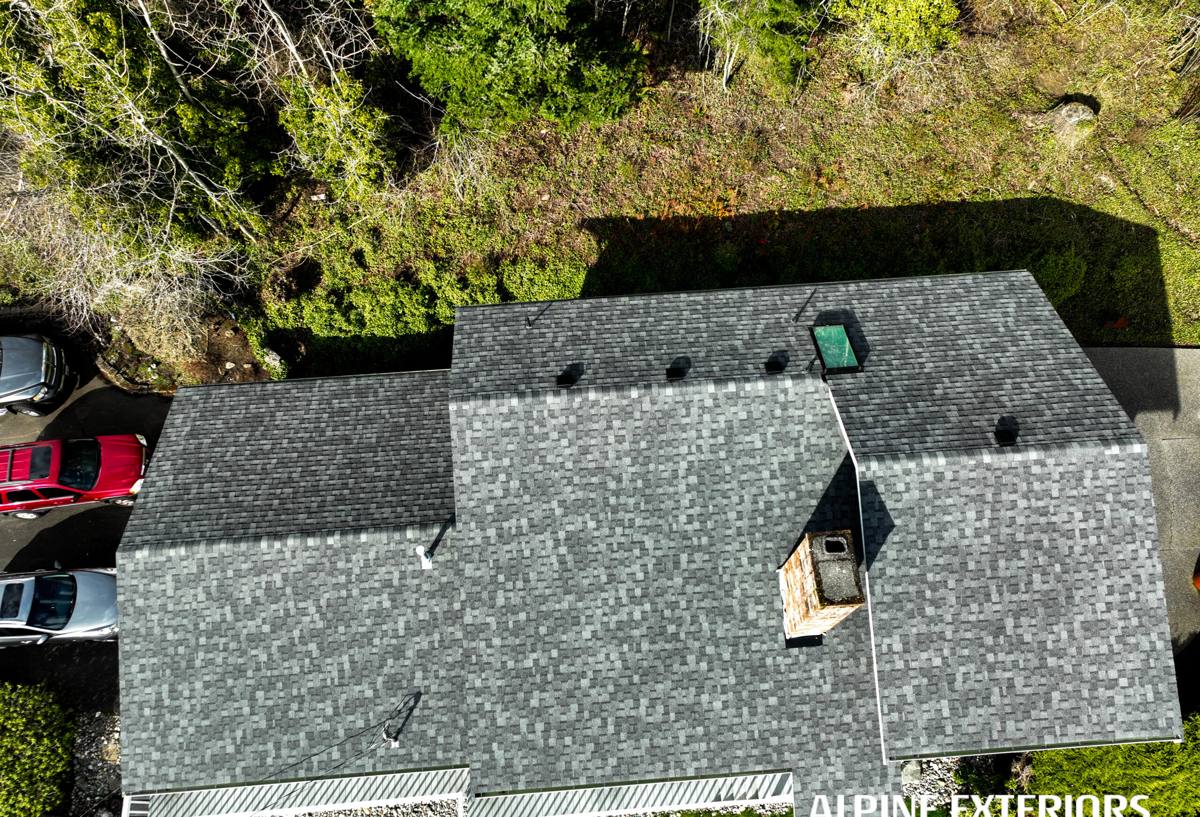
What Salt Air, Rain, and Moss Actually Do to a Roof
Salt Air
Salt-carrying moisture accelerates corrosion on any unprotected or under-protected metal — flashing, fasteners, drip edge, vent stacks. Cheap or mismatched metal components are usually the first thing to fail on a roof near the water, well before the shingles or panels themselves wear out. This is why fastener and flashing selection matters as much as the roofing material itself out here.
Driving Rain
Rain that falls straight down is easy for almost any roof to shed. Rain that's being pushed sideways by wind is a different problem — it tests every lap, seam, and penetration on the roof. Valleys, chimney flashing, skylight curbs, and low-slope transitions are where a marginal installation shows its weakness first.
Moss
Whatcom County's long wet season combined with shaded, tree-covered lots gives moss months at a time to establish itself. Moss holds moisture against the roofing material, works its way under shingle tabs and shakes as it grows, and can lift edges enough to let water in. A roof with poor ventilation and drainage will grow moss back faster than one that was built to shed water and dry out between rains.
What a Correct New Roof Installation Actually Involves
A roof is a system, not a single layer of material. Skipping or shortcutting any part of the system is where most premature failures start. A properly installed new roof for a Happy Valley home should include:
- Full tear-off of the old roofing so the deck can be inspected — not roofing over existing layers, which traps moisture and hides deck damage
- Deck inspection and repair of any soft, rotted, or delaminated sheathing before new material goes down
- Ice-and-water shield membrane in valleys, around penetrations, and along eaves where wind-driven rain and ice dams are most likely
- Synthetic underlayment across the full roof as a secondary water barrier
- Properly lapped and sequenced flashing at all walls, chimneys, skylights, and roof-to-roof transitions
- Corrosion-resistant fasteners and metal components suited to a coastal-influenced climate
- Balanced intake and exhaust ventilation so the attic space can dry out between storms
- Ridge, hip, and starter courses installed to manufacturer spec, not shortcuts that void warranty coverage
Every one of those items matters more in a place like Happy Valley than it would somewhere with a milder, drier climate. Skip the ventilation and moss comes back within a couple of seasons. Skip the flashing details and driving rain finds a way in during the first real windstorm. Use the wrong fasteners and salt air starts working on them immediately.
Choosing a Roofing Material for This Location
There's no single "best" roofing material for every home — it depends on the home's exposure, the roof's pitch and shading, and the owner's budget and maintenance tolerance. Here's how the common options stack up for a Happy Valley home specifically:
| Material | Salt Air Durability | Moss Resistance | Maintenance |
|---|---|---|---|
| Architectural asphalt shingle | Good, with quality flashing/fasteners | Moderate — benefits from zinc/copper strips and clean ventilation | Low to moderate |
| Standing seam metal | Very good with coastal-rated coatings and fasteners | High — sheds moisture quickly, little for moss to grip | Low |
| Cedar shake | Fair — needs regular treatment near salt air | Low without diligent upkeep — porous surface holds moisture | High |
| Composite/synthetic shake | Good | Moderate to good depending on product | Low to moderate |
We'll walk through these trade-offs honestly during your estimate rather than steering every homeowner toward the same product. Cedar shake can still be the right call for the look a homeowner wants, but we'll be direct about the added upkeep it needs in this climate before you commit to it — that's a maintenance-burden conversation, not a knock on the material.
Ventilation and Drainage: The Part Homeowners Don't See
Most roof callbacks we get asked to look at in shaded, damp neighborhoods trace back to poor ventilation, not bad shingles. An attic that can't breathe stays warmer and more humid than it should, which condenses moisture on the underside of the deck and keeps the topside of the roof damp longer after every rain. That combination is exactly what moss and premature shingle wear need.
A correct installation balances intake ventilation (typically at the eaves) with exhaust ventilation (ridge or roof vents), sized to the attic's square footage. We also check that gutters and downspouts can actually keep up with driving rain — undersized or poorly pitched drainage sends water back up under the roof edge instead of off the property, which is a common source of edge rot on older Whatcom County homes.
Our Installation Process
- On-site inspection and estimate. We look at the existing roof, deck condition where visible, ventilation setup, and any problem areas like valleys or chimney flashing, and give you a written, no-pressure estimate.
- Material selection. We go over the options above based on your home's exposure and budget, with honest trade-offs — not a sales pitch for whatever we have the most of on the truck.
- Tear-off and deck inspection. Old roofing comes off completely so we can see the deck and address any rot or damage before it's covered up again.
- Underlayment and flashing. Ice-and-water membrane, synthetic underlayment, and properly sequenced flashing go in before any finish material.
- Roofing installation. Material is installed to manufacturer specification, including starter courses, fastener patterns, and ridge/hip work.
- Ventilation check. We confirm intake and exhaust ventilation is balanced for the attic space, adding or correcting vents as needed.
- Final walkthrough. We inspect the finished roof with you, clean up the site, and go over care and warranty information.
Signs a Happy Valley Home May Need a New Roof Soon
- Shingles that are cupping, curling, or losing granules in patches
- Moss or dark streaking that returns quickly after cleaning
- Soft spots or noticeable sagging when viewed from the ground or attic
- Daylight visible through the roof deck from inside the attic
- Rusted, lifted, or missing flashing around chimneys, vents, or skylights
- Granules collecting in gutters in larger amounts than in past years
- Interior water stains on ceilings after heavy or wind-driven rain
- A roof approaching or past the manufacturer's expected service life for its material
Any one of these can often be addressed with a repair. Several of them together, or a roof already past its expected lifespan, is usually the point where a full replacement makes more financial sense than continuing to patch it.
What Drives the Cost of a New Roof
| Factor | Why It Matters |
|---|---|
| Roof size and pitch | More surface area and steeper pitches mean more material and labor time |
| Material choice | Asphalt, metal, and cedar/composite carry different material and installation costs |
| Deck condition | Rotted or damaged sheathing found during tear-off adds repair cost |
| Number of penetrations | Chimneys, skylights, and vents each require careful, time-consuming flashing work |
| Access and tree cover | Shaded, hard-to-access lots common in Happy Valley can affect staging and cleanup time |
| Ventilation upgrades | Correcting inadequate intake/exhaust ventilation adds material and labor but pays off in roof life |
Most full roof replacements on homes in this area run from the high four figures for a straightforward asphalt shingle job on a smaller, simple roof, up into the five figures for larger roofs, steeper pitches, metal roofing, or homes with a lot of penetrations and complex flashing. We'll give you a firm, itemized number after seeing the actual roof — we don't quote blind over the phone.
Why a Crew That Already Works Happy Valley Matters
A roofing crew that regularly works this specific area already knows which details matter most here: how the local wind and rain patterns tend to hit roofs, which flashing and fastener choices hold up to the salt air influence, and what ventilation setup actually keeps moss from coming right back under the tree cover common to this neighborhood. That's different knowledge than a crew that mostly works dry, inland roofs and treats every job the same way.
Local familiarity also means fewer surprises with permitting and inspection timelines for Whatcom County, and a crew that can speak specifically to how a given roof design performs on other homes nearby — not generic claims, but direct experience with this area's conditions.
Protecting Your Roof After Installation
A correctly installed roof still benefits from basic upkeep, especially in a climate like this one:
- Keep gutters clear so water can't back up under roof edges during heavy rain
- Trim back overhanging branches to reduce shading and debris buildup that feed moss growth
- Have moss growth treated before it spreads rather than waiting for a full cleaning
- Schedule a periodic visual inspection, especially after major windstorms
- Address minor flashing or fastener issues promptly before they become water intrusion problems
A well-built roof paired with basic seasonal upkeep is what actually gets you a full service life out of the investment in this climate — neither one alone does the job as well.
If your Happy Valley home needs a new roof or you're not sure whether what you have left is a repair or a replacement, we're happy to take a look and give you a straightforward, no-pressure written estimate. Use the form below to get started.