 Chuckanut Exterior
 Siding Built for Happy Valley's Weather, Not Just Its Curb Appeal
Happy Valley homes sit close enough to the water and the tree line that the siding on a house does more work than most homeowners realize. It's not just the finish coat of a home's exterior — it's the first line of defense against salt-laden air drifting in off the bay, wind-driven rain that hits walls sideways during winter storms, and a moss season that can stretch on for months in the shade of mature Douglas fir and cedar. Siding installed without that reality in mind may look fine on move-in day and start showing problems within a few winters: swollen seams, peeling paint, soft trim, or moss creeping up from the ground line.
Doing this job right in Chuckanut isn't about picking a color and nailing up panels. It's about understanding how water moves across a wall assembly in a marine climate, choosing a product that's engineered for that exposure, and installing it with the clearances, flashing, and fastening details that keep moisture moving out instead of soaking in.
What Happy Valley's Climate Actually Does to Siding
Salt Air and Corrosion
Proximity to Chuckanut Bay means airborne salt settles on exterior surfaces year-round, not just during storms. Salt accelerates corrosion in fasteners, flashing, and any metal trim components. Over years, corroding fasteners can loosen siding, and corroding flashing can fail exactly where it's needed most — at windows, doors, and roof-to-wall transitions.
Driving Rain
Whatcom County's winter storms don't just fall straight down — wind pushes rain horizontally into wall surfaces, seams, and laps. A siding system that isn't detailed for wind-driven rain will eventually let water behind the cladding, where it's much harder to dry out than on the surface.
Moss and Shade
Many Happy Valley lots have significant tree cover, which keeps siding shaded and damp longer after rain events. That extended dampness is exactly what moss, algae, and mildew need to establish themselves, and it's harder on paint finishes and less-durable siding materials than a sunnier, drier lot would be.
What a Correct Siding Installation Actually Involves
The siding itself is only part of the system. A correct installation manages water at every layer, not just the visible surface. On every Happy Valley project, that means:
- A weather-resistive barrier installed with proper shingle-lap sequencing so water sheds down and out, never inward
- Correct flashing at every window, door, deck ledger, and roof-to-wall intersection — the highest-risk points on any home
- Rainscreen or drainage gap detailing where conditions call for it, so moisture that does get behind the cladding has somewhere to drain and dry
- Corrosion-resistant fasteners driven to manufacturer spec — not overdriven, not underdriven
- Correct clearance between the bottom of the siding and grade, decks, patios, and roof lines, so splash-back and standing water don't sit against the material
- Factory-finished panels and trim wherever possible, to avoid field-painted cut edges being the weak point in the system
Skip any one of these and the siding itself almost doesn't matter — water will find the gap.
Why We Install James Hardie Fiber Cement — and Nothing Else
We install James Hardie fiber cement exclusively. We don't install vinyl, LP SmartSide, Cemplank, Allura, primed spruce, or cedar, and we think Happy Valley homeowners deserve an honest explanation of why, not just a sales pitch for whatever we happen to stock.
Vinyl is inexpensive and low-maintenance in mild, dry climates, but it's a petroleum-based product that expands and contracts with temperature swings, can warp or crack in wind-driven weather, and its seams and J-channels give water a path inward that's hard to fully seal against driving rain. Wood siding — cedar or primed spruce — can look excellent, but it demands ongoing painting, caulking, and moisture vigilance that's genuinely difficult to keep up with in a climate this damp, and it's the material most vulnerable to the rot and moss issues this area is known for. LP SmartSide is a wood-strand product with a resin-saturated core; it holds up reasonably well when installation and maintenance are done exactly to spec, but any breach in its factory coating exposes wood fiber to moisture, and repairs are less forgiving than with a cement-based product.
Fiber cement, by contrast, is non-combustible, dimensionally stable across temperature and humidity swings, and doesn't feed rot or insects the way wood-based products can. James Hardie backs its siding with a factory-applied ColorPlus finish that's baked on and warranted separately from the substrate, which matters in a climate where paint film failure is a real, recurring homeowner complaint.
| Material | Common Trade-Off in This Climate | Why It Matters Here |
|---|---|---|
| Vinyl siding | Seams and panel movement can let wind-driven rain track inward | Frequent horizontal rain events near the bay |
| Cedar / primed spruce | High ongoing maintenance; vulnerable to rot and moss | Extended shade and dampness on tree-covered lots |
| LP SmartSide | Coating breach exposes wood-strand core to moisture | Long wet seasons leave little margin for deferred maintenance |
| James Hardie fiber cement | Requires correct fastening and clearances at install | Non-combustible, dimensionally stable, factory-finished |
Choosing the Right Hardie Product for Happy Valley's Exposure
James Hardie engineers its HZ5 product line specifically for climates with real seasonal moisture and freeze-thaw cycling, which describes Whatcom County well. That engineering shows up in the fiber cement formulation itself, not just the surface finish, so the board holds up to repeated wet-dry cycles rather than just resisting them cosmetically.
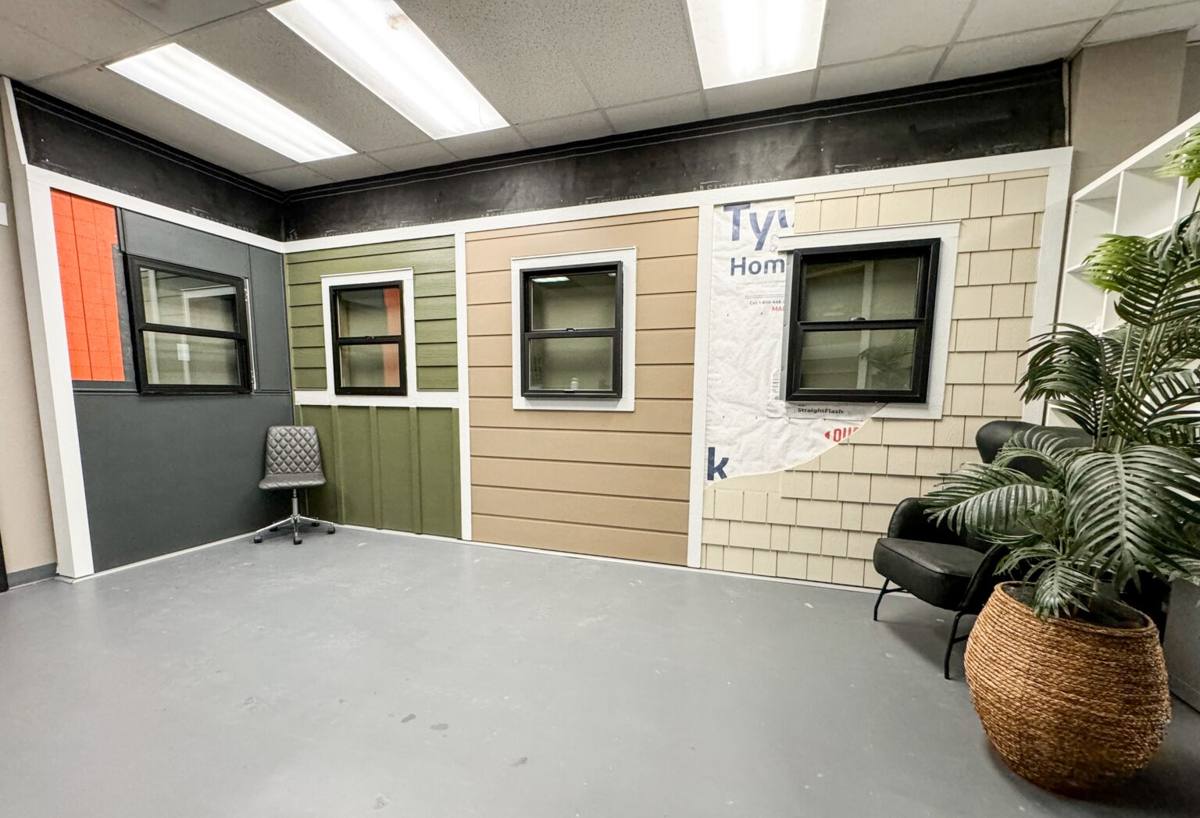
For Happy Valley homes we typically discuss lap siding for classic coastal Northwest profiles, vertical panel siding for modern or transitional exteriors, and Hardie Trim for corner boards, fascia, and window casing that needs to match the durability of the field siding rather than being the first thing to fail. ColorPlus finishes are available in a range of colors that are formulated to hold up to UV and moisture exposure better than field-applied paint, which reduces the repainting cycle that's such a burden on wood siding in this climate.
Our Installation Process
- On-site assessment. We walk the exterior, check existing sheathing and framing condition, and identify moisture-prone areas — deck ledgers, chimney chases, low-clearance sections, shaded north and west walls.
- Tear-off and substrate repair. Old siding comes off, and any rot, soft sheathing, or compromised framing gets repaired before anything new goes on. Installing new siding over a wet or damaged substrate just hides the problem.
- Weather-resistive barrier and flashing. House wrap or building paper goes on with correct lap sequencing, and flashing is installed at every penetration and transition before siding begins.
- Furring or drainage detailing where called for. On walls with heavy shade or known moisture history, we discuss a rainscreen gap so any incidental moisture behind the cladding can drain and dry.
- Siding and trim installation. Hardie panels, lap, or trim go up to manufacturer fastening schedules and clearance requirements — not general contractor guesswork.
- Sealant and detail work. Joints, penetrations, and trim intersections get sealed with products compatible with the Hardie finish.
- Final walkthrough. We review the completed exterior with the homeowner and point out any maintenance items specific to the home's exposure.
Living With Moss, Salt, and Rain: What Ongoing Maintenance Looks Like
Correctly installed Hardie siding needs far less attention than wood or vinyl, but "low-maintenance" doesn't mean "no-maintenance" in a Chuckanut microclimate. A simple annual routine keeps a Happy Valley exterior performing the way it's supposed to:
- Rinse siding annually, and more often on shaded north- and west-facing walls where moss and algae take hold fastest
- Trim back tree limbs and shrubs to keep airflow moving across siding surfaces and reduce prolonged dampness
- Inspect caulking and sealant joints yearly, especially around windows and trim, since UV and moisture cycling can break down sealant faster than the siding itself
- Keep gutters and downspouts clear so overflow doesn't run down or pool against wall sections
- Watch clearance points — where siding meets grade, decks, or roof lines — for debris buildup that traps moisture against the material
Cost Factors for a Happy Valley Siding Project
Every home is different, but the variables that most often move the price on a Happy Valley siding job are consistent enough to plan around:
| Factor | Why It Affects Cost |
|---|---|
| Substrate condition | Rot or moisture damage found at tear-off adds repair scope before new siding goes on |
| Home complexity | Multiple gables, dormers, and trim details take more labor per square foot than a simple rectangular form |
| Product selection | Lap vs. panel profiles and trim packages carry different material costs |
| Drainage detailing | Adding a rainscreen gap on high-exposure walls adds labor but reduces long-term moisture risk |
| Access and site conditions | Slopes, tree cover, and tight lot access common in Happy Valley can affect staging and labor time |
We walk every project in person before quoting, because the difference between a fair estimate and a surprise change order almost always comes down to what's actually happening behind the old siding — something no phone estimate can catch.
Why It Matters to Hire a Crew That Already Works Happy Valley
Siding installation isn't a one-size-fits-all trade. A crew that mostly works drier, inland climates may not think twice about clearance details or drainage planes that make or break performance here. A crew that's already worked Happy Valley and the surrounding Chuckanut area knows which walls take the brunt of the weather, understands how salt air and shade interact with different materials, and builds those lessons into every installation rather than learning them on your house. That local pattern recognition — knowing where moss shows up first, which details fail under driving rain, which flashing points get overlooked — is the difference between siding that looks good at handoff and siding that still performs a decade later.
If you're planning a siding project for a Happy Valley home, we're happy to walk the exterior with you, talk through what your home's specific exposure calls for, and put together a straightforward, no-pressure estimate. There's no obligation — just a clear look at what correct siding installation would involve for your house.