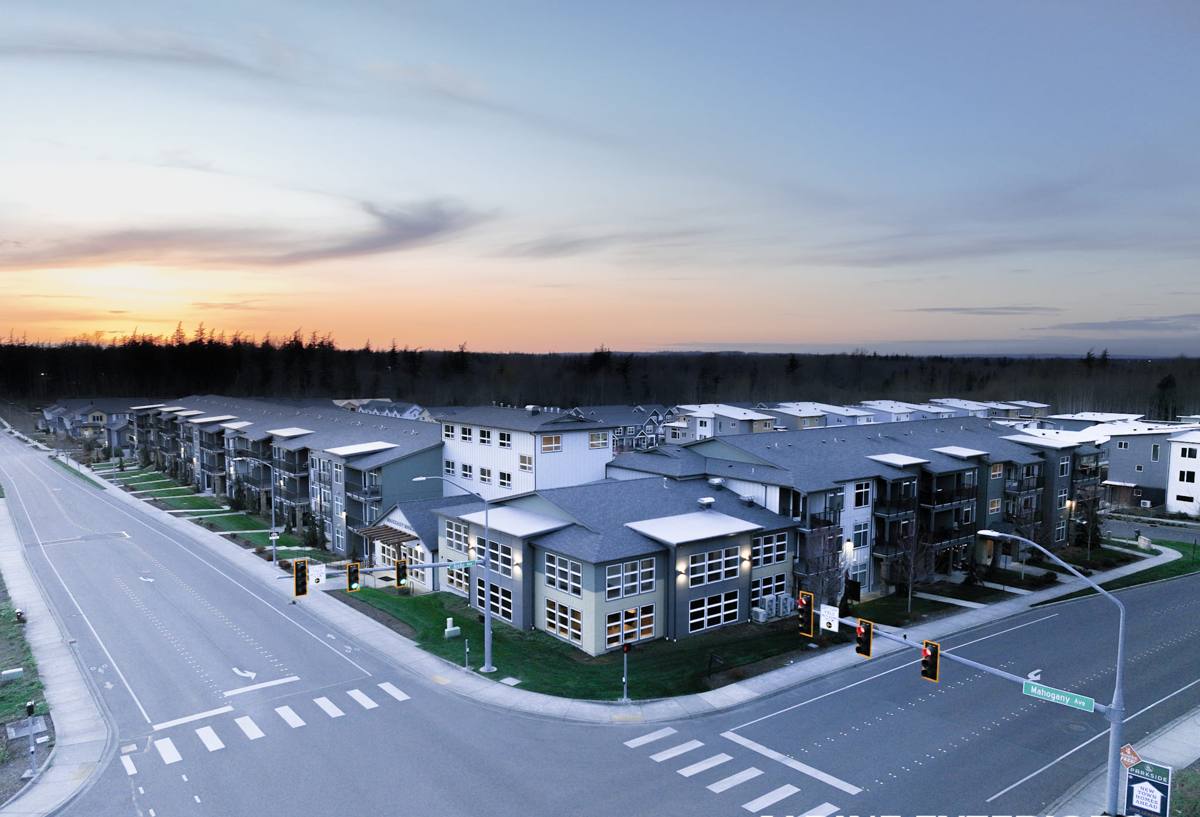
 Chuckanut Exterior
 Metal Roofing Built for Happy Valley's Conditions
Happy Valley homes sit close enough to the water and the tree line that they take a different kind of weather beating than houses further inland. Salt-laden air off the water, driving rain that comes in sideways during winter storms, and a moss season that never really ends all work against a roof year-round. A roofing system that holds up fine in a drier part of Whatcom County can fail early here if it wasn't chosen and installed with these conditions in mind.
Metal roofing, done correctly, is one of the best answers to that combination. It sheds water fast, doesn't give moss the organic surface it needs to colonize, and can be detailed to handle salt exposure without the coating failures that plague poorly-specified systems. But "metal roofing" covers a wide range of products and installation quality, and not every crew that installs it locally understands what Happy Valley specifically throws at a roof.
What Chuckanut's Climate Actually Does to a Roof
It helps to be specific about the mechanisms, because they drive every decision that follows.
Salt Air and Corrosion
Proximity to saltwater accelerates corrosion on any exposed metal — fasteners, flashing, panel edges, and cut ends where bare steel is exposed. Homes closer to the water see this faster than those set back, but nowhere in Happy Valley is fully exempt. The fix isn't avoiding metal roofing; it's specifying coatings and fastener hardware rated for coastal exposure and detailing cut edges so bare metal isn't left exposed to the air.
Driving Rain
Wind-driven rain doesn't just fall on a roof — it gets pushed sideways under laps, around penetrations, and into any seam that wasn't sealed or lapped correctly. On a standard roof this shows up as slow leaks that take years to notice. On a poorly installed metal roof it can show up much faster, because metal systems rely on correct overlap and fastening more than they rely on sheer material thickness to stay watertight.
Moss and Organic Growth
Whatcom County's long wet season gives moss, lichen, and algae a wide window to establish themselves. On composition shingles, moss roots into the granule surface and lifts shingles as it grows, trapping moisture underneath. Metal roofing gives moss nothing to grip in the same way, but valleys, flashing transitions, and areas that stay shaded and damp can still collect debris and moss if they aren't designed to shed water and dry out.
Choosing the Right Metal Roofing System
Not all metal roofing is the same product wearing different colors. The system matters as much as the material.
| System Type | Best For | Trade-offs |
|---|---|---|
| Standing seam (concealed fastener) | Long-term, low-maintenance roofs; homes with visible rooflines | Higher upfront cost; requires skilled installation to get seams right |
| Exposed-fastener metal panel | Budget-conscious projects, outbuildings, simpler rooflines | Fasteners can loosen and gaskets age over time, especially with coastal exposure — needs periodic fastener checks |
| Metal shingle/shake panels | Homes wanting a traditional look with metal's durability | More seams and details than standing seam; installation quality matters even more |
For most Happy Valley homes, we lean toward standing seam for primary roof areas because the fasteners are hidden under the panel and never exposed to weather. That matters more here than in a drier inland climate, since every exposed fastener near salt air is a future maintenance point.
What a Correct Installation Actually Involves
Metal roofing rewards a careful installer and punishes a rushed one. The material itself is durable, but the assembly underneath it is what actually keeps water out.
- Underlayment: A high-temperature, self-adhering or synthetic underlayment rated for the climate, not a basic felt that degrades under Pacific Northwest moisture cycles
- Ventilation: Proper ridge and intake ventilation so condensation doesn't form under the panels — a common cause of hidden deck rot on metal roofs installed without airflow in mind
- Fastening: Corrosion-resistant fasteners matched to the panel material, torqued correctly — over-driven or under-driven screws are one of the most common causes of early leaks
- Flashing details: Custom-formed flashing at valleys, chimneys, skylights, and wall transitions rather than generic stock pieces forced to fit
- Panel layout: Seams and laps run to shed wind-driven rain based on the actual prevailing weather exposure of that roof plane, not just laid out for speed
Any one of these done wrong can undo the benefit of an otherwise good material. This is why we treat metal roofing as a system to be engineered for the specific home, not a product to be nailed down as fast as possible.
Moss Prevention and Long-Term Maintenance
A well-installed metal roof in Happy Valley needs far less maintenance than a shingle roof, but "far less" isn't "none." Here's what actually keeps one performing over the decades it's built to last:
- Clear debris from valleys and around penetrations before it holds moisture against the panel or flashing
- Check gutters and downspouts each fall — clogged gutters back water up under drip edges even on a metal roof
- Inspect exposed-fastener areas periodically for loosening or gasket wear if that system was used anywhere
- Watch for any moss or algae staining in shaded valleys and remove it before it holds moisture
- After major windstorms, do a visual check for lifted flashing or displaced debris
None of this requires a specialist visit every year. It's the kind of thing a homeowner can do from the ground with binoculars, or we can fold into an occasional check when we're in the neighborhood for other work.
Our Process for Happy Valley Projects
Assessment
We start by looking at the specific roof — its orientation to prevailing wind and rain, how exposed it is to salt air, existing ventilation, and the condition of the roof deck underneath any existing roofing. This tells us what system and detailing actually make sense, rather than defaulting to a one-size answer.
Specification
We spec panel gauge, coating, fastener hardware, and underlayment based on that assessment, and walk through the trade-offs with the homeowner in plain terms — what costs more upfront, what saves maintenance later, and why.
Installation
Deck repairs happen before anything goes down, not after problems show up. Flashing is custom-formed on site for the actual geometry of the roof, not forced from stock pieces. Fastening and sealant work is done to the manufacturer's coastal-exposure specifications, not the minimum.
Final Walkthrough
We walk the completed roof with the homeowner, point out any maintenance items specific to that roof's layout, and make sure everything is documented for warranty purposes.
What Drives the Cost
Metal roofing costs more upfront than composition shingles, and the range within metal roofing itself is wide depending on system and detailing.
| Factor | Why It Matters |
|---|---|
| Panel system (exposed-fastener vs. standing seam) | Standing seam costs more in material and labor but reduces long-term maintenance and fastener failure risk |
| Roof complexity | More valleys, dormers, and penetrations mean more custom flashing work and labor time |
| Coating and gauge | Heavier gauge and marine-grade coatings cost more but hold up better against salt air exposure |
| Deck condition | Any rot or damage found under existing roofing adds repair cost before the new roof goes on |
| Tear-off vs. overlay | Full tear-off costs more than overlaying but is usually the right call for a roof meant to last decades |
We give homeowners an honest range early and refine it once we've actually assessed the roof — we don't like surprising people with a number that moves a lot between the estimate and the invoice.
Why It Matters to Hire a Crew That Already Works Happy Valley
A roofing crew that mostly works drier, inland parts of Whatcom County can install a technically correct metal roof that still underperforms here, simply because they didn't account for the salt exposure or the wind-driven rain patterns specific to this area. Details that are optional inland — coastal-rated fasteners, specific flashing sequencing at exposed edges, ventilation sized for a longer wet season — aren't optional in Happy Valley.
We work in this part of Chuckanut regularly, which means we've seen how roofs here actually age, not just how they're supposed to perform on paper. That shows up in the choices we make on your specific roof, not in a sales pitch.
Get a Straight Answer on Your Roof
If you're weighing metal roofing for a Happy Valley home — whether it's a full replacement, a re-roof over an aging system, or you just want an honest read on what your current roof needs — we're happy to take a look and walk you through the options with no pressure to decide on the spot. Use the form below to request a free estimate.