 Chuckanut Exterior
 Roof Repair Built for York's Coastal Climate
Homes in the York area of Chuckanut sit in one of the tougher climates in Whatcom County for a roof to survive. Between the salt-laden marine air, the driving rain that comes off the water sideways in a storm, and a moss season that can run most of the year in shaded spots, a roof here ages differently than one twenty miles inland. Repairing it correctly means understanding those forces, not just patching whatever is leaking today.
Salt Air and Metal Fasteners
Salt-heavy air accelerates corrosion on anything metal — nail heads, flashing, valley metal, and the fasteners holding shingles or panels down. A roof that looks fine from the ground can have fasteners that have lost most of their holding strength underneath. When we repair a roof in this area, we check fastener condition as a matter of course, not as an upsell. Using the wrong-grade fastener on a re-nail or a patch is one of the most common causes of a "repaired" roof leaking again within a year or two out here.
Driving Rain and Wind-Driven Water
Most roofing systems are designed to shed water moving straight down. Wind-driven rain moves sideways and upward under shingles, around flashing edges, and into any gap that a calmer climate would never test. Chuckanut's exposure to weather rolling in off the water means laps, flashing overlaps, and underlayment details that would be marginal elsewhere need to be done right here, every time.
Moss, Shade, and Slow-Drying Roofs
Trees, north-facing slopes, and the general dampness of a Pacific Northwest winter add up to long moss and algae seasons on shaded roof sections. Moss holds moisture against the roofing material, works its way under shingle tabs and into seams, and keeps a roof wet for days after the rest of the neighborhood has dried out. Left alone, it doesn't just look bad — it actively shortens the life of the roof and creates the conditions for the leaks we get called out for.
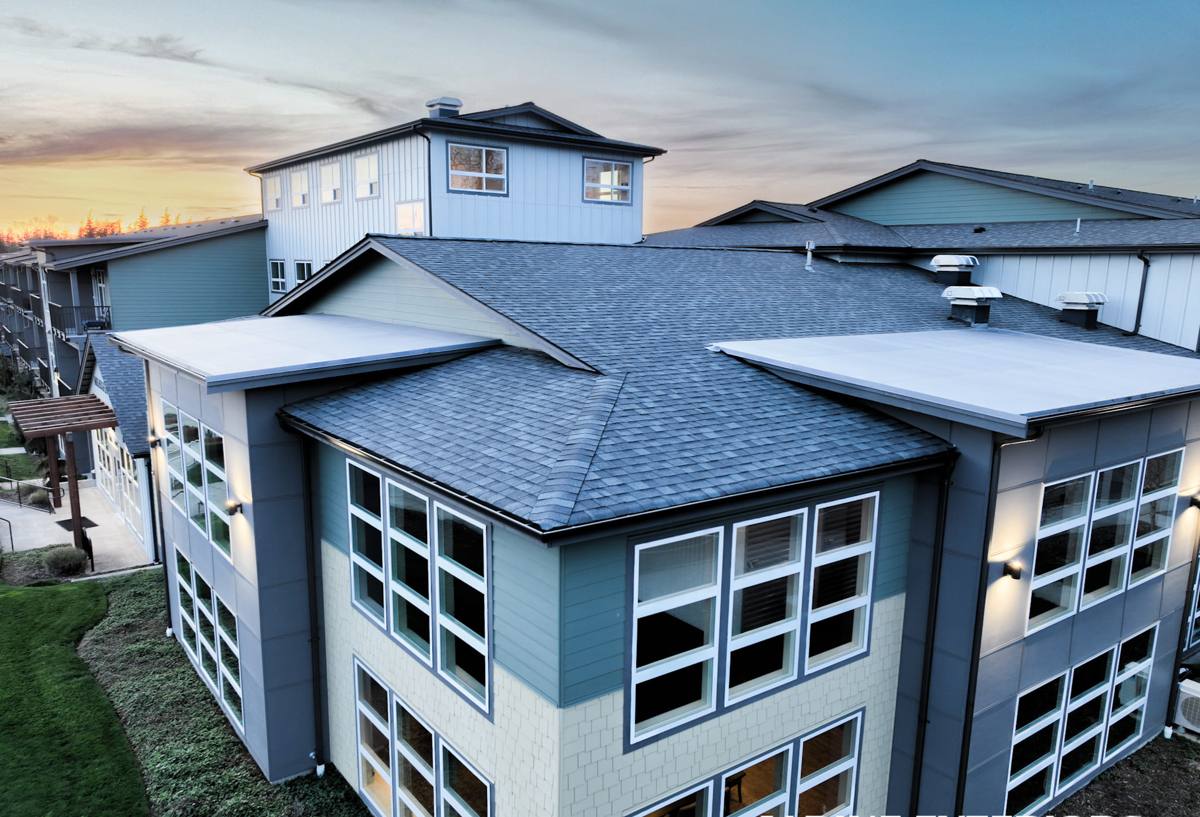
Common Roof Problems We Find in York Homes
Some issues show up on nearly every service call in this area. Knowing the pattern helps homeowners catch problems before they turn into interior damage.
- Moss and algae buildup on shaded slopes, especially north- and east-facing roof planes
- Corroded or lifted flashing at chimneys, skylights, and roof-to-wall transitions
- Nail pops and loosened fasteners from repeated wet-dry cycling
- Granule loss on asphalt shingles from years of driving rain and wind abrasion
- Clogged or undersized gutters causing water to back up under the roof edge
- Soft or discolored roof decking visible from the attic, a sign water has already gotten past the surface layer
- Cracked or brittle sealant around vent pipes and penetrations
What a Correct Roof Repair Actually Involves
Diagnosing the Real Source of the Leak
Water almost never shows up on the ceiling directly below where it entered the roof. It travels along rafters, decking, and underlayment before finding a gap in the drywall or insulation. A repair that just patches the spot above the stain often misses the actual entry point, which means the leak comes back — usually in a different spot on the ceiling, which makes homeowners think it's a new problem. We trace water paths from the attic side whenever access allows, because that's where the real story is.
Matching Materials and Flashing Details
A patch that doesn't match the existing roofing material's age, type, and thickness can create its own problems — trapping moisture, reacting differently to temperature swings, or simply standing out and weathering unevenly. Flashing gets rebuilt with the correct overlap and fastening pattern for the roof pitch and exposure, not just recaulked. Caulk and sealant have their place, but they are a short-term fix when used as a substitute for proper flashing, not a repair method on their own.
Doing More Than Patching
A repair that's done right addresses the conditions that caused the failure, not just the hole. That might mean improving ventilation in an attic section that's been running damp, clearing a moss colony that's been feeding moisture into a seam, or extending a flashing detail that was undersized to begin with. Patching the symptom without touching the cause is why some roofs seem to need the "same" repair every year or two.
Our Roof Repair Process
- Inspection. We look at the roof surface, flashing, penetrations, and — where accessible — the attic or underside of the decking, to find the actual source of the problem.
- Assessment and options. We explain what we found in plain terms: what needs to happen now, what can reasonably wait, and what a full replacement would look like if the roof is closer to the end of its service life than a repair budget makes sense for.
- Repair scope and estimate. A written estimate before any work starts, covering materials, the specific repair steps, and timeline.
- The repair itself. Deck repair where needed, correct underlayment and flashing work, matched roofing material, and proper fastening for this climate's exposure.
- Cleanup and check. Site cleared of debris and old materials, gutters checked for anything that fell in during the work, and a final walk-through of what was done.
Repair vs. Replacement: Cost Factors
Not every roof problem calls for full replacement, but knowing when a repair stops making financial sense matters. These are the factors that push the decision one way or the other.
| Factor | Favors Repair | Favors Replacement |
|---|---|---|
| Age of roof | Under roughly two-thirds of expected material lifespan | Near or past expected lifespan for the material |
| Extent of damage | Isolated to one section, flashing, or penetration | Spread across multiple slopes or the whole roof |
| Decking condition | Solid, no soft spots found | Widespread soft decking or rot found during inspection |
| Granule loss / wear pattern | Localized, rest of roof still has good service life | Even wear across the whole roof, shingles brittle throughout |
| History of repeat leaks | First occurrence or new, identifiable cause | Same areas leaking repeatedly despite past repairs |
An honest inspection will tell you which column your roof falls into. We won't push a full replacement on a roof that a proper repair will handle for years, and we won't recommend patching a roof that's genuinely at the end of its life just to avoid a harder conversation.
Roofing Materials We Work With in This Climate
Repairs need to be done with materials suited to salt air and constant moisture exposure, not just whatever matches the color. Here's how the common options hold up in a climate like Chuckanut's.
| Material | How It Handles This Climate | Maintenance Considerations |
|---|---|---|
| Asphalt composition shingle | Solid performer when properly ventilated and flashed; moss and algae buildup is the main long-term concern | Periodic moss removal and gutter clearing extend service life significantly |
| Metal roofing | Sheds wind-driven rain well and resists moss better than shingles on steep pitches | Fastener quality and coating matter more near salt air; installation detail sensitivity is higher |
| Cedar shake | Traditional look but requires more diligence in a damp, moss-prone climate | Needs regular treatment and moss control to avoid accelerated moisture damage |
Whatever material is already on the roof, our repair standard is to use fasteners, flashing, and underlayment rated for this climate, even if that costs a little more than the minimum. It's the difference between a repair that lasts and one that's back on the schedule next winter.
Why a Crew That Already Works York Matters
A roofer who works this part of Whatcom County regularly has already seen how the local exposure to salt air and driving rain plays out on real roofs, season after season. That means fewer surprises during inspection, a faster read on whether a leak is isolated or a sign of broader wear, and repair decisions grounded in what actually holds up here — not generic advice that might apply somewhere with a milder or drier climate. It also means we're not learning the neighborhood's weather patterns on your roof for the first time.
Maintenance Between Repairs
A repair holds up longer when it's not fighting the same conditions that caused the original problem. A few habits make a real difference on roofs in this climate:
- Clear moss off shaded slopes before it spreads under shingle tabs, rather than after
- Keep gutters and downspouts clear so water isn't backing up under the roof edge during heavy rain
- Trim back overhanging branches that keep sections of roof shaded and slow to dry
- Have flashing and penetrations checked every couple of years, since these fail before the field of the roof usually does
- Address small leaks early — a stain the size of a dinner plate is a much cheaper fix than the same leak left for another wet season
Scheduling Around Pacific Northwest Weather
Roof repairs go best in a dry window, and dry windows aren't guaranteed for long stretches at a time in this region. We watch the forecast and plan repair work for stretches of manageable weather, and for anything urgent — an active leak during a storm — we can get a temporary measure in place to limit interior damage until a proper repair can be done right. Waiting for "someday" on a known leak almost always costs more once the decking underneath has had time to absorb water.
If you've got a leak, a soft spot, or just a roof that's due for a look after another wet Whatcom County winter, we're glad to come take a look. The estimate is free, there's no pressure to book anything on the spot, and you'll get a straight answer about what your roof actually needs — just fill out the form below to get started.