 Chuckanut Exterior
 Roofing in Happy Valley: A Different Set of Conditions
Happy Valley sits close enough to the water and the tree line that its roofs deal with a combination most inland neighborhoods never see: salt-laden air moving in off the Sound, long stretches of driving rain that comes in sideways during winter storms, and a moss season that can run from fall through spring under Chuckanut's tree canopy. None of these is dramatic on its own. Together, over years, they shorten the life of a roof that wasn't installed with them in mind.
Asphalt shingle roofing is still the right call for the large majority of Happy Valley homes — it's cost-effective, it holds up well when installed correctly, and it's easy to repair in sections rather than replacing the whole field. The difference between a roof that lasts its full rated life here and one that fails early almost never comes down to the shingle brand. It comes down to underlayment choice, ventilation, flashing detail, and whether the crew accounted for Whatcom County's wet, shaded conditions instead of just following a generic install checklist.
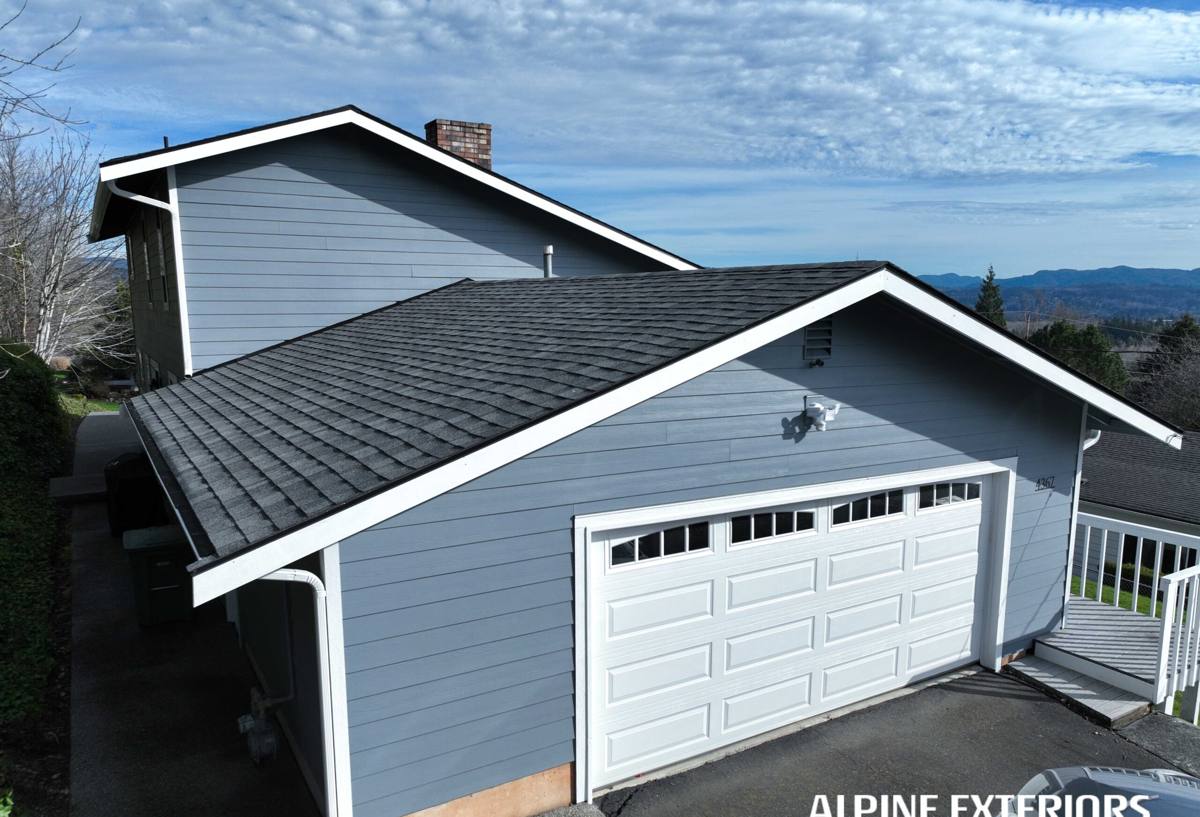
What Happy Valley's Climate Actually Does to a Roof
Salt Air and Metal Components
Homes with a water-influenced microclimate see accelerated corrosion on exposed metal — nails, flashing, vent stacks, and drip edge. Standard electro-galvanized fasteners can start showing rust streaks years before they would inland. We spec corrosion-resistant fasteners and flashing on Happy Valley jobs as a default, not an upgrade, because the cost difference is small and the failure it prevents (streaking, fastener back-out, flashing pinholes) is not.
Driving Rain
Wind-driven rain doesn't just fall on a roof, it pushes sideways and works its way under shingle tabs, around penetrations, and along valleys and eaves if those areas aren't detailed correctly. This is where most leaks in this area actually start — not in the open field of shingles, but at transitions: valleys, chimneys, skylights, wall step-flashing, and low-slope sections where standard three-tab or architectural shingle isn't the right product to begin with.
Moss and Shaded Roof Sections
Under mature tree cover, north-facing slopes and shaded valleys stay damp longer after every rain. Moss and algae take hold in that moisture, and moss in particular does real damage: its root structure lifts shingle edges, holds water against the mat, and accelerates granule loss. A roof that looks fine from the ground can have moss working under the tabs on the shaded side while the sun-facing slope looks pristine.
What a Correctly Installed Asphalt Shingle Roof Includes Here
A shingle roof is a system, not a single product. Every layer matters, and in a climate like this, skipping or downgrading any one of them is where premature leaks and shortened lifespans come from.
| Component | Why It Matters in Happy Valley |
|---|---|
| Ice-and-water shield at eaves, valleys, and penetrations | Backs up the shingle layer where wind-driven rain and moisture pooling are most likely to force water past the surface |
| Synthetic underlayment (full field) | Holds up to repeated wet-dry cycling far better than old felt paper, and stays intact if a section of shingles is damaged before repair |
| Balanced intake and exhaust ventilation | Keeps the underside of the deck dry, which slows moss regrowth and prevents trapped moisture from rotting sheathing |
| Corrosion-resistant flashing and fasteners | Salt-influenced air corrodes standard galvanized metal faster than it will inland |
| Proper nailing pattern and exposure | Under-driven or over-driven nails are a leading cause of shingle blow-off in coastal wind events |
Choosing the Right Shingle for This Neighborhood
Not every asphalt shingle line handles moss and algae exposure the same way. Most manufacturers now offer algae-resistant shingles that embed copper or zinc granules into the surface, which slow (not eliminate) the growth that causes the dark streaking common on older roofs around the county. For homes in Happy Valley with significant tree cover, we generally recommend algae-resistant architectural shingles over standard three-tab, both for the added durability and because architectural shingles shed water more effectively on the lower-slope sections common in this area.
Architectural vs. Three-Tab in This Climate
- Architectural (dimensional) shingles: Thicker, heavier, better wind ratings, longer manufacturer warranties, and generally better moisture shedding on complex rooflines — our default recommendation for most Happy Valley homes.
- Three-tab shingles: Lower upfront cost, lighter weight, thinner mat — can be an honest option on a budget or for a secondary structure, but they show wear and granule loss faster under sustained wet conditions.
- Algae-resistant options: Worth the modest upcoat cost anywhere with shade or moisture exposure, which describes most of Happy Valley's tree-lined lots.
Our Process for a Happy Valley Roofing Project
- On-site inspection: We walk the roof (not just the ground) to check deck condition, existing ventilation, flashing points, and moss or moisture damage before quoting anything.
- Deck assessment: Any soft, rotted, or delaminated sheathing gets identified and priced separately — this is the one variable that can't be fully known until old roofing is off.
- Tear-off and disposal: Full removal of old material rather than overlaying, which lets us catch hidden deck damage and gives the new system a clean, flat base.
- Underlayment and flashing installation: Ice-and-water shield at vulnerable points, synthetic underlayment across the field, new flashing at every penetration and valley.
- Shingle installation: Correct nailing pattern, exposure, and manufacturer-specified fastening for the wind and moisture conditions of the site.
- Ventilation check and correction: We confirm intake and exhaust are balanced, adding or adjusting vents where the existing setup is inadequate.
- Final walkthrough: We review the completed roof with the homeowner, including maintenance expectations specific to the property's sun and shade exposure.
Ventilation: The Part Homeowners Rarely See but Always Feel
Attic ventilation gets overlooked constantly, and it's one of the most consequential parts of a roofing job in a wet climate. Without balanced intake (usually at the soffit) and exhaust (usually at or near the ridge), warm moist air from inside the house gets trapped against the underside of the roof deck. In Whatcom County's damp winters, that trapped moisture condenses, feeds mold and rot in the sheathing, and shortens shingle life from underneath — a failure mode that has nothing to do with the shingles themselves and everything to do with airflow. Correcting ventilation is often the single highest-value fix we make on an older Happy Valley roof, and it's something we check on every inspection, not just full replacements.
Maintenance That Actually Extends Roof Life Here
A shingle roof in this climate isn't maintenance-free, but the upkeep it needs is modest if it's done on a regular schedule rather than reactively.
- Clear gutters and downspouts at least twice a year — clogged gutters back water up under the eave line, exactly where ice-and-water shield is doing its job but shouldn't have to work overtime.
- Have moss treated or gently removed before it spreads, rather than after it's visibly lifting shingle edges.
- Trim back overhanging branches to cut down on shade, debris buildup, and physical abrasion against the roof surface.
- Schedule a walk-on inspection every couple of years, especially after any major windstorm.
- Address small flashing leaks immediately — they're inexpensive to fix early and expensive once they've caused deck damage.
- Never pressure-wash a shingle roof — it strips protective granules and can void manufacturer warranties.
Signs Your Happy Valley Roof Needs a Look
Most shingle roof problems give warning signs well before a leak shows up inside the house. Granules collecting in gutters, shingle tabs that look curled or cupped, dark streaking on shaded slopes, and visible moss growth are all indicators worth acting on. So is any soft spot felt when walking the attic floor, or daylight visible through the roof deck from inside. Catching these early is almost always cheaper than waiting for an active leak.
What Drives Cost on a Shingle Roofing Project
| Factor | How It Affects the Project |
|---|---|
| Roof size and pitch | Larger and steeper roofs take more material and more labor time, and steep pitches require additional safety setup |
| Number of valleys, penetrations, and transitions | Each one needs individual flashing detail — more complexity means more labor per square |
| Existing deck condition | Rotted or delaminated sheathing found during tear-off adds material and labor beyond the base quote |
| Shingle tier chosen | Three-tab, standard architectural, and premium algae-resistant lines all carry different material costs and warranty lengths |
| Ventilation upgrades needed | Adding or correcting intake/exhaust venting is a smaller line item but affects long-term performance significantly |
| Tear-off vs. overlay | We generally recommend full tear-off for accuracy and longevity, which costs more upfront than layering over old shingles |
Exact pricing depends on what we find during the on-site inspection — anyone quoting a full number sight-unseen is guessing. We give straight, itemized estimates so you know what you're paying for and why.
Why Local Roofing Experience in Happy Valley Matters
A crew that regularly works Happy Valley and the surrounding Chuckanut area already knows which slopes tend to hold moss, which flashing details fail first under wind-driven rain, and how much ventilation correction a typical older home in this pocket of Whatcom County usually needs. That's not something you can fully replicate from a generic install checklist written for a dry climate. It shows up in fewer callbacks, fewer surprises during tear-off, and a roof that's actually built for the conditions it has to survive, not just the conditions on a spec sheet.
If you're weighing a repair, a full replacement, or just want an honest read on where your current roof stands, we're happy to take a look. Reach out for a free, no-pressure estimate using the form below.