 Chuckanut Exterior
 Building a Deck That Holds Up in Happy Valley
Happy Valley sits in one of the more demanding microclimates for outdoor structures in Whatcom County. Between the salt-laden air drifting up from the water, driving rain off the Pacific systems, and a moss season that can stretch from October well into May, a deck here works harder than the same structure would twenty miles inland. We've built and repaired decks throughout this area long enough to know which details are cosmetic and which ones are the difference between a deck that lasts fifteen years and one that needs major repair by year seven.
This page covers what a deck built specifically for Happy Valley conditions needs to get right — material choice, framing, drainage, and the finish details that keep moisture and moss from winning. It's not a generic deck page; it's what we've learned building in this exact stretch of Chuckanut.
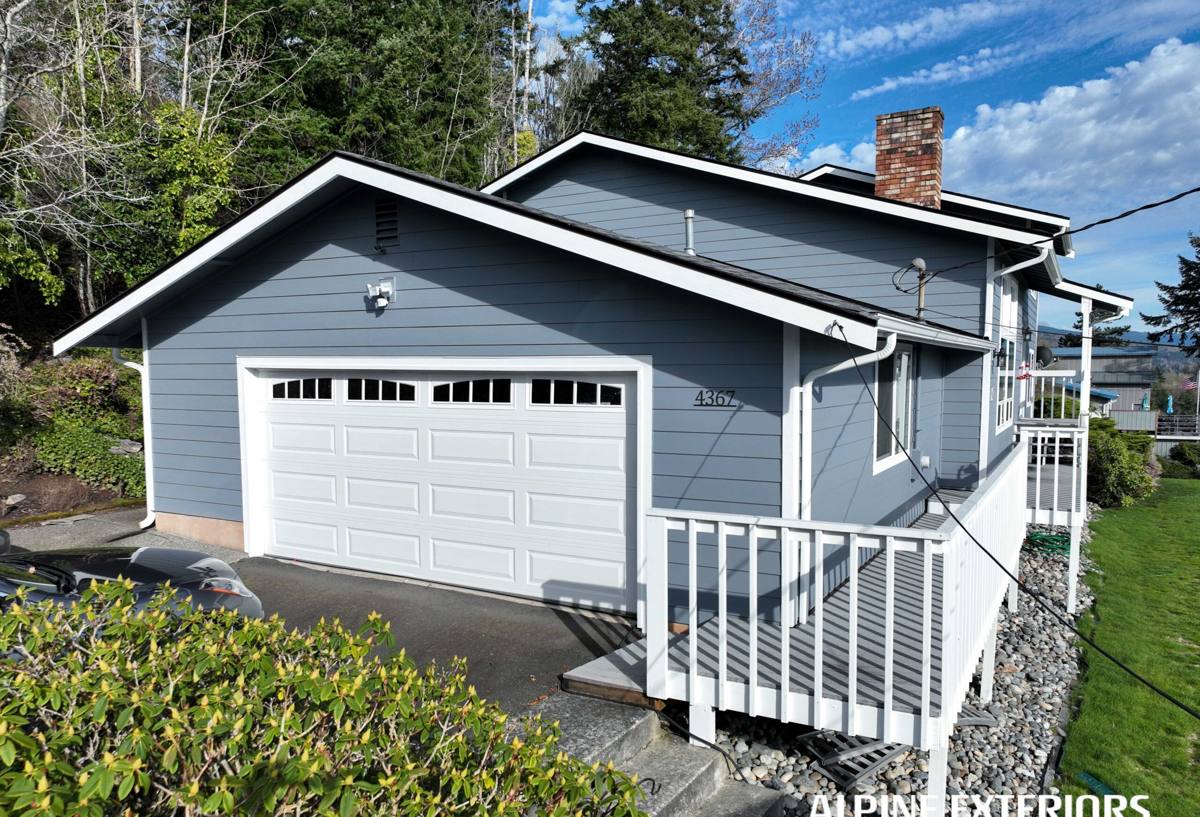
What Happy Valley's Climate Actually Does to a Deck
Three things drive almost every deck failure or premature repair we see in this area:
Salt Air
Proximity to the water means airborne salt settles on every exterior surface, including deck hardware. Standard zinc-coated fasteners and connectors corrode faster here than the same products would in a dry inland climate. Corrosion at a joist hanger or ledger bolt is a structural problem, not a cosmetic one — it's usually hidden until the metal has already lost meaningful strength.
Driving Rain
Rain in this part of Whatcom County doesn't just fall straight down — wind-driven storms push water sideways into rim joists, under railing posts, and behind fascia boards. Any gap, unsealed end cut, or poorly flashed ledger connection becomes an entry point. Once water gets behind a board or into end grain, it doesn't dry out quickly in our climate — it stays wet for weeks at a time.
Moss and Sustained Dampness
Shade from mature trees, combined with a long wet season, gives moss and algae months to establish themselves on any deck surface that doesn't drain and dry quickly. Beyond looking bad, moss holds moisture against the decking material continuously, which accelerates rot in wood and can stain or degrade the surface of lower-grade composites.
What Happy Valley Homes Need From a Deck
Many homes in this area sit on sloped or wooded lots, often with tree cover close to the structure and a mix of sun and deep shade across the same deck surface. That combination changes how a deck should be built compared to a flat, open, sun-exposed lot:
- Framing and fasteners rated for coastal exposure, not just standard exterior-grade hardware
- Decking material chosen with the shaded, moss-prone sections in mind, not just the sunny half
- Drainage detailing that accounts for uneven or sloped grade beneath the deck
- Railing and post connections sealed against wind-driven rain, especially on the weather-facing side
- Enough airflow underneath the deck to let framing dry between rain events
A deck designed without these considerations may look fine for the first year or two, but the climate here finds every shortcut eventually.
Decking Material Options for This Climate
There's no single "best" decking material for every situation — it depends on budget, how much shade the deck gets, and how much maintenance the homeowner actually wants to do. Here's how the common options hold up under Happy Valley conditions specifically:
| Material | Moss/Moisture Resistance | Maintenance | Typical Lifespan Here |
|---|---|---|---|
| Pressure-treated wood | Fair — needs regular sealing to resist moss staining and rot | Annual cleaning and re-sealing recommended | 10-15 years with upkeep |
| Cedar | Good natural rot resistance, but surface grays and can host moss without treatment | Periodic cleaning and oiling for appearance and protection | 15-20 years with upkeep |
| Capped composite | Very good — cap layer resists moisture absorption and staining | Occasional washing, no sealing or staining | 25-30+ years |
| PVC decking | Excellent — no wood fiber to absorb moisture | Occasional washing | 25-30+ years |
Wood costs less upfront and has a natural look many homeowners want, but it's also the material most affected by our specific climate — it needs consistent maintenance to keep moss and rot at bay, and shaded sections will always need more attention than sunny ones. Capped composite and PVC cost more initially but largely remove moisture absorption from the equation, which matters more here than in a drier climate. We're honest with clients about that trade-off rather than pushing one material as universally "better" — it's a maintenance-versus-upfront-cost decision, and the right answer depends on how much deck upkeep you want to take on.
Framing and Structure: Where Decks Actually Fail
Most deck failures we get called out for aren't decking-surface problems — they're structural, and they start below what you can see from the top.
Ledger Board Attachment
The ledger board, where the deck attaches to the house, is the single most important connection on the entire structure and the most common source of hidden water damage. Proper flashing behind the ledger, combined with corrosion-resistant fasteners, keeps water from tracking into the house's rim joist and wall framing — a repair that's far more expensive than getting it right the first time.
Fasteners and Connectors
In a coastal-exposure climate, we specify hot-dip galvanized or stainless connectors and fasteners rated for the added corrosion risk, not the minimum-code standard hardware. It costs more per piece and adds nothing to how the deck looks, but it's the difference between hardware that's still sound in twenty years and hardware that's compromised in eight.
Footings
Footings need to be sized and set to local frost depth and soil conditions, which can vary noticeably across sloped or wooded Happy Valley lots. On uneven terrain, this often means engineering footing depth and post placement individually rather than using a one-size layout.
Drainage and Moisture Control Underneath the Deck
What happens under a deck matters as much as what happens on top of it. A deck built low to grade or over poorly draining soil traps moisture against the framing continuously through our wet season, which is exactly the condition rot and moss both need.
We build in airflow and drainage from the start: adequate clearance between the deck framing and grade, grading or drainage work beneath the deck to move water away rather than let it pool, and gaps in decking boards sized to shed water instead of holding it. On sloped lots, this sometimes means additional grading or a simple drainage path is part of the deck scope, not an afterthought.
Railings, Fascia, and Finish Details
The visible finish details are where a lot of water intrusion quietly starts. Post bases that sit in standing water, fascia boards without a drip edge, and railing connections without proper sealing all give wind-driven rain a way in. On the weather-facing side of a deck — usually the side that takes the brunt of storms coming off the water — we pay extra attention to sealing post connections and using fasteners and hardware rated for the exposure, since that side ages faster than the sheltered side of the same structure.
Our Deck Building Process
Every deck we build in the Happy Valley area follows the same sequence, adjusted for the specific lot:
- Site assessment — we look at grade, tree cover, sun exposure, and how water currently moves across the lot before designing anything
- Design and material selection — sized to your budget and maintenance preference, with honest trade-offs explained up front
- Permitting — we handle the Whatcom County permit process for the project
- Footings and framing — engineered to local soil and frost conditions, built with corrosion-resistant hardware throughout
- Drainage and airflow detailing — grading and clearance work under the deck before decking goes down
- Decking, railing, and finish work — installed with attention to the weather-facing exposure and shaded sections separately
- Final walkthrough — we go over maintenance expectations specific to the material you chose
Maintenance Checklist for Coastal Deck Longevity
A well-built deck still needs some seasonal attention in this climate. This is what we recommend to homeowners regardless of which contractor built the deck:
- Sweep debris and standing leaves off the deck surface regularly through fall and winter
- Clean visible moss or algae growth before it spreads, using a deck-safe cleaner rather than a pressure washer on wood
- Check that gaps between decking boards stay clear so water can shed properly
- Inspect railing posts and ledger flashing yearly for signs of water staining or soft wood
- Reseal or refinish wood decking on the schedule the product calls for — don't wait until it looks obviously weathered
- Confirm under-deck drainage paths haven't been blocked by landscaping growth or debris
Why a Crew That Already Works Happy Valley Matters
Building a deck that performs well in Chuckanut's climate isn't about following a generic deck-building checklist — it's about knowing which details matter more here than they would somewhere drier and less exposed. A crew that's worked lots in this specific area already knows how the local grade tends to run, which sides of a structure take the worst weather, and which hardware and materials actually hold up through a full Whatcom County wet season rather than just looking good on install day. That local experience shows up years later, not on day one — which is exactly when it matters most.
If you're planning a new deck or replacing one that hasn't held up, we're happy to take a look and talk through what makes sense for your lot. Reach out for a free, no-pressure estimate using the form below.