 Chuckanut Exterior
 Windows Built for Where Happy Valley Actually Sits
Happy Valley homes take a different kind of weather beating than houses further inland. Between the salt air drifting up off the water, driving rain that comes in sideways during a Whatcom County winter storm, and a moss season that seems to stretch longer every year, window assemblies here work harder than the manufacturer's spec sheet usually accounts for. A window that performs fine in a dry climate can fail early here — not because the glass breaks, but because moisture finds its way into the frame, the sill, or the wall cavity behind it and nobody notices until the trim is soft.
Custom windows aren't about fancy shapes or oversized glass, though we do plenty of that too. For most Happy Valley homeowners, "custom" simply means the window is built to fit an actual opening in an actual house — not a generic stock size that gets shimmed and caulked into submission. That distinction matters more here than almost anywhere else in Chuckanut, because a poorly fitted window is exactly where salt-laden moisture and driving rain find their way in.
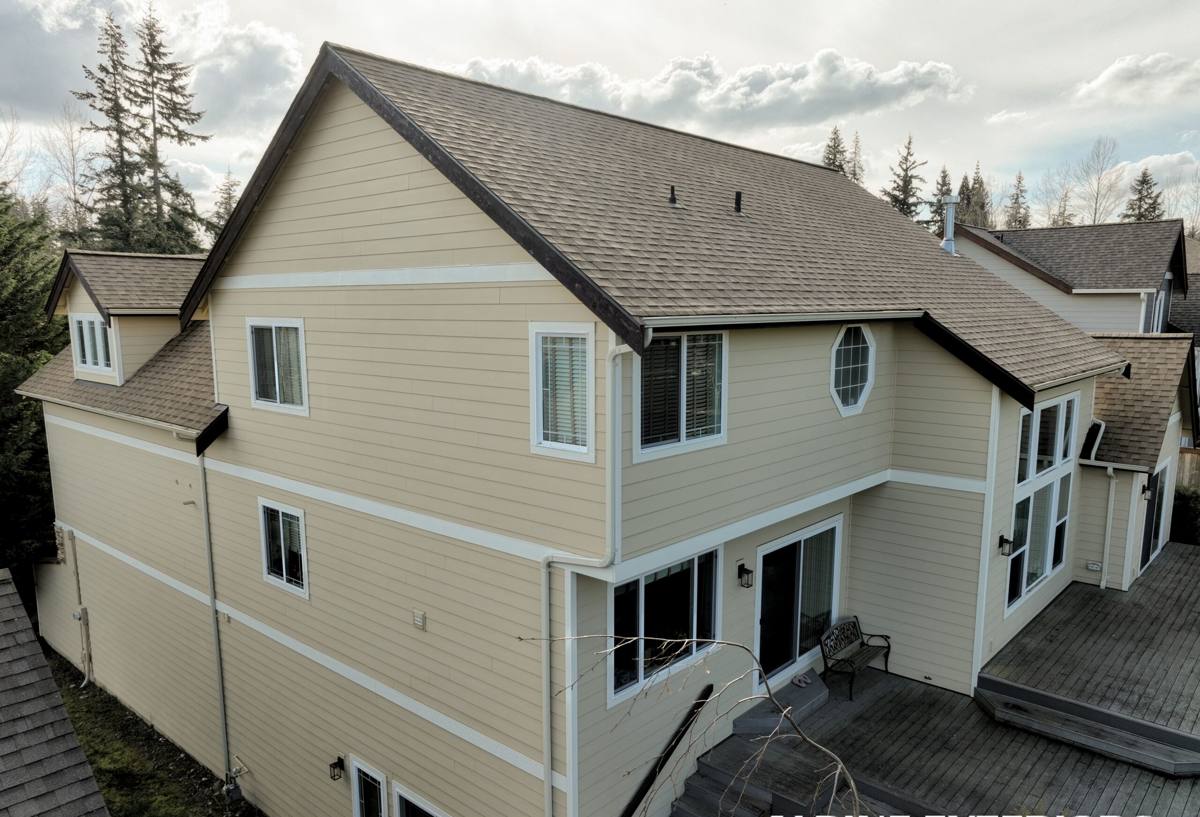
What Salt Air, Rain, and Moss Actually Do to a Window
Salt Air
Airborne salt is corrosive to exposed metal hardware — hinges, cranks, balance systems, and lower-quality aluminum components. It also breaks down certain sealants and finishes faster than they're rated for. Homes closer to open water see this first, but Happy Valley's elevation and exposure mean salt air still reaches properties that aren't right on the shoreline.
Driving Rain
Wind-driven rain doesn't just fall on a window — it gets pushed sideways and upward against it, testing every seam. A window that's watertight in a light, straight-down rain can still leak under wind-driven conditions if the flashing detail, sill pan, or sealant joint wasn't done correctly. This is one of the most common causes of hidden water damage we find behind older windows in this area.
Moss Season
Whatcom County's long wet season keeps moss and algae active for much of the year. On windows, that growth tends to collect in frame tracks, sill corners, and anywhere water sits instead of draining. Beyond the cosmetic issue, trapped moisture under moss growth keeps wood trim and lower-quality composite frames damp for extended periods, which accelerates rot and finish failure.
Choosing a Frame Material That Holds Up Locally
There's no single "best" window material for every home — it depends on your home's age, exposure, and how much upkeep you want to take on. Here's how the common options actually perform under Happy Valley's conditions specifically.
| Frame Material | Salt Air / Moisture Behavior | Maintenance Needed | Best Fit |
|---|---|---|---|
| Vinyl | Won't corrode or rot; performs consistently in salt air | Low — occasional cleaning | Most homes prioritizing value and low upkeep |
| Fiberglass | Very stable in temperature swings and moisture; strong seal retention | Low | Larger openings or homes with more direct weather exposure |
| Wood-Clad | Interior wood warmth with an exterior shell, but cladding seams need monitoring | Moderate — check seals and touch up as needed | Homes prioritizing a traditional interior look |
| Aluminum | Prone to corrosion and condensation in coastal, wet climates without upgraded finishes | Higher — finish and hardware need attention | Limited use; generally not our default recommendation here |
We don't install aluminum-frame windows as our standard recommendation in Happy Valley, not because the material is inherently bad, but because in this specific combination of salt air and sustained moisture, it asks more of the homeowner in upkeep than vinyl or fiberglass do for a comparable result. If you have a specific reason to want it — matching an existing design, for example — we'll talk through the trade-offs honestly rather than steer you away without explanation.
Glass Packages Worth Paying Attention To
The frame keeps water out; the glass package determines comfort and energy performance. In a marine climate like this one, a few features matter more than others:
- Double or triple pane with argon fill — reduces heat loss during cold, damp winter stretches
- Low-E coatings — help manage both winter heat loss and summer heat gain without darkening the glass noticeably
- Warm-edge spacer systems — reduce condensation risk at the glass edge, which is where fogging and seal failure usually start
- Proper glass sizing for wind exposure — larger panes on exposed elevations may need thicker glass or additional structural consideration
Condensation between panes is one of the clearest signs a seal has failed, and it happens faster in homes with sustained humidity exposure. A quality glass package with a warm-edge spacer buys you years before that becomes an issue.
What a Correct Installation Actually Involves
The window unit itself is maybe half the job. The other half — the part that actually determines whether you get driving-rain leaks in year three — is the installation detail work most homeowners never see once the trim goes back on.
Sill Pan and Flashing
Every opening should get a sloped sill pan and properly lapped flashing so that any water that does get past the window sheds outward, not into the wall cavity. This is the single most common shortcut we find in old or poorly done window jobs, and it's the reason a "new window" can still leak.
Sealant Sequencing
Sealant has to go in the right places and be left out of others — a fully sealed perimeter with no way for incidental moisture to drain back out can trap water instead of keeping it out. This is a detail that's easy to get backwards if a crew isn't used to coastal Whatcom County conditions.
Insulation Behind the Frame
Gaps between the window frame and rough opening need to be filled with a material that won't compress or hold water — done wrong, this becomes a cold spot and a moisture trap at the same time.
Our Process, Start to Finish
- On-site assessment — we measure actual openings, check for existing water damage or rot around current windows, and note the home's specific exposure to wind and rain
- Material and glass selection — we walk through frame and glass options honestly, including what we'd choose for our own home in that same spot
- Removal and inspection — old windows come out carefully so we can check the framing underneath for damage before anything new goes in
- Repair as needed — any soft or water-damaged framing gets addressed before the new window goes in, not covered over
- Installation with proper flashing and sealant detail — sill pan, flashing, insulation, and sealant done in the correct sequence
- Final check and cleanup — operation check on every unit, site cleanup, and a walkthrough so you know what to expect from the new windows
Signs Your Happy Valley Home's Windows Need a Closer Look
- Fogging or condensation between the panes of glass (not just on the surface)
- Soft or discolored trim or sill wood around the frame
- Moss or dark staining collecting in the frame track or lower corners
- Drafts you can feel near the frame even when the window is fully closed
- Windows that are difficult to open, close, or lock
- Visible gaps or cracked, missing sealant around the exterior perimeter
- A musty smell near the window that wasn't there before
Any one of these on its own isn't necessarily an emergency, but a few together — especially soft trim plus visible moss or staining — usually means water has been getting behind the window for a while.
Why Local Experience Matters for This Job
A window crew that mostly works dry-climate developments and a crew that regularly works Happy Valley and the wider Chuckanut area will make different default decisions on the same house. The local crew already knows which elevations take the worst of the wind-driven rain, expects to find moss-related moisture issues in certain wall assemblies, and doesn't treat flashing detail as optional because they've seen what skipping it costs a homeowner two winters later. That's not a marketing point — it's the difference between a window that's still watertight in ten years and one that needs attention in three.
It also means faster, more accurate estimates. When a crew has already worked on homes with similar exposure nearby, they're not guessing at what your walls are dealing with — they've seen it before.
Living With Moss Season: Simple Upkeep That Protects the Investment
New windows still need a little seasonal attention in this climate. None of it is complicated, but skipping it shortens the life of even a well-installed window.
| Task | Frequency | Why It Matters |
|---|---|---|
| Clear debris and moss from frame tracks and sills | 2–3 times per year, more in shaded areas | Prevents trapped moisture against the frame |
| Check exterior sealant for cracking or gaps | Annually | Catches small sealant failures before water gets behind the trim |
| Inspect weep holes for blockage | Annually | Keeps incidental water draining out as designed |
| Wipe down hardware and tracks | 2–3 times per year | Reduces salt air buildup on moving parts |
If you'd like a closer look at what your current windows are dealing with, or you're ready to talk through options for a Happy Valley home specifically, we're glad to come take a look. The estimate is free, there's no pressure, and you'll walk away with a straight answer about what your windows actually need.