 Chuckanut Exterior
 Why Happy Valley Homes Need Siding Built for This Exposure
Happy Valley sits close enough to the water and the tree line around Chuckanut that its homes take on a specific combination of punishment: salt-laced air drifting off Bellingham Bay, long stretches of driving rain pushed sideways by wind off the Salish Sea, and a shaded, moisture-heavy moss season that can run more months than it doesn't. Any one of those things is manageable. Together, over years, they're what separates a siding job that holds up for decades from one that starts failing at year eight or ten.
Salt air is corrosive to fasteners and finishes. Driving rain finds every gap in flashing and caulk that a calmer climate would never expose. And moss and algae don't just look bad on a north-facing wall shaded by mature trees — they hold moisture against the siding surface far longer than the material was ever meant to sit wet. Wood-based and wood-adjacent siding products lose the fight against that combination eventually. That's the backdrop for every recommendation on this page.
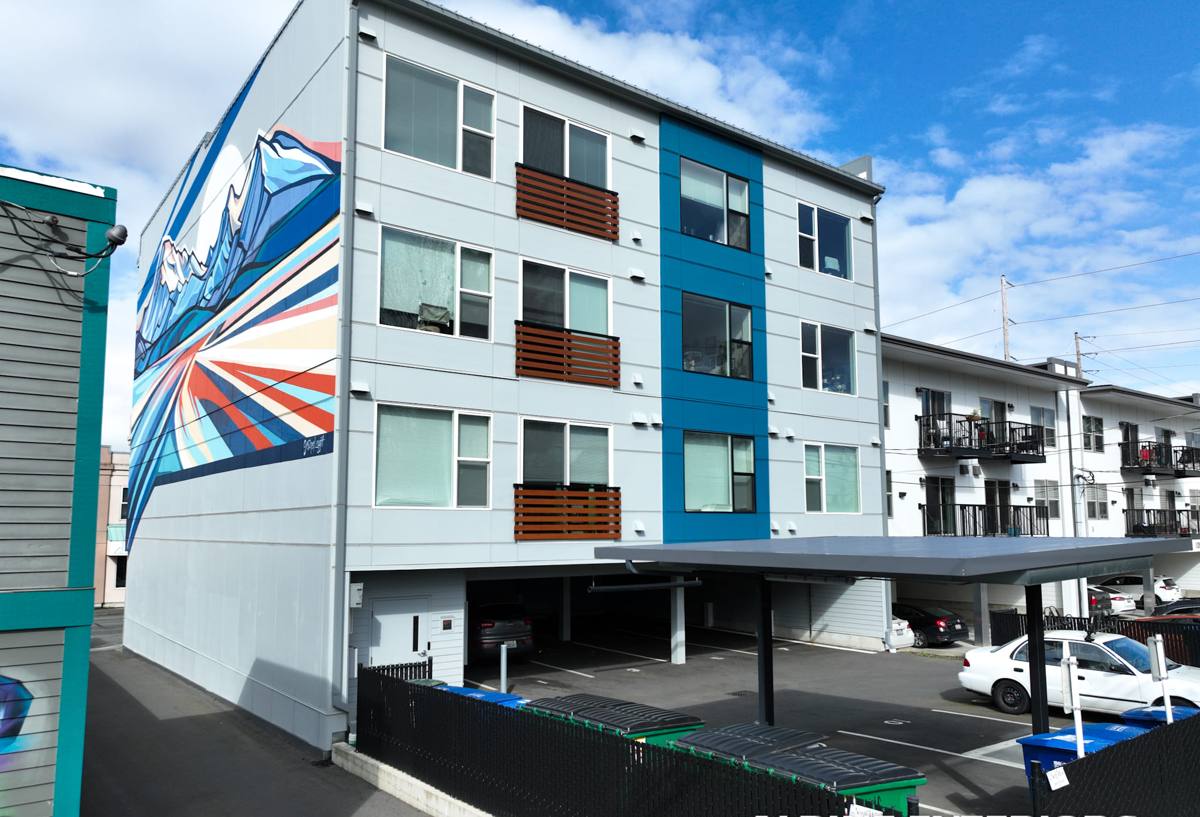
What "Correct" Looks Like on a Happy Valley Home
Fiber cement siding done right in this part of Whatcom County isn't just about the board you choose — it's about how the whole wall assembly is built to move water away from the structure instead of trapping it. A correct job accounts for:
- A drainage gap (rain screen) behind the siding so any moisture that gets past the surface can drain and dry instead of sitting against the sheathing
- Properly lapped and sealed flashing at every window, door, and roof-to-wall transition, since that's where driving rain actually gets in
- Correct fastener spacing and type, including corrosion-resistant fasteners appropriate for a salt-air environment
- Factory-finished boards with sealed cut edges on site, so field cuts don't become the weak point in an otherwise water-resistant system
- Proper clearance from grade, decks, and roof lines so siding isn't sitting in a moisture trap from day one
Skip any one of these and you can still end up with a wall that looks fine for a few years and fails quietly behind the surface — which is exactly the kind of failure that's expensive to catch late.
Why We Only Install James Hardie Fiber Cement
We don't install LP SmartSide, vinyl, Cemplank, Allura, or bare cedar and primed spruce siding, and in a climate like Happy Valley's, that's not a brand preference — it's a standard we hold because of what this exposure does to alternatives over time. Wood-based composite products depend heavily on an intact factory coating and perfect field sealing to resist moisture; any breach, and the substrate itself is wood fiber that can swell, delaminate, or rot exactly where it's hardest to inspect. Vinyl can't be painted a durable factory-grade color, tends to show its seams and fasteners over time, and doesn't hold up structurally the way a cement-based board does. Bare or primed wood siding requires the kind of ongoing maintenance — recoating, caulk inspection, moss treatment — that most homeowners don't sign up for when they think they're buying a "set it and forget it" exterior.
James Hardie fiber cement is a cement-and-cellulose composite. It doesn't rot, it's non-combustible, and it's engineered in HZ5 (climate zone 5) formulations specifically for the wetter, more humid conditions found across the Pacific Northwest. The factory-applied ColorPlus finish is baked on under controlled conditions and backed by a real finish warranty — a meaningfully different proposition than field-applied paint trying to hold up against salt air and months of overcast, damp weather.
Where Hardie Actually Wins in This Climate
| Condition Happy Valley Homes Face | How Fiber Cement Responds |
|---|---|
| Salt air and coastal humidity | Non-organic substrate doesn't corrode or degrade from salt exposure the way metal or untreated wood can |
| Extended moss and algae season on shaded walls | Factory finish resists moisture absorption into the board itself; surface growth can be cleaned without damaging the substrate underneath |
| Driving, wind-pushed rain | Dense cement composition doesn't wick water the way wood fiber does, reducing the risk of hidden rot behind the wall |
| Wildland-adjacent tree cover | Non-combustible material, unlike wood siding or some composite products |
The James Hardie Product Lines We Use Here
Most Happy Valley homes end up with HardiePlank lap siding, since it matches the traditional lap profile common across Chuckanut and greater Whatcom County neighborhoods, but the right product depends on the house. HardieShingle works well on homes with gable accents or a more textured look, and HardiePanel is useful for board-and-batten sections or accent walls. All of it comes in HZ5 formulation as standard for this region, and all of it is available in the factory ColorPlus finish line so the color coat isn't something applied on a ladder in variable weather — it's cured at the factory before the boards ever reach the site.
Our Process for a Happy Valley Siding Project
1. On-Site Assessment
We start by walking the exterior and checking the condition of the existing siding, trim, and — critically — the wall assembly underneath where we can access it. In a climate this wet, we're specifically looking for signs of moisture that never made it to the surface: soft trim, staining at penetrations, or areas where moss and algae have been sitting against the wall long enough to hold moisture in.
2. Tear-Off vs. Overclad Decision
Not every home needs a full tear-off. If the sheathing and framing underneath are sound, an overclad can work. If there's evidence of moisture damage — which we see more often on older homes with wood siding that's been fighting this climate for decades — a tear-off gives us the chance to fix the problem at the source instead of covering it up.
3. Install with the Drainage Plane First
Before a single piece of Hardie goes up, the water management layer goes in — weather-resistive barrier, flashing at every penetration, and a drainage gap where the assembly calls for it. This is the step that determines whether the siding actually performs in driving rain, and it's also the step that's easiest for a crew unfamiliar with this climate to shortcut.
4. Finish Detailing
Trim, caulking at appropriate joints only (not as a substitute for proper flashing), and a final check of clearances at grade, decks, and roofline transitions — the details that keep water moving away from the house instead of sitting against it.
Why a Crew That Already Works Happy Valley Matters
Siding installation isn't uniform across climates, and it isn't even uniform across Whatcom County. A crew that primarily works drier inland conditions may not default to the drainage details that matter most a few miles from open water. A crew that already works Chuckanut and Happy Valley knows which walls take the worst of the wind-driven rain, which orientations grow moss fastest, and how local permitting and inspection expectations run in this jurisdiction. That familiarity shows up in fewer callbacks and a siding system that's actually built for the conditions it has to survive, not just the conditions on a spec sheet.
What Drives the Cost of a Fiber Cement Siding Job
| Factor | Why It Matters |
|---|---|
| Tear-off vs. overclad | Removing old siding and repairing any hidden damage adds labor but may be necessary for a sound long-term result |
| Home size and wall complexity | More corners, gables, and trim details mean more cutting, fitting, and flashing work |
| Product line and profile | Lap, shingle, and panel styles have different material and labor requirements |
| Existing moisture damage | Rotted sheathing or framing found during tear-off needs to be repaired before new siding goes on |
| Trim and accessory scope | Fascia, soffit, and window/door trim replacement alongside siding adds to overall project scope |
We give honest, itemized pricing after seeing the actual home — broad online estimates rarely account for the condition of what's underneath the existing siding, which is often the biggest variable on older homes in this climate.
Maintaining Fiber Cement Siding in a Salt-Air, High-Moss Climate
Fiber cement is low-maintenance compared to wood or composite alternatives, but "low-maintenance" isn't "no-maintenance" in a climate like this one. A simple annual routine keeps a Hardie installation performing for the long haul:
- Rinse the siding annually, and more often on shaded, moss-prone walls, to keep organic growth from sitting against the surface
- Inspect caulking at trim and penetration points yearly and re-caulk any joints that have opened up
- Trim back vegetation and tree limbs that keep a wall shaded and damp longer than the rest of the house
- Check gutters and downspouts before the wet season to keep water moving away from the siding instead of overflowing onto it
- Watch for any staining, soft spots, or discoloration near ground level or deck ledgers, which can signal a moisture issue worth checking early
If your Happy Valley home's siding is showing its age, or you're planning ahead of the next wet season, we're happy to take a look and walk you through what we find — no pressure, no obligation. Use the form below to request a free estimate.