 Chuckanut Exterior
 Siding Repair Built for Happy Valley's Conditions
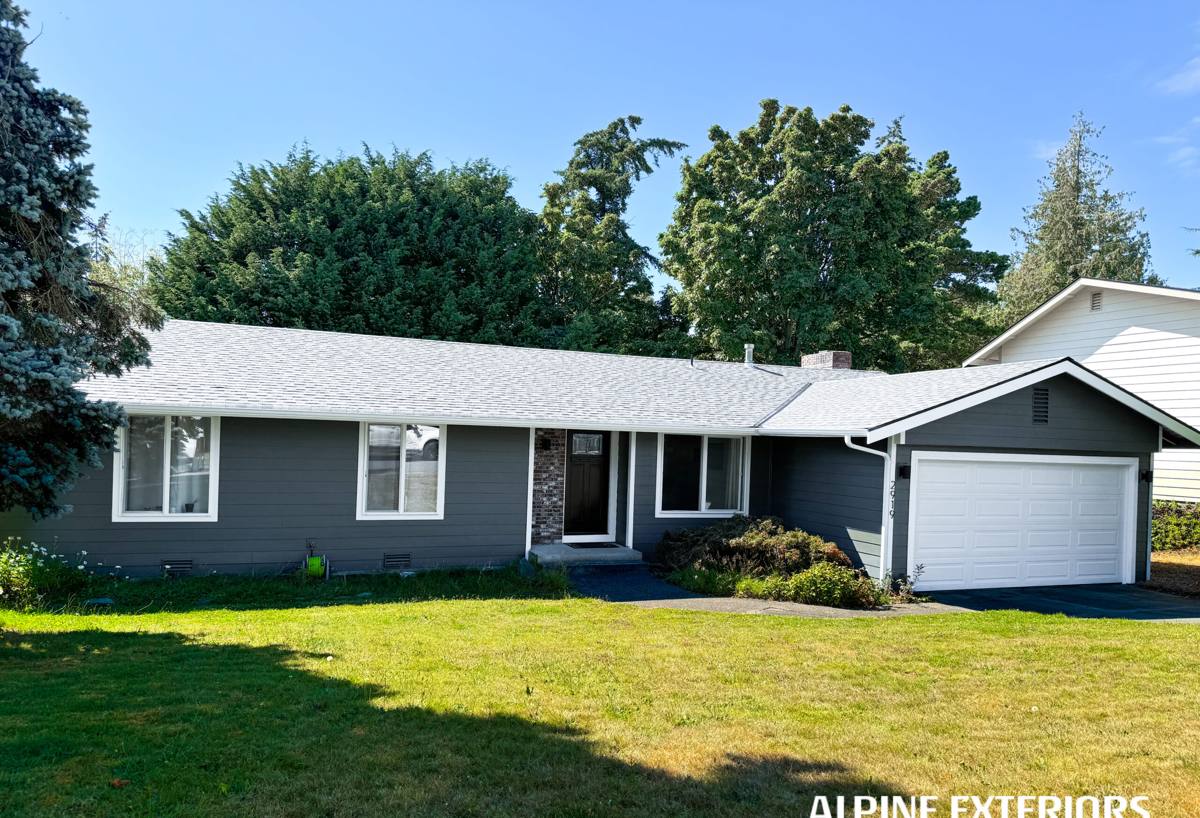
Happy Valley sits close enough to the water and tree cover that its homes take a different kind of beating than houses further inland. Salt-laden air off the Salish Sea works into seams and fasteners year-round, driving rain off Chuckanut Bay finds every gap in a wall system during the wet months, and the shade from mature trees keeps moss and algae established on north- and west-facing walls for most of the year. None of that is unusual for Whatcom County, but it does mean siding repair here isn't a one-size-fits-all job. A patch that would hold up fine in a drier, more open part of the county can fail fast on a shaded Happy Valley lot with poor airflow.
We've repaired enough siding in this neighborhood to know which walls fail first, which details get skipped on a rush job, and which fixes are actually worth doing versus which ones just delay a bigger repair. This page is about that one job — siding repair for Happy Valley homes — not a generic overview.
Why This Climate Is Hard on Siding
Salt Air and Metal Fasteners
Coastal air carries fine salt particles that settle on exterior surfaces and accelerate corrosion on exposed nail heads, flashing, and trim fasteners. Once a fastener starts rusting, it weakens, and the siding around it loses its hold. On older homes with galvanized (rather than stainless or coated) fasteners, this is often the real cause of siding that looks "loose" or "popped" for no obvious reason.
Driving Rain and Wind-Driven Moisture
Chuckanut's exposure to storms coming off the water means rain doesn't just fall straight down — it gets pushed sideways into siding laps, corner boards, and window trim. Siding systems rely on gravity and overlap to shed water; wind-driven rain defeats that if the laps are too shallow, caulk has failed, or house wrap behind the siding has gaps. This is why repairs that only address the visible surface damage, without checking what's happening behind the siding, tend to fail again within a season or two.
Moss, Algae, and Shade
Shaded, tree-covered lots — common in Happy Valley — stay damp longer after a storm than open, sun-exposed sites. That extended damp period is exactly what moss and algae need to establish. Left alone, moss holds moisture against the siding surface, which is a slow but steady path to rot in wood-based products and finish breakdown in painted surfaces.
Signs Your Siding Needs Repair, Not Just Cleaning
Homeowners often can't tell the difference between a surface issue and a structural one until a contractor is standing at the wall. These are the signs worth a closer look:
- Soft or spongy spots when you press on the siding, especially near the bottom courses or below windows
- Visible gaps, cracks, or separation at seams, corners, or butt joints
- Paint that's bubbling, peeling, or flaking in a specific area rather than evenly across the wall
- Streaking or dark staining below nail heads or seams — a sign water is tracking through a gap
- Persistent moss or algae growth that returns quickly after cleaning
- Warping, bowing, or siding that no longer sits flat against the wall
- Any musty smell or visible staining on interior walls that share an exterior with a suspect section
What a Correct Siding Repair Actually Involves
A quick patch — caulk over a crack, a new piece of siding face-nailed over the old — covers the symptom but not the cause. A correct repair works through the whole wall assembly:
- Diagnose the actual failure point. Surface damage is often a symptom of something happening behind the siding — a flashing gap, a failed seal at a penetration, or a fastener that's let go.
- Remove damaged material back to sound substrate. Cutting out only the visibly bad section and leaving compromised material next to it just moves the failure point a few inches over.
- Check and repair the water-resistive barrier. If house wrap or building paper behind the siding is torn, sagging, or missing at the repair area, replacing siding over it without fixing that layer defeats the purpose of the repair.
- Re-flash penetrations and transitions. Windows, doors, and any wall penetrations near the repair need proper flashing detail, not just caulk, to shed wind-driven rain correctly.
- Match reveal, fastening pattern, and finish. A repair that doesn't match the existing coursing and fastening is easy to spot and can create a new water path if the laps don't align.
- Seal and finish to the same standard as new installation. Correct caulk joints, correct fastener spacing, correct paint or factory-finish matching.
Repair or Replace: How to Think About It
Not every damaged section needs a full re-side, and not every repair is worth doing if the underlying material is failing broadly. Here's how we typically evaluate it:
| Factor | Leans Toward Repair | Leans Toward Replacement |
|---|---|---|
| Extent of damage | Isolated to one or two wall sections | Spread across multiple elevations |
| Cause | Impact damage, isolated fastener failure, one bad seam | Widespread moisture intrusion, systemic material failure |
| Age of existing siding | Siding is mid-life and otherwise sound | Siding is near or past its expected service life |
| Material condition | Substrate behind damage is dry and solid | Rot, delamination, or soft sheathing found during inspection |
| Match availability | Existing product/color is still available or a close match exists | Product discontinued or repeated patching will look inconsistent |
When repair is the right call, we do it right rather than talk homeowners into a bigger job than they need. When a wall's damage points to a systemic moisture problem, we say so plainly and explain why patching it would just be a short-term fix.
Our Repair Process for Happy Valley Homes
We approach every siding repair call in this area the same structured way:
1. On-Site Inspection
We look at the damaged area and the wall around it, not just the spot the homeowner pointed out. Given how far wind-driven rain can travel behind a lapped surface, damage often extends further than it appears from the ground.
2. Honest Scope and Estimate
We tell you what we found, what's causing it, and what it will take to fix correctly — including if that means more than the original repair request. No inflated scope, no minimizing a real moisture problem either.
3. Removal and Substrate Check
Damaged siding comes off cleanly, and we check the sheathing and water-resistive barrier underneath before anything goes back on.
4. Correct Reinstallation
Repairs are installed to the same fastening, flashing, and lap standards as new siding — not just tucked back into place.
5. Finish Match
We work to match existing color and texture as closely as possible so the repair doesn't stand out as a patch job.
Why We Repair Toward James Hardie, Not Away From It
We're a James Hardie-only installer — we don't install vinyl, LP SmartSide, or other fiber cement brands. On a repair job, that shows up in a specific way: when a section of siding needs to be cut out and replaced rather than patched, we replace it with James Hardie fiber cement rather than whatever the original material was, wherever that's a practical option for the wall.
There's a reason for that beyond brand preference. Fiber cement doesn't absorb moisture the way wood-based siding does, so a Hardie repair section isn't reintroducing the same rot risk into a wall that's already shown vulnerability. It's non-combustible, holds paint and factory finish (ColorPlus) longer than most alternatives, and Hardie's HZ5 product line is engineered specifically for the wetter, harsher climate zones the Pacific Northwest falls into. On a home where salt air and driving rain already caused the damage you're repairing, that's a meaningful upgrade at the repair point, not just a swap.
Where a full color or profile match to older non-Hardie siding isn't realistic, we'll tell you that directly and lay out the options — including where a full re-side makes more long-term sense than chasing a patchwork match.
Why Local Experience Matters for This Job
Siding repair is a job where local knowledge changes the outcome. A crew that regularly works Happy Valley and the surrounding Chuckanut area knows which wall orientations take the worst of the wind-driven rain, how long moss actually takes to re-establish on shaded lots here, and which fastener and flashing details hold up against this specific combination of salt air and rainfall — versus a generic approach that might be fine somewhere drier or more sheltered. That local pattern recognition is part of what separates a repair that lasts from one that reopens in two years.
It also means fewer surprises during the estimate. We're not guessing at how this climate treats siding — we're working from what we've already seen on homes nearby.
Keeping a Repair From Becoming a Recurring Job
After a repair, a few habits go a long way in this climate:
- Rinse moss and algae off shaded walls before it has a chance to establish a heavy growth
- Keep gutters and downspouts clear so roof runoff isn't dumping extra water onto siding below
- Trim back vegetation that's keeping a wall section shaded and damp longer than the rest of the house
- Check caulk joints at trim, windows, and penetrations annually — this is usually the first thing to fail
- Address small issues (a loose piece, a cracked joint) promptly rather than waiting for wet season to make it worse
If you're seeing early signs of trouble on a Happy Valley home, we're happy to take a look and give you a straight answer on what it needs. Reach out for a free, no-pressure estimate using the form below.