 Chuckanut Exterior
 Windows in Happy Valley Face a Different Kind of Wear
Happy Valley sits close enough to the water and the tree line that its homes take on a specific combination of punishment: salt-laden air drifting off the Salish Sea and Samish Bay, driving rain that comes in sideways more often than straight down, and a moss season that seems to stretch longer every year. None of these things ruin a window overnight. They work slowly, at the seams and joints, until a window that looked fine for a decade suddenly isn't. A window installation done for this stretch of Whatcom County needs to plan for that slow wear from day one, not just fill an opening with new glass.
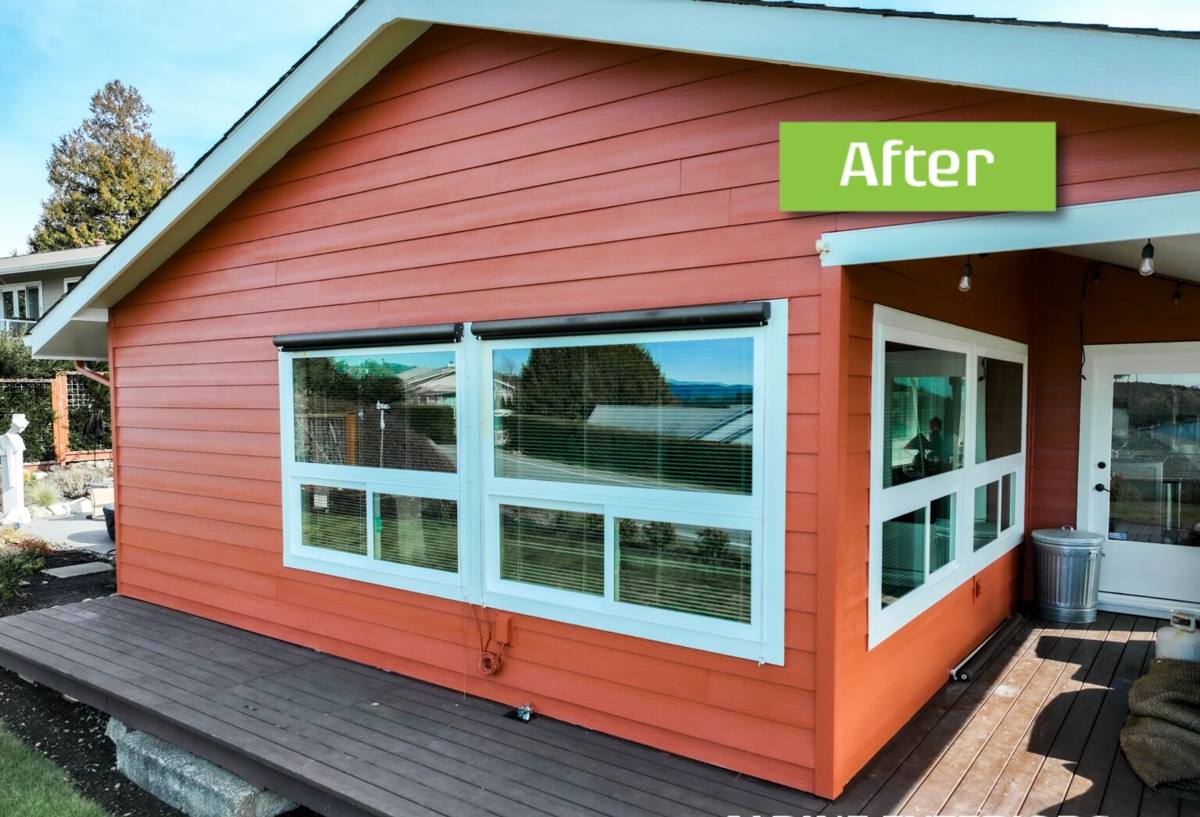
What Salt Air, Rain, and Moss Actually Do to a Window
Salt Air and Hardware Fatigue
Airborne salt is corrosive to unprotected metal. On a window, that means hinges, cranks, balance systems, and screws that aren't rated for a marine-influenced climate will pit and seize years before they should. It also accelerates wear on lesser-quality cladding and fasteners hidden inside the frame, where you won't see the damage until the window starts operating stiffly or a corner starts to fail.
Driving Rain and Water Intrusion
Wind-driven rain doesn't just fall on a window, it gets pushed into it — against the top of the frame, into the corners, and up under sills that weren't sloped or flashed correctly. A window can be perfectly good and still leak if the opening around it wasn't built to shed water. This is the single biggest cause of window-related rot we see in this area, and it's almost always an installation issue, not a product issue.
Moss and Trapped Moisture
Moss doesn't attack a window directly, but it holds moisture against trim, sills, and siding longer than bare wood or vinyl would on its own. Where moss builds up around or above a window opening, that dampness has more time to find any small gap in the flashing or sealant and work its way behind the frame. Over a long moss season, a small gap becomes a soft spot, and a soft spot becomes a repair.
Signs a Happy Valley Home Needs New Windows
Most homeowners don't notice window failure until it's visible, but there are earlier signs worth checking for, especially before winter storm season:
- Fogging or moisture between panes on a double- or triple-pane window (a failed seal)
- Soft, spongy, or discolored trim or sill wood at the base of the window
- Windows that are hard to open, close, or lock, especially after damp weather
- Visible daylight or a noticeable draft around the frame
- Peeling paint or bubbling finish concentrated near window corners
- Moss or dark streaking building up just above or beside a window opening
- A musty smell near a window that wasn't there in past years
What a Correct Installation Actually Involves
Swapping an old sash for a new one and caulking around the edges is not a window installation suited to this climate — it's a shortcut that tends to fail within a few wet seasons. A proper job addresses water management at every layer of the opening, not just the visible trim.
Flashing and Water Management
Flashing tape and housewrap integration have to be layered correctly — each layer lapping over the one below it — so water is directed out and down, away from the wall structure, no matter which direction the rain is blowing. This is the step that gets skipped most often on rushed jobs, and it's the one that matters most here.
Sill Pans and Sloped Sills
A sill pan under the window creates a backstop and a drainage path for any water that does get past the exterior seal. Combined with a sill that's shimmed to slope slightly outward, it gives water somewhere to go instead of somewhere to sit.
Sealants and Backer Rod
Sealant is a finishing detail, not the primary defense. It has to be paired with backer rod at the right depth and applied to a clean, dry, compatible surface, or it will crack and pull away well before its rated lifespan — especially with the temperature and moisture swings typical of a Whatcom County winter.
Fastening, Shimming, and Squaring
A window that isn't shimmed square in the opening will bind, sag, or develop gaps at the corners over time, even if every other step was done well. Fastening has to hold the frame true without over-compressing it, which is a detail that matters more with vinyl and fiberglass frames than with older wood-frame construction.
Choosing the Right Window for This Climate
There's no single "best" window material — each comes with trade-offs worth understanding before you decide, particularly given the salt air and rain this area sees.
| Frame Material | Moisture Behavior | Maintenance | Notes for This Climate |
|---|---|---|---|
| Vinyl | Won't rot; can expand/contract with temperature swings | Low — occasional cleaning | Good value; verify corner-weld quality on lower-end lines |
| Fiberglass | Very stable, minimal expansion, resists moisture well | Low | Strong option for driving rain and temperature cycling |
| Wood-clad | Interior wood needs protection from any interior moisture | Moderate to high | Attractive, but cladding seams need careful sealing near salt air |
| Aluminum | Conducts cold and can corrode without proper coating | Moderate | Generally not our first recommendation this close to the water |
We don't install every product on the market, and that's intentional. Some lower-cost lines use hardware or corner construction that isn't built for sustained salt exposure, and we'd rather steer a homeowner toward a window that will still be performing well in fifteen years than one that looks the same on install day but struggles by year five.
Our Installation Process
- On-site assessment: we check the existing opening, sill, and surrounding wall for rot, moisture damage, or settling before quoting anything
- Measurement and product selection: exact sizing and a frame/glass package suited to the home's exposure — full sun, prevailing wind, or heavy tree cover
- Removal: old window and any damaged trim or sheathing removed without over-widening the opening
- Opening prep: repair any rot found, install or correct the sill pan, and integrate flashing with the existing weather barrier
- Installation: window set, shimmed square and plumb, and fastened per manufacturer specification
- Sealing and finish work: backer rod and sealant applied correctly, interior and exterior trim reinstalled or replaced
- Final check: operation, lock function, and a visual water-path review before we call the job done
Cost Factors for Window Installation
Every home is different, but the same handful of variables drive most of the cost difference between a straightforward job and a more involved one.
| Factor | Why It Matters |
|---|---|
| Number of windows | Per-window cost drops somewhat with larger projects due to setup and access efficiency |
| Frame material and glass package | Vinyl, fiberglass, and wood-clad options carry different material costs; Low-E and gas-fill glass add a premium |
| Condition of the existing opening | Hidden rot or moisture damage requires repair before a new window can be installed correctly |
| Access and story height | Second-story or hard-to-reach windows take longer and may require additional equipment |
| Full-frame vs. insert replacement | Full-frame replacement addresses the opening itself and typically costs more than an insert into a sound existing frame |
As a broad range, most single-family window projects in this area run from a few hundred dollars per window for straightforward insert replacements to well over a thousand per window where rot repair, full-frame work, or upgraded glass packages are involved. An honest, in-person estimate is the only way to know where a specific project lands.
Why Hiring a Crew That Already Works Happy Valley Matters
A contractor who works regularly in Happy Valley and the surrounding Chuckanut area already knows what this climate does to an installation over time, because they've been back to see it. That matters for two practical reasons. First, it means the flashing and sealing details are treated as essential rather than optional, because the same crew has seen what happens when they're skipped. Second, it means someone is actually available if a question comes up after a wet winter — not a company that installed windows here once and moved on to the next region. Local availability, for warranty follow-up or just a second look at a detail you're unsure about, is worth as much as the installation itself.
Caring for New Windows in a Marine Climate
A correctly installed window still benefits from a little seasonal attention, especially with the salt air and moss this area sees:
- Rinse salt residue off exterior frames and glass periodically, especially after storms
- Clear moss or debris from sills, tracks, and weep holes so water can drain freely
- Check and re-lubricate hardware — locks, cranks, hinges — once a year
- Inspect exterior caulk lines annually and touch up before small cracks let water in
- Keep gutters and downspouts clear so runoff isn't sheeting directly down over window openings
If you're noticing drafts, fogged glass, or soft trim around your windows — or you're simply planning ahead before the next wet season — we're happy to take a look and give you a straightforward, no-pressure estimate for your Happy Valley home. Use the form below to get started.