 Chuckanut Exterior
 Roof Repair Built for Happy Valley's Climate
Homes in Happy Valley sit close enough to the water and the tree line that the roof takes a different kind of beating than it would a few miles inland. Salt-laden air off the Sound works on metal fasteners and flashing year-round. Driving rain off Chuckanut's exposed slopes finds every weak seam, lap, and nail hole. And the long, wet moss season here does more than make a roof look neglected — moss holds moisture against the shingle surface for months at a time, which is exactly the condition that shortens a roof's life. A repair that works in a drier climate doesn't always hold up here. We approach every Happy Valley roof repair with those three factors in mind first.
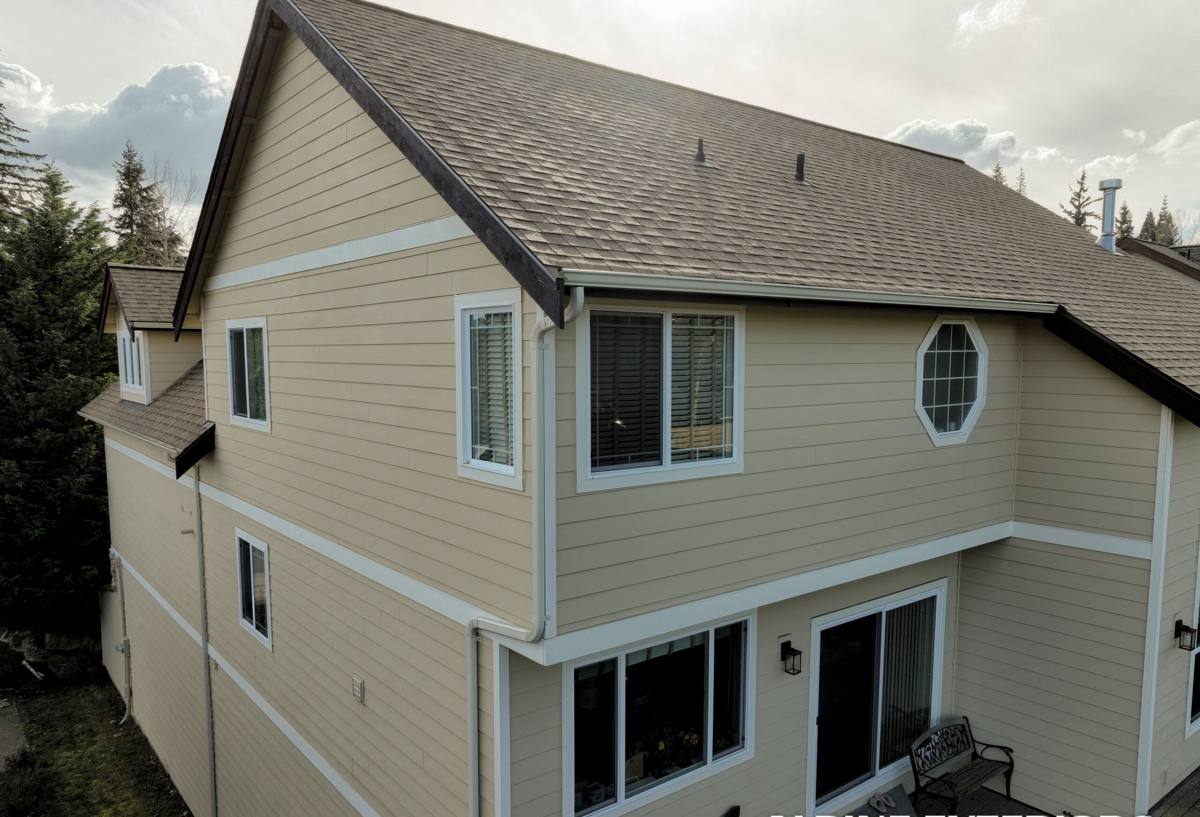
Signs a Repair — Not a Full Replacement — Is the Right Call
Most roofs don't fail all at once. They fail in specific spots while the rest of the field is still sound. Knowing which is which saves homeowners from paying for a full tear-off they don't need, or from patching a roof that's actually past the point of spot repair.
When Repair Makes Sense
- A handful of cracked, curled, or missing shingles in an otherwise intact field
- A single active leak traced to one penetration — a vent, chimney, or skylight
- Flashing that's lifted, corroded, or was installed incorrectly the first time
- Localized moss or debris buildup that's damaged the shingles beneath it but hasn't compromised the deck
- Damage from a storm or falling limb confined to one section of roof
When It's Time to Talk Replacement Instead
- Granule loss and shingle brittleness spread across most of the roof, not just one slope
- Multiple leaks in unrelated areas, suggesting the underlayment has failed broadly
- Soft or spongy decking discovered once we're up there, which no surface repair will fix
- A roof already past its expected service life for its material
We'll tell you honestly which category your roof falls into. A repair that's really a stopgap on a dying roof isn't a good use of anyone's money.
The Roof Repair Issues We See Most in Happy Valley
Moss and Trapped Moisture
Moss doesn't just sit on top of shingles — it roots into the granule surface and lifts shingle edges as it grows, creating a path for water to get underneath. In a neighborhood with as much shade and moisture as Happy Valley gets, moss isn't an occasional problem; it's a maintenance item every homeowner should plan around. A repair in a moss-affected area isn't finished until the moss causing the damage is removed and the roof is treated to slow regrowth — otherwise you're patching the symptom and leaving the cause in place.
Flashing and Fastener Corrosion
Salt air accelerates corrosion on exposed metal — flashing around chimneys and skylights, nail heads, and drip edge. Corroded flashing is one of the most common sources of a "mystery leak" that shows up nowhere near where the water is actually entering, because water travels along the underlayment before it finds a way through the ceiling. When we repair flashing here, we account for the corrosion risk in the materials we choose, not just the shape of the joint.
Wind-Driven Rain at Valleys and Laps
Chuckanut's terrain means wind doesn't always come from the same direction twice, and driving rain can push water uphill under a lap that would shed water fine in a straight downpour. Valleys, low-slope transitions, and shingle laps facing the prevailing weather take the brunt of it. These are the areas we inspect most closely on any repair call, even when the reported leak is somewhere else on the roof.
What a Correct Repair Actually Involves
A roof repair done right is more than swapping out the shingles someone can see are damaged. It means:
- Tracing the leak to its actual source — water often travels along the deck or underlayment before dripping somewhere visible, so the stain inside is rarely directly below the entry point.
- Checking the deck for soft spots or rot before any new material goes down. Covering a compromised deck with new shingles just hides the problem.
- Matching materials to the existing roof where possible, so the repair blends in and performs consistently with the surrounding field rather than creating a new seam that ages differently.
- Addressing the cause, not just the symptom — replacing corroded flashing instead of resealing it, removing moss instead of shingling over it, correcting a nailing pattern instead of caulking over a gap.
- Sealing and flashing every penetration properly, since penetrations — not open field shingle — are where most leaks actually originate.
Our Roof Repair Process
1. Inspection and Honest Assessment
We start on the roof, not on paper. We look at the deck, the flashing, the vents, the valleys, and the general condition of the shingles — not just the spot you called us about — because a roof this exposed to salt air and rain often has more than one issue developing at once.
2. A Clear Explanation of What We Found
Before any work starts, we walk you through what's actually going on: what needs repair now, what's worth watching, and what doesn't need attention at all. No pressure to upgrade a repair into a replacement you don't need.
3. The Repair Itself
We work in weather windows that let materials seal properly — asphalt shingles and sealants need the right temperature and dry time to bond, and rushing a repair in wet conditions is how a "fixed" roof leaks again within a season.
4. Cleanup and Final Check
We clear debris, old material, and any moss removed from the roof and gutters, then do a final check of the repaired area before we consider the job done.
Repair Cost Factors
Every roof and every leak is different, so we don't quote a number until we've actually seen the roof. But the factors below generally drive the price of a repair up or down, and it's worth understanding them before you get quotes.
| Factor | Lower Cost | Higher Cost |
|---|---|---|
| Scope of damage | One localized area | Multiple separate problem areas |
| Roof access | Simple, low-slope, easy setup | Steep pitch, multiple stories, limited access |
| Cause | Isolated flashing or fastener failure | Underlying deck damage or rot |
| Material match | Common shingle still available | Discontinued or specialty material to match |
| Moss condition | Light, recent growth | Heavy, long-established moss with shingle damage underneath |
As a rough guide, a straightforward, single-area repair is typically a fraction of the cost of a full re-roof — but a repair that turns up rotted decking or widespread flashing failure can climb closer to a partial re-roof once it's opened up. We'll always tell you which situation you're in before we proceed.
Why Hiring a Crew That Already Works Happy Valley Matters
A roofer who works this part of Whatcom County regularly already knows what to expect before they climb the ladder — how fast moss reestablishes here, which flashing details tend to fail first under driving rain, and how the salt air affects fastener choice. That familiarity shows up in fewer surprises and fewer callbacks. It also means we're not guessing about permitting or working around a schedule dictated by weather windows unique to this stretch of coastline; we plan around it as a matter of course. When you're comparing contractors, it's fair to ask directly how much work they've done in Happy Valley and the surrounding Chuckanut area — the answer tells you a lot.
Roof Maintenance Checklist for Happy Valley Homeowners
Between repairs, a little regular attention keeps small issues from becoming big ones. Consider this a baseline for homes in our climate:
- Inspect the roof (or have it inspected) at least once a year, ideally before the wettest months set in
- Remove moss buildup before it spreads across a full slope, not after
- Keep gutters and downspouts clear so water isn't backing up under the roof edge
- Trim back overhanging branches that keep sections of roof shaded and damp
- Check flashing around chimneys, skylights, and vents for lifting or corrosion
- Address small leaks immediately — they rarely stay small
- Keep a record of past repairs so any contractor you hire knows the roof's history
Get an Honest Look at Your Roof
If you're dealing with a leak, storm damage, or a roof that's showing its age under Chuckanut's weather, we're happy to come take a look. We'll give you a straightforward assessment and a free, no-pressure estimate — no upsell, just what your roof actually needs. Use the form below to get started.