 Chuckanut Exterior
 Lake Samish's Siding Climate: Shade, Moss, and Moisture That Never Fully Dries Out
Lake Samish sits back in the trees off the Chuckanut corridor, and that setting is exactly what makes siding here behave differently than siding on an open lot in town. Mature fir and cedar canopy shades most homes for a good part of the day, which is pleasant to live under but murder on exterior materials — shaded siding dries slower after every rain, and Whatcom County gets a lot of rain to dry from. Add the humidity that collects over lake water, the salt-tinged air that drifts up the Chuckanut Drive corridor off Samish Bay, and a moss season that can run eight or nine months out of the year, and you have a siding environment that punishes anything not built to handle sustained damp.
Wood siding and trim in these conditions absorb moisture, swell, and eventually rot from the inside out, usually behind a coat of paint that hides the problem until it's expensive. Vinyl doesn't rot, but it doesn't stop the moss and algae bloom on north-facing, shaded walls either — it just gives that growth something cheap and porous to cling to. Homes right down at the water or tucked deep in the trees see this worse than homes up on the open ridges nearby. This page covers what siding needs to actually do at Lake Samish, what a correct James Hardie install looks like out here, and why we install this product exclusively rather than offering a menu of options.
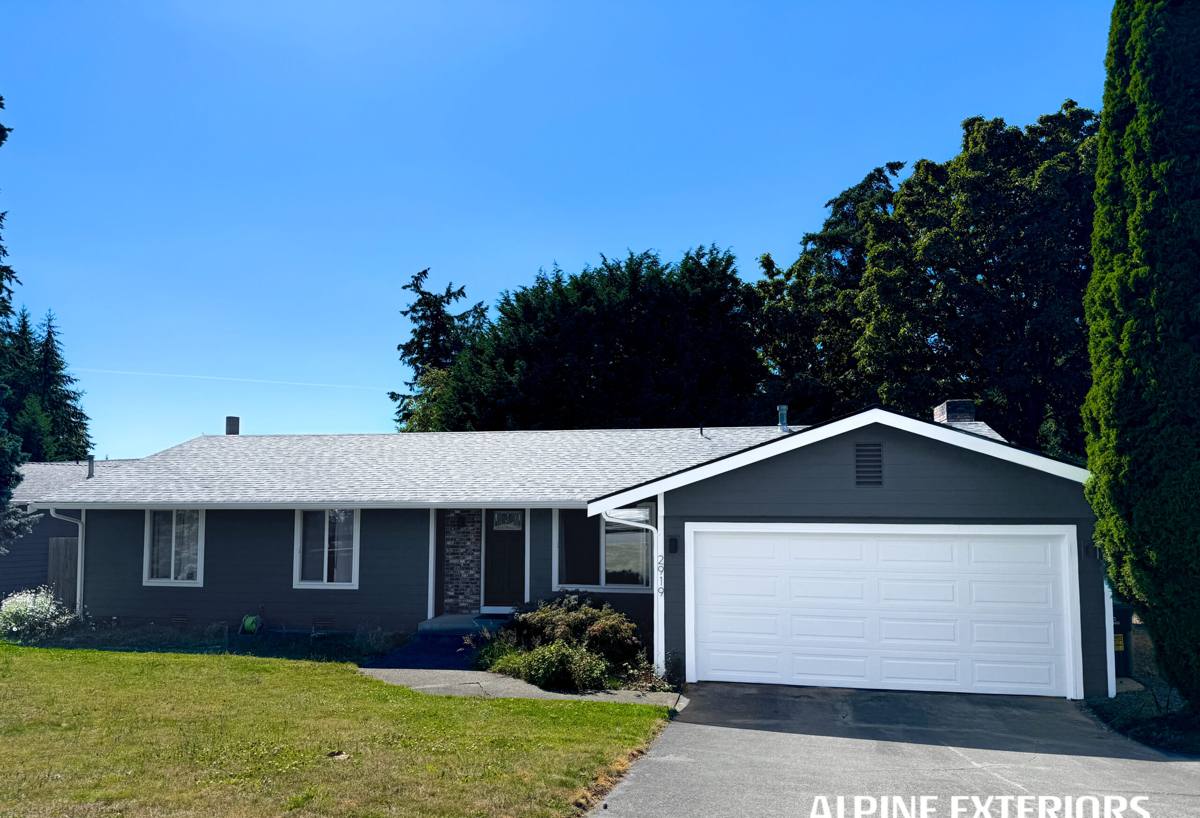
Why James Hardie Fiber Cement Is the Right Call for a Shaded Lake Property
It Doesn't Feed the Moss and Mildew Cycle
James Hardie siding is fiber cement — sand, cement, and cellulose fibers pressed and cured into a board that doesn't absorb water the way wood does and doesn't offer organic material for moss and algae to root into the way some other sidings do over time. On a shaded Lake Samish wall, that difference shows up as fewer green-black streaks and a longer stretch between cleanings, because the surface itself isn't feeding the growth. It still needs periodic washing — nothing stops moss from settling on a chalky or dirty surface — but the material itself isn't the problem.
The Factory Finish Matters as Much as the Board
Hardie's ColorPlus finish is baked on at the factory under controlled conditions, not brushed on outdoors in whatever humidity happens to be in the air that week. That finish resists fading and holds its color line at seams and touch-ups far better than field-applied paint, which is a real advantage under heavy tree cover where UV exposure is uneven and paint failure tends to show up first in the shadiest, dampest spots — exactly where Lake Samish homes take the most abuse.
Non-Combustible in a Wooded Setting
Fiber cement is non-combustible. That's a genuine consideration for homes set back in trees the way many Lake Samish properties are — it doesn't make a house fireproof, but it removes the siding itself as fuel against embers and radiant heat, which matters more the closer a home sits to unmanaged brush and timber.
What a Correct James Hardie Installation Involves Out Here
Hardie siding fails early almost exclusively because of installation shortcuts, not because of the product itself. In a high-moisture, shaded environment like Lake Samish, the margin for error is smaller than it is on a dry, sunny lot in town — water that would evaporate off in an afternoon somewhere else can sit against a wall for days.
Drainage Plane and Rainscreen Gap
Every Hardie install we do starts with a proper weather-resistive barrier and, on the north- and lake-facing walls that see the most shade and moisture, a rainscreen gap behind the siding. That gap lets bulk water and trapped humidity drain and evaporate instead of sitting against the sheathing — it's a small detail that makes the difference between a wall assembly that dries out and one that slowly rots from behind a perfectly good-looking exterior.
Flashing and Sealant Discipline
Windows, doors, deck ledgers, and any place two planes meet are where water actually gets in, not through the field of the siding itself. Correct step flashing, head flashing, and kick-out flashing at rooflines matter more here than on a drier lot, because a missed flashing detail on a shaded wall doesn't get the benefit of quick drying between storms.
The Right HZ Product for This Climate
James Hardie engineers its HardieZone products by climate zone. Homes in this part of Washington call for the HZ5 line, engineered for wetter, more variable climates rather than the HZ10 product built for hot, dry regions. Using the correct zone product isn't a minor spec detail — it affects how the board handles moisture cycling over decades.
Caulking and Gapping
Fiber cement needs to be gapped and caulked correctly at butt joints and trim, per Hardie's published installation instructions, so the assembly can move with seasonal humidity swings without cracking the finish or opening a path for water. This is one of the most commonly rushed steps on jobs done by crews that don't install Hardie regularly, and it's one of the first places we check on any home we're bidding a repair or repaint for.
Our Process for a Lake Samish Siding Project
- Walk and assessment. We look at shade exposure, moss and moisture staining patterns, existing siding and trim condition, and any signs of water intrusion around windows, decks, and rooflines before we quote anything.
- Tear-off and sheathing check. Old siding comes off and we inspect the sheathing underneath. Soft or water-damaged sheathing gets replaced before anything new goes on — covering a rotten wall with new siding just delays the problem.
- Weather barrier and drainage plane. House wrap or building paper goes on correctly lapped, with a rainscreen gap on walls that need it given their shade and moisture exposure.
- Flashing at every penetration. Windows, doors, vents, and rooflines get flashed before siding closes around them.
- Hardie panel or lap installation. Installed to Hardie's fastening, gapping, and clearance specs — including the ground clearance and deck clearance that matter most on a lake lot where grade and moisture sit close to the wall.
- Caulking, trim, and finish detail. Joints, trim, and touch-up painting are finished to match the ColorPlus factory finish as closely as field conditions allow.
- Site cleanup and walkthrough. We walk the finished job with the homeowner before we consider it done.
James Hardie Compared to Other Siding Options in This Climate
We get asked why we don't offer vinyl, LP SmartSide, or cedar as alternatives. Here's the honest comparison for a shaded, damp lake environment like this one:
| Factor | James Hardie Fiber Cement | Vinyl | LP SmartSide / Engineered Wood | Cedar |
|---|---|---|---|---|
| Moisture absorption | Very low — not organic material | Doesn't absorb, but traps moisture behind it | Wood-based; vulnerable at cut edges and seams | Absorbs and swells; needs consistent sealing |
| Moss/algae resistance | Doesn't feed growth; needs periodic washing | Prone to green staining in shade | Prone to growth if coating fails | Prone to growth, especially untreated |
| Fire behavior | Non-combustible | Melts/deforms under heat | Combustible | Combustible |
| Finish durability under tree cover | Factory-baked ColorPlus finish | Can fade unevenly, chalky over time | Field-applied coating, wears at seams first | Needs re-staining or re-sealing on a cycle |
| Typical service life when installed correctly | Decades, with strong transferable warranty | Variable; brittle over time | Shorter than fiber cement in wet climates | Shorter without diligent maintenance |
None of these alternatives are junk products across the board — vinyl is inexpensive and low-maintenance in the right setting, cedar has real curb appeal, and engineered wood has its place. But for a shaded, moss-prone, moisture-heavy lot like most Lake Samish parcels, we've standardized on Hardie because it's the product we're confident holding up without a maintenance treadmill or a moisture callback three years in.
Keeping Lake Samish Siding Looking Right Between Projects
A correct Hardie install is low-maintenance, not no-maintenance. In this climate, a little seasonal attention goes a long way:
- Rinse shaded, north-facing walls with a garden hose or soft wash once or twice a year to keep moss and algae from getting established — avoid high-pressure washing, which can force water behind panels and damage the finish.
- Keep tree limbs and shrubs trimmed back from the walls so air can move and sunlight can reach siding that would otherwise stay damp all day.
- Clear leaf and needle debris out of any spot where it collects against the base of the siding or in inside corners.
- Check caulking at trim and butt joints every couple of years and have any cracked or missing sealant redone before it becomes a water path.
- Watch for soft spots, staining, or bubbling paint around window and door trim — those are early signs of a flashing issue, not a siding issue, and are cheaper to fix early.
- Keep gutters clear so roof runoff isn't sheeting down the siding face during heavy rain events.
Why Hiring a Crew That Already Works Lake Samish Matters
Lake Samish properties come with logistics that a crew unfamiliar with the area has to learn on your dime. Narrow, wooded driveways and limited staging space around some lake lots change how material gets delivered and how scaffolding gets set. Tree cover close to the house means work has to account for limbs and root zones, not just the wall itself. And because much of the area sits outside city limits, permitting and inspection go through Whatcom County rather than a municipal building department — a crew that pulls permits here regularly knows the process and doesn't lose weeks figuring it out mid-project.
Weather windows matter too. Scheduling a tear-off and weather-barrier install around this area's rain patterns is a real planning problem, not an afterthought — a crew that works this lake regularly builds their schedule around it instead of getting caught with an open wall in a storm.
Cost Factors on a Lake Samish Hardie Project
Every home is different, so we don't quote off square footage alone. The factors that actually move the number on a lake property like this are:
| Factor | Why It Affects Cost |
|---|---|
| Existing siding removal | Tear-off of wood, vinyl, or failed engineered wood adds labor and disposal beyond a re-side over sound sheathing. |
| Sheathing condition | Moisture-damaged sheathing found during tear-off needs repair or replacement before new siding goes on. |
| Access and staging | Wooded, sloped, or narrow lake lots can require more setup time, hand-carrying material, or specialized scaffolding. |
| Story height and roofline complexity | Multi-story walls, steep rooflines, and lots of flashing detail add labor time. |
| Trim and detail level | Board-and-batten accents, custom trim, or multiple siding profiles cost more in material and labor than a simple lap job. |
| Rainscreen and drainage upgrades | Adding a rainscreen gap on heavily shaded walls is extra labor but pays off in wall durability on a lot like this. |
We walk every property in person and give a written quote based on what we actually find — not a phone estimate based on square footage alone.
If you're weighing a siding project on a Lake Samish home, we'll come out, look at your specific exposure and existing siding condition, and give you a straight answer on what it needs — no pressure, no upsell to a product we don't stand behind. Use the form below to request a free estimate.