 Chuckanut Exterior
 Siding Replacement Built for Lake Samish Conditions
Homes around Lake Samish sit in one of the damper, shadier pockets of the greater Chuckanut area. Dense second-growth forest wraps much of the lake, keeping siding in shade for long stretches of the day, while the same marine weather systems that push driving rain across Whatcom County funnel through the Chuckanut corridor and settle into the Samish basin. The result is siding that dries slower than it would on an open, sun-exposed lot — and siding that dries slowly is siding that grows moss, holds moisture at the seams, and ages faster than it should.
We replace siding for homeowners in this area regularly enough to know what actually causes premature failure here, and what a replacement needs to get right the first time. This page covers what Lake Samish homes are up against, what a correct siding replacement involves, and why we install exclusively James Hardie fiber cement rather than the vinyl, LP SmartSide, or bare wood products still common on older lake homes.
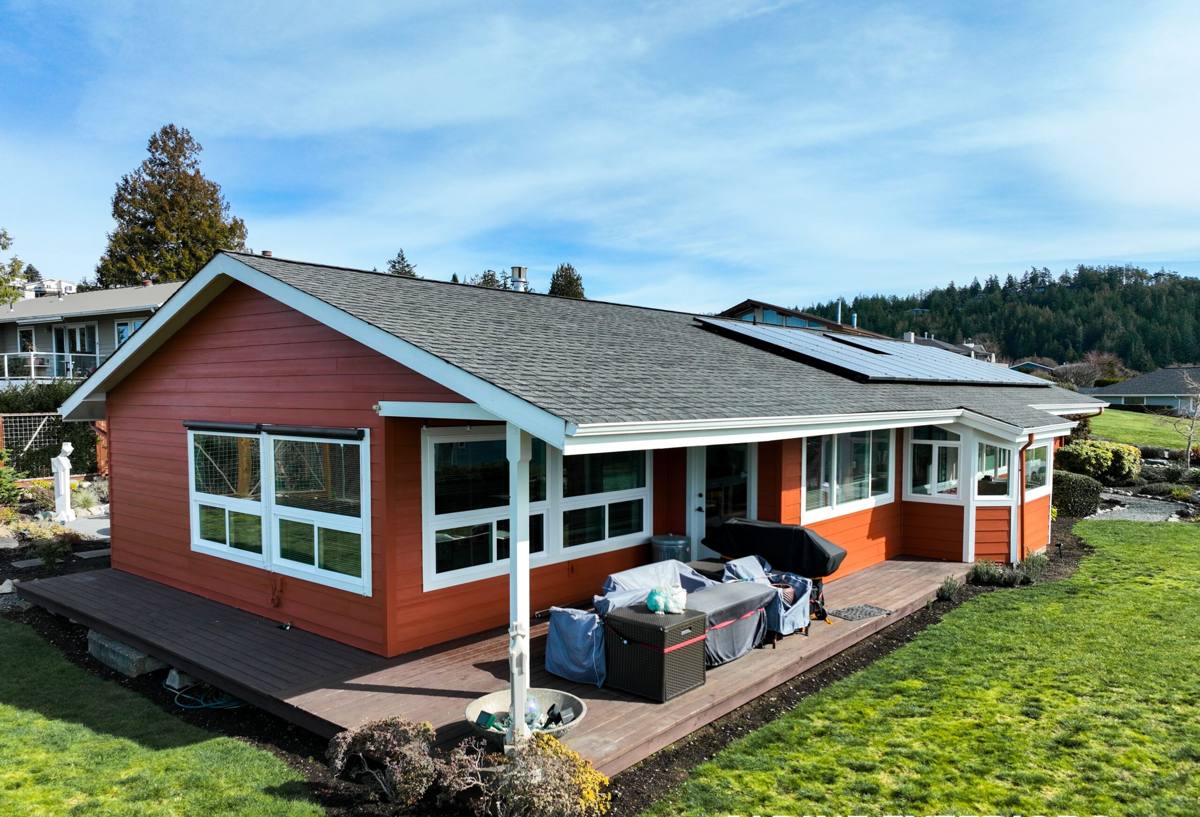
What the Lake Samish Microclimate Does to Siding
Shade and slow drying
Tree cover around the lake is a big part of the appeal of living there, but it also means many homes get only partial sun, if that, on one or more sides. Siding in constant shade never gets a real chance to dry out between rain events. Moisture that would evaporate off a sun-facing wall in a few hours can sit in the surface texture of the wrong siding material for days.
Moss and organic growth
Shade plus moisture plus organic debris — falling needles, leaf litter, airborne spores from the surrounding trees — is exactly the recipe moss needs. Once moss establishes on a siding surface, it holds water against that surface continuously, which accelerates rot in wood-based products and can work into seams and fastener points on lower-grade materials.
Driving rain and wind-driven moisture
Storms moving through the Chuckanut corridor off the Sound and Samish Bay don't just drop rain straight down — wind-driven rain gets pushed sideways into wall assemblies, especially around windows, corners, and butt joints. On a lake lot with tree cover funneling wind in unpredictable directions, that wind-driven moisture finds gaps in old caulking, poorly lapped siding, or degraded house wrap faster than it would on a more sheltered, open-plan neighborhood.
Humidity off the lake itself
Being right on the water adds a layer of ambient humidity beyond what falls as rain. Homes closest to the shoreline see it most, but the effect extends through the surrounding tree-covered lots as well — it's one more reason siding here needs to shed and resist moisture rather than absorb it.
How This Shows Up as Siding Failure
When we inspect older homes around Lake Samish, the failure patterns are consistent:
- Moss and algae staining concentrated on north- and shade-facing walls
- Soft, spongy wood siding or trim near ground level and under eaves with poor drip edges
- Swollen or delaminating panels on lower-grade composite or OSB-based siding where moisture got behind the surface layer
- Paint failure and repeated repainting cycles trying to keep ahead of moisture intrusion
- Caulk failure at butt joints and trim, letting wind-driven rain behind the cladding
- Warping or cupping on wood lap siding that's been through repeated wet-dry cycles in shade
None of these are unusual for the climate — they're the expected result of putting moisture-sensitive materials in a shaded, humid, high-moss environment and not staying ahead of maintenance. The fix isn't just replacing what failed; it's replacing it with a system that doesn't have the same vulnerabilities.
What a Correct Siding Replacement Involves
A siding replacement done right is a wall system upgrade, not a cosmetic swap. For a Lake Samish home, that means:
Full tear-off and sheathing inspection
We remove the old siding down to the sheathing and inspect for rot, soft spots, and hidden moisture damage — common in shaded, moss-prone areas where problems can develop unseen behind old siding for years. Any compromised sheathing gets replaced before anything new goes on.
Correct weather-resistive barrier and flashing
A new, continuous weather-resistive barrier goes down first, with flashing detailed correctly around every window, door, and penetration. This is where wind-driven rain either gets managed or gets in — it's not a step to shortcut on a lake lot exposed to sideways-driven storms.
Ventilation and drainage planning
On shaded walls especially, we plan for a drainage gap or rainscreen approach where appropriate so that any moisture that does get past the cladding has a way to drain and the wall assembly can breathe rather than trap water against the sheathing.
Material selection suited to shade and moss exposure
This is the step that determines whether the homeowner is back to fighting moss and rot in ten years or not dealing with it again for decades. It's why we don't install just anything.
Why We Install James Hardie Only — And Why It Matters More Here
We install James Hardie fiber cement siding exclusively. We don't offer vinyl, LP SmartSide, Cemplank, Allura, primed spruce, or bare cedar, and in a shaded, moss-prone lake environment like this one, the reasons matter more than they would on a sunny, open lot.
| Concern | Wood / engineered wood siding | Vinyl siding | James Hardie fiber cement |
|---|---|---|---|
| Moisture absorption | Absorbs moisture; prone to swelling and rot in shade | Doesn't absorb, but seams and gaps let water behind panels | Engineered to resist moisture damage; won't rot or swell |
| Moss and organic growth | Textured, absorbent surface holds moss and algae | Grows algae/mildew in constant shade and humidity | Factory finish resists staining; cleans up without damaging the material |
| Performance in constant shade | Slow to dry; degrades faster without full sun exposure | Can warp or discolor unevenly in shade vs. sun | Stable dimensionally regardless of sun exposure |
| Fire exposure (wildland-adjacent lots) | Combustible | Can melt/deform under radiant heat | Non-combustible fiber cement |
| Finish longevity | Needs repainting on a regular cycle | Can fade; color is not repairable, only replaceable | ColorPlus factory finish holds color far longer than field paint |
The moss resistance and moisture stability matter directly for shaded Lake Samish lots. The non-combustible property is also worth taking seriously here — many lake properties back up to or sit within forested, wildland-adjacent terrain, and fiber cement doesn't contribute fuel to a structure the way wood-based siding does.
James Hardie's HZ5 product line is engineered for regions with freeze-thaw cycling and sustained moisture exposure, which fits the Whatcom County climate well. Combined with the ColorPlus factory finish — baked-on color that resists fading and doesn't need repainting on the schedule wood or field-painted siding does — it's a system built to be left alone for long stretches, which is exactly what a shaded lake property needs.
Our Process for a Lake Samish Siding Replacement
- On-site inspection — we walk the exterior, check shaded and moss-affected walls closely, and inspect for hidden moisture damage behind existing siding.
- Written scope and estimate — what's being torn off, what sheathing repair (if any) is anticipated, and the Hardie products and colors proposed.
- Tear-off and sheathing repair — full removal, with any rot or damaged sheathing replaced before moving forward.
- Weather barrier and flashing installation — correctly lapped and detailed at every penetration.
- Hardie siding installation — installed to manufacturer spec, including proper fastening, clearances, and caulking at joints.
- Final walkthrough — we review the finished work with the homeowner before calling the job done.
Cost Factors for Lake Samish Siding Replacement
Every home is different, but the main variables that move the price on a lake-area replacement are consistent:
| Factor | Why it matters here |
|---|---|
| Sheathing condition | Shaded, moss-affected walls are more likely to need sheathing repair discovered during tear-off |
| Home access | Lake lots with steep grades, limited driveway access, or dense tree cover can affect staging and scaffolding |
| Siding profile and trim complexity | Multiple gables, dormers, and trim details increase labor time regardless of material |
| Color and finish selection | Standard ColorPlus colors vs. custom finishes affect material cost |
| Square footage and wall height | Larger and taller walls require more material and labor |
We give a written, itemized estimate after the on-site inspection — not a phone-quote guess — because the sheathing condition on a shaded lake wall genuinely can't be assessed accurately without a look.
What to Ask Before Hiring for a Lake Samish Home
- Will you inspect and document sheathing condition before quoting a final price?
- What weather-resistive barrier and flashing details will you use around windows and doors?
- Are you a James Hardie certified or preferred installer, and can you speak to the HZ product lines relevant to this climate?
- How do you plan for drainage or ventilation on walls that stay in shade most of the day?
- What does the manufacturer warranty cover, and what does your workmanship warranty cover separately?
- Do you have experience working lake-adjacent lots with limited access or tree cover?
Why a Crew That Already Works Lake Samish Matters
Siding failure patterns around Lake Samish aren't the same as they are on an open, sun-exposed lot in town. A crew that hasn't worked shaded, moss-prone lake properties before may not catch hidden sheathing rot behind old siding, may under-plan for drainage on a north-facing wall, or may not think through wildfire-adjacent material choices the way a crew familiar with the area does. We've worked homes in this specific microclimate — shade patterns, moss buildup, access challenges, and all — and we bring that knowledge to every estimate and every install, not just a generic siding package.
Whatcom County permitting and inspection requirements also apply the same way here as anywhere else in the county, and a crew that's pulled permits and passed inspections in this area already knows what's expected without extra back-and-forth that can slow a project down.
Get an Estimate for Your Lake Samish Home
If your siding is showing moss staining, soft spots, or paint that won't hold anymore, it's worth having it looked at before those small problems become sheathing repairs. We offer free, no-pressure estimates for Lake Samish homeowners — walk the property with us, get a straight answer on condition, and get a written quote for James Hardie siding built for this exact climate. Use the form below to schedule a visit.