 Chuckanut Exterior
 Why Burlington Roofs Take More Punishment Than Most
Burlington sits in a stretch of Chuckanut-area Whatcom County where the roof over your head is doing real work most of the year. You get salt-laden air rolling in off the water, long stretches of driving rain that hits siding and roof planes sideways instead of straight down, and a mossy, shaded understory climate that keeps roof surfaces damp far longer than homes even twenty miles inland. None of that is unusual for this part of Washington. But it does mean a roofing material and installation method that works fine in a dry climate can fall short here, and homeowners in Burlington often find that out the hard way when a roof that "should" have lasted decades starts failing at year twelve or fifteen.
Metal roofing, installed correctly, is one of the more forgiving answers to this climate. That's not a sales pitch — it's a materials fact. But "installed correctly" is doing a lot of work in that sentence, and that's really what this page is about: what your roof is actually up against here, what a correct metal roofing job looks like for a Burlington home, and why the installation details matter more than the panel brand on the invoice.
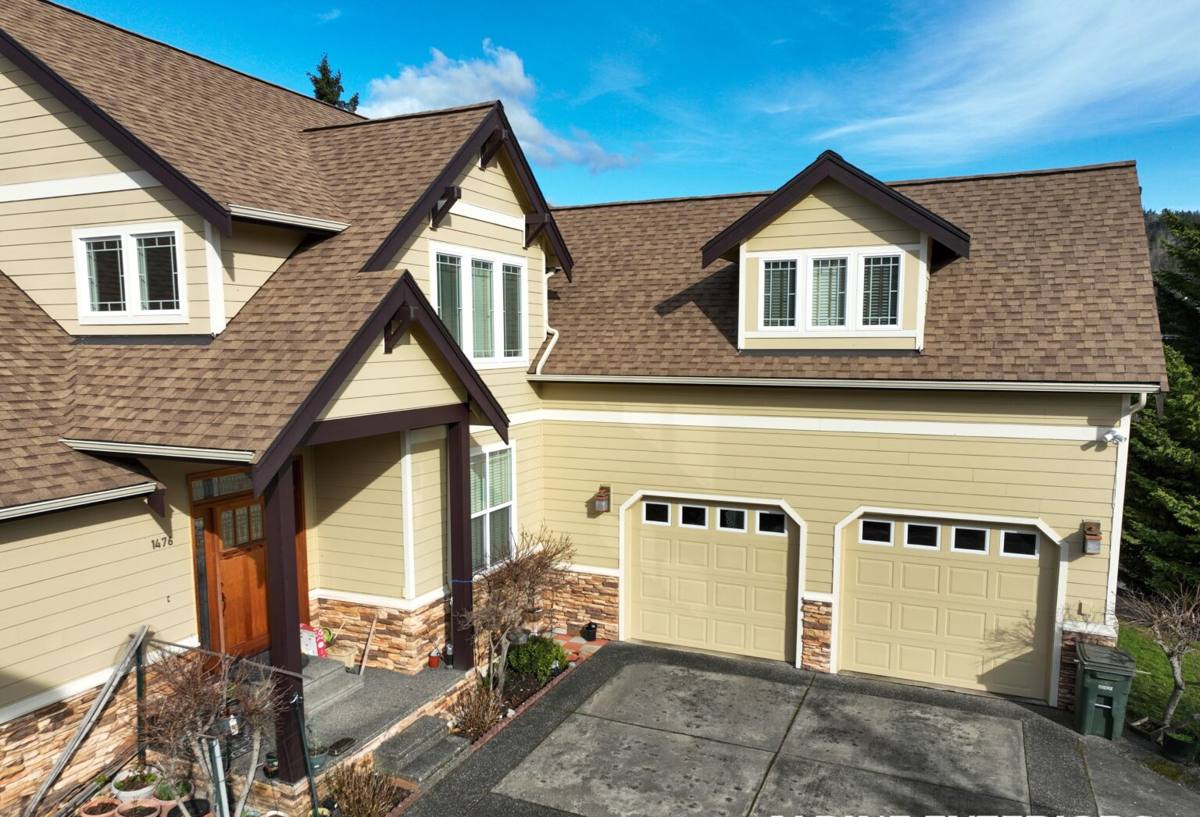
What Salt Air, Rain, and Moss Actually Do to a Roof
Salt Air and Corrosion
Coastal and near-coastal air carries fine salt particles that settle on every exposed surface, including your roof. On bare or poorly coated metal, that salt accelerates corrosion at fastener heads, cut edges, and anywhere the protective coating has been scratched or worn thin. It's a slow process, which is exactly why it's dangerous — it doesn't show up as a leak until years after the coating has already started breaking down.
Driving Rain and Wind-Driven Water
Rain that comes in at an angle behaves differently than rain that falls straight down. It gets pushed up under laps, around flashing, and into any gap that a fastener-only or minimally-lapped system leaves open. A roof designed for calmer weather often relies on gravity alone to shed water. A roof built for this area needs laps, seams, and flashing details that assume the wind is going to try to push water backward.
Moss, Shade, and Trapped Moisture
Tree cover and the region's damp, mild climate are a near-perfect combination for moss and organic growth on roofing. Moss itself isn't just cosmetic — its root structure holds moisture against the roof surface and can work into laps and fastener penetrations, and it grows fastest in the shaded, north-facing, and low-slope sections of a roof that already drain and dry the slowest. Roofs that stay damp longer age faster, no matter what they're made of.
Why Metal Roofing Is a Strong Fit for This Climate
We don't push metal roofing on every home — it's not the right or affordable choice for every project, and asphalt or composition roofing done correctly still has a legitimate place. But for homes dealing with the combination Burlington gets — salt air, sideways rain, and a long moss season — metal has real structural advantages when it's specified and installed right:
- A hard, smooth, non-porous surface that gives moss far less to grip onto compared to shingle granules
- Steep shed angles and interlocking seams that move wind-driven water off the roof faster than lapped shingle systems
- Factory-applied coatings engineered specifically to resist salt-air corrosion when the correct alloy and finish are chosen
- A long service life that, done right, outlasts multiple shingle roof cycles — which matters when you're weighing the higher upfront cost
The trade-off is that metal roofing is far less forgiving of a sloppy install than shingles are. A shingle roof with an imperfect fastening pattern might still shed water reasonably well. A metal roof with the wrong fastener, the wrong lap, or a rushed flashing detail can leak in specific, repeatable, and hard-to-diagnose ways. That's the whole reason installation quality gets more attention on this page than the panels themselves.
Choosing the Right Metal Roofing System for Burlington Conditions
Not all metal roofing is built the same way, and the differences matter more here than in a drier climate. The table below lays out the honest trade-offs between the systems we most commonly discuss with Burlington homeowners.
| System | How Water Is Sealed | Salt-Air Performance | Best Fit |
|---|---|---|---|
| Standing seam (concealed fastener) | Interlocking vertical seams, no exposed fastener penetrations on the field of the panel | Strongest — fewer penetration points for salt and moisture to reach | Full roof replacements, homes closer to open air or exposed sites |
| Exposed-fastener panel | Screws with rubber washers driven through the panel face | Adequate if fasteners and coatings are matched correctly, but washers age and need eventual attention | Outbuildings, budget-conscious projects, lower-exposure roof sections |
| Stone-coated steel | Interlocking panels with a textured coated surface | Good, with the added benefit of shedding moss growth similarly to smooth metal | Homeowners who want a traditional shingle or shake look with metal's durability |
For most primary roofs in this area, we lean toward standing seam because it minimizes the number of penetrations exposed to driving rain and salt air over the life of the roof. Exposed-fastener systems aren't a bad product — they're a reasonable choice for a detached shop or garage — but on a primary residence in a wet, salty climate, the long-term maintenance burden of monitoring dozens of washered fasteners is worth being upfront about before you commit to one.
Coatings and Finishes
The coating matters as much as the base metal. Galvalume and properly painted steel or aluminum systems are built to resist corrosion, but the coating has to be matched to the environment — a finish rated for a dry inland climate isn't automatically the right call for a home a few miles from salt water. We'll walk through what coating spec fits your specific site rather than defaulting to whatever's cheapest to stock.
What a Correct Metal Roof Installation Actually Involves
This is where most of the long-term performance of a metal roof is decided — not in the panel brand, but in the details underneath it.
Underlayment
A high-temperature, self-adhering synthetic underlayment underneath the metal gives you a second line of defense if wind-driven rain ever gets past a seam or fastener. On a roof in this climate, we treat underlayment as essential, not optional.
Fastening and Sealing
Fastener spacing, torque, and washer condition all affect how well a roof resists wind uplift and water intrusion. Overdriven or underdriven screws are one of the most common causes of early leaks on exposed-fastener metal roofs, and it's an easy thing to get wrong if the crew is moving fast.
Flashing at Valleys, Walls, and Penetrations
Flashing is where the majority of real-world metal roof leaks actually happen — not on the open field of the roof. Chimneys, skylights, wall transitions, and valleys all need custom-formed flashing and correct lap sequencing so water is always directed downhill and out, never trapped or funneled sideways.
Ventilation
Metal roofs need proper attic or roof-deck ventilation to manage condensation, which is a different concern from exterior leaks but just as damaging over time if ignored. In a humid climate like this one, we check ventilation as part of every metal roofing scope, not as an afterthought.
How Our Process Works
We keep the process straightforward because roofing decisions are already stressful enough without added confusion.
- On-site assessment. We look at your existing roof structure, decking condition, ventilation, and any moss or moisture damage before recommending anything.
- Honest system recommendation. We'll tell you whether standing seam, exposed-fastener, or stone-coated steel actually fits your roof and budget — not just what we'd prefer to sell.
- Written estimate. Scope, materials, and timeline in writing, with no vague allowances hiding in the fine print.
- Installation. Deck inspection and repair as needed, underlayment, panels, and flashing installed to the standard this climate actually requires.
- Final walkthrough. We go over the finished roof with you before we consider the job done.
Maintenance: What Burlington Homeowners Should Actually Do
Metal roofing is low-maintenance compared to shingles, but "low" doesn't mean "none." A short annual routine goes a long way in this climate:
- Clear overhanging branches and debris that trap moisture against the roof surface
- Rinse off accumulated moss, needles, or organic buildup before it has time to establish, especially on shaded slopes
- Check that gutters and downspouts are clear so water isn't backing up under the roof edge
- Have fastener heads and washers on exposed-fastener systems inspected every few years, since these age faster than the panels themselves
- Look at flashing around chimneys, vents, and skylights after major wind or rain events
- Address any scratched or exposed coating promptly, before salt air gets a foothold on bare metal
Why Hiring a Crew That Already Works in Burlington Matters
A roofing crew that mostly works dry, inland climates can still install a technically competent roof — on paper. But the difference shows up in the judgment calls: how tight the flashing laps need to be given the wind direction on your specific site, whether your roof's shaded north slope needs extra attention against moss, which fastener and coating combination actually holds up against salt air instead of just resisting it in a lab test. That judgment comes from doing this work repeatedly in this specific climate, not from a generalized installation manual.
It also matters for accountability. A crew based in and around this area is easy to reach if a question comes up five years down the road, and has a reputation in the community worth protecting — which shapes how carefully the job gets done in the first place.
What Affects the Cost of a Metal Roof
We won't quote a number without seeing your roof, but the honest range for metal roofing generally sits above asphalt shingles up front, offset by a much longer service life and lower long-term maintenance. The main factors that move the price are:
- Panel system chosen — standing seam typically costs more than exposed-fastener panel systems
- Roof complexity — the number of valleys, penetrations, and roof planes drives labor time
- Deck condition — any rot or damage found during tear-off adds repair work before new roofing goes on
- Tear-off versus overlay — removing old roofing versus roofing over it, where code and condition allow
- Access — steep pitches or difficult site access affect labor and equipment needs
We'll walk through each of these specific to your home during the estimate, so you're pricing your actual roof, not a national average.
If you're weighing a metal roof for your Burlington home, we're glad to come take a look and give you a straight read on your options — no pressure, no upsell script. Fill out the form below to schedule a free estimate.