 Chuckanut Exterior
 Roofing for Sedro-Woolley's Particular Climate
Sedro-Woolley sits in a stretch of Whatcom and Skagit country where the weather doesn't do a roof any favors. Homes here deal with salt-tinged air moving in off the water, long stretches of driving rain that comes in sideways as often as straight down, and a moss season that can run most of the year in shaded, north-facing sections of a roof. None of that is dramatic on its own. What it does is wear a roof down quietly, year after year, in ways that are easy to miss until a leak shows up inside the house.
An asphalt shingle roof that's built and installed correctly can handle all of this for decades. One that's installed to a generic, one-size-fits-all standard usually starts showing problems in the first five to ten years — granule loss, moss intrusion at the edges, soft spots at the valleys. The difference isn't the shingle brand. It's whether the underlayment, ventilation, and flashing details were done with this specific climate in mind.
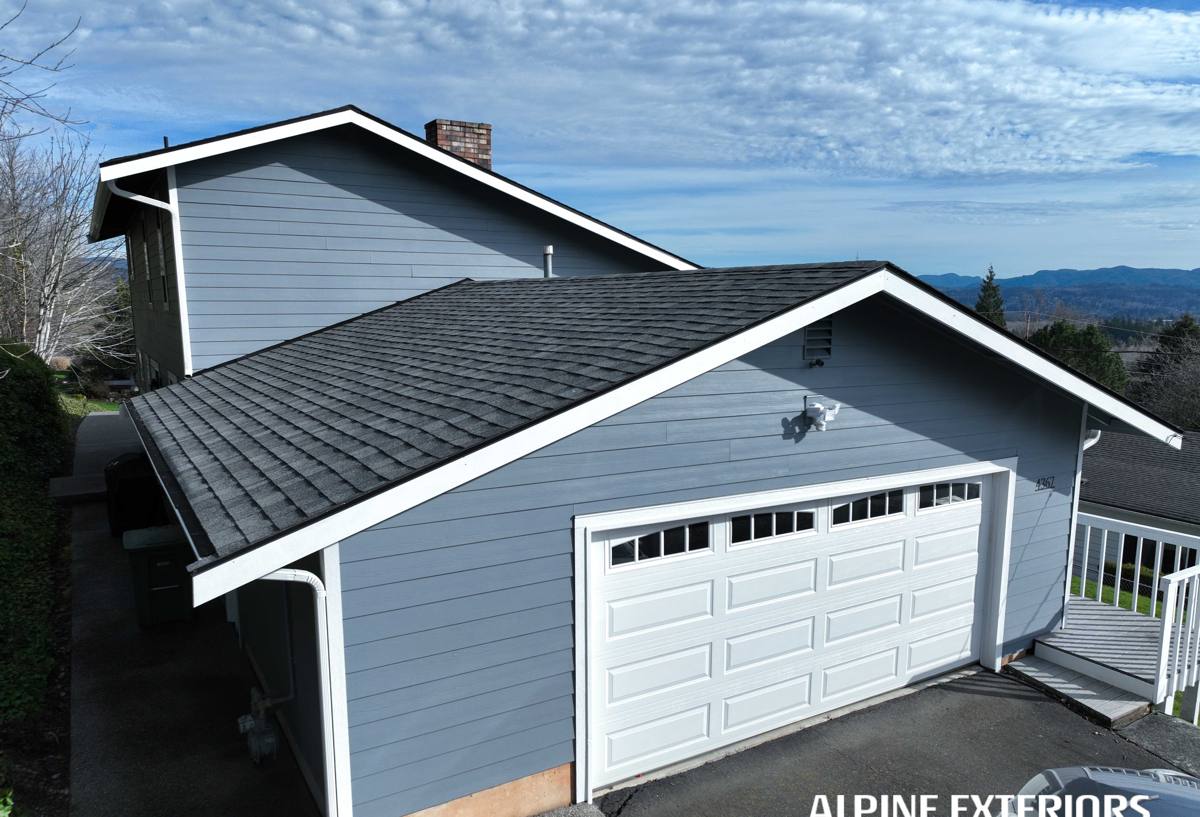
What a Correct Installation Looks Like Here
A shingle roof is a system, not a single product. The shingle is the visible layer, but most of the actual weather protection comes from what's underneath and around it. For a Sedro-Woolley home, a few details matter more than they would in a drier climate.
Underlayment and Water Barriers
We use synthetic underlayment across the full roof deck rather than the older felt paper, because it holds up better to the extended damp exposure that's normal here during install and afterward. At eaves, valleys, and any low-slope transitions, we add self-adhering ice-and-water membrane. This isn't an upsell — those are the spots where wind-driven rain gets pushed backward under shingles, and a standard underlayment alone won't stop it.
Flashing at Every Penetration
Chimneys, plumbing vents, skylights, and roof-to-wall transitions are where the large majority of leaks actually start, not in the open field of shingles. Step flashing, counter-flashing, and vent boots need to be sized and installed correctly, then sealed with materials rated for long-term UV and moisture exposure, not general-purpose caulk that will crack within a couple of seasons.
Nailing and Fastening
Shingles rated for high wind exposure only perform to that rating if they're nailed correctly — right number of fasteners, right placement, right pattern. Under-nailing is one of the most common shortcuts we find when we tear off an older roof, and it's invisible from the ground until a section blows loose in a windstorm.
Problems We Commonly Find on Local Roofs
When we inspect an older asphalt shingle roof in this area, the same handful of issues show up again and again:
- Moss colonies establishing at shaded valleys and north-facing slopes, lifting shingle edges as they grow
- Granule loss and premature aging on roofs with poor attic ventilation, which traps heat and moisture against the underside of the deck
- Soft or spongy decking at valleys and eaves where water has been getting past worn flashing for years
- Streaking and dark staining from algae growth, which is cosmetic but signals a roof that stays damp longer than it should
- Popped or backed-out nails from thermal movement and, in some cases, incorrect original installation
None of these are unusual for the climate. They're expected wear patterns. The question is whether they're caught early through routine inspection or left until they turn into a deck repair or an interior leak.
Choosing the Right Shingle for This Area
Not every asphalt shingle is built the same way, and the differences matter more here than in a milder climate. The table below is a general guide to how the common tiers compare for a home in this area.
| Shingle Type | Typical Lifespan | Best For | Trade-offs |
|---|---|---|---|
| 3-tab asphalt | 15–20 years | Budget-conscious replacements, secondary structures | Lower wind rating, less algae resistance, thinner profile |
| Architectural (laminate) asphalt | 25–30 years | Most primary residences in this climate | Higher upfront cost, but far better moss and wind performance |
| Premium/designer architectural | 30–50 years | Homes prioritizing longevity and appearance | Highest material cost; installation quality matters even more at this tier |
| Impact-resistant (Class 4) asphalt | 25–30+ years | Homes with heavy tree cover or debris exposure | Premium pricing, but can reduce insurance premiums in some cases |
For most Sedro-Woolley homes, we recommend an architectural shingle with algae-resistant (copper-infused) granules as a baseline. The granule treatment doesn't stop moss outright, but it slows the algae staining that's nearly universal on shaded Pacific Northwest roofs within a few years of installation.
Our Process, Start to Finish
We keep the process straightforward and we don't skip steps to save time, because the steps we'd skip are the ones that cause callbacks two winters later.
- Inspection and estimate. We walk the roof (or use a lift/drone when pitch or access requires it), check the attic for ventilation and moisture signs, and document the deck condition before quoting anything.
- Tear-off. Old shingles and underlayment come off completely — we don't install a new layer over an existing one. That's the only way to actually inspect and repair the deck underneath.
- Deck repair. Any soft, delaminated, or water-damaged sheathing gets replaced before anything new goes down. This is called out separately on the estimate if we find it, not buried in a change order later.
- Underlayment and water barriers. Synthetic underlayment across the field, ice-and-water membrane at eaves, valleys, and low-slope sections.
- Flashing. New or upgraded flashing at all penetrations, chimneys, and roof-to-wall transitions.
- Shingle installation. Installed to manufacturer nailing specs for the shingle's wind rating, not a generalized pattern.
- Ventilation check. Intake and exhaust ventilation confirmed or corrected as part of the job, not treated as a separate upsell.
- Cleanup and magnetic sweep. Full jobsite cleanup, including a nail sweep of the ground and driveway.
Ventilation and Moisture: The Part Nobody Sees
A shingle roof fails from underneath more often than it fails from the top. Attics in this region need balanced intake (usually at the soffits) and exhaust (ridge or roof vents) to let moisture escape before it condenses against the roof deck. Without it, moisture builds up in the attic space, the deck stays damp longer after rain, and that dampness is exactly what moss and algae need to take hold from below as well as above.
Poor ventilation also shortens shingle life directly — trapped heat and humidity accelerate the breakdown of the asphalt and granule layer, which is why two roofs installed the same year, a few miles apart, can age at very different rates. When we quote a shingle replacement, we check the attic ventilation as a standard part of the estimate, not as an add-on found later.
Maintenance That Actually Extends Roof Life Here
A correctly installed shingle roof still needs upkeep in a climate with this much moisture and moss pressure. The checklist below covers what actually matters:
- Have moss and debris cleared from valleys and shaded slopes at least once a year, using methods that don't strip granules or void shingle warranties
- Keep gutters clear so water isn't backing up under the shingle edge at the eaves
- Trim back tree limbs that keep sections of the roof shaded and slow to dry
- Walk the attic once a year (or have it checked during a roof inspection) for signs of moisture, staining, or daylight at penetrations
- Address small flashing or sealant issues immediately — they're inexpensive to fix early and expensive to ignore
- Avoid pressure washing shingles directly; it strips granules and shortens shingle life faster than the moss it's meant to remove
Cost Factors for an Asphalt Shingle Roof
Every roof is priced individually based on size, pitch, layers to remove, and deck condition, so we don't quote numbers sight unseen. What we can tell you is what actually moves the price:
| Factor | How It Affects Cost |
|---|---|
| Roof pitch and access | Steeper roofs and limited access require more safety equipment and labor time |
| Number of existing layers | Removing multiple old layers costs more in labor and disposal than a single tear-off |
| Deck condition | Rotted or soft sheathing found during tear-off adds material and labor not visible at estimate time |
| Shingle tier chosen | 3-tab, architectural, and premium/impact-rated shingles carry different material costs |
| Roof complexity | Valleys, dormers, skylights, and chimneys all add flashing work and installation time |
| Ventilation upgrades | Adding or correcting intake/exhaust ventilation is usually modest relative to overall project cost |
We give a written estimate that breaks out these factors so there's no guessing about what you're paying for, and we flag anything found during tear-off before we proceed with repairs beyond the original scope.
Why a Crew That Already Works This Area Matters
A roofing crew that regularly works Sedro-Woolley and the surrounding Chuckanut area already knows what this climate does to a roof over time, because we've torn enough of them off to see the patterns firsthand — where moss tends to establish first, which flashing details fail earliest under sustained wind-driven rain, and how much ventilation a typical attic in this area actually needs. That's not something a crew passing through on a one-off job has any reason to know.
It also means we're accountable locally. If a question comes up after the job — a sound during a storm, a spot you want us to double-check — we're not far away and we're not hard to reach. For a system that's meant to protect a home for decades, that kind of local accountability is worth as much as the shingle brand on the invoice.
If you're weighing a repair against a full replacement, or just want an honest read on how much life is left in your current roof, we're happy to take a look. Reach out for a free, no-pressure estimate using the form below.