 Chuckanut Exterior
 Why Alger Roofs Wear Differently Than Roofs Inland
Alger sits close enough to the water and the tree line that its roofs take on a different kind of punishment than a roof twenty miles inland. It's not one dramatic storm that does the damage — it's the steady combination of salt-laden air, wind-driven rain that finds its way sideways under poorly lapped materials, and a moss season that can run eight months out of the year in a shaded, damp lot. A roof that would hold up fine in a drier part of Whatcom County can fail early here if it wasn't built with this specific mix of conditions in mind.
When we install a new roof in Alger, we're not just putting on whatever shingle is in stock. We're accounting for how salt air affects metal components, how driving rain exposes weak flashing and underlayment choices, and how moss and algae take hold on roofs that stay shaded and damp longer than roofs in open, sunny areas. Getting a new roof right here means building in margin for all three from day one.
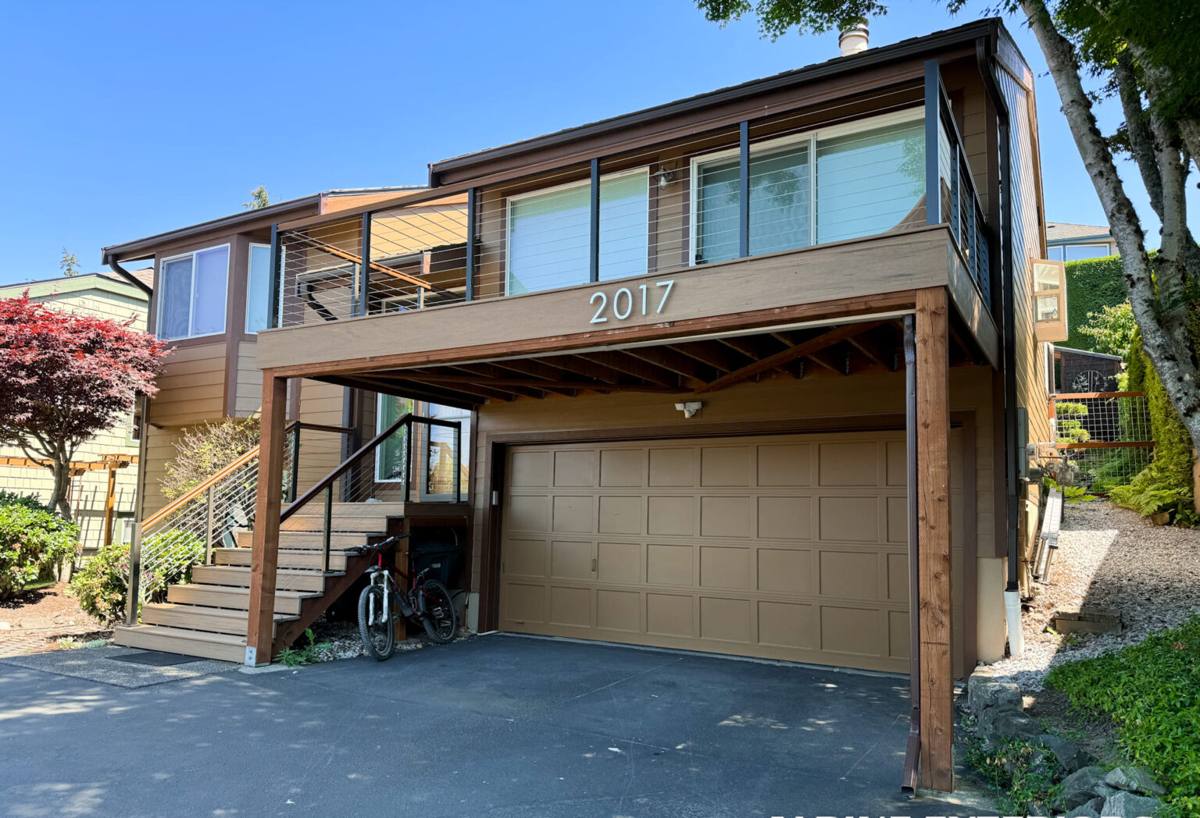
What the Local Climate Actually Does to a Roof
Salt Air and Corrosion
Homes near Chuckanut and the surrounding coastal pockets deal with airborne salt that inland Whatcom County properties simply don't see as much of. Salt air accelerates corrosion on exposed metal — nails, flashing, vent stacks, and gutter hardware. Standard electro-galvanized fasteners can start showing rust streaks within a few years in this kind of environment, and once a fastener corrodes, it loses grip and the material around it starts to fail. This is why fastener and flashing material selection isn't a minor detail on a coastal-influenced roof — it's one of the first things that determines whether the roof looks and performs the same at year fifteen as it did at year one.
Driving Rain
Rain here rarely falls straight down. Wind off the water pushes it sideways and up under eaves, into valleys, and around any penetration that wasn't flashed with enough overlap. A roof can look completely fine from the ground and still be taking on water at a valley, a chimney saddle, or a poorly sealed vent boot — problems that don't show up as a ceiling stain until the sheathing underneath has already been wet for a season or two. Correct installation is almost entirely about controlling water at these transition points, not just covering the open field of the roof.
Moss and Algae
Tree cover, moisture, and shade combine to make moss and algae a near-constant presence on roofs in this part of Skagit and Whatcom County. Moss isn't just cosmetic — it holds moisture against the roofing material, lifts shingle edges as it grows, and works its way under tabs and flashing over time. Left unaddressed for a few seasons, a mossy roof degrades faster than a clean one of the same age and material.
What a Correct New Roof Installation Actually Involves
A roof is a system, not a single layer of shingles. For an Alger home, we treat every layer as a chance to either build in protection against local conditions or leave a weak point that shows up in five years instead of twenty.
- Tear-off and deck inspection — old roofing comes off completely so the deck can be checked for soft spots, rot, or delamination before anything new goes down.
- Ice-and-water shield at vulnerable areas — self-adhering membrane at eaves, valleys, and around penetrations, where driving rain and wind-blown water are most likely to get underneath the roofing material.
- Synthetic underlayment across the field — a water-resistant barrier under the entire roof surface as a second line of defense beneath the shingles or panels.
- Corrosion-resistant flashing and fasteners — stepped flashing at walls and chimneys, and hardware rated for coastal-influenced exposure rather than standard interior-grade materials.
- Balanced attic ventilation — intake at the soffits and exhaust at the ridge, sized to match, so moisture doesn't build up in the attic and shorten the life of the roof from underneath.
- Algae-resistant roofing material where it fits the home and budget, to slow the rate at which moss and algae take hold in the first place.
Choosing the Right Roofing Material for an Alger Home
There's no single "best" roofing material for this area — it depends on the home's exposure, roof pitch, tree cover, and budget. Here's how the common options compare for a property dealing with salt air, driving rain, and heavy moss pressure.
| Material | How it handles this climate | Maintenance to expect |
|---|---|---|
| Algae-resistant asphalt shingle | Solid, cost-effective performance against driving rain; copper-infused granules slow algae and moss growth compared to standard shingles | Periodic gentle roof cleaning; gutter clearing each fall |
| Standard architectural shingle | Good rain performance but no built-in resistance to moss and algae, so growth shows up faster under shaded, damp conditions | More frequent moss treatment and cleaning than AR-rated shingles |
| Metal roofing (standing seam) | Sheds driving rain and moss very effectively due to a smooth, steep-shed surface; needs corrosion-rated fasteners and coatings near salt air | Low; occasional inspection of seams and fastener points |
| Cedar shake | Traditional look, but holds moisture longer than other options — the least forgiving choice in a heavy moss, high-rain environment without diligent upkeep | High; regular treatment and inspection required to prevent rot |
For most Alger homes, we lean toward algae-resistant architectural shingles or standing seam metal, depending on the roof's pitch, how much shade the property gets, and what the homeowner wants to maintain long term. Both are honest, durable choices for this climate when installed correctly — the installation quality matters as much as the material choice.
Our Installation Process
- On-site assessment — we walk the roof and attic, check the deck condition, note tree cover and shade patterns, and identify problem areas like valleys, chimneys, and low-slope sections.
- Material and system recommendation — based on the roof's specific exposure, we recommend a material and underlayment system, not just a default package.
- Tear-off and deck repair — old material removed, deck inspected and repaired where needed before anything new is installed.
- Underlayment and flashing installation — ice-and-water shield, synthetic underlayment, and corrosion-resistant flashing installed at every vulnerable point.
- Roofing material installation — shingles or panels installed to manufacturer spec, with attention to nailing patterns and exposure rates that matter more in high-wind, high-rain conditions.
- Ventilation check — soffit and ridge ventilation confirmed balanced for the attic size.
- Final walkthrough and cleanup — site cleared of debris and nails, and we walk the finished roof with the homeowner.
Living With Moss Season: What Homeowners Can Do
Even a well-installed roof needs some homeowner attention in a moss-heavy environment like this. A little routine care goes a long way toward getting the full lifespan out of a new roof.
- Keep overhanging branches trimmed back to reduce shade and let the roof dry out between rains
- Clear gutters and downspouts each fall before the heavy rain sets in, so water isn't backing up under the roof edge
- Have moss treated or gently removed before it spreads across a large area — it's far easier to manage early
- Avoid pressure washing shingles directly, which can strip granules and shorten the roof's life
- Schedule a roof check after major windstorms to catch lifted shingles or damaged flashing early
What a New Roof Costs to Install
Every roof is priced based on size, pitch, material, and how much tear-off and deck repair is involved, so we won't quote a number without seeing the roof. In general terms, homeowners can expect the following factors to move the price up or down:
| Factor | Effect on cost |
|---|---|
| Roof pitch and complexity (valleys, dormers, chimneys) | Steeper, more complex roofs take longer to install and cost more in labor |
| Material choice (asphalt vs. metal vs. cedar) | Metal and cedar carry a higher material cost than standard asphalt shingles |
| Deck condition underneath the old roofing | Rotted or soft sheathing found during tear-off adds repair cost before new roofing goes on |
| Ventilation upgrades | Adding or correcting soffit and ridge venting adds modest cost but protects the investment |
| Access and site conditions | Steep lots, limited driveway access, or heavy tree cover near the home can affect labor and disposal costs |
We provide a written estimate after walking the actual roof, so the homeowner knows exactly what they're paying for and why.
Why It Matters to Hire a Crew That Works This Area
A roofing crew that mostly works drier, inland jobs doesn't always think about corrosion-rated fasteners or extra flashing overlap at valleys, because they haven't had to. Working regularly in Alger and the surrounding Chuckanut area means we've seen firsthand how salt air, driving rain, and moss season interact on real roofs over time — not in a manual, but on actual jobs in this part of Whatcom County. That local experience shapes decisions that don't show up on a basic estimate: which fasteners to spec, where to add an extra course of ice-and-water shield, and which material genuinely holds up under this area's tree cover and weather rather than just looking good on install day.
If your roof is due for replacement, we're happy to take a look and walk you through what we'd recommend for your specific property — no pressure, no upsell, just a straight assessment. Reach out using the form below to schedule a free estimate.