 Chuckanut Exterior
 Lake Samish's Climate Is Hard on Decks — Here's Why
Lake Samish sits in a pocket of Whatcom County where thick fir and cedar canopy, a large body of water, and the Pacific weather patterns that move through the Chuckanut area all combine against outdoor wood surfaces. Many lots around the lake stay shaded most of the day, which means decks dry slowly after rain instead of drying within a few hours the way a full-sun deck would. Add in driving rain events that come through in fall and winter, a long stretch of the year when moss and algae actively grow rather than dying back, and the salt-tinged air that drifts inland from Chuckanut Bay and Samish Bay, and you have a combination that's genuinely tougher on a deck than a typical in-town lot sees.
None of that means a deck at Lake Samish is doomed — it means the material choice and the install details matter more here than they would on a dry, open, south-facing lot. That's the lens we bring to every composite decking project in this neighborhood.
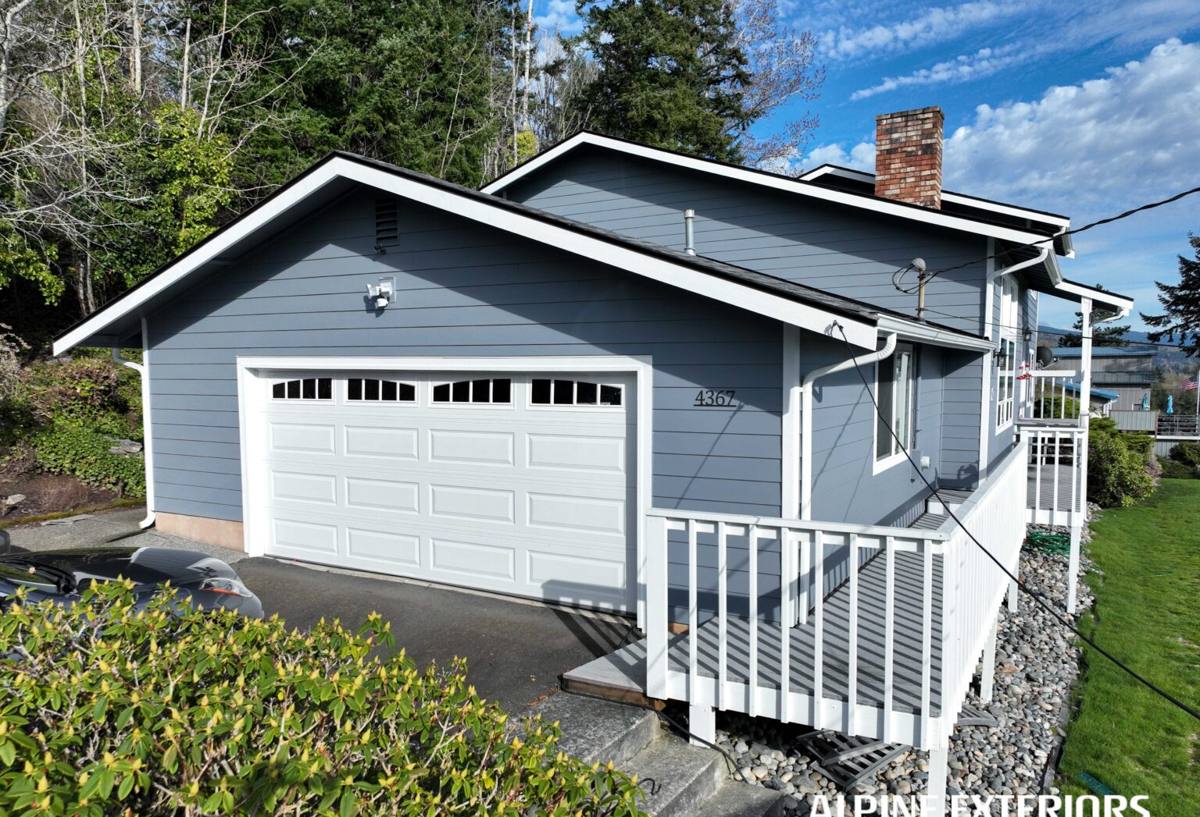
Why Composite Decking Makes Sense for This Setting
Composite decking is made from a blend of wood fiber and plastic, and the better products are fully capped in a polymer shell that keeps moisture out of the core. That matters a lot around a shaded lake lot, because it removes the rot and fastener-hole decay that eventually catches up with wood decking sitting under wet canopy for months at a stretch. You're also not staining or sealing it every year or two, which is a real advantage when a deck is hard to get equipment and supplies to.
What composite decking does not do automatically is resist moss and algae. Those are surface organisms that need moisture, shade, and organic debris (fir needles, cedar duff, pollen) to take hold — and they'll grow on the surface of a composite board just as happily as on wood if the board stays damp and dirty long enough. The material solves the decay problem; it doesn't solve the biology problem on its own. That's why board selection and how the deck is built matter as much as the product itself.
The Substructure Decisions That Matter More Here Than in Town
The framing underneath a composite deck is what actually determines whether it stays solid for decades, and a few details deserve extra attention on a Lake Samish lot:
- Joist spacing: composite boards generally require tighter joist spacing than solid wood decking — check the manufacturer's span tables, not just the old wood-deck spacing that might already be in place.
- Ledger flashing: where the deck framing attaches to the house, proper flashing keeps water from tracking behind the siding and into the rim joist — a slow, hidden failure that's common on shaded, damp walls.
- Footings on sloped ground: a lot of Lake Samish properties slope toward the water, which changes footing depth, drainage routing, and sometimes engineering requirements compared to a flat in-town lot.
- Ventilation under the deck: low clearance combined with shade traps moisture against the framing. Keeping adequate airflow underneath, and using joist tape to protect the tops of wood joists, extends the life of the structure the composite boards are riding on.
A composite deck is only as good as what's underneath it. We treat the substructure inspection or rebuild as the most important part of the job, not a formality before the "real" work starts.
Choosing a Board That Holds Up in Shade and Damp
Not all composite decking is built the same way, and the differences show up fastest in exactly the conditions Lake Samish lots have — shade, standing moisture, and organic debris.
| Board Type | Moisture & Moss Behavior | Maintenance Needs | Fit for Shaded Lake Lots |
|---|---|---|---|
| Uncapped composite | Absorbs surface moisture more readily; can hold algae film longer | Periodic cleaning required to prevent staining from setting in | Workable in full sun; not our first choice under heavy canopy |
| Capped composite | Polymer shell sheds surface water faster; easier to rinse clean | Occasional wash-down keeps it looking right | Solid choice for most Lake Samish decks |
| Grooved / hidden-fastener boards | No exposed screw heads for debris and moisture to collect around | Same as capped composite, slightly cleaner surface to maintain | Preferred where trees drop needles and duff onto the deck |
Color is a secondary but real factor: darker boards hide early staining better but run warmer underfoot in the rare stretches of direct sun, while lighter boards show algae staining sooner but generally rinse clean without much effort. Neither is wrong — it's a trade-off worth discussing against how much sun a specific deck actually gets before you pick a color.
Grooved vs. Square-Edge Profiles
Grooved-edge boards use hidden fasteners that clip into a channel on the board's side, leaving no screw heads on the surface. On a shaded deck, that matters because exposed fastener heads are exactly where moss and grime tend to establish first. Square-edge, face-screwed boards are still a legitimate option and cost a bit less installed, but they give moss and dirt more places to grab hold.
How We Approach a Lake Samish Composite Deck Install
- Site assessment — we look at sun exposure, tree canopy, slope, drainage paths, and how water moves across the lot before we plan anything.
- Substructure evaluation — existing framing gets inspected for rot and correct spacing; on a rebuild, footings and joists are set to current span tables for composite decking, not legacy wood spacing.
- Footing placement — depth and location account for the site's slope and drainage rather than a one-size approach.
- Framing and flashing — ledger boards get properly flashed, joists get protective tape, and airflow underneath is preserved.
- Decking installation — boards are gapped correctly for expansion and contraction across our temperature swings, and fastened with a hidden-fastener system where the board profile allows it.
- Fascia, trim, and railing — finished to current code requirements for guard height and baluster spacing.
- Final walk-through — we go over basic care with the homeowner before we call the job done.
Keeping Moss and Mildew From Taking Over
A composite deck under canopy still needs some seasonal attention — just far less than a wood deck would. A simple maintenance routine keeps a Lake Samish deck looking good year-round:
- Sweep off needles, cedar duff, and leaf debris regularly rather than letting it compost on the surface.
- Rinse the deck with a garden hose and a stiff, non-metal bristle brush a couple of times a year, more often on the shadiest sections.
- Use a cleaner made for composite decking if algae staining does set in — avoid pressure washers on tight settings, which can etch or fuzz the board surface.
- Keep gutters and downspouts directing roof runoff away from the deck surface, not onto it.
- Trim overhanging branches where reasonable to let more light and air reach the deck — even a modest increase in sun exposure slows moss regrowth substantially.
- Check that under-deck ventilation gaps haven't been blocked by landscaping, stored items, or skirting installed without vents.
Permits and Site Considerations Near the Lake
Properties near Lake Samish and the broader Chuckanut shoreline can fall under additional shoreline or critical-area review beyond what a standard in-town remodel requires, and slope or setback conditions vary lot to lot. We don't guess on this — we confirm current permit requirements with Whatcom County for the specific parcel before work begins rather than assuming a past deck's permit history still applies. Site access is its own consideration too: narrow lake-area driveways and steep approaches sometimes call for different staging and material handling than a standard subdivision lot.
Why It Matters That We Already Work This Neighborhood
A crew that's worked other Lake Samish properties isn't guessing at how a deck will hold up here — they've already seen which spots stay damp longest, which board choices actually shed moss versus which ones need constant attention, and how the local permitting process handles shoreline-adjacent lots. That familiarity shows up in practical ways: knowing to check for septic system locations before setting footings, planning around narrow or shared driveways for material delivery, and being able to respond quickly if a long rainy stretch changes the schedule. It also means fewer surprises mid-project, because the site conditions common to this area aren't a new problem to solve each time.
What Affects the Cost of a Lake Samish Composite Deck
Composite decking costs more upfront than pressure-treated wood, but the honest comparison has to include maintenance over the deck's life, not just the install invoice. Several factors move the price on a specific project more than others:
| Factor | Why It Changes the Price |
|---|---|
| Square footage and shape | More cuts, corners, and picture-framing add labor beyond simple square-foot math |
| Substructure condition | Repairing or fully rebuilding an aging frame costs more than decking over a sound one |
| Board tier | Entry-level capped composite versus premium grooved and hidden-fastener lines carries a real price spread |
| Railing and guard requirements | Code-compliant railing systems vary widely in material and labor cost |
| Site access and slope | Steep or narrow lake lots can require more time for material handling and equipment staging |
| Permit and shoreline review | Additional review near the lake can add time to the front end of a project |
We'd rather walk a specific site and give a real number than throw out a broad range that doesn't hold up once we see the lot.
If you're weighing composite decking for a home near Lake Samish, we're glad to take a look and talk through what your specific lot actually needs — no pressure, no obligation. Use the form below to request a free estimate.