 Chuckanut Exterior
 Building a Deck That Can Actually Handle Lake Samish
Lake Samish sits in a pocket of Whatcom County that gets its own weather within the weather — tucked between forested slopes, ringed by tall conifers, and close enough to the Chuckanut hills and the Salish Sea that the same storms bringing salt-laden air and driving rain off the water also settle in among the trees around the lake. A deck built here doesn't live in the same conditions as one on an open, sunny lot ten minutes away. It lives in shade for long stretches of the day, stays damp longer after a storm, and spends a good part of the year fighting moss instead of drying out in the sun. Building a custom deck for this setting means designing for those specifics from the first sketch, not bolting a standard deck onto a non-standard site.
This page focuses on one job in one place: custom deck construction for homes around Lake Samish. Not a generic deck-building overview — what actually matters here, given the tree cover, the moisture, and the long Whatcom County wet season.
What Makes a Lake Samish Lot Different
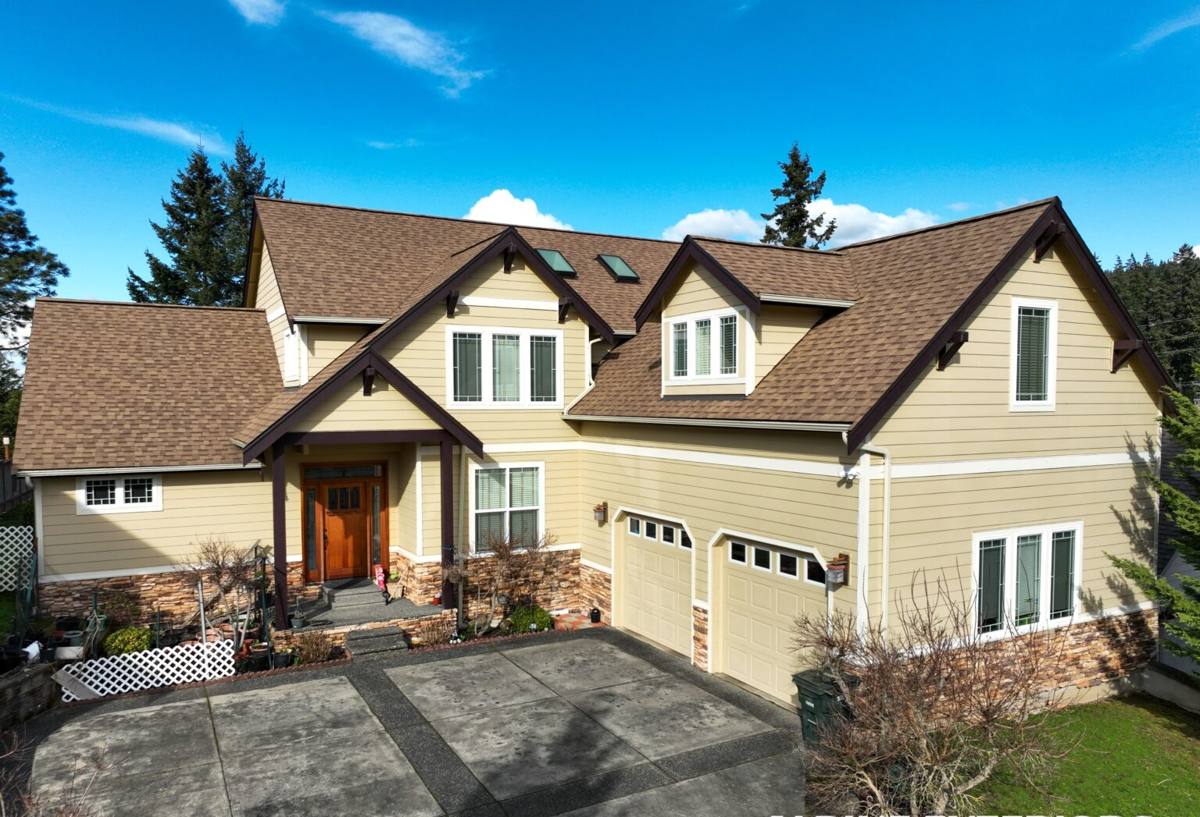
Most of the homes around the lake sit under or near a canopy of Douglas fir, cedar, and bigleaf maple. That canopy is part of what makes the area beautiful, and it's also the single biggest factor in how a deck ages here. Shade slows drying time after every rain. Falling needles, leaves, and seed litter collect in gaps between boards and along ledger lines. And because the lake itself adds humidity to the air right at ground level, decks in low or shaded spots can stay damp well after the rest of the yard has dried out.
Add in the region's broader climate — long stretches of driving rain, a wet season that runs from fall through spring, and the salt air that moves inland off Chuckanut Bay and the Samish flats during coastal storms — and you get a site that's harder on wood, fasteners, and finishes than a typical inland Whatcom County yard. Moss doesn't just grow on roofs out here; on a shaded, moisture-holding deck surface it can take hold within a season if the material and drainage aren't right.
None of that means a deck can't work at Lake Samish — it means the design has to account for shade, standing moisture, and organic debris as normal operating conditions, not worst-case exceptions.
Decking Material: What Actually Holds Up in Shade and Damp
Wood decking
Cedar and pressure-treated fir are still solid choices at Lake Samish, and cedar in particular has a natural resistance to rot and insects that suits a wet climate. The trade-off is maintenance: in a shaded, humid spot, wood needs more frequent cleaning and refinishing to keep moss and mildew from taking hold in the grain. Homeowners who like the look and feel of real wood and are willing to stay on top of a cleaning and sealing schedule do well with it here — it's not a low-maintenance choice on this kind of lot, and we say that upfront rather than after the sale.
Composite decking
Composite boards resist rot and don't need refinishing, which takes one maintenance task off the list. In a shaded, moss-prone environment, though, not all composites behave the same — surface texture and cap quality make a real difference in how easily moss and algae can get a foothold and how easy the board is to scrub clean without damaging the surface.
Capped composite / PVC decking
Fully capped composite and cellular PVC boards are our default recommendation for shaded, moisture-heavy sites like Lake Samish. The capped surface sheds water and organic debris better than uncapped composite or wood, resists moss and mildew staining, and holds up to routine scrubbing without the fiber core absorbing moisture. It costs more up front than wood or basic composite, but on a lot that stays damp for much of the year, it's the option that asks the least of the homeowner over time.
| Material | Moss/mildew resistance in shade | Maintenance | Typical lifespan |
|---|---|---|---|
| Cedar / pressure-treated wood | Fair — needs regular cleaning and sealing | Annual cleaning, periodic staining/sealing | 15–20 years with upkeep |
| Standard composite | Good, varies by product and cap quality | Occasional washing, no staining | 25+ years |
| Capped composite / PVC | Best — sheds moisture and debris well | Occasional washing only | 25–30+ years |
What's Underneath Matters More Than What's On Top
A deck surface can look great and still fail early if the framing underneath wasn't built for a wet, shaded site. This is where most of the real engineering decisions happen, and where cutting corners doesn't show up until years later.
Ledger flashing and attachment
Where the deck ties into the house is the single most common point of moisture failure on any deck, and it's a bigger risk on a shaded lot where that joint rarely gets full sun to dry out. Proper flashing, correct fastener spacing, and a code-compliant ledger connection aren't optional details — they're what keeps water from working its way into the house framing over time.
Ground clearance and airflow
Decks built low to the ground or over poorly graded soil trap moisture underneath, which speeds up rot in framing and gives moss and mold a place to establish even if the surface material is resistant. On Lake Samish lots with limited grading or sloped ground, we pay close attention to clearance, drainage paths, and airflow under the structure so it can actually dry out between storms.
Footings on sloped or root-heavy ground
Many lots around the lake have some grade to them, and mature tree roots aren't unusual this close to established forest. Footings need to be sized and placed for the actual soil and slope conditions on site, not assumed from a flat-lot standard — this is one of the areas where a generic plan run without a site visit tends to fall short.
Fasteners, Railings, and Hardware for a Damp, Shaded Site
Hardware choice matters more here than it does on a dry, sunny lot. We use corrosion-resistant fasteners rated for the moisture and salt-air exposure this region sees, and we favor hidden fastener systems on visible decking where the budget allows — fewer exposed fastener heads means fewer places for moisture to sit and streak or stain the surface over time.
For railings, the same shade-and-moisture logic applies. Wood rail systems need the same upkeep as wood decking. Metal or cable rail components should be corrosion-resistant hardware, not just a coated finish that can wear through. Composite or PVC-clad rail systems pair naturally with capped decking for a low-maintenance package that still holds up to the lake's humidity.
Design Decisions Specific to a Lake Samish Property
Every deck design starts with the site, and Lake Samish sites tend to share a few recurring challenges worth planning around from the start:
- Slope and grading — many lots step down toward the lake, which affects footing depth, stair placement, and how water sheds away from the structure.
- Tree canopy and root zones — deck footprint and footing placement need to work around mature trees rather than through them, both for the tree's health and the deck's stability.
- Sun pockets — even shaded lots usually have a spot that gets more direct light during part of the day; positioning the deck to catch it can make a real difference in how quickly it dries and how comfortable it is to actually use.
- Drainage away from the structure — on sloped or shaded ground, water needs a clear path away from footings and ledger connections rather than pooling near the house.
- View lines to the lake — where a lake view is part of the property's appeal, railing style and deck orientation get weighed against the moisture and maintenance trade-offs of a more open design.
Our Process for a Lake Samish Deck Build
- Site visit and assessment. We walk the property, check grade, drainage, sun/shade patterns, tree root zones, and the condition of any existing structure before we design anything.
- Design and material selection. Based on what we find on site, we recommend a decking and framing approach suited to the actual moisture and shade conditions of that lot — not a one-size-fits-all package.
- Permitting. We handle the permitting process through the appropriate Whatcom County channels for the scope of the project, including any additional requirements tied to proximity to the lake.
- Framing and structural work. Footings, ledger attachment, and framing are built to hold up under this site's specific moisture and load conditions, with attention to drainage and airflow underneath.
- Decking, railing, and finish work. Surface material and hardware go in last, installed to the manufacturer's spec so warranties stay intact.
- Final walkthrough. We go over the finished deck with the homeowner, including a straightforward rundown of what maintenance it actually needs going forward.
Project cost varies a lot based on size, framing complexity, slope, and material class — a straightforward ground-level deck in durable composite and a larger multi-level design in capped PVC with custom railing are very different jobs. We give homeowners a real number after the site visit rather than a guess over the phone.
Keeping a Lake Samish Deck Moss-Free Season After Season
Even the right material and framing benefit from some basic upkeep on a shaded, damp lot. A short seasonal routine goes a long way:
- Sweep off needles, leaves, and seed debris regularly, especially in fall and after windy storms — trapped organic matter is what feeds moss growth.
- Rinse or scrub the surface a few times a year to remove the thin film of algae and pollen that builds up in shaded spots before it becomes a moss problem.
- Check gaps between boards and clear out anything that's collected there, since trapped debris holds moisture against the material.
- Keep gutters and downspouts near the deck clear so runoff isn't dumping extra water onto or near the structure.
- Trim back overhanging branches where practical to let more light and airflow reach the deck surface.
- Inspect fasteners, railing connections, and the ledger area once a year for early signs of corrosion or moisture intrusion.
Why Hiring a Crew That Already Works Lake Samish Matters
A contractor who's built decks on flat, sunny lots elsewhere in Whatcom County can still do competent framing — but Lake Samish rewards crews who already understand its particular combination of shade, slope, and moisture. Knowing which materials actually resist moss in these conditions, how to detail a ledger connection on a site that rarely dries out fully, and how to grade and place footings around mature tree roots isn't generic deck-building knowledge — it's specific to this kind of site, and it's the difference between a deck that looks good on installation day and one that still looks and performs well a decade later.
We build custom decks for homes around Chuckanut and the lake because we're already familiar with the local permitting process, the soil and slope conditions common to the area, and the maintenance realities homeowners here actually deal with. That local familiarity shapes every recommendation we make, from material choice to footing placement.
If you're planning a new deck or replacing one that's struggled with moss, rot, or moisture damage, we're happy to take a look and talk through what would actually work best on your property. Reach out for a free, no-pressure estimate using the form below.