 Chuckanut Exterior
 Lake Samish Siding Takes a Different Kind of Beating
Homes around Lake Samish sit in a pocket of Whatcom County where the weather doesn't let up. The lake holds moisture in the air long after a storm has passed, the tree cover keeps siding shaded and slow to dry, and the same driving rain that soaks the rest of Chuckanut comes in sideways off the water on windy days. Add in the salt-tinged marine air that reaches inland from the Sound and you've got a combination that ages exterior siding faster than most homeowners expect.
That combination shows up as specific, predictable damage: moss and algae colonizing north-facing walls and anything under tree cover, paint that fails years ahead of schedule because the substrate underneath stays damp, and trim boards that soften or delaminate where water collects and never fully evaporates. None of this is unusual for the area — it's just what siding here has to survive, year after year. The point of a good repair isn't to make a wall look fixed for a season. It's to stop the specific moisture pathway that caused the damage in the first place, so the same spot doesn't fail again next winter.
What a Correct Repair Actually Involves
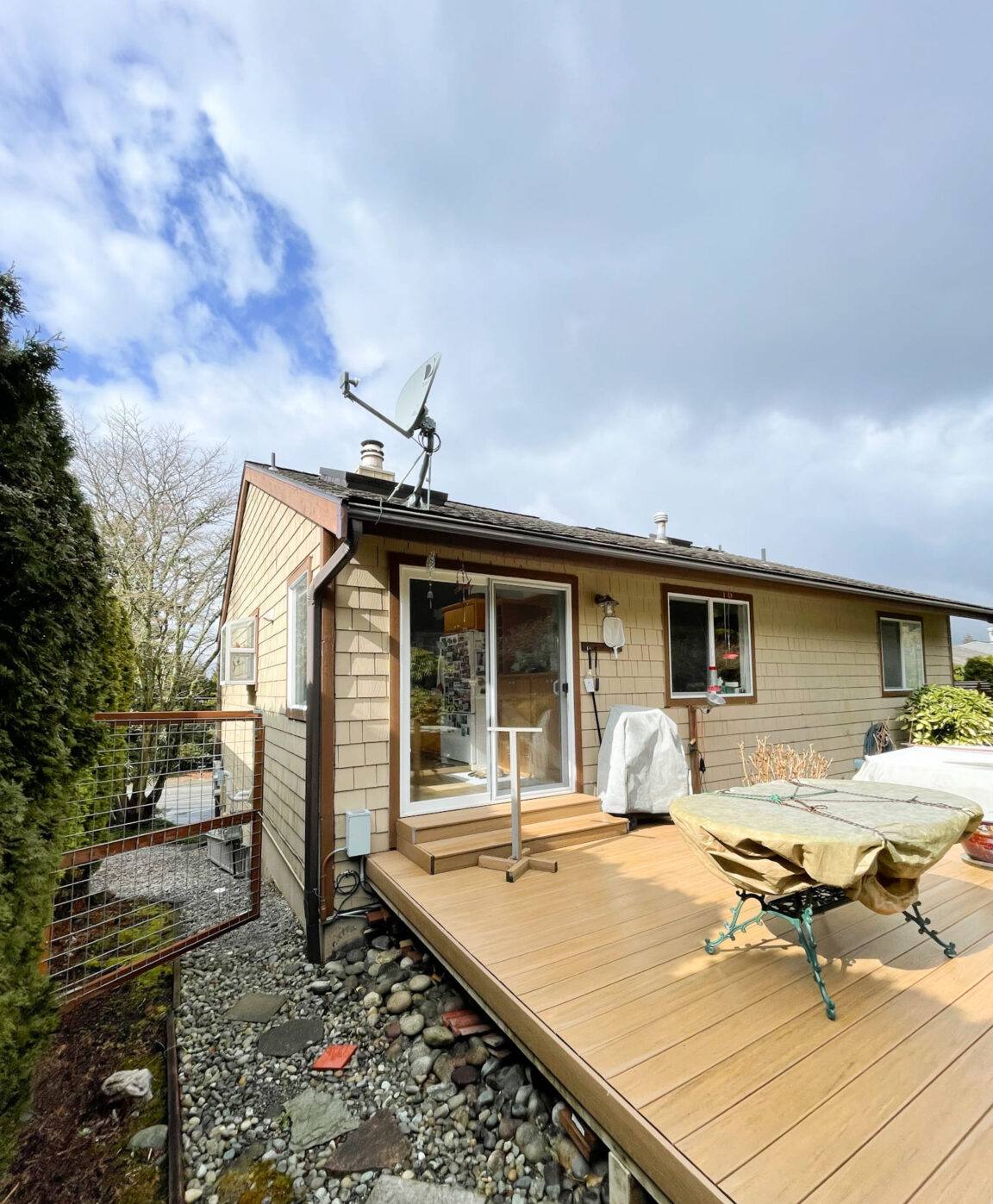
A lot of "siding repair" in this region amounts to caulking a crack, screwing a loose board back down, or slapping a patch of matching paint over a stain. Those fixes look fine for a photo and fail within a year, because they treat the symptom and ignore the water that's still getting in behind the cladding. A repair done right starts with figuring out why that section failed at all.
Diagnosis before repair
Before any board comes off, we look at what's actually happening behind it — is water tracking down from a gutter or roof valley above, wicking up from grade or a sprinkler line below, or getting trapped by a flashing detail that was never sealed correctly to begin with? Cutting into siding without answering that question means you're gambling that the new material will hold up better than the old, with no reason to believe it will.
Matching structure, not just color
Repairs also have to match the existing wall assembly — the housewrap or building paper behind the siding, the flashing at windows and penetrations, the fasteners, and the way panels or boards overlap each other. A patch that looks right from the driveway but breaks the original water-shedding sequence just creates a new leak point a few inches from the old one.
Sealing the actual entry point
Once the cause is identified, the fix addresses that — re-flashing a window head, correcting a kickout flashing that was missing at a roof-to-wall intersection, re-grading a spot where water pools against the foundation, or replacing rotted sheathing underneath before any new siding goes back on. Covering rot with new siding without addressing what's underneath just buys a few more years before the same repair has to happen again, done properly this time.
Common Failure Points Around Lake Samish
Every neighborhood has its own patterns, and Lake Samish homes tend to show trouble in a handful of predictable spots:
- North and lake-facing walls — least direct sun, slowest to dry, first place moss and mildew take hold
- Under deep eaves and tree canopy — shaded, humid, and often missed during routine cleaning
- Bottom courses near grade — splashback, ground moisture, and mulch beds pushed too close to the wall
- Window and door trim — caulk joints that were never designed to be the primary water barrier, now cracked and letting water track behind the casing
- Deck and porch ledger connections — a common spot for hidden rot where two structures meet and flashing details get complicated
- Panel seams and butt joints — especially on older siding where the original sealant has simply worn out
None of these are dramatic failures on their own. They're slow, quiet, moisture-driven problems that get more expensive the longer they're left alone — which is exactly why a repair job that only addresses the visible symptom rarely holds up out here.
Repair or Replace? How We Help You Decide
Not every damaged section needs a full re-side, and not every homeowner needs to hear "you need all new siding" when a targeted repair will do the job. The honest answer depends on how far the damage has spread and what's underneath it.
| Factor | Repair usually makes sense | Replacement is the better call |
|---|---|---|
| Extent of damage | Isolated to one or two wall sections | Recurring across multiple elevations |
| Sheathing condition | Solid, dry once opened up | Soft, spongy, or visibly rotted |
| Siding material | Still in production or a close match available | Discontinued profile or color, poor match |
| Age of existing siding | Under 15-20 years, otherwise sound | Original material near or past its service life |
| Underlying cause | A single fixable source (flashing, caulk, grading) | Systemic moisture issues behind large areas |
We'll tell you plainly which category your home falls into. If a repair will genuinely hold, that's what we recommend — there's no reason to sell a full re-side when a correctly executed repair solves the problem.
Our Process for Lake Samish Repairs
- On-site assessment — we look at the damaged area and the water path leading to it, not just the visible symptom
- Open it up — remove the affected siding and check the housewrap, flashing, and sheathing underneath before assuming anything
- Address the cause — correct the flashing, drainage, or sealant failure that let water in to begin with
- Replace damaged material — sheathing, framing if needed, and siding, matched as closely as possible to what's already on the wall
- Reseal and finish — proper flashing tape, sealant at the right joints (not every joint), and paint or factory finish matched to the surrounding siding
- Walk the whole elevation — while we're there, we flag any other early-stage trouble spots so you know what to watch, even if it's not urgent yet
What We Use for Repairs
For homes already clad in James Hardie fiber cement, repairs are straightforward — we cut in matching HZ5-engineered boards or panels, which are built for this exact wet, marine-influenced climate, and refinish with ColorPlus-matched product where possible so the repair doesn't stand out as a different shade five years later.
For homes currently sided in something else — vinyl, LP SmartSide, cedar, or an older fiber cement product — we'll still make an honest repair using a compatible material so the immediate problem gets solved. But if a homeowner is looking at a wall with recurring rot, failing paint, or moss that keeps coming back no matter how often it's cleaned, that's usually a sign the material itself is struggling with this climate, not just a one-time installation flaw. In those conversations we're straightforward about it: this is why we install James Hardie on every full re-side we do. It's non-combustible, engineered for wet regional exposure, backed by a strong transferable warranty, and it doesn't feed the moss and mildew cycle the way wood-based products can. A repair doesn't need to turn into that conversation — but we'll have it honestly if the underlying material is the real issue.
Why a Crew That Already Works Lake Samish Matters
Siding repair around a lake with heavy tree cover and shifting drainage isn't the same job as repair on a dry, open lot across town. A crew that's worked this specific area already knows which wall orientations fail first, how the tree canopy changes drying time, and where local grading and drainage tend to push water against foundations. That local pattern recognition shortens the diagnosis step and means fewer surprises once the siding comes off.
It also means showing up prepared — with the right underlayment, flashing tape, and sealants suited to a damp, shaded, moss-prone environment, rather than generic materials that might be fine somewhere drier. Whatcom County's coastal-influenced weather isn't hypothetical for us; it's the baseline we plan every repair around.
Signs Your Siding Needs a Closer Look
- Paint that's peeling, bubbling, or chalking well ahead of its expected repaint interval
- Soft or spongy spots when you press on siding or trim near the bottom of walls
- Moss or dark streaking that returns quickly after cleaning
- Gaps opening up at seams, corners, or where siding meets window and door trim
- Visible warping, cupping, or separation in individual boards or panels
- Musty smell or discoloration on interior walls that back up to an exterior wall
- Siding that feels damp to the touch even on dry days
Catching any of these early usually means a contained, affordable repair. Waiting means the damage spreads to framing and sheathing, and the job gets bigger and more expensive than it needed to be.
Get an Honest Look at Your Siding
If you're seeing any of these signs on a Lake Samish home, it's worth getting a straight answer about what's actually going on behind the wall before it turns into a bigger repair. We offer a free, no-pressure estimate — we'll tell you plainly whether you're looking at a targeted repair or something more, and why.