 Chuckanut Exterior
 Windows Built for Alger's Marine Climate
Alger sits close enough to the water that salt air is a fact of life, not an occasional nuisance. Combine that with Whatcom County's driving rain and a moss season that can stretch from fall through spring, and window assemblies here work harder than they do almost anywhere else in the state. Frames, seals, and flashing all take a slow beating from moisture cycling in and out, and salt-laden air accelerates corrosion on hardware and fasteners that aren't rated for it. A window installation that would hold up fine in a drier inland climate can start failing early out here if it's not detailed correctly for these conditions.
None of this means Alger homeowners need to overspend on exotic materials. It means the installation details — flashing sequence, sealant choice, hardware selection, and drainage — matter more than they would elsewhere, and cutting corners on any of them shows up faster than it would in a milder climate.
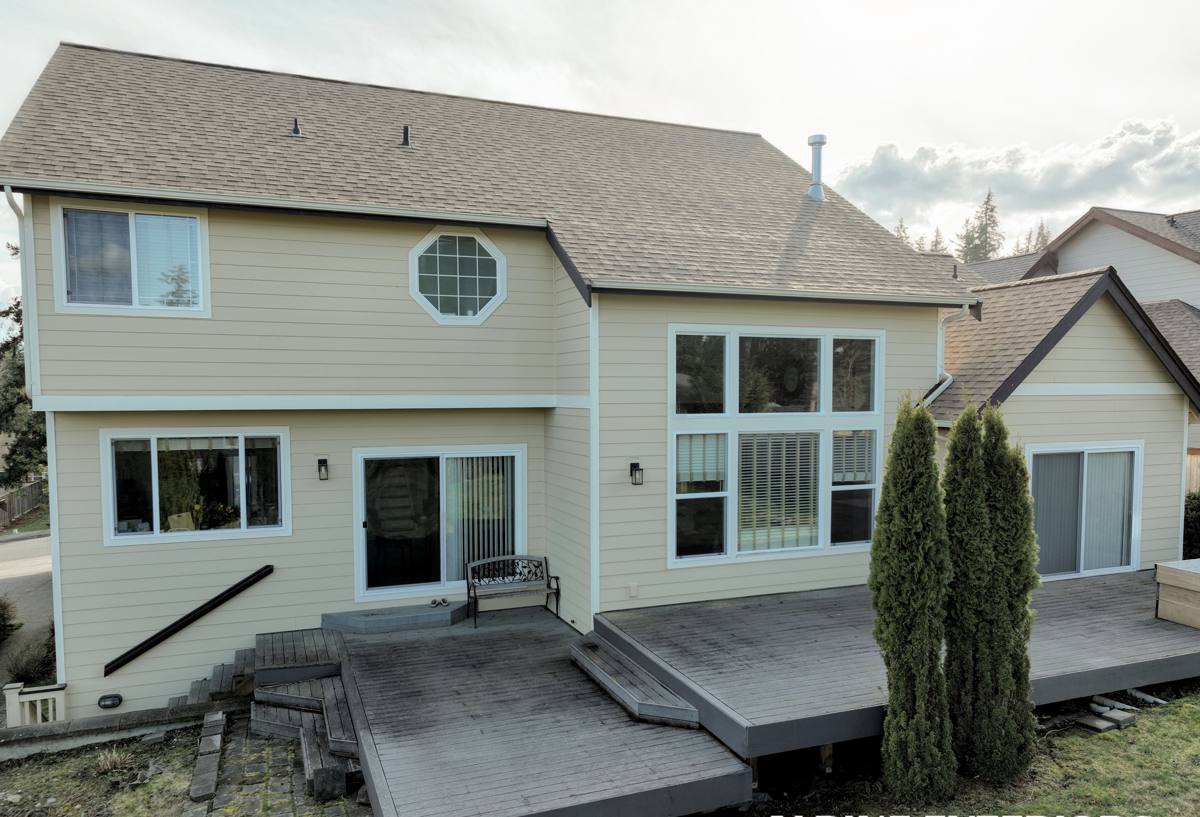
Signs Your Alger Home Needs New Windows
Older windows don't usually fail all at once. They show a pattern of small problems first. If you're seeing several of the items below, it's worth having the windows evaluated before the next wet season:
- Fogging or a permanent haze between panes (a sign the seal has failed and the gas fill is gone)
- Wood trim or sills that feel soft, or paint that's bubbling near the frame
- Visible moss or dark streaking building up on the sill or lower frame
- Drafts you can feel with a hand near the frame on a windy day
- Windows that stick, won't latch fully, or have warped enough to bind
- Hardware — hinges, latches, cranks — that's corroded, pitted, or seized
- A noticeable jump in heating costs without any other explanation
Any one of these on its own might just need repair. Several together, especially on the sides of the house that take the most weather, usually point to windows nearing the end of their service life.
What a Correct Window Installation Involves
Most window problems we're called out to fix in this area didn't start with a bad window — they started with an installation that skipped a step. The window itself is often the easy part. Getting the opening ready and sealed correctly is where the job is won or lost.
Flashing and the Weather Barrier
Every opening needs to be flashed so that any water that gets past the exterior siding is directed back out, not into the wall cavity. That means sill pan flashing at the bottom, house wrap integration at the sides and top, and a shingle-style overlap so water always sheds downward and outward. In a climate with as much driving rain as Chuckanut sees, this step isn't optional — it's the difference between a window that stays dry for decades and one that starts rotting the framing behind it within a few wet seasons.
Insulation and Air Sealing
The gap between the window frame and the rough opening needs to be filled with the right material — typically a low-expansion window foam, not standard construction foam that can bow the frame — and backed up with proper air sealing on the interior side. Done right, this stops drafts and moisture-laden air from working its way into the wall.
Sealant Selection
Exterior caulking has to be a product rated for continuous exposure to UV and salt air, applied at the right joints — not everywhere, since some joints are designed to weep water out and sealing them shut traps moisture instead of stopping it. This is a detail that's easy to get backwards if a crew is used to working in a different climate.
Choosing the Right Window for This Climate
There's no single "best" frame material — it depends on your budget, the look you want, and how much upkeep you're willing to do. Here's how the common options hold up specifically against salt air, moisture, and moss exposure:
| Frame Material | Salt Air / Moisture Resistance | Maintenance | Typical Cost Position |
|---|---|---|---|
| Vinyl | Very good — won't corrode or rot, handles moisture well | Low — occasional cleaning | Most affordable |
| Fiberglass | Excellent — stable in temperature swings, resists warping | Low | Mid to upper range |
| Wood (clad exterior) | Good on the clad side, but any breach exposes wood to rot risk | Higher — finish and seals need periodic attention | Upper range |
| Aluminum | Poor without special coatings — prone to corrosion and condensation in salt air | Moderate | Varies |
For most homes in the Alger area, vinyl or fiberglass frames give the best balance of weather resistance and low upkeep. If you want the look of real wood on the interior, a wood-interior/clad-exterior unit can work, but it's worth going in with clear eyes about the added maintenance that comes with it — that's a trade-off we'll walk through honestly rather than talk you into or out of a look you want.
Glass Package
Double-pane, low-E glass is the standard baseline for this climate and handles our winters and marine humidity well. Triple-pane adds meaningful sound dampening and a bit more insulation value, which is worth considering on a busy road or a north-facing wall that never gets sun, but it's rarely required to hit code and adds cost and weight. We'll tell you where it makes sense on your specific house rather than upselling it across the board.
Our Installation Process
- On-site assessment — we check each opening for rot, framing condition, and current flashing before quoting anything
- Measure and order — accurate measurements matter more than people expect; a window that's slightly off doesn't seal right no matter how careful the installation is
- Remove and inspect — old windows come out and we look at the sheathing and framing underneath before anything new goes in
- Repair as needed — any soft wood or compromised sheathing gets addressed before the new window goes in, not covered up
- Flash, set, and seal — sill pan, sides, head flashing, low-expansion foam, and correctly placed exterior sealant
- Interior and exterior finish — trim, caulking, and cleanup so the job looks finished, not just functional
- Final walkthrough — we test operation and check the seal with you before we call it done
Cost Factors to Expect
Every home is different, but the line items that move the price on a window installation in this area are fairly consistent:
| Factor | Why It Affects Cost |
|---|---|
| Frame material and glass package | Vinyl is generally the most affordable; fiberglass and clad-wood cost more upfront |
| Condition of the existing opening | Rot or damaged framing found during removal adds repair work before the new window can go in |
| Window size and configuration | Larger units, bays, and custom shapes cost more than standard single or double units |
| Number of windows done at once | Doing multiple windows in one visit is generally more efficient than one at a time |
| Access and site conditions | Upper-story or hard-to-reach windows take more time and equipment |
We give straightforward, itemized quotes so you can see exactly what's driving the number — no vague lump-sum pricing that hides what you're actually paying for.
Why a Crew That Already Works in Alger Makes a Difference
A window installer who mostly works drier inland areas isn't necessarily doing anything wrong — they're just used to a different set of failure points. Out here, we've seen what happens when flashing details or sealant choices aren't matched to salt air and near-constant winter moisture, because we're the ones called back out to fix it years later. That experience shapes how we detail every opening, from the flashing sequence to which joints get sealed and which get left to drain.
Working regularly in and around Chuckanut and greater Whatcom County also means we're familiar with the general permitting expectations and typical construction found in homes of this area, which keeps the job moving without surprises.
Living With Your New Windows: Moss Season Maintenance
New windows installed correctly need very little upkeep, but a few habits will keep them performing well through a long moss season:
- Rinse sills and tracks a couple of times a year to clear organic buildup before it holds moisture against the frame
- Keep nearby gutters and downspouts clear so runoff isn't sheeting directly across window openings
- Check exterior caulking annually for cracking or separation, especially after a hard winter
- Trim back vegetation that keeps a window shaded and damp longer than the rest of the house
- Operate every window a few times a year, even ones you don't use often, so hardware doesn't seize up
If you're weighing whether it's time to replace or you just want a straight answer on what your current windows need, we're happy to take a look. Reach out for a free, no-pressure estimate using the form below.