 Chuckanut Exterior
 Windows Built for Life on Lake Samish
Lake Samish sits in a pocket of Whatcom County that gets more shade, more standing moisture, and more wind-driven weather off the water than a typical in-town lot. Homes ringing the lake and up along the Chuckanut corridor deal with conditions that generic window sales pitches rarely account for: tree canopy that keeps siding and trim damp for days after a storm, driving rain that comes in sideways off the water, and a moss season that runs longer here than it does in flatter, more open neighborhoods nearby. Energy-efficient windows are only "efficient" if they're built and installed to handle that environment. A window with a great efficiency rating on paper that leaks, fogs, or rots at the sill within a few years isn't saving anyone money.
We work on homes around Lake Samish regularly, which means we already know what the lake-facing and shaded lots throw at a window install before we show up — tight access, softer ground near the shoreline, and building envelopes that were often sealed decades ago with materials that have since failed.
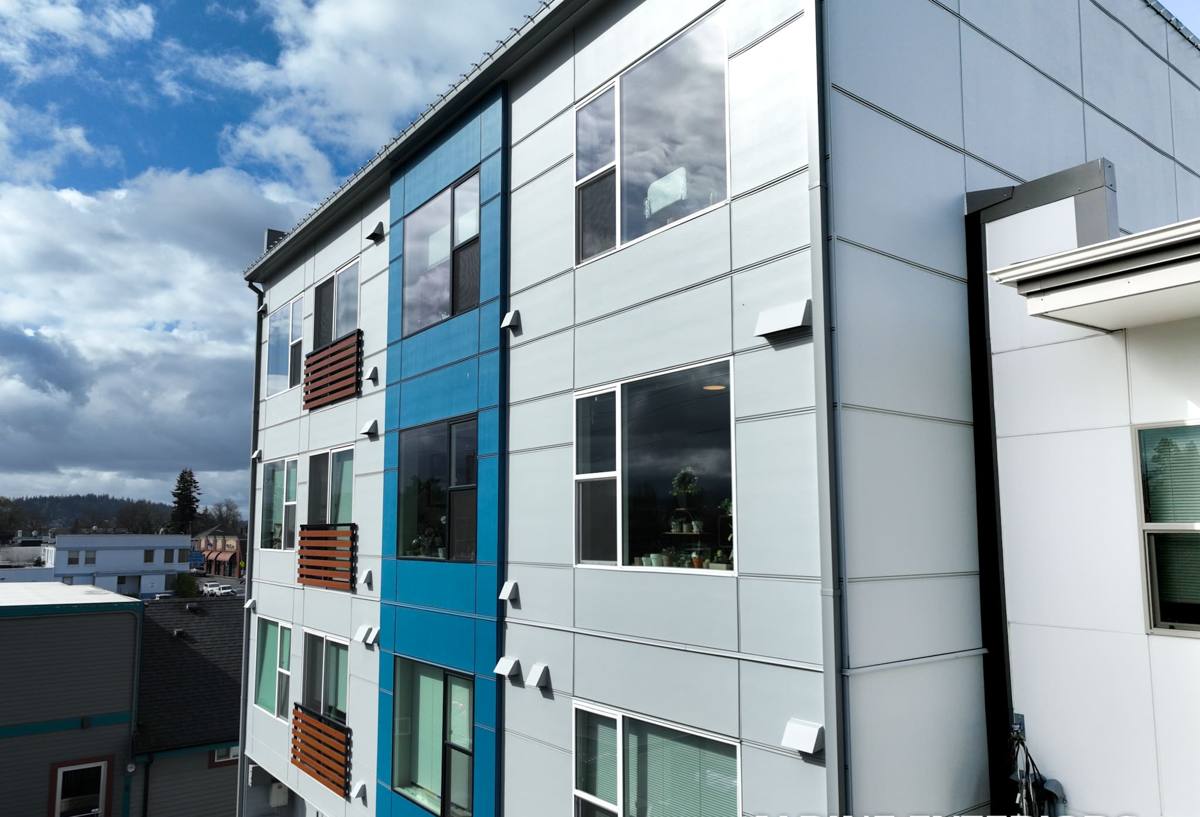
The Climate Your Windows Are Actually Fighting
Driving Rain and Wind-Driven Moisture
Whatcom County gets a lot of rain, but the rain that matters most for windows is the kind that comes in at an angle. Lake Samish's setting between wooded slopes and open water funnels wind in ways that push rain sideways against west- and south-facing walls. That kind of driving rain finds any gap in flashing, sealant, or a poorly bedded nailing fin. Over years, water that gets behind the window frame instead of running off it is what causes rot, mold, and hidden framing damage that costs far more to fix than the window itself.
Deep Shade, Humidity, and a Long Moss Season
Many Lake Samish properties sit under mature fir and cedar cover, which keeps exterior surfaces — siding, trim, and window sills — damp longer after every rain than a house in open sun. That extended damp period is exactly what moss, algae, and mildew need to take hold, and it also accelerates decay in wood sills and trim around older windows. It doesn't directly rot glass or vinyl, but it breaks down caulking and wood trim faster, which opens the door for the water intrusion that does the real damage.
Temperature Swings Near the Water
Being close to the lake also means more days with condensation on glass — cool mornings meeting warmer, more humid indoor air. Older single-pane or poorly sealed double-pane windows fog up and sweat, which drips onto sills and frames and adds to the moisture load those surfaces are already carrying from rain and shade. Newer glass packages with the right coatings and gas fills largely solve this, and it's one of the more noticeable day-to-day differences homeowners here report after a replacement.
What "Energy Efficient" Actually Means for This Location
Efficiency ratings are only useful if you know which numbers matter for a shaded, damp, waterside property versus an open, sunny one. For most Lake Samish homes, we're less focused on chasing the lowest possible SHGC (solar heat gain, which matters more on sun-baked south walls) and more focused on U-factor (overall heat loss) along with air and water infiltration ratings. A window that's well-rated for insulation but poorly rated for water resistance is a bad match for a site like this.
Frame Material Trade-Offs
Frame choice matters as much as the glass package in a damp, shaded environment. Here's how the common options generally compare for a Lake Samish setting:
| Frame Material | Moisture & Humidity Behavior | Insulating Value | Maintenance | Typical Lifespan |
|---|---|---|---|---|
| Vinyl | Won't rot; can expand/contract with big temperature swings | Good | Low | 20–30 years |
| Fiberglass | Very stable through moisture and temperature shifts | Very good | Low | 30–40+ years |
| Wood-clad | Attractive interior wood, but cladding seams need monitoring in constant shade | Very good | Higher — seams and finish need periodic checks | 20–30 years with upkeep |
| Aluminum | Conducts cold and can condense heavily; less common for full replacements here | Weaker unless thermally broken | Low | 20–30 years |
Our general standard for shaded, waterside lots like Lake Samish is vinyl or fiberglass for most full-frame replacements — both resist the constant damp cycle without the seam or finish upkeep that wood-clad units need in low-sun conditions. Wood-clad is still a fine choice for owners who want the interior wood look and are willing to keep up with it; we'll walk through that trade-off honestly rather than steer everyone toward one product.
Signs Your Current Windows Are Underperforming
Before recommending replacement, we look for concrete signs that a window has stopped doing its job — not just its age. Common indicators on Lake Samish homes include:
- Fogging or a permanent haze between panes, a sign of a failed seal on a double-pane unit
- Soft or discolored wood at the sill or bottom corners of the frame
- Drafts you can feel by hand along the frame edge on a windy day
- Visible gaps or cracked, shrunken caulking around the exterior trim
- Moss or dark staining building up on the sill or trim faster than on the rest of the wall
- Difficulty opening, closing, or latching that didn't used to be a problem
- Noticeably higher heating bills compared to similar-sized homes nearby
One or two of these usually means a repair or targeted resealing will hold for a while. Several at once, especially soft wood at the sill, usually means the window and the framing behind it need to come out.
What a Correct Installation Actually Involves Here
Given how much water this location deals with, install details matter more than the window brand. A correct job includes:
- Stripping back to sound framing and checking for hidden rot before anything new goes in
- Installing a proper sill pan so any water that does get past the window drains back outside instead of into the wall
- Flashing tape and building paper integration that shed water downward in the correct shingle-style overlap
- Low-expansion foam and backer rod at the frame gap — not just caulk alone — for both insulation and a secondary water barrier
- Exterior sealant rated for damp, shaded conditions and applied at the manufacturer's specified points, not sealed all the way around, which traps water instead of letting it drain
That last point trips up a lot of DIY and lower-end installs: sealing a window completely airtight around its entire perimeter feels thorough, but it can trap any water that does get in behind the frame with nowhere to go. On a shaded, high-moisture lot like Lake Samish, that mistake shows up as rot a few years later, not immediately — which is exactly why it's worth getting right the first time.
Our Process for Lake Samish Homes
The steps don't change much from house to house, but what we're checking for at each one is shaped by this location:
- On-site assessment — we check every window opening for rot, prior water damage, and how much shade and wind exposure that specific wall gets
- Measuring and product selection — we walk through frame material, glass package, and hardware options based on your home's exposure and your budget, not a one-size answer
- Scheduling around weather — openings are only exposed for as long as it takes to swap the unit; we plan around forecasted rain rather than working through it
- Installation — proper sill pan, flashing, foam, and sealant sequence as described above, on every window, every time
- Walkthrough and cleanup — we test operation, check seals, and clear debris before we consider the job done
Why a Crew That Already Works Lake Samish Matters
Access around the lake is different from a standard in-town lot. Driveways can be steep, narrow, or shared, and some properties sit close to the shoreline with septic or well systems that need to be respected when staging equipment and material. Crews unfamiliar with the area sometimes underestimate site logistics and either scope the job wrong or damage landscaping getting materials to the house. Knowing which roads handle a loaded truck comfortably, and knowing to check with a homeowner about well or septic locations before setting up staging, isn't something you learn from a spec sheet.
Whatcom County permitting and code requirements can also apply to window replacement in certain scopes, particularly if openings are being enlarged or structural framing is affected. A crew that regularly works this area already knows when a permit is needed and how to keep a straightforward replacement straightforward, without surprise delays.
What Affects Cost
Every home is different, but the main variables that move the price on a Lake Samish window project are usually the same:
| Cost Factor | Why It Matters |
|---|---|
| Number and size of openings | More or larger windows means more material and labor |
| Frame material chosen | Vinyl is generally the most budget-friendly; fiberglass and wood-clad cost more upfront |
| Condition of existing framing | Hidden rot found once the old window is out adds repair time and material |
| Access and staging | Steep driveways, upper-story windows, or tight lakeside lots can add labor time |
| Glass package | Upgraded low-E coatings and gas fills cost more but reduce condensation and energy loss |
We'll always give you a real number for your specific home rather than a generic per-window estimate — the variables above can shift a quote meaningfully in either direction.
If your windows are fogging, drafting, or showing soft wood at the sill, or you just want a straight opinion on whether repair or replacement makes more sense for your Lake Samish home, we're glad to take a look. Reach out for a free, no-pressure estimate using the form below.