 Chuckanut Exterior
 Why Lake Samish Puts Windows to the Test
Homes around Lake Samish sit in one of the more demanding microclimates in Whatcom County. The lake and the surrounding timber hold moisture in the air long after a storm has passed, tree cover keeps large sections of most roofs and walls in shade for much of the day, and wind off the water drives rain sideways into siding and window openings rather than letting it fall straight down. Add in the salt-tinged air that moves inland from Samish Bay and the greater Puget Sound on windy days, and you have a combination that is genuinely tough on window assemblies — frames, seals, hardware, and glass alike.
None of that means custom windows are a bad idea here. It means the details matter more than they would on a dry, open, inland lot. A window that would perform fine in a sunny subdivision can fail early at Lake Samish if it was never built or installed with this environment in mind.
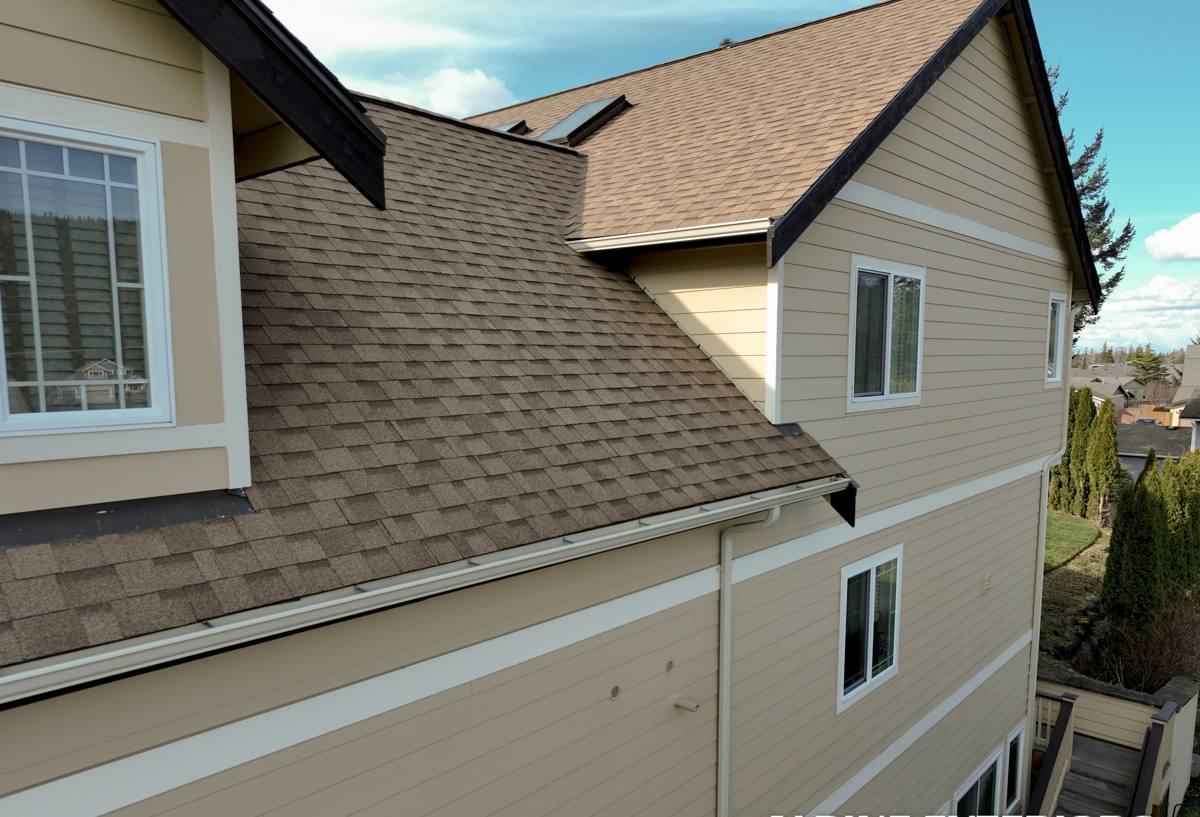
What the Local Climate Actually Does to Windows Over Time
Driving Rain and Wind-Driven Moisture
Wind-driven rain doesn't just hit glass — it pushes water sideways and upward into the gaps around a window frame, testing flashing and sealant joints in a way calm rainfall never does. On exposed or lake-facing walls, this is the single biggest driver of hidden rot and interior water staining we see in the area.
Shade, Humidity, and Moss
Tree-shaded lots near the lake stay damp longer after every rain event. That extended dampness is exactly what moss, algae, and mildew need to establish themselves on sills, tracks, and exterior trim. Once moss gets a foothold on a window sill or the wood trim around a frame, it holds moisture against the surface even longer, accelerating whatever decay or finish failure is already underway. Whatcom County's long, wet moss season means this cycle can run for months at a time rather than just a few weeks.
Salt Air and Hardware
Homes closer to open water catch salt-laden air on windy days. Salt accelerates corrosion on unprotected metal hardware — hinges, cranks, locks, and screws — and can degrade certain finishes faster than a purely inland climate would. This is a slower, quieter problem than rot, but it shows up as stuck cranks, pitted hardware, and locks that stop closing cleanly.
Temperature Swings and Condensation
Lake-adjacent air holds more moisture, and that moisture shows up as condensation on interior glass when warm indoor air meets a cold window surface. Persistent condensation on sills and lower sashes is often the first visible sign that a window's seal or glazing is no longer keeping up.
Signs Your Current Windows Are Losing the Battle
- Fogging or a hazy film between the panes of a double- or triple-glazed unit — the seal has failed and moisture has gotten between the glass layers
- Soft, discolored, or spongy wood at the sill or lower corners of the frame
- Moss or dark green-black growth on sills, tracks, or exterior trim that returns soon after cleaning
- Cranks, locks, or sliders that stick, grind, or require more force than they used to
- Visible daylight or a noticeable draft around the frame when the window is closed and locked
- Paint or finish that's bubbling, peeling, or chalking faster on the lake-facing side of the house than elsewhere
- Noticeably higher heating bills without any other explanation
Any one of these on its own might just mean routine maintenance. Two or three together, especially on the side of the house that faces the lake or takes the most wind, usually mean the window assembly itself is past the point where cleaning or re-caulking will fix it.
What a Correct Installation Looks Like Here
"Custom windows" doesn't just mean windows sized to an odd opening — it means the whole assembly is specified and installed for the conditions that particular wall actually faces. For Lake Samish that means paying close attention to a few things that get skipped on easier jobs:
Flashing and Water Management
The flashing detail around a window — how water that gets past the glass and frame is directed back out instead of into the wall cavity — matters more here than almost anywhere else in the county. We install with a full head, jamb, and sill flashing sequence that assumes wind-driven rain will reach the opening, because on a lake-facing wall, it will.
Sill Design and Drainage
A sill that doesn't shed water quickly becomes the first place moss and rot take hold. Correct sill pitch and clear weep paths so any water that does get into the frame has somewhere to go are non-negotiable on this kind of site.
Sealant and Gasket Quality
Not all sealants and weatherstripping hold up the same way to repeated wet-dry cycling and shade-driven dampness. We use products rated for sustained exposure rather than the cheapest option that looks fine on install day.
Hardware Selection
For homes closer to the water, we lean toward hardware with better corrosion resistance rather than standard-grade cranks and locks that can start pitting or sticking within a few seasons.
Frame Materials: What Holds Up Around the Lake
Every frame material has real trade-offs. Here's how the common options actually perform in a damp, shaded, occasionally salty environment like Lake Samish — not in a showroom.
| Frame Material | Moisture Behavior | Maintenance | Best Fit For |
|---|---|---|---|
| Vinyl | Won't rot; unaffected by moss or salt air | Low — occasional cleaning | Most Lake Samish homes prioritizing durability and value |
| Fiberglass | Excellent stability, minimal expansion/contraction | Low | Larger openings and lake-facing walls with heavy wind exposure |
| Wood (clad or unclad) | Attractive but vulnerable to prolonged dampness and moss if finish isn't maintained | High — regular refinishing and inspection needed | Homeowners who want a traditional look and are committed to upkeep |
| Aluminum | Won't rot but conducts cold and can corrode near salt air without proper coating | Moderate | Limited use; usually not our first recommendation this close to the water |
We're honest with clients about wood: it can look great, but in a shaded, damp, moss-prone setting it demands a real maintenance commitment. If that's not something you want to keep up with, we'll say so rather than sell you a product that will disappoint you in five years.
Glass and Glazing for This Climate
Insulated glass units (double- or triple-pane) with a quality low-E coating and properly gas-filled sealed units are the baseline here — the temperature difference between a cold lake-effect morning and a heated interior is enough to cause real condensation problems on lesser glass. For rooms that see more direct exposure to wind and rain, we also look at:
- Warm-edge spacer systems, which reduce the cold-edge effect that drives condensation at the perimeter of the glass
- Impact-resistant or laminated options for particularly exposed openings
- Tinted or low-E coatings tuned for the amount of shade versus direct sun a given wall actually gets, since tree cover varies a lot from one side of a lake home to another
There's rarely one "correct" glass spec for an entire house here — the lake-facing wall and the tree-shaded wall often warrant different choices.
Our Process
- On-site assessment. We look at each opening individually — sun exposure, wind exposure, current condition, and any existing moisture or rot issues — rather than quoting a blanket spec for the whole house.
- Product recommendation. We walk you through frame and glass options suited to what that specific wall faces, with honest trade-offs, not a single upsell pitch.
- Removal and inspection. When we pull the old window, we inspect the framing underneath for hidden rot or water damage before anything new goes in — this is where problems that started years ago often surface.
- Correct flashing and installation. Full flashing sequence, proper shimming and leveling, and sealant appropriate for sustained wet-dry cycling.
- Finish and cleanup. Interior and exterior trim work finished to match the home, site cleaned up, and old materials hauled away.
- Walkthrough. We show you how the new hardware operates and flag anything worth keeping an eye on for your first year.
Maintenance Checklist for Lake Samish Homeowners
Even the right windows, correctly installed, benefit from a little seasonal attention in this climate:
- Clear moss and debris from sills and tracks before it has a chance to hold moisture through the wet season
- Rinse salt residue off frames and hardware after windy weather off the water, especially on lake-facing walls
- Check that weep holes on sills are clear and draining, not clogged with dirt or moss
- Exercise cranks and locks periodically so hardware doesn't seize from disuse plus corrosion
- Inspect exterior caulking and touch it up before gaps widen into real leak paths
- For wood frames, plan on refinishing on the schedule the manufacturer recommends — don't wait for visible damage
Cost Factors to Expect
Every project is different, but the main variables that move the price on a Lake Samish custom window job are consistent: opening size and how many openings, frame material, glass upgrades (impact resistance, extra low-E coatings, triple pane), the condition of the existing framing once we open the wall up, and how much trim or siding work is needed to finish it properly. A straightforward vinyl replacement in a standard opening sits at the lower end of the range; a large fiberglass unit on an exposed lake-facing wall with hidden rot repair and upgraded glazing sits at the higher end. We'll give you a clear, itemized number after the on-site assessment — not a rough guess over the phone.
Why Local Experience Matters Here
A crew that hasn't worked around Lake Samish before will often spec the same window and the same install method they'd use on a dry, open lot across the county — and be surprised a season or two later when moss returns to the sill or a lake-facing unit starts leaking. Working this specific area regularly means we already know which walls take the worst of the wind-driven rain, how long shaded surfaces stay wet after a storm, and which materials and details actually hold up through a full Whatcom County wet season rather than just looking good on install day. That's the difference between a window that needs attention again in a few years and one that quietly does its job for decades.
If your windows around Lake Samish are showing their age — or you're planning new construction or a remodel and want it done right from the start — we're happy to come take a look. Reach out for a free, no-pressure estimate using the form below.