 Chuckanut Exterior
 Roofing Around Lake Samish: A Different Kind of Wear
Lake Samish sits in the wooded corridor between Bellingham and the Skagit Valley, just off the Chuckanut Drive area and within reach of Samish Bay and the broader Puget Sound air mass. Homes here are tucked under tall conifers and big-leaf maple, close to the water, and shaded for much of the day. That setting is a big part of why people live here, but it is also exactly the combination — shade, moisture, and marine-influenced weather — that ages a roof faster than it would in a drier, more open part of Whatcom County.
A roof on a sunny, exposed lot and a roof on a shaded Lake Samish lot are not the same job, even if the shingle is the same. We've worked enough roofs around this lake to know which slopes hold moss, which valleys take the worst of the driving rain, and where a roof needs extra attention it wouldn't need three miles away in town. This page is about what a correct new roof installation looks like for a Lake Samish home specifically — not a generic roofing overview.
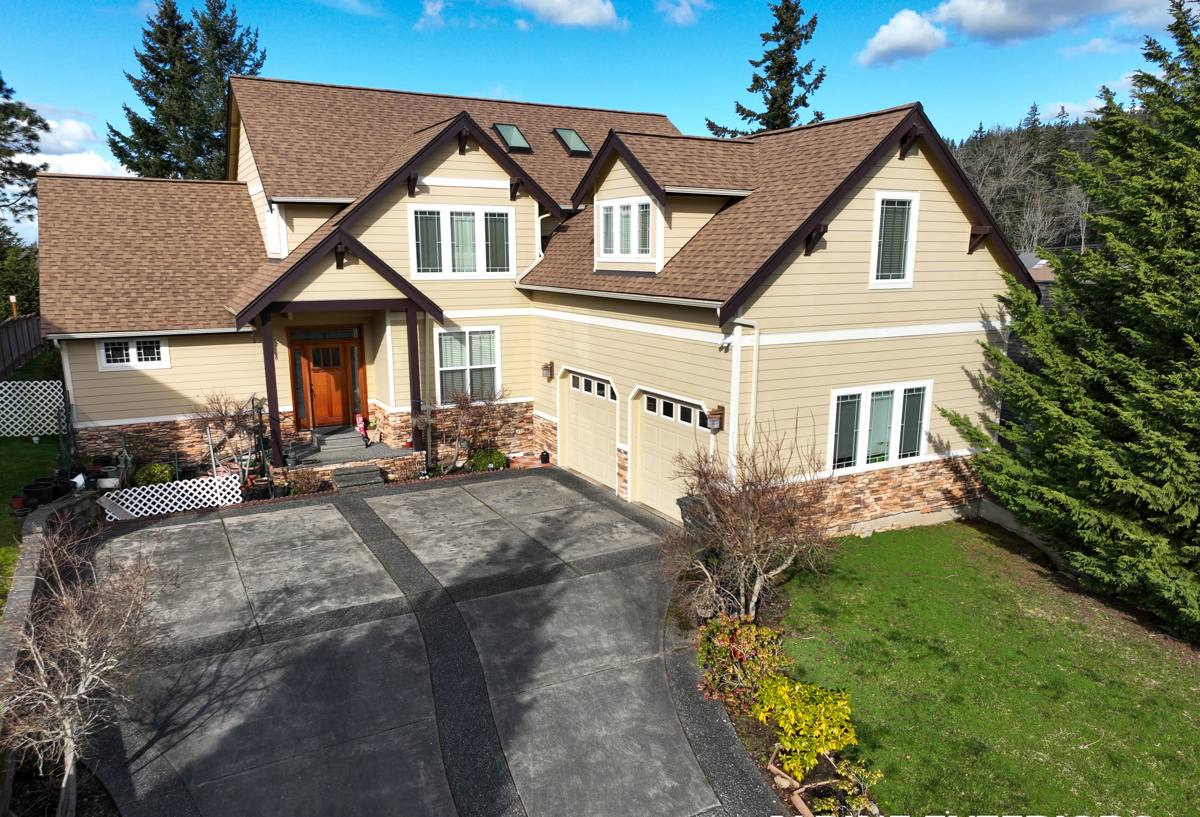
Why the Local Climate Is Hard on Roofs Here
Moss and Shade
North- and east-facing roof slopes around the lake, especially ones shaded by conifers, stay damp far longer after a rain than a roof in the open. That extended dampness is exactly what moss and algae need to take hold. Once moss establishes itself, it doesn't just look bad — it lifts shingle edges, holds water against the roof deck, and accelerates granule loss. A roof that would otherwise last two decades can lose years off its service life if moss is left to spread unchecked.
Driving Rain and Wind
Whatcom County gets a lot of rain, but the rain that does the damage isn't the gentle, straight-down kind — it's wind-driven rain that gets pushed sideways under shingle edges, into exposed nail heads, and up under flashing that wasn't properly lapped. A roof near the lake, with wind funneling across open water and through gaps in the tree line, sees more of this sideways-driving rain than a roof tucked into a fully built-up neighborhood.
Salt-Laden Marine Air
Lake Samish is inland, but the air moving through this part of the Chuckanut corridor carries moisture off Samish Bay and Puget Sound. That marine air doesn't just mean humidity — it means slow, steady corrosion of exposed metal: nail heads, flashing, valley metal, and vent stacks. Over years, that corrosion is often what lets water in long before the shingles themselves are actually worn out.
Signs Your Lake Samish Roof Needs Replacement, Not Another Repair
Repairs make sense when the damage is isolated. Full replacement makes sense when the roof's underlying protection — the deck, underlayment, and flashing system — is compromised in more than one place. Signs it's time to stop patching:
- Moss or algae staining across multiple slopes, not just one shaded corner
- Granule loss heavy enough that you can see bare, shiny patches on the shingle surface
- Soft or spongy spots when walking the roof, which usually means the deck underneath is wet
- Daylight visible through the attic at the ridge, eaves, or around vent penetrations
- Repeated leaks in different spots each winter, rather than the same one spot
- Shingles curling, cupping, or losing their tab edges, especially on sun-and-shade transition areas
- The roof is original to a home built more than 20-25 years ago and has never been fully replaced
What a Correct New Roof Installation Actually Involves
Full Tear-Off and Deck Inspection
We don't install a new roof over an old one. A layover hides deck damage, traps moisture between layers, and voids most manufacturer warranties outright. Every job starts with a full tear-off down to the deck, so we can actually see what's underneath — and around this lake, it's common to find sections of sheathing that need to be replaced due to long-term moisture exposure under moss-covered areas.
Underlayment and Ice-and-Water Protection
Given how much wind-driven rain this area sees, we don't treat underlayment as an afterthought. Synthetic underlayment across the full deck, with self-adhering ice-and-water membrane at eaves, valleys, and around every penetration, gives the roof a second line of defense if wind ever pushes water past the shingle surface.
Flashing Done Right
Flashing failures — not worn-out shingles — cause a large share of the leaks we get called out to fix. New step flashing at walls, properly lapped valley metal, and new flashing at every vent and chimney are standard on every install, not an upgrade.
Fastening for Wind Exposure
Roofs near the lake and open water take more sustained wind than roofs boxed in by neighborhood construction. We fasten to the shingle manufacturer's high-wind specification — correct nail placement, correct nail count per shingle — rather than the minimum builder-grade pattern.
Ventilation Built Into the Plan
A new roof is also the right time to correct ventilation, which we cover in more detail below, because it directly affects how long the new roof will actually last under this tree cover.
Choosing the Right Roofing Material for a Shaded Lake Lot
There is no single "best" roofing material for every home — it depends on how much shade and tree debris a specific roof deals with, what the roof pitch looks like, and what the homeowner wants to maintain over time. Here's how the common options compare for a shaded, tree-heavy Lake Samish property:
| Material | Moss/Algae Resistance | Typical Lifespan | Relative Cost | Best Fit |
|---|---|---|---|---|
| Standard 3-tab asphalt | Lower — no algae-resistant granules | Shorter end of the range | $ | Budget-driven jobs on less-shaded slopes |
| Architectural (dimensional) asphalt with AR granules | Good, especially with copper/zinc granule blends | Mid-to-long range | $$ | Most Lake Samish homes; our default recommendation |
| Standing seam metal | Excellent — sheds moss almost entirely | Long range | $$$ | Steep slopes, homes prioritizing longevity over upfront cost |
| Synthetic/composite shake | Good, with proper AR treatment | Mid-to-long range | $$-$$$ | Homeowners wanting a cedar look without cedar's moisture upkeep |
We're honest about trade-offs rather than pushing one product. Cedar shake, for instance, can look great, but in a heavily shaded, high-moisture setting like this it demands far more upkeep to manage moss and rot than most homeowners want to sign up for — that's a maintenance-burden call, not a knock on the material itself.
Ventilation and Moisture: The Part Homeowners Skip
Around Lake Samish, poor attic ventilation is one of the most common issues we find during tear-off, and it's almost invisible from the ground. Without balanced intake at the soffits and exhaust at the ridge, warm, moist air gets trapped in the attic, condenses against the underside of the deck, and slowly rots sheathing from the inside — while the surrounding tree canopy keeps the outside of the roof damp longer than usual. That double exposure, moisture from below and moisture from above, is why we treat ventilation as part of the roofing job, not a separate line item to skip.
What Balanced Ventilation Looks Like
Continuous or evenly spaced soffit vents pulling in fresh air, paired with ridge venting (or box vents where the roofline doesn't allow a continuous ridge vent) letting warm, moist air out. Getting the intake-to-exhaust ratio right matters more than simply adding more vents.
Our Process for Lake Samish Roof Installations
- On-site assessment. We walk the roof and the attic, check moss patterns, deck condition, ventilation, and flashing points before quoting anything.
- Material selection. We go over the trade-offs above in plain terms and recommend what fits the home's actual exposure, not a one-size answer.
- Tear-off and deck repair. Full removal of the old roofing, replacement of any compromised sheathing, and a clean deck to build on.
- Underlayment, flashing, and ventilation installed. The protective layers most homeowners never see, done to spec rather than to the minimum.
- Shingle or material installation. Installed to manufacturer wind-rated fastening patterns.
- Site cleanup and magnetic sweep. Especially important around the lake, where loose nails and debris shouldn't end up in the yard, the driveway, or anywhere near the water.
- Final walkthrough. We go over the finished roof and the workmanship warranty with you before we consider the job done.
Why It Matters to Hire a Crew That Already Works This Lake
Lake Samish properties come with logistics that a crew unfamiliar with the area has to figure out on the fly: narrow, tree-lined driveways that limit where a dumpster or material delivery can sit, septic systems and drainfields that equipment needs to avoid driving over, and a genuine expectation from residents that debris, wash-off, and old shingle material stay out of the lake itself. None of that is complicated, but it's exactly the kind of local knowledge that either gets handled smoothly or turns into a mid-project headache.
We also know which Whatcom County permitting steps apply to a straightforward reroof versus a job involving structural repair, so there are no surprises partway through. Hiring a crew that already knows this lake means fewer assumptions and fewer avoidable mistakes — not a different quality of work, just less friction getting there.
After the Install: Keeping a Lake Samish Roof Healthy
A correctly installed roof still needs a little seasonal attention in this environment, mostly because of the tree cover:
- Clear gutters at least twice a year — needle and leaf buildup from surrounding conifers and maples causes more backed-up water damage here than almost anything else
- Have moss growth treated early, before it spreads across a full slope, rather than waiting until it's visibly thick
- Keep overhanging branches trimmed back where reasonably possible to reduce shade and debris load on the roof
- Have the roof looked at after any major windstorm, since wind-driven debris near the lake can loosen flashing even when shingles look fine from the ground
These aren't dramatic tasks, but skipping them is how a well-installed roof loses years off its expected lifespan in a spot like this.
If you're weighing repair versus replacement, or just want a straight answer on what your Lake Samish roof actually needs, we're glad to take a look. Fill out the form below for a free, no-pressure estimate — we'll tell you honestly what we find.