 Chuckanut Exterior
 Siding Replacement Built for South Hill's Weather, Not Just Its Curb Appeal
South Hill sits close enough to the water that homes here take a different kind of beating than siding a few miles inland. Salt-laden air drifts up off the bay, driving rain comes in sideways during the winter storm season, and the shaded, damp pockets around mature trees and north-facing walls stay wet long enough to grow moss for months at a time. Siding that would hold up fine in a drier part of Whatcom County can start failing early here — and once it starts failing, it usually fails from the inside out, behind the surface you can see.
We work on siding replacement across Chuckanut and the surrounding communities, and South Hill's exposure is something we plan for specifically, not something we treat as a footnote. This page covers what that actually means: what the climate does to siding here, what a correct replacement job looks like, how our process runs, and why the product we install is the one it is.
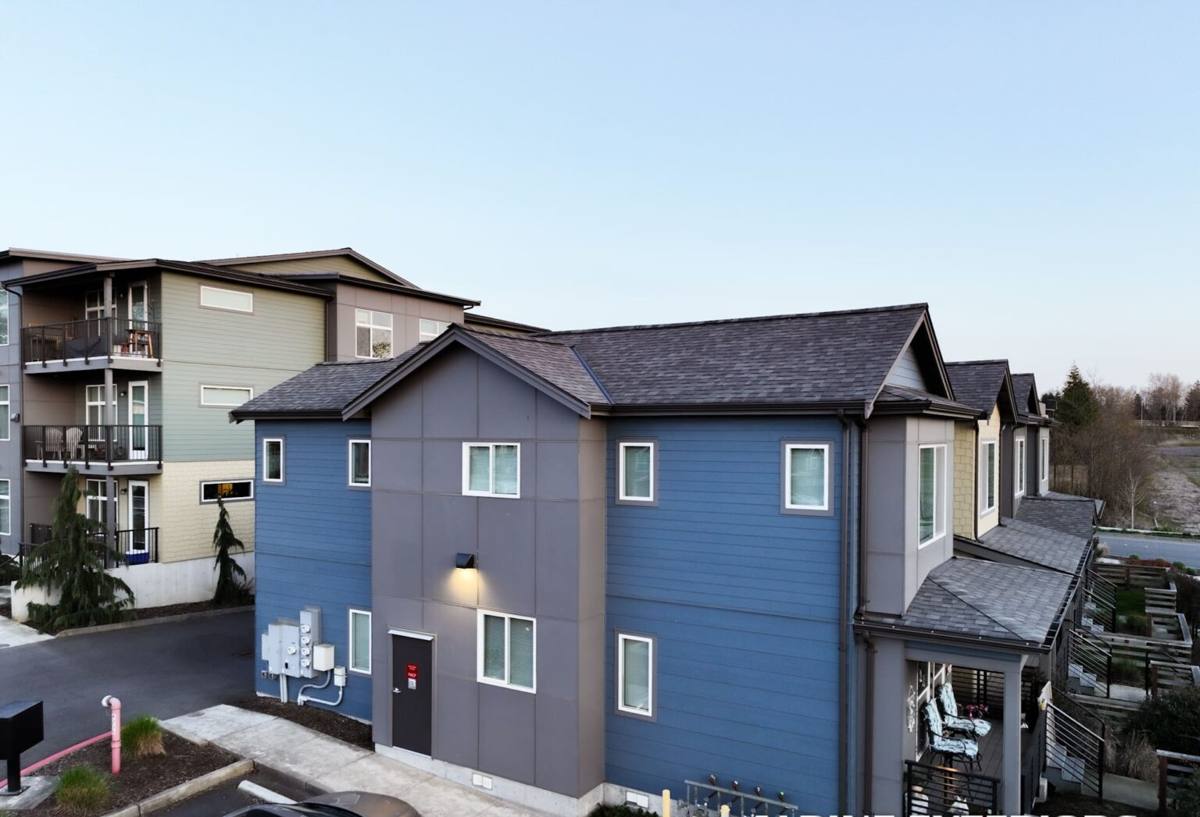
What Salt Air, Driving Rain, and Moss Actually Do to Siding
These three conditions don't just make a house look dirty faster — they attack siding in specific, mechanical ways.
Salt air
Airborne salt is corrosive to exposed metal fasteners, flashing, and trim, and it accelerates the breakdown of lower-grade paint finishes. On wood-based and composite siding products, salt-laden moisture works its way into seams and end cuts faster than plain rainwater does, which speeds up swelling and edge deterioration.
Driving rain
Wind-driven rain doesn't fall straight down — it hits siding at an angle and gets pushed up under laps, around penetrations, and into any gap in the flashing. A siding system that only manages water falling vertically will leak here. What matters is how the assembly behind the siding — the water-resistive barrier, the flashing details, the lap geometry — handles water moving sideways and upward under wind pressure.
Moss and prolonged dampness
Whatcom County's long wet season means shaded siding, especially on north walls and under overhangs, can stay damp for weeks without a real drying window. Moss and algae take hold in that environment, and on porous or wood-based siding, sustained moisture contact is what starts rot at the surface. Even on materials that resist rot outright, trapped moisture behind the cladding — from poor flashing or a missing drainage gap — is the real long-term threat, not what grows on the face of the boards.
The common thread: it's rarely the siding surface itself that fails first. It's what's happening behind it, at the flashing, the seams, and the fastening — which is why replacement quality matters as much as product choice.
Signs a South Hill Home Needs Siding Replacement
Some of these show up on the surface. Others only show up once you know where to look.
- Visible cracking, warping, or delamination on lap siding, especially on the weather-exposed sides of the house
- Soft or spongy spots when you press on the siding near the bottom courses, corners, or under windows
- Paint that's failing faster than a normal repaint cycle would explain — bubbling, peeling, or chalking within just a few years
- Persistent moss or algae growth that comes back within weeks of cleaning, particularly on shaded walls
- Staining or dark streaking below seams, trim, or window flashing, which usually points to water tracking behind the siding
- Visible gaps opening up at butt joints, corners, or where siding meets trim, windows, and doors
- Interior signs — musty smell, peeling paint, or soft drywall near exterior walls — that suggest moisture has already gotten past the cladding
- Siding that's simply reached the end of its expected service life, even if it still looks presentable from the street
Any one of these on its own might just call for a repair. Several together, especially on a wall that faces prevailing wind and rain, usually means the underlying water management has broken down and a full section — or the whole exterior — needs to come off so it can be done right.
What a Correct Siding Replacement Actually Involves
Siding replacement isn't just removing old boards and nailing up new ones. On a home exposed to South Hill's rain and salt air, the parts you don't see afterward are the parts that determine whether the job lasts.
Full tear-off and substrate inspection
We remove the old siding down to the sheathing and inspect for rot, soft spots, or water damage that's been hidden for years. Any compromised sheathing or framing gets repaired before anything new goes up — covering damaged substrate with new siding just seals the problem in.
Water-resistive barrier and flashing
A new weather-resistive barrier goes on correctly lapped, shingle-style, so water is always directed outward and down. Flashing gets installed at every window, door, and penetration, integrated with the barrier rather than just caulked over it. This is the layer that actually stops wind-driven rain — the siding itself is the second line of defense, not the first.
Drainage gap
Any moisture that does get past the siding face needs somewhere to go. A proper rainscreen or drainage gap behind the cladding lets water drain and lets the wall assembly dry out between storms, which matters enormously in a climate where "between storms" can be a short window.
Correct fastening and clearances
Fastener type, spacing, and penetration depth all follow the manufacturer's specification — not a generic rule of thumb. Ground clearance, deck and patio clearance, and gaps at trim are set to keep the bottom edge of the siding from sitting in standing water or constant splash-back.
Trim, caulking, and finish details
The finish work — corner trim, caulking at joints, paint or factory finish touch-up — is what gives the wall its final weather seal and its appearance. Rushed trim work is one of the most common places we find failures on homes we're asked to look at after another company's install.
Our Siding Replacement Process
- On-site assessment. We look at the whole exterior, not just the section that prompted the call — exposure on each wall, existing damage, drainage, and any substrate concerns.
- Written estimate and product plan. You get a clear scope of work, product and color selection, and a price before anything is scheduled.
- Tear-off and substrate repair. Old siding comes off, sheathing and framing are inspected, and any damage is repaired and documented.
- Barrier, flashing, and drainage installation. The water management layer goes in first and gets inspected before siding installation begins.
- Siding installation to manufacturer spec. Fastening, clearances, and joint treatment follow the product's installation manual, not shortcuts.
- Trim, caulking, and final finish. Detail work is completed and the site is cleaned up.
- Final walkthrough. We go over the finished job with you before calling it done.
Why We Install Only James Hardie Fiber Cement
We don't install LP SmartSide, vinyl, Cemplank, Allura, primed spruce, or cedar. That's a deliberate standard, not a limited product line we're stuck with. In a climate that combines salt air, sustained wet-season dampness, and driving rain, the trade-offs of those other products — moisture sensitivity at cut edges, seam behavior over time, or a maintenance burden that's hard to keep up with on a coastal exterior — are ones we've decided aren't worth passing on to homeowners here.
James Hardie fiber cement is non-combustible, engineered specifically for moisture resistance, and available in HZ product lines designed around regional climate demands rather than a one-size-fits-all specification. ColorPlus factory-applied finish holds color and resists the fading and chalking that plain field-painted products are more prone to, and it comes backed by a strong transferable warranty. None of that replaces correct installation — flashing and drainage still do the real work of keeping water out — but it gives a South Hill home a siding material that's genuinely built for this exposure, not just tolerant of it.
Comparing Siding Materials for South Hill's Exposure
| Factor | James Hardie Fiber Cement | Vinyl | Wood / Primed Spruce / Cedar |
|---|---|---|---|
| Combustibility | Non-combustible | Combustible, can soften/warp near heat | Combustible |
| Moisture behavior | Engineered for wet climates; stable when installed to spec | Doesn't absorb water but can warp, and seams rely on lap fit | Absorbs moisture at cut edges and end grain; prone to rot without upkeep |
| Salt air resistance | Factory finish resists fading and chalking | Can chalk and become brittle over time | Finish breaks down faster in salt air; needs frequent recoating |
| Maintenance | Periodic caulking/inspection; ColorPlus reduces repainting | Low structural upkeep but color fades, hard to repair invisibly | Regular painting/staining and moisture monitoring required |
| Typical service life (installed correctly) | Multiple decades, backed by transferable warranty | Variable; shortens with UV and impact damage | Shorter without diligent, ongoing maintenance |
What Drives the Cost of Siding Replacement
Every home is different, so we don't quote broad numbers without seeing the job, but the same factors move the price on every South Hill project:
| Cost Factor | Why It Matters |
|---|---|
| Extent of substrate damage | Hidden rot or moisture damage found during tear-off adds repair work before new siding can go on |
| Home size and wall complexity | More corners, dormers, and trim details mean more labor and material cuts |
| Siding profile and finish selected | Lap width, texture, and factory finish options affect material cost |
| Accessibility | Steep rooflines, tight setbacks, or difficult staging areas affect labor time |
| Scope | Full-home replacement versus a single elevation or repair-and-blend section |
The only way to get an accurate number is a walk-around of the actual house, which is what our estimate visit is for.
Why Hiring a Crew That Already Works in South Hill Matters
Siding installation manuals are written for general conditions. Applying them well on a specific street, wall orientation, and exposure takes judgment that comes from having done it here before. A crew that already works South Hill homes knows which walls typically take the worst wind-driven rain, where moss tends to come back no matter how often it's cleaned, and how the salt air changes the maintenance conversation compared to a home further inland in Whatcom County.
That familiarity shows up in small decisions during the job — where to add extra flashing attention, how to detail a drainage gap on a shaded north wall, which trim details are worth the extra time given what this climate does to a house year after year. It's the difference between a siding job that meets code and one that's actually built for where it sits.
If your South Hill home's siding is showing its age, or you just want an honest look at what shape it's really in, we're glad to come take a look. The estimate is free, there's no pressure, and you'll get a straight answer about what your home actually needs.