 Chuckanut Exterior
 Why Decks Wear Out Faster in South Hill
If you own a home in South Hill, you already know your deck takes a beating that inland properties never see. Chuckanut sits in a stretch of Whatcom County where salt-laden air off the water, long stretches of driving rain, and a moss season that can run six months or more all work against wood, fasteners, and framing at the same time. It's not one problem — it's three problems happening at once, year after year, and most decks simply aren't built to survive that combination indefinitely.
Salt air accelerates corrosion on anything metal: nails, screws, joist hangers, post bases. Once those fasteners start to fail, the structural integrity of the deck goes with them, often quietly, underneath boards that still look fine from the top. Driving rain pushes water sideways and upward into joints, ledger connections, and end grain that a straight-down rain would never reach. And moss doesn't just look bad — it holds moisture against the wood surface for weeks at a time, which is exactly the condition that causes rot and rapid coating breakdown. A deck in a drier inland climate might get 20+ years out of standard construction. Around Chuckanut, we regularly see structural problems show up in half that time when a deck wasn't built or flashed correctly in the first place.
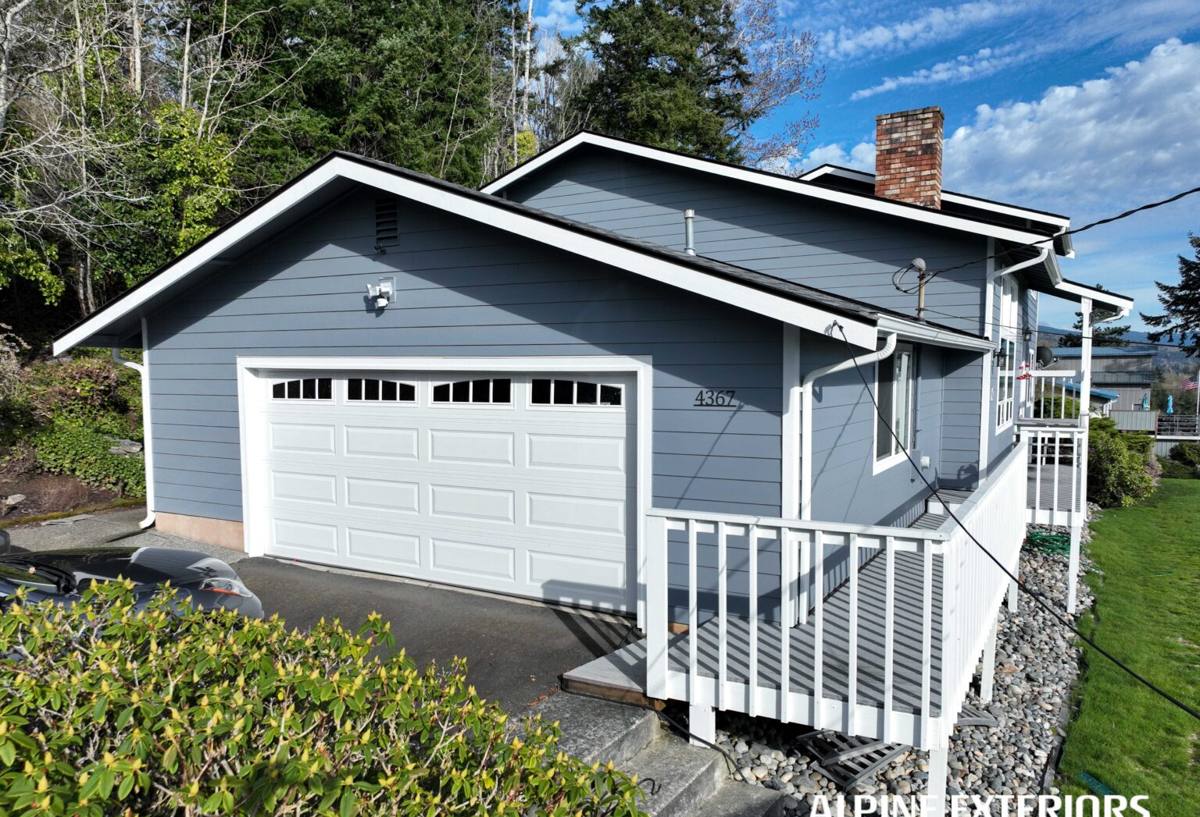
Signs a South Hill Deck Needs Replacement, Not Repair
Not every tired-looking deck needs to come out. But there's a real difference between a deck that needs a facelift and one that's become a liability. Here's how we tell the difference on-site.
Repair usually makes sense when:
- A handful of boards are cracked, cupped, or splintering but the frame underneath is solid
- Railings are loose but the posts are still sound at the base
- Fasteners are surface-rusted but not failing structurally
- The deck is under 10-15 years old and was built to current code
Replacement is the honest recommendation when:
- The ledger board connection to the house shows rot or was never properly flashed
- Joists or beams feel spongy, or a screwdriver sinks into the wood with light pressure
- Post bases are corroded or sitting in standing water/soil contact
- Multiple structural members are compromised, not just isolated spots
- The deck was never permitted or built to a load-bearing standard to begin with
We'll always tell you straight if repair is the smarter, cheaper move. But when the frame itself is the problem, patching the surface just delays a bigger repair bill — and in a wet climate like this one, that delay usually gets worse, not better.
What a Correct Deck Replacement Actually Involves
Framing and footings built for wet ground
A deck replacement starts below the decking, not above it. In Whatcom County's soil and moisture conditions, footings need to be set below frost depth and sized correctly for the load, with post bases that keep wood off wet ground and concrete. We check spacing on joists and beams against current code span tables rather than just matching whatever was there before — a lot of older decks in this area were built undersized by today's standards.
Ledger attachment and flashing — the part that actually protects your house
The single most common failure point we find on decks near Chuckanut isn't the decking boards — it's the ledger board where the deck attaches to the house. If that connection isn't properly flashed and fastened, driving rain works its way behind it and rots both the deck framing and the house's rim joist. A correct replacement means proper flashing, correct fastener type and spacing, and a water management path that assumes it will rain sideways here — because it does.
Decking material selection
What goes on top matters, but it matters less than what's underneath. Still, material choice affects how much maintenance you're signing up for and how the deck holds up to moss and standing moisture year after year.
| Material | Upfront Cost | Maintenance | Moss/Moisture Resistance | Typical Lifespan |
|---|---|---|---|---|
| Pressure-treated wood | Lowest | Annual cleaning/sealing recommended | Fair — needs upkeep to resist moss and rot | 10-15 years with maintenance |
| Cedar | Moderate | Periodic staining/sealing | Naturally rot-resistant, still needs care in moss season | 15-20 years with maintenance |
| Composite decking | Higher | Occasional washing, no staining | Good — doesn't absorb moisture like wood, but surface can still get slick with moss/algae | 25-30+ years |
There's no universally "right" answer — it depends on your budget and how much yearly upkeep you actually want to do. What we won't do is install a product in a way that ignores how it behaves in this climate. Composite still needs proper ventilation underneath to manage moisture, and wood still needs a maintenance schedule you'll actually keep. We'll walk you through the honest trade-offs for your specific deck rather than pushing whatever has the best margin.
Fasteners and Hardware: Where Salt Air Does the Most Damage
This is the detail that gets skipped on a lot of deck jobs, and it's the one that matters most this close to the water. Standard galvanized fasteners can corrode faster than expected in a salt-air environment, and once a joist hanger or structural screw starts to fail, it can compromise the whole connection without any visible warning from above. On replacements in and around Chuckanut, we use fasteners and hardware rated for the corrosion exposure this location actually sees — not just whatever meets minimum code in a drier region.
Our Process, Start to Finish
- Free on-site assessment — we look at the framing, ledger, footings, and existing decking, not just the surface, and tell you honestly whether you need replacement or repair.
- Written estimate — clear scope, material options, and a real price, not a placeholder number that changes once work starts.
- Permitting — we handle the permit process for the jurisdiction your property falls under, so the deck is inspected and documented correctly.
- Demo and structural rebuild — old decking, framing, and any compromised ledger connection come out; new framing goes in to current span and load standards.
- Flashing and moisture management — done before a single deck board goes down, since this is the part you can't fix later without tearing things apart again.
- Decking, railing, and finish work — installed to manufacturer spec, with attention to drainage and airflow underneath.
- Final walkthrough — we go over maintenance expectations for your specific material so you know what upkeep actually looks like here.
Permits and Local Considerations
Deck replacements involving structural changes — new footings, altered framing, or a deck attached at a different height or footprint — typically require a permit and inspection. Skipping this isn't just a compliance issue; it also means nobody with code expertise ever checked that your footings, ledger connection, or railing height actually meet current safety standards. We pull the appropriate permits as part of the job so you're not left holding that risk, and so the work is documented if you ever sell the home.
Living With Your New Deck Through Moss Season
A correctly built deck still needs some seasonal attention in this climate — that's just reality here, not a sign something was done wrong. A little routine care goes a long way toward getting the full lifespan out of the materials you paid for.
- Sweep debris and standing organic matter off the deck regularly through fall and winter, before it has time to hold moisture against the surface
- Clean moss and algae off decking and stairs as it appears — a slick deck is also a safety hazard, not just a cosmetic one
- Check that gaps between boards stay clear so water can drain through instead of pooling
- Inspect the ledger flashing and railing connections once a year for any sign of movement or moisture staining
- Re-seal or re-stain wood decking on the schedule appropriate to that product — don't wait until it's visibly gray and cracked
- Keep gutters and downspouts near the deck clear so runoff isn't dumping directly onto or under it
Why It Matters That We Already Work in South Hill
A deck built to a generic national spec sheet isn't necessarily built for a Chuckanut winter. Crews who work regularly in Whatcom County's coastal conditions know where water actually collects on a ledger connection, which fastener grades hold up near the water and which don't, and how much airflow a deck substructure needs to survive a wet season without trapping moisture underneath. That's not something you learn from a manual — it's something you learn from replacing decks that failed because those details were skipped the first time around.
We're not asking you to take that on faith. Ask any contractor bidding your deck replacement how they handle ledger flashing, what fastener spec they use, and how they've adapted their framing for local moisture and salt exposure. The answers will tell you a lot about whether they've actually worked this climate before.
Get a Straight Answer About Your Deck
If your deck in South Hill is showing signs of trouble — soft spots, rust streaks, moss that won't quit, or a railing that doesn't feel as solid as it used to — we're happy to take a look and give you an honest read on repair versus replacement. There's no pressure and no obligation. Use the form below to request a free estimate, and we'll walk the deck with you and explain exactly what we're seeing and why.