 Chuckanut Exterior
 Roofing on South Hill Isn't Like Roofing Everywhere Else
South Hill sits up in the trees and close to the water, and that combination puts a roof through more than most homes in Whatcom County ever see. The elevation and tree canopy that make the neighborhood so livable also mean roofs stay shaded longer, dry out slower, and catch more wind off the bay than roofs down in the flats. If you've owned a home up here for more than a few years, you've probably already noticed streaks of moss on the north-facing slopes, corroded nail heads poking through old shingles, or a soft spot near a valley that wasn't there five years ago. None of that is unusual. It's just what this microclimate does to a roof over time, and it's exactly why a roof replacement here needs to be planned differently than one on a flat, open lot with full sun exposure.
This page is about one job, done right, in one neighborhood: full roof replacement for South Hill homes. Not a general overview of roofing — the specifics of what this particular stretch of Chuckanut and Whatcom County does to a roof, and what a correctly installed replacement needs to account for.
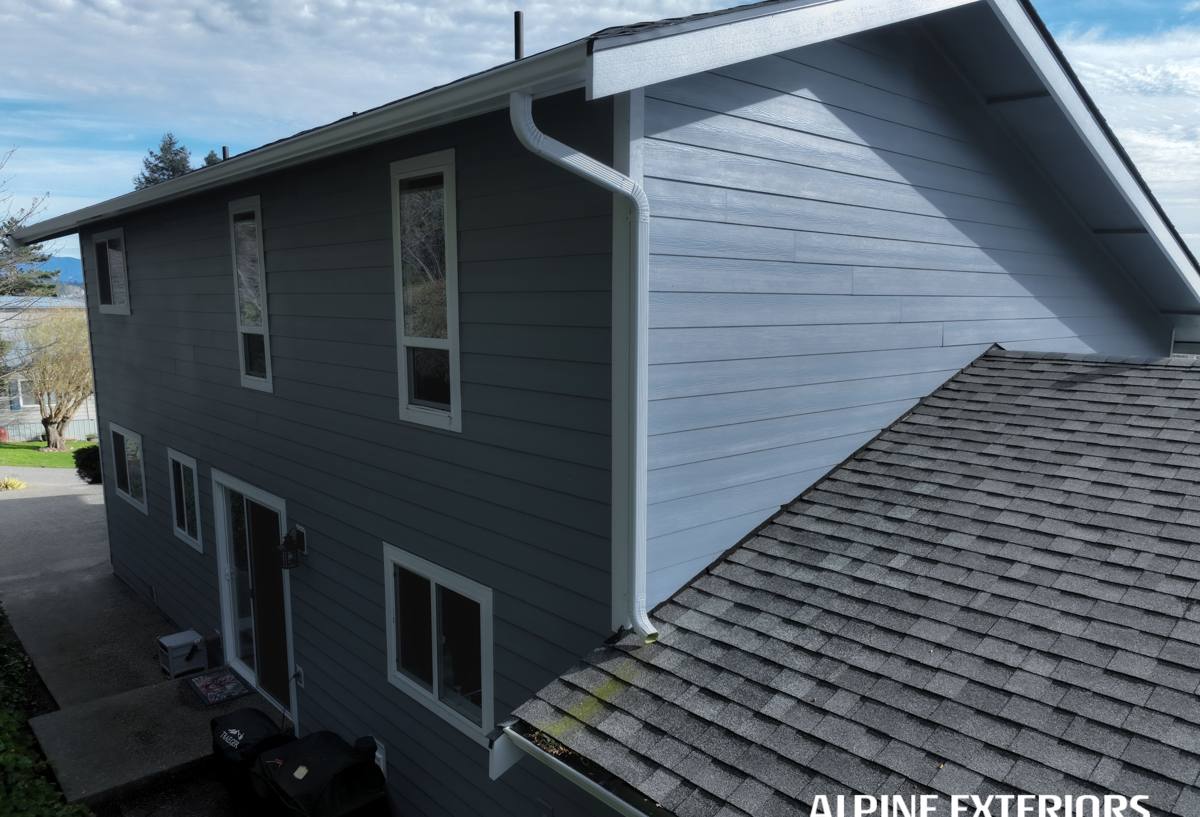
What Salt Air, Driving Rain, and Moss Actually Do to a Roof
Salt Air
Homes with any exposure toward the water pick up airborne salt, especially during winter storms when wind pushes moist air uphill. Salt accelerates corrosion on anything metal — exposed fasteners, flashing, valley metal, and vent stacks. On an older roof you'll often see this first as rust bleed streaking down from nail heads or a flashing seam that's gone from clean metal to pitted and brown. It doesn't destroy a roof overnight, but it shortens the working life of any component that isn't corrosion-resistant, which is why fastener and flashing selection matters more here than it does further inland.
Driving Rain
Whatcom County doesn't just get a lot of rain — it gets a lot of wind-driven rain, where water is pushed sideways and upward under normal conditions instead of falling straight down. That matters because a roof's weakest points aren't the open field of shingles, they're the transitions: valleys, chimney flashing, skylight curbs, and the first few feet above the eave. Wind-driven rain finds any gap in those transitions and pushes water uphill under the roofing material, which is how you end up with a leak at a wall or ceiling that's nowhere near where the water actually got in.
A Long Moss Season
Shaded, tree-covered lots — which describes a lot of South Hill — stay damp for months longer than open roofs. Moss and lichen take hold on the shaded slopes first, and once established they hold moisture against the roofing material, lift shingle edges, and work their way under tabs and laps. A roof that's dried out and clean every summer wears very differently than one that's been damp under moss from October through May.
What a Correct Roof Replacement Involves
A roof replacement is more than stripping old shingles and nailing down new ones. On a South Hill home, every layer underneath the visible surface is doing real work against the conditions above.
Tear-Off and Deck Inspection
We remove the existing roofing down to the deck rather than layering over it. That's the only way to actually see what's underneath — soft or delaminated sheathing, old damage around penetrations, or framing that's been quietly absorbing moisture. Any compromised decking gets replaced before anything new goes down. Skipping this step is the single most common shortcut in roofing, and it's the one that causes the most expensive problems later.
Underlayment and Ice-and-Water Protection
Over the deck, we install synthetic underlayment across the full roof, with self-adhering ice-and-water shield reinforcing the vulnerable spots — eaves, valleys, and around every penetration. Given how much wind-driven rain this area sees, that underlayment layer is doing real work, not just serving as a formality between the deck and the shingles.
Flashing
Step flashing at walls, counter-flashing at chimneys, and properly formed valley metal matter more here than the shingles themselves in terms of where leaks actually start. We use corrosion-resistant flashing materials given the salt exposure, and we don't reuse old flashing on a full replacement — it's inexpensive relative to the rest of the job and it's the piece most likely to fail first.
Ventilation
A balanced intake-and-exhaust ventilation system keeps the attic close to outside temperature and controls moisture from the inside. On shaded, damp lots this is doing double duty: it helps the roof deck dry out from underneath even when the surface above stays damp longer through a long moss season, and it protects the shingle warranty, which typically requires proper attic ventilation to remain valid.
Fastening and Wind Rating
We fasten to the shingle manufacturer's high-wind specification rather than the minimum, with corrosion-resistant fasteners given the salt air. Elevated, tree-adjacent lots like South Hill's see real wind loading during winter storms, and under-fastening is a common reason otherwise-new roofs lose shingles in their first few years.
Choosing the Right Roofing Material for This Neighborhood
There's no single "best" roofing material — the right choice depends on your home's roof pitch, tree coverage, budget, and how much long-term maintenance you want to take on. Here's how the common options stack up against South Hill's specific conditions.
| Material | Moss & Shade Performance | Salt Air / Corrosion Resistance | Relative Maintenance | Relative Cost Tier |
|---|---|---|---|---|
| Architectural Asphalt Shingle | Good with proper ventilation; benefits from occasional moss treatment on shaded slopes | Good — minimal exposed metal when properly flashed | Low to moderate | Lower to mid |
| Standing Seam Metal | Excellent — moss struggles to hold on a smooth, sloped metal surface | Very good with a marine-grade coated finish | Low | Higher |
| Cedar Shake | Poor without diligent upkeep — shaded, damp conditions accelerate decay | Fair — fasteners need to be corrosion-resistant | High | Mid to higher |
| Composite / Synthetic Shake | Good — resists moisture absorption better than natural wood | Good | Low to moderate | Mid to higher |
For heavily shaded South Hill lots specifically, we're generally cautious about recommending cedar shake as a primary roofing choice. It's a good-looking product, but on a roof that stays damp for months at a time under tree cover, it demands a level of ongoing maintenance — cleaning, treatment, inspection — that most homeowners don't want to keep up with year after year. That's a maintenance-burden and moisture-behavior tradeoff we'll walk through honestly if it's a material you're considering, not a reason to rule it out entirely.
Our Roof Replacement Process
- On-site inspection — we get on the roof, check the deck condition where accessible, look at ventilation, flashing, and the extent of moss or wear, and take photos to review with you.
- Written estimate — a clear breakdown of material options, scope, and pricing, with no pressure to decide on the spot.
- Material selection — we walk through the tradeoffs for your specific roof and budget, informed by what actually holds up on shaded, wind-exposed South Hill lots.
- Scheduling around weather — we plan tear-off days around dry windows where possible, and we don't leave a deck exposed overnight if rain is coming.
- Tear-off and deck inspection — full removal, with any compromised sheathing replaced before we move forward.
- Underlayment, flashing, and ventilation installed — the layers that do the real work, done to spec rather than to the minimum.
- New roofing installed — fastened to high-wind specification with corrosion-resistant materials.
- Cleanup and magnetic sweep — job site and yard cleared of debris and stray fasteners.
- Final walkthrough — we review the finished roof with you and go over warranty paperwork.
Signs a South Hill Roof Needs Replacement, Not Just Repair
Not every roofing problem means a full replacement. But a few signs, especially in combination, usually point that direction rather than toward another round of patching.
- Granule loss heavy enough that shingles look bald or patchy, especially on south- and west-facing slopes that take the most sun and weather
- Persistent moss or lichen on shaded slopes that returns within a season or two of cleaning
- Rusted or pitted flashing and exposed fastener heads, particularly on roof faces with the most exposure toward the water
- Curling, cracking, or cupping shingles across large sections rather than one isolated spot
- Soft or spongy decking felt underfoot, or daylight visible through the roof deck from inside the attic
- A roof approaching or past the manufacturer's expected service life for its material and exposure
- Repeated leaks in different locations after previous repairs — a sign the underlying materials are failing broadly, not just at one point
Why a Crew That Already Works South Hill Matters
South Hill's terrain isn't neutral to work in. Steep, narrow access, mature trees overhanging roof lines, and older homes with roof geometries that don't match a modern tract-house layout all change how a job actually gets done. A crew that's worked this neighborhood before knows how to protect landscaping and gutters from falling debris under tree cover, how to stage material safely on a sloped or tight lot, and how to sequence a tear-off so an exposed deck isn't sitting open when a fast-moving marine system rolls in — which happens more often here than homeowners moving from drier climates tend to expect.
That local familiarity also shows up in smaller, practical ways: knowing which slopes on a shaded lot are going to need moss-resistant details built in from the start, and being realistic with you about how often a roof under heavy tree cover will need a maintenance check compared to one in the open.
Permits and Timing in Whatcom County
Roof replacement typically requires a permit through the applicable local building authority, and we handle that process as part of the job rather than leaving it to you to sort out. Timing matters too — we try to schedule tear-offs during realistic dry windows for this area's weather patterns, and we plan the sequence of work so your home isn't left more exposed to rain than necessary at any point in the project.
Get a Straight Answer About Your Roof
If your South Hill roof is showing moss, granule loss, or flashing wear, or you're just not sure whether you're looking at another repair or a full replacement, we're glad to take a look. We'll give you a clear, honest assessment and a written estimate — no pressure, no upsell, just what your roof actually needs. Use the form below to request a free estimate.