 Chuckanut Exterior
 Building Decks That Actually Hold Up in South Hill
A deck in South Hill has to do more than look good on a sunny afternoon. It has to survive months of standing water, salt-laden air rolling in off the bay, and shade patterns that never quite let the boards dry out. Most of the deck problems we get called out to fix in this part of Whatcom County didn't start as bad workmanship — they started as a design or a material that wasn't matched to the climate it was going to live in. A custom deck built specifically for a South Hill lot, with its slope, tree cover, and exposure taken into account, avoids most of that from day one.
This page covers what we've learned building and repairing decks in this area: what the climate actually does to a deck over time, what a correctly built one requires, and how our process works from first estimate to final walkthrough.
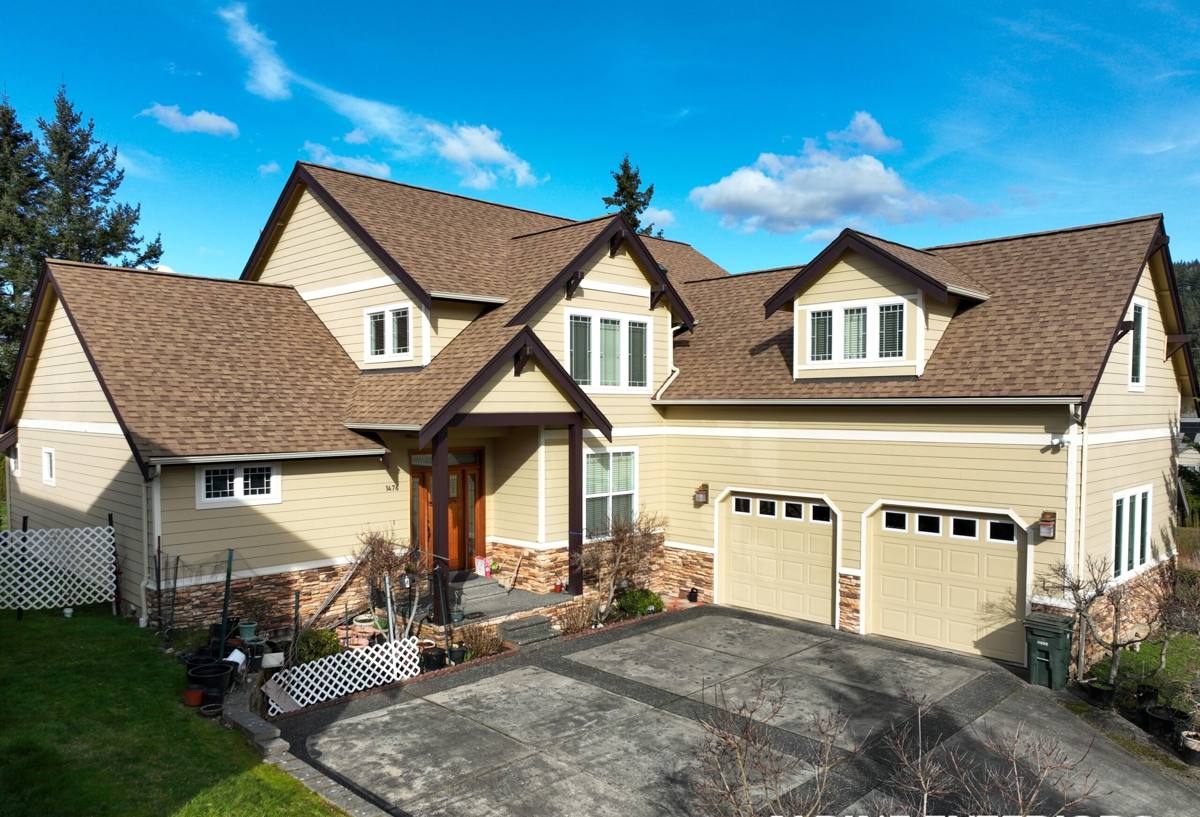
What South Hill's Climate Does to a Deck
Chuckanut sits close enough to the water that salt air is a real factor, not a marketing talking point. Combine that with driving rain that comes in sideways during winter storms and a moss season that can stretch from fall through spring, and you've got three separate stresses working on every board, fastener, and footing.
Salt Air and Metal Hardware
Salt-carrying air accelerates corrosion on anything metal — screws, joist hangers, post bases, railing brackets. Standard zinc-coated fasteners that would be fine forty miles inland can start rusting and staining the decking within a couple of seasons this close to the water. Once a fastener starts to corrode, it loses holding strength long before it looks obviously bad, which is why so many older decks in this area have hardware issues hiding under boards that still look fine on top.
Driving Rain and Water Management
Rain that comes in at an angle finds every gap in flashing, every unsealed ledger connection, and every spot where a board wasn't left with enough of a drainage gap. A deck that's pitched even slightly wrong, or that lacks proper flashing where it meets the house, will trap water against the structure — and that's where rot starts, usually out of sight.
Moss and Shade
Tree cover and the long stretch of overcast, damp weather typical of this part of Washington mean moss and algae get a real foothold on decks that don't get much direct sun. Beyond making boards slippery, moss holds moisture against the surface long after the rest of the yard has dried out, which speeds up wood decay and can stain composite surfaces if it's left to spread.
Choosing Decking Material for a South Hill Lot
There's no single "best" decking material — there's the material that fits your site, your maintenance appetite, and your budget. Here's how the common options compare for a deck exposed to salt air, heavy rain, and shade.
| Material | Moisture & Salt Air Behavior | Moss/Algae Resistance | Maintenance |
|---|---|---|---|
| Pressure-treated lumber | Resists rot when properly sealed; hardware corrosion is the bigger risk | Low — needs regular cleaning and treatment | Annual sealing/staining recommended |
| Cedar | Naturally moisture and insect resistant; still needs sealing near salt air | Moderate — better than PT lumber, still needs cleaning | Periodic sealing to hold color and resist checking |
| Composite decking | Doesn't rot or absorb water like wood; quality varies by brand and core type | Better than wood, but surface can still stain if moss isn't cleaned off | Occasional washing; no staining or sealing |
| PVC/capped polymer | Fully moisture resistant; best option directly exposed to salt spray | Best resistance of the group | Lowest — mostly rinsing |
We'll walk through these trade-offs honestly during your estimate. Wood costs less up front but asks for more of your time every year. Composite and PVC cost more initially but hand a lot of that maintenance burden back to the material itself — which matters a lot on a shaded, damp lot like the kind common in South Hill.
What a Correctly Built Deck Involves
A deck is only as good as what's underneath the boards. The parts nobody sees are the parts that determine whether it's still solid in fifteen years.
Footings and Framing
Footings need to be sized and set below frost depth, and the framing needs joist spacing that matches the decking material's actual span rating — composite and PVC boards often require tighter joist spacing than solid wood, and skipping that step is a common shortcut that shows up as bounce and sag within a few years.
Ledger Attachment and Flashing
Where the deck ties into the house is the single most important water-management detail on the whole structure. Correct flashing — installed in the right order relative to the house's siding and weather barrier — keeps rain from working its way behind the ledger board and into the rim joist. This is the detail we see skipped or done poorly most often on older decks in this area.
Fasteners and Connectors
Given the salt air here, we lean toward stainless steel or heavy hot-dip galvanized hardware for structural connections rather than standard coated fasteners, especially on decks with any real exposure to the water side of the property. It costs more per fastener; it also means you're not fighting rust stains and loosening hardware in five years.
Drainage and Airflow
Proper board spacing and a slight slope away from the house keep water moving instead of pooling. Underneath, adequate airflow between the ground and the framing helps everything dry out between rain events instead of staying damp for days, which matters more here than in drier climates.
Our Process, From Estimate to Finished Deck
- Site visit — we look at slope, sun exposure, tree cover, drainage patterns, and how the deck will tie into the house before we talk materials.
- Design and material selection — we walk through the honest trade-offs for your specific lot, not a one-size-fits-all pitch.
- Permitting — we handle the permit application and inspections required for the project.
- Footings and framing — built to span and load requirements for your chosen decking, not the minimum.
- Flashing, decking, and railing installation — with fastener and hardware choices suited to this area's salt exposure.
- Final walkthrough — we go over care and maintenance specific to the material you chose before we consider the job done.
Maintenance That Actually Matters Here
Every deck benefits from upkeep, but in a climate like this, a few tasks matter more than others. This isn't a full maintenance manual — it's the short list that prevents most of the problems we get called about.
- Sweep debris and standing leaves off the deck surface regularly, especially under tree cover where moss gets a foothold fastest
- Wash moss and algae off with a deck-safe cleaner before it has a chance to stain or hold moisture against the boards
- Check railing posts and stair connections yearly for movement — loosening hardware is often the first visible sign of fastener corrosion
- Keep gutters and downspouts near the deck clear so runoff isn't dumping extra water onto or under the structure
- Reseal wood decking on the schedule appropriate to the product — don't wait until it's visibly gray and dry
- Look underneath once a year if you can access it — ledger flashing and framing problems show up there long before they show up on top
Permits and Local Considerations
Decks above a certain height or attached to the house typically require a permit and inspection in Whatcom County, and requirements can vary depending on your specific parcel and whether the structure is attached or freestanding. We handle that process as part of the build rather than leaving it to the homeowner to sort out, and we design to the load and setback requirements that apply to your property rather than assuming a generic standard will pass.
Why Hire a Crew That Already Works in South Hill
A deck built by someone unfamiliar with this specific stretch of Whatcom County climate tends to look right on installation day and start showing problems two or three winters in — the fasteners that were fine somewhere drier, the flashing detail that works in a less exposed location, the material that wasn't ready for this much shade and moisture. We build decks in this area regularly, which means the material choices, hardware, and drainage details on your project reflect what actually holds up here, not just what holds up on paper.
If you're planning a new deck or replacing one that's showing its age, we're happy to take a look and give you a straightforward, no-pressure estimate — use the form below to get started.