 Chuckanut Exterior
 South Hill's Siding Has a Harder Job Than Most
Not every neighborhood in Whatcom County puts the same demands on exterior siding. South Hill sits close enough to the water that homes there deal with a steady mix of salt-laden air, wind-driven rain, and a moss season that can stretch across most of the year. Siding that performs fine on a sheltered inland lot can start showing problems years earlier here — paint failure, soft trim, streaking, and boards that never quite dry out between storms. When we install siding on a South Hill home, we're not just matching a product to a house; we're matching it to a specific set of conditions that this part of Chuckanut deals with year-round.
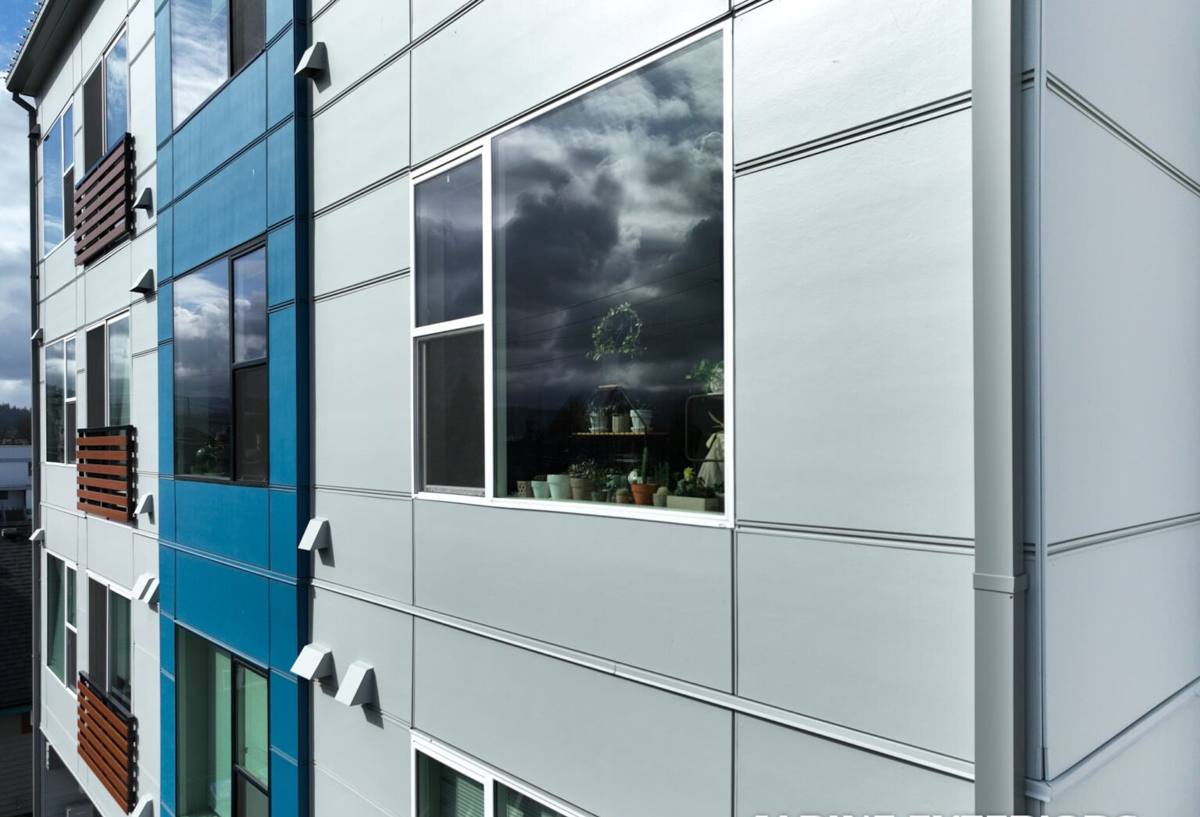
What Chuckanut's Climate Does to Siding Over Time
Salt Air and Moisture
Proximity to saltwater means airborne salt settles on exterior surfaces along with everyday moisture. Over time, that combination accelerates the breakdown of paint films, corrodes exposed fasteners, and speeds up wear on caulking and trim joints. Siding materials that rely on a surface-applied paint job — rather than a factory-cured finish — tend to chalk, fade, and peel noticeably faster in this kind of exposure.
Driving Rain and Wind-Driven Water
Whatcom County storms don't always fall straight down. Wind pushes rain sideways into wall assemblies, which means the details behind the siding — flashing, water-resistive barriers, and proper overlaps — matter just as much as the siding itself. A product or installation that isn't built to shed wind-driven water will eventually let moisture behind the cladding, and that's where real damage starts: rot in sheathing, mold, and soft framing that's expensive to repair.
The Long Moss Season
Shade, moisture, and mild temperatures give moss and algae a long runway in this area. Siding that stays damp longer — because of poor ventilation gaps, tight landscaping, or a porous surface — gives moss more time to take hold. Once organic growth gets established on siding, it holds moisture against the surface and speeds up everything else that's already working against the material.
What a Correct Siding Installation Actually Involves
Good siding installation is mostly invisible once the job is done — it's in the layers you don't see. A correct installation on a South Hill home includes:
- A continuous, properly lapped water-resistive barrier behind the siding
- Flashing at every window, door, and horizontal trim transition, installed so water is directed out and down, never trapped
- Correct starter strip placement at the base of the wall so the first course sits true and drains properly
- Manufacturer-specified fastener type, spacing, and depth — over-driven or under-driven nails are one of the most common causes of early siding failure
- Proper clearance between siding and grade, decks, roof lines, and other transitions to keep the bottom edge from sitting in standing moisture
- Correctly sized gaps at butt joints and trim to allow for expansion without forcing water intrusion
Skip any one of these and the siding can still look fine on install day — the problems show up two, five, or ten years later, usually as rot or paint failure that's much more expensive to fix than it would have been to do right the first time.
Why We Install Only James Hardie Fiber Cement in South Hill
We made a deliberate decision to install James Hardie fiber cement siding exclusively, and it's a decision that matters more in a climate like this one than it would somewhere drier. Hardie's fiber cement is non-combustible, dimensionally stable in wet-dry cycling, and available in HZ product lines engineered for specific climate zones rather than a one-size-fits-all formulation. The ColorPlus finish is baked on at the factory under controlled conditions, which holds up to salt air and UV exposure far better than a field-applied paint job, and it comes with its own finish warranty backed by the manufacturer.
We don't install vinyl, LP SmartSide, Cemplank, Allura, primed spruce, or cedar. Each of those products has real strengths and a legitimate place in the market — this isn't about those products being bad. It's that after years of doing exterior work in this climate, we've seen where each one tends to struggle: vinyl can warp and doesn't hold paint if you ever want a different color; engineered wood products are sensitive to moisture at cut edges and joints if installation isn't precise; raw wood siding demands an ongoing maintenance and repainting schedule most homeowners don't want to keep up with. Standardizing on one product lets our crew install it the same correct way every time, and it lets us stand behind the result with confidence instead of hedging between multiple systems.
Our Siding Installation Process for South Hill Homes
- On-site assessment — we walk the exterior, check current siding and trim condition, note drainage and grading issues, and look at sun/wind/moisture exposure specific to the lot.
- Tear-off and sheathing inspection — old siding comes off and the sheathing underneath gets inspected for rot or soft spots before anything new goes on. Hidden damage gets repaired, not covered up.
- Water-resistive barrier and flashing — a new barrier is installed with correct laps, and flashing is set at every penetration and horizontal transition.
- Hardie panel or lap installation — siding goes up to manufacturer fastening specs, with attention to butt joint placement, corner details, and clearances at grade, roofline, and deck ledgers.
- Trim, caulking, and touch-up — trim is set, joints are sealed with a compatible sealant, and any factory-finish touch-up is done with matched, manufacturer-approved product.
- Final walkthrough — we go over the finished exterior with the homeowner before calling the job complete.
Signs Your South Hill Home's Siding Needs Attention Now
A few warning signs show up earlier here than they would in a drier climate, and they're worth acting on before they turn into structural repairs:
- Paint that's peeling, chalking, or bubbling, especially on sun- or wind-exposed walls
- Persistent moss or algae staining that comes back soon after cleaning
- Soft or spongy spots when you press on siding or trim, particularly near the bottom courses
- Visible gaps opening up at butt joints, corners, or trim boards
- Boards that are cupping, warping, or separating from the wall
- Water stains or musty smells on interior walls that back up to exterior siding
Any one of these on its own might be minor. Several together, or anything involving soft wood, usually means moisture has already gotten behind the siding and it's worth having someone look before it spreads.
Cost Factors for South Hill Siding Projects
Every home is different, so we don't quote a flat number without seeing the house, but these are the main variables that move a South Hill siding project's cost:
| Factor | What It Affects | Why It Matters in This Climate |
|---|---|---|
| Extent of sheathing repair | Labor and material before new siding goes up | Wind-driven rain and moss retention mean hidden rot is more common on older, unmaintained exteriors here |
| Siding profile (lap vs. panel) | Material quantity and install labor | Profile choice affects how well water sheds on exposed elevations |
| Trim and flashing detail | Time spent on transitions, corners, and openings | Correct flashing is the main defense against wind-driven water intrusion |
| House height and access | Equipment and labor time | Multi-story South Hill homes on sloped lots often need more setup |
| ColorPlus finish selection | Material cost | Factory finish resists salt air and UV better than field-applied paint over the life of the siding |
Why a Crew That Already Works South Hill Matters
Siding installation isn't purely a manufacturer's spec sheet applied the same way everywhere — the site matters. A crew that's worked other South Hill homes already knows which elevations tend to catch the worst wind-driven rain, where moss builds up fastest given the tree cover and shade patterns common in this part of Chuckanut, and which older homes in the area are more likely to have hidden sheathing damage under existing siding. That familiarity shows up in small decisions during the job — where to pay extra attention to flashing, how tight to run clearances near grade, which details are worth the extra time given what this climate does to a house over the years. It also means we're already familiar with Whatcom County permitting and inspection expectations, so the paperwork side of the job doesn't slow things down.
Caring for Hardie Siding After Installation
Fiber cement siding is low-maintenance compared to wood or vinyl, but "low-maintenance" doesn't mean "no maintenance" in a marine climate. A yearly rinse-down helps keep salt residue and early moss growth from building up, especially on north-facing or shaded walls. It's worth checking caulking at trim joints and penetrations every year or two, since sealant is the first thing to wear out even when the siding itself is holding up fine. Keeping gutters clear and grading water away from the foundation also protects the bottom courses of siding, which take the brunt of splash-back during heavy rain.
Talk to a Local Crew Before You Decide
If your South Hill home's siding is showing its age, or you're planning ahead before problems start, we're happy to take a look and give you a straightforward, no-pressure estimate. Use the form below to get in touch and we'll walk you through what we see and what we'd recommend.