 Chuckanut Exterior
 Metal Roofing on South Hill: What This Climate Actually Demands
South Hill sits close enough to the water that salt air is a daily fact of life, and far enough into Whatcom County's rain pattern that driving, wind-blown storms are routine rather than rare. Add the shade and dampness that come with a long Pacific Northwest moss season, and you have a set of conditions that will find every weak point in a roofing system within a few years. A roof that performs fine in a drier, inland climate can fail early here — not because the material is bad, but because it wasn't matched to what this specific location throws at it.
Metal roofing, installed correctly, holds up well against all three of those pressures. But "installed correctly" is doing a lot of work in that sentence. A metal roof is only as good as the fasteners, flashing, underlayment, and ventilation behind it — and those details matter more in Chuckanut than they would somewhere with a milder, drier climate.
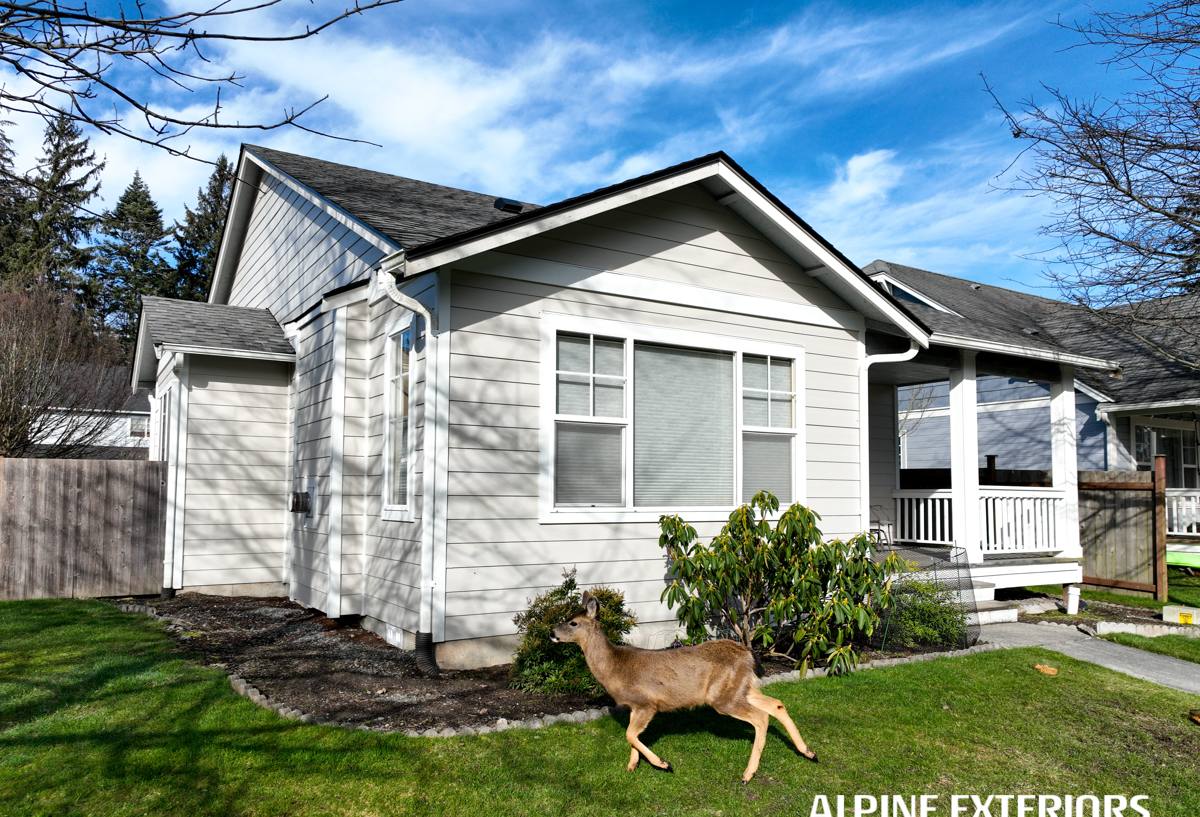
What Salt Air, Rain, and Moss Actually Do to a Roof
Salt Air and Metal Components
Airborne salt accelerates corrosion on any exposed metal — fasteners, flashing, ridge caps, and valley metal included. On a coastal property, uncoated or poorly coated steel components can start showing rust streaks and pitting years before they would inland. This is why fastener and coating selection isn't a minor spec on a South Hill roof; it's one of the decisions that determines whether the roof looks and performs well at year fifteen or starts staining and weakening at year five.
Driving Rain and Wind-Driven Water
Rain that falls straight down is easy to shed. Rain that's pushed sideways by wind off the water is a different problem — it gets forced under shingles, up under flashing laps, and into any gap that a calmer climate could get away with. Roofs here need tighter seams, properly lapped flashing, and underlayment that's rated to handle water that isn't just running downhill but is actively being driven uphill and sideways during a storm.
Moss, Shade, and Trapped Moisture
Tree cover and persistent damp conditions make South Hill good moss habitat. Moss holds moisture against a roofing surface, and on organic materials like wood shakes or asphalt shingles, that trapped moisture accelerates rot and granule loss. On a well-installed metal roof, moss has a much harder time getting a foothold in the first place, and what does grow is easier to remove without damaging the surface underneath.
Why Metal Is a Strong Fit for South Hill Homes
We don't push metal roofing on every home — it's a real investment and it's not the right call for every budget or every roofline. But for this specific climate, it solves problems that other materials struggle with:
- Smooth, hard surfaces give moss and lichen far less to grip onto compared to wood or composition shingles.
- Properly coated steel and aluminum resist coastal corrosion far better than untreated fasteners or exposed nail heads.
- Interlocking or standing seam panels shed wind-driven rain more reliably than lapped shingle systems, especially on steeper pitches.
- Metal sheds snow and ice buildup rather than trapping it, which matters during the occasional hard winter weather event.
- A correctly installed metal roof typically outlasts asphalt shingles by two to three times, which matters when re-roofing means dealing with scaffolding, access, and disruption to the property.
Metal Roofing Systems We Install
Not all metal roofing is the same product wearing different colors. The system matters as much as the material. Here's how the main options compare for a home in this climate:
| System | Best For | Coastal Considerations |
|---|---|---|
| Standing seam (concealed fastener) | Most South Hill homes; steep or moderate pitches | No exposed fastener heads to corrode; best wind and water resistance |
| Exposed fastener panel | Outbuildings, shops, budget-conscious projects | Fasteners and washers need periodic inspection near salt air |
| Stone-coated steel | Homes wanting a shake or tile look | Coating protects the substrate but laps and fastener points still need careful detailing |
For most primary residences on South Hill, we lean toward standing seam because it removes the weak point — exposed fasteners — that salt air attacks first. That said, exposed fastener systems have their place on secondary structures where cost matters more than a 40-plus year service life.
What a Correct Metal Roof Installation Involves
Deck Prep and Underlayment
Metal roofing is only as reliable as what's underneath it. We check the roof deck for rot or soft spots before anything goes down — a common issue on older South Hill homes where a previous roof trapped moisture against the sheathing for years without anyone noticing. Over that deck goes a synthetic or high-temp underlayment rated for the wind-driven rain this area sees, with extra attention at eaves and valleys where water concentrates.
Fastening and Flashing Details
This is where a lot of metal roofs fail early, and it's rarely visible from the ground. Flashing at chimneys, skylights, sidewalls, and valleys has to be properly lapped and sealed, not just caulked over. Fasteners need to match the panel material to avoid galvanic corrosion — mixing incompatible metals is a slow, invisible mistake that shows up as staining and leaks years later.
Ventilation
A tight, well-sealed roof still needs to breathe. Proper ridge and soffit ventilation keeps moisture from condensing inside the attic space, which matters in a climate where the air outside is damp for a good chunk of the year. Skipping this step is a common shortcut that causes problems that have nothing to do with the roofing material itself.
Our Process for a South Hill Metal Roofing Project
- On-site inspection. We look at the existing roof, deck condition, ventilation, and any moss or moisture issues before quoting anything.
- Honest scope and estimate. We tell you what the roof actually needs — full tear-off, deck repair, or a straightforward install over sound decking — and give you a clear, itemized estimate.
- Tear-off and prep. Old material comes off, the deck gets inspected and repaired as needed, and new underlayment goes down before a single panel is installed.
- Panel installation and detailing. Panels, flashing, and trim go in with attention to every seam and penetration — the parts of the job that determine whether it holds up in a coastal storm.
- Final walkthrough. We go over the finished roof with you, answer questions, and make sure you know what little maintenance the system does need.
Cost Factors Worth Understanding
Metal roofing costs more upfront than asphalt shingles, and the range on any given South Hill home depends on a handful of real variables rather than a flat per-square number:
| Factor | Why It Matters |
|---|---|
| Roof pitch and complexity | Steep pitches, multiple valleys, and dormers add labor and material waste |
| Tear-off vs. overlay | Removing old roofing and repairing deck issues adds cost but is often the right call on older homes |
| Panel system chosen | Standing seam runs higher than exposed fastener panels due to labor and material |
| Access and site conditions | Tree cover, steep lots, and limited equipment access affect labor time |
We'd rather walk your roof and give you real numbers than throw out a broad estimate that doesn't hold up once we're actually up there.
Maintenance: Keeping Moss Season From Undoing the Work
A correctly installed metal roof needs very little upkeep, but "very little" isn't "none." In a climate with a long moss season, we recommend a periodic visual check — especially in valleys, around penetrations, and anywhere debris can collect and hold moisture against the surface. Keeping gutters clear and trimming back overhanging branches where practical does more to protect a metal roof here than almost anything else a homeowner can do on their own.
Signs Your Roof Is Ready for a Metal Upgrade
- Moss or algae keeps returning within a season or two of cleaning
- Shingles are curling, cracking, or losing granules faster than expected for their age
- You've had recurring leaks near valleys, chimneys, or skylights
- Rust staining is showing up on flashing or exposed fasteners
- Your attic shows signs of trapped moisture or poor ventilation
- You're planning to stay in the home long-term and want to stop re-roofing every 15-20 years
Why a Crew That Already Works South Hill Matters
Metal roofing done wrong doesn't usually fail on day one — it fails two, five, or ten years in, once the wrong fastener has corroded or an under-detailed flashing lap finally lets water through during a hard storm. A crew that regularly works South Hill roofs already knows how this specific combination of salt air, driving rain, and moss pressure behaves, and details the job accordingly instead of treating it like a generic install. That local experience is the difference between a roof that looks right at handoff and one that's actually built to hold up here.
If you're weighing metal roofing for your South Hill home, we're happy to take a look and give you a straightforward, no-pressure estimate — just fill out the form below and we'll get in touch.