 Chuckanut Exterior
 Roofing for South Hill's Particular Climate
South Hill sits close enough to the water and high enough on the slope that its roofs deal with a combination most inland neighborhoods never see: salt-laden air off the bay, wind-driven rain that gets pushed sideways under poorly sealed edges, and a moss season that can run most of the year in Whatcom County's mild, wet climate. None of these are dramatic on their own, but stacked together over a few winters they find every weak point in a roof — a nail that backed out half an inch, a shingle tab that lost its seal, a valley that was never flashed quite right.
Asphalt shingle roofing is still the right call for the large majority of homes here. It's proven, repairable, and reasonably priced compared to metal or specialty products. The difference between a shingle roof that holds up for its full service life and one that starts failing early almost never comes down to the shingle brand — it comes down to whether the roof underneath it (ventilation, underlayment, flashing, fasteners) was built for this specific climate instead of a generic one.
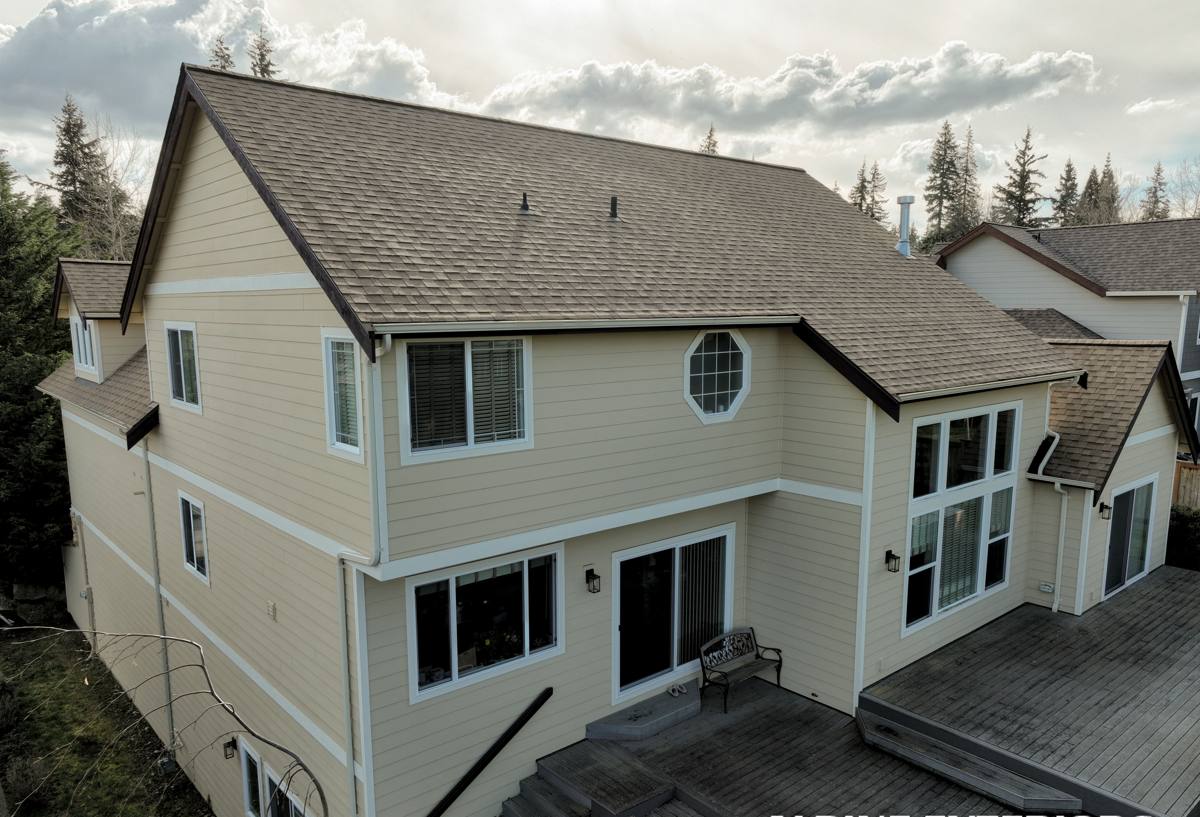
What "Correct" Looks Like on a South Hill Roof
Ventilation That Actually Moves Air
Warm, moist attic air rising into a roof deck that can't breathe is one of the fastest ways to rot sheathing and shorten shingle life from the underside — a problem that shows up years before anyone notices a leak. A correct install balances intake at the eaves with exhaust at the ridge, sized to the attic's actual square footage, not just whatever vent happened to be on the truck.
Underlayment Built for Wind-Driven Rain
Standard felt underlayment is fine in a dry climate. On South Hill, where rain regularly comes in at an angle instead of straight down, we treat synthetic underlayment and self-adhered membrane at the eaves, valleys, and any low-slope transitions as standard practice, not an upgrade. That membrane is what stops water that gets past the shingles from ever reaching the deck.
Flashing at Every Transition
Chimneys, skylights, sidewalls, and valleys are where the overwhelming majority of roof leaks actually start — not in the open field of shingles. Step flashing, counter-flashing, and valley metal have to be formed and layered correctly, not just caulked and hoped for. Caulk is a maintenance item; flashing is the actual waterproofing.
Fastening for Coastal Wind
Homes exposed on South Hill's higher ground catch more wind than roofs tucked into a valley. Nailing pattern and nail placement matter more than most homeowners realize — a shingle that's face-nailed too high or under-driven will lift in a windstorm even if the shingle itself is rated for high wind.
Signs a South Hill Roof Needs Attention
Because moss and algae growth is so common here, homeowners often assume a roof is "fine" as long as it isn't actively leaking. By the time water shows up inside, the underlying damage is usually well established. Worth checking for or having inspected:
- Moss or dark algae streaking concentrated on the north-facing or shaded slopes of the roof
- Granules collecting in gutters or at downspout outlets
- Shingle tabs that are curling, cupping, or lifting at the edges
- Soft or spongy spots when walking the roof (a sign of deck rot underneath)
- Daylight visible through the attic roof boards, or damp insulation below the deck
- Rusted or lifted flashing around chimneys, vents, and skylights
- Sagging along a ridge line or valley
Choosing an Asphalt Shingle for This Climate
There's no single "best" shingle — the right choice depends on how exposed the roof is, the home's roof pitch, and the homeowner's budget and expectations. Here's how the common tiers compare for a coastal Whatcom County home:
| Shingle Type | Typical Lifespan Here | Best For | Trade-Offs |
|---|---|---|---|
| 3-Tab Standard | 15–20 years | Budget re-roofs, rental or resale properties | Lower wind rating, less algae resistance without upgraded granules |
| Architectural / Dimensional | 25–30 years | Most South Hill homes | Higher upfront cost, but far better wind and impact performance |
| Algae-Resistant (Class AR) | Same as base tier, better appearance | Shaded lots, north-facing slopes, homes near tree cover | Slight cost premium; resistance fades gradually over decades, not permanent |
| Premium / Designer | 30+ years | Homes prioritizing appearance and longer warranty coverage | Highest material cost; benefit is mostly cosmetic and warranty length |
For most homes on South Hill, we steer people toward a mid-to-upper architectural shingle with algae-resistant granules. It's the tier where the added cost over basic 3-tab is easiest to justify given how consistently this climate tests a roof's wind and moss resistance.
Our Asphalt Shingle Roofing Process
- On-site assessment. We walk the roof (not just look at it from the ground), check the attic for ventilation and moisture issues, and identify problem areas like valleys, flashing, and shaded slopes.
- Honest scope and written estimate. You get a clear breakdown of what's being replaced — deck repairs if needed, underlayment type, flashing work, shingle selection — before any work starts.
- Tear-off and deck inspection. Old roofing comes off down to the deck so we can actually see the sheathing condition, not guess at it from above.
- Deck repair as needed. Any soft, rotted, or delaminated sheathing gets replaced before new roofing goes down — this is not an area to shortcut.
- Underlayment and flashing installation. Ice-and-water membrane at eaves and valleys, synthetic underlayment across the field, new flashing at every penetration and transition.
- Shingle installation. Installed to manufacturer nailing specifications for the wind zone, with proper starter courses and ridge caps — the details that determine whether a warranty is actually valid if something goes wrong later.
- Cleanup and final walkthrough. Magnetic sweep for stray fasteners, debris removal, and a walkthrough so you know what was done and what to watch for going forward.
Why It Matters That We Already Work in South Hill
A roofing crew that only shows up in a neighborhood once knows the general trade — not the neighborhood. Working South Hill regularly means we already understand which slopes tend to hold moss longest, which roof orientations take the worst of the driving rain off the water, and how the terrain here affects everything from staging equipment safely on a sloped lot to sequencing work around the wetter stretches of the year. It also means our estimates are grounded in what these specific roofs actually need, not a generic national average.
It matters just as much for what happens after installation. A local crew is the one you can actually call in three years if something needs a look — not a company that moved on to the next region. Whatcom County permitting requirements, inspection scheduling, and typical roof ages in this area are things we deal with regularly, which keeps a project moving instead of stalling on paperwork.
Maintenance That Extends Roof Life Here
Even a correctly installed shingle roof needs some upkeep in this climate, mostly because of moss and organic debris rather than the shingles themselves aging poorly:
- Keep gutters clear so water isn't backing up under the shingle edge, especially under tree cover
- Remove moss buildup gently — never pressure-wash asphalt shingles, which strips protective granules
- Trim back overhanging branches to reduce shade, debris, and physical wear on the roof surface
- Schedule a walk-through inspection every couple of years, and always after a significant windstorm
- Address small flashing or sealant issues promptly, before a minor gap becomes a deck repair
What Affects the Cost of a Shingle Roof in South Hill
| Factor | Why It Matters |
|---|---|
| Roof size and number of stories | Drives material quantity and labor time; multi-story homes also add access complexity |
| Roof pitch and complexity | Steep slopes, multiple valleys, and dormers all add labor and flashing work |
| Deck condition | Rotted or delaminated sheathing found during tear-off adds repair cost, but skipping it isn't an option |
| Shingle tier selected | 3-tab, architectural, and algae-resistant options carry different material costs |
| Ventilation and underlayment upgrades | Proper intake/exhaust venting and storm-grade underlayment cost more upfront but reduce long-term failures |
| Access and staging | Steep or tight South Hill lots can require additional safety equipment and time |
We'd rather walk you through these factors on your actual roof than quote a number without ever seeing the property — every one of these variables changes the estimate, and a fair quote reflects the real job, not a generic average.
If your South Hill roof is showing moss, missing granules, curling shingles, or you just want an honest read on how much life it has left, we're glad to come take a look. The estimate is free, there's no pressure attached to it, and you can use the form below to get started.