 Chuckanut Exterior
 Roof Repair Built for South Hill's Climate
South Hill sits up above the flatter parts of Chuckanut, which means more exposure to wind off the water, heavier tree cover in a lot of yards, and a longer stretch of shaded, damp roof surface than homes on lower, more open lots. That combination — salt-laden air, driving rain off the Sound, and a moss season that can run most of the year in the shady spots — is hard on every part of a roof system: shingles, flashing, underlayment, and the fasteners holding it all together.
A roof repair in this neighborhood isn't the same job as a roof repair in a dry inland climate. It has to account for wind-driven rain finding its way under flashing, moss roots working into shingle granules, and gutters that clog faster because of the tree canopy overhead. We've repaired enough South Hill roofs to know which failure points show up first and which ones get ignored until they turn into a much bigger job.
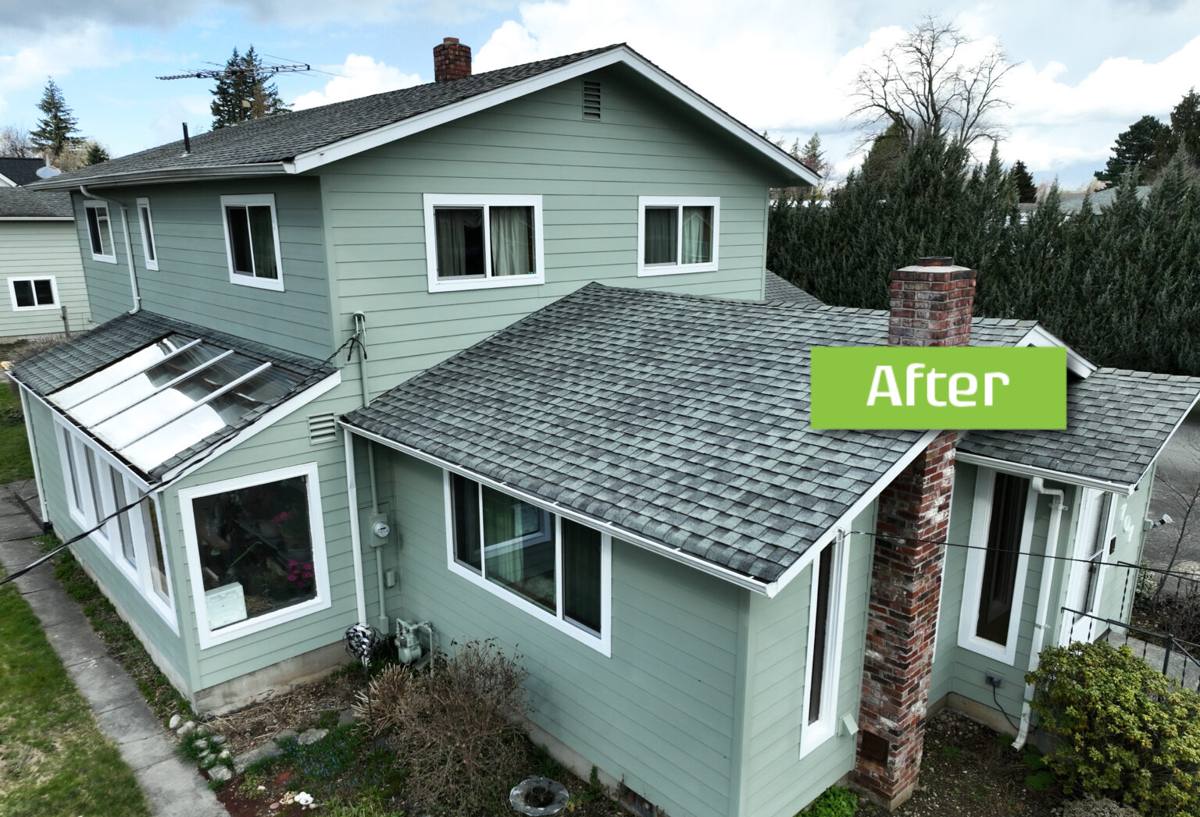
Why Whatcom County Weather Wears Roofs Down Faster
Three things do most of the damage to South Hill roofs over time:
Salt Air
Homes closer to the water pick up airborne salt that accelerates corrosion on metal flashing, nail heads, gutter screws, and any exposed fasteners. Once a fastener starts to rust, it loses its grip and its seal — that's a slow leak waiting to happen, usually discovered only after water has already reached the decking underneath.
Driving Rain
Whatcom County storms often come in sideways, not straight down. Wind-driven rain gets pushed up under shingle tabs, into open valleys, and behind flashing that's just a little loose or under-lapped. A roof that would shed water fine in a calm rain can leak in a wind event, which is why so many "mystery leaks" only show up during a specific kind of storm.
Moss and Shade
South Hill's mature trees are part of what makes the neighborhood attractive, but they also mean more shaded roof area, more organic debris in valleys and gutters, and a moss season that can start early and last late into the year. Moss holds moisture against the roof surface long after the rest of the roof has dried, and its root structure lifts shingle edges and granules over time — which is exactly what shortens a roof's working life before it's actually worn out.
Signs a South Hill Roof Needs Repair, Not Replacement
Most roofs don't fail all at once — they show warning signs first. Catching these early is usually the difference between a straightforward repair and a much larger project.
- Moss or dark streaking concentrated on the shaded (usually north-facing) side of the roof
- Granules collecting in gutters or at the base of downspouts
- Curling, lifted, or cracked shingle tabs, especially near ridges and valleys
- Rust staining or visible corrosion around flashing, vents, or chimney counterflashing
- A ceiling stain that only appears during wind-driven storms, not steady rain
- Daylight visible through the attic roof deck at joints or nail penetrations
- Sagging or soft spots near valleys, where debris and moisture collect longest
- Loose, missing, or rattling fasteners on ridge caps and flashing edges
If you're seeing one or two of these, it's usually still a repair. Multiple items on this list, especially combined with the roof's age, is when we'll tell you honestly if replacement makes more financial sense.
What a Correct Roof Repair Actually Involves
A roof repair done right isn't just patching the spot where water is showing up inside — the visible leak point and the actual entry point are often several feet apart, especially on a sloped roof. Our process starts with tracing the path water actually takes, not just covering the symptom.
Diagnosis First
We inspect the roof surface, the flashing details around penetrations (chimneys, vents, skylights), the valleys, and the attic side of the deck where visible. On a shaded, moss-prone roof, we're also checking how much organic buildup has accumulated and whether it's already affecting the shingle mat underneath.
Matching the Repair to the Roofing Material
Composition shingle, cedar shake, and metal roofing all fail differently and repair differently. A shingle repair might mean replacing a section of shingles and re-flashing a valley. A cedar roof repair often involves replacing split or moss-damaged shakes and correcting ventilation that's letting moisture linger. Metal roofing repairs are usually about resealing fastener penetrations and correcting panel laps rather than patching the panel itself.
Flashing and Sealant Done Properly
Most roof leaks in this region trace back to flashing, not the shingles themselves. Flashing has to be layered correctly with the roofing material — not just caulked over — so water sheds outward instead of getting trapped. Caulk and sealant have their place, but they're a supplement to correct flashing work, never a substitute for it.
Moss and Debris Removal Done Without Damage
Moss needs to come off without gouging or lifting granules, which means the right tools and the right technique — not a pressure washer set too aggressively, which can strip a roof's protective coating and shorten its life faster than the moss would have.
Repair vs. Replacement: How We Help You Decide
Homeowners in South Hill often ask whether it's worth repairing an older roof or better to plan for replacement. There's no single right answer — it depends on the roof's age, how widespread the damage is, and how many repairs it's already had.
| Factor | Leans Toward Repair | Leans Toward Replacement |
|---|---|---|
| Roof age | Under 15-20 years (material dependent) | At or past manufacturer's expected lifespan |
| Damage extent | Localized — one valley, one flashing area, one section | Spread across multiple slopes or repeated leak points |
| Repair history | First or second repair on this roof | Third-plus repair, or recurring leaks in the same area |
| Moss/organic damage | Surface-level, hasn't reached the shingle mat | Granule loss and mat exposure across large areas |
| Decking condition | Solid, no soft spots found | Soft, spongy, or visibly rotted decking |
We'll always give you a straight answer on which side of that line your roof falls on, and we won't push a full replacement when a proper repair will genuinely hold up.
Our South Hill Roof Repair Process
- Inspection and photos: We walk the roof (weather permitting) and document the actual condition, not just the reported leak.
- Honest diagnosis: We explain what's failing, why, and whether it's a repair or a replacement conversation — in plain language, no upsell.
- Written estimate: A clear scope of work and price before anything starts, so there are no surprises.
- The repair itself: Matched materials, proper flashing technique, and moss/debris cleared from the work area, not just the leak spot.
- Final check: We confirm the repair area sheds water correctly and check adjacent flashing and fasteners while we're already up there.
Why Hiring a Crew That Already Works in South Hill Matters
Roofing crews who don't work this specific area regularly tend to treat every job the same way, regardless of local conditions. A crew that already knows South Hill knows to check for moss buildup in the shaded valleys first, expects wind-driven rain patterns rather than just straight-down leaks, and understands how the tree canopy and elevation here accelerate wear compared to homes just a few miles away in more open, drier parts of Whatcom County.
That local familiarity also matters for access and scheduling — steep driveways, tree clearance for ladders and equipment, and working around the wetter stretches of the year so a repair isn't rushed between storm systems. It's the difference between a roof repair that's done and one that's done right for this specific hillside, this specific tree cover, and this specific weather pattern.
Maintenance That Extends the Life of a Repair
A good repair is only half the equation — a little seasonal upkeep keeps moss and debris from undoing the work.
- Clear gutters and valleys at least twice a year, more often under heavy tree cover
- Trim back overhanging branches to reduce shade and debris buildup
- Have moss treated at the first sign of growth rather than waiting for a full season of buildup
- Schedule a roof check after major wind or storm events, even without a visible leak
If you're seeing moss, a stain on the ceiling after a windy storm, or shingles that just look tired, we're happy to take a look and give you a straightforward, no-pressure estimate on what it will take to fix it right. Use the form below to get started.