 Chuckanut Exterior
 Decks in Burlington Take a Different Kind of Beating
Burlington sits close enough to the water that salt-laden air reaches your deck year-round, and Whatcom County's rain doesn't let up for long stretches of the year. Add in a moss season that can run from fall through spring on anything shaded or north-facing, and a deck here is working under conditions a lot of national "deck building" advice never accounts for. A custom deck built for Burlington isn't just about layout and looks — it has to be engineered from the ground up to shed water, resist corrosion, and keep moss from getting a foothold in the first place.
We build custom decks specifically for this stretch of Whatcom County, and the choices we make on framing, fasteners, decking material, and drainage are all driven by what actually holds up here versus what looks good on a spec sheet from a drier climate.
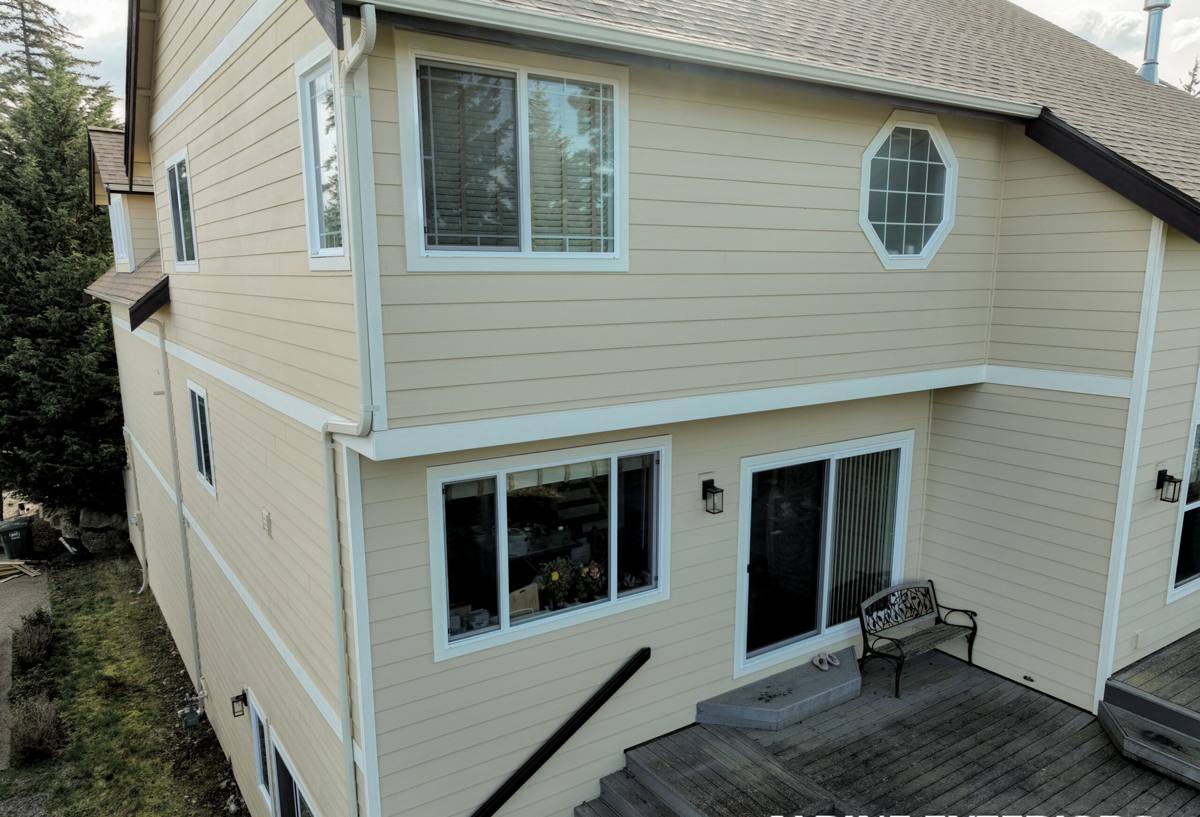
What "Correct" Actually Means for a Burlington Deck
A deck can look finished and still be built wrong for this climate. The difference usually isn't visible until year three or four, when trapped moisture, corroding hardware, or moss growth starts showing up. Getting it right up front costs less than fixing it later.
Framing and Flashing
The ledger board — where the deck attaches to your house — is the single most common failure point on decks in wet climates. It needs proper flashing that directs water away from the house band joist, not just caulk and a prayer. We flash every ledger connection and use joist tape on the tops of joists so fasteners aren't driving straight into exposed, absorbent wood that will hold water against the metal.
Footings and Ground Contact
Whatcom County soil holds moisture longer than sandy or well-drained ground, which means footings need to be sized and set below frost depth with proper drainage around them, not just poured to minimum code and left. We also keep structural wood off the ground and away from standing water wherever the site allows, since ground-level moisture is what drives rot and moss growth from below rather than above.
Choosing Decking Material for Salt Air and Moss
There's no single "best" decking material — there's the right material for your budget, your sun exposure, and how much upkeep you actually want to do. Salt air accelerates corrosion on hardware and fasteners regardless of what decking you choose, and shaded areas of any deck in this climate will grow moss if the surface holds moisture. Here's how the common options actually compare under Burlington conditions:
| Material | Moisture & Moss Behavior | Maintenance | Typical Lifespan Here |
|---|---|---|---|
| Pressure-treated wood | Absorbs water; moss and algae take hold quickly in shade unless cleaned regularly | Annual cleaning, periodic staining/sealing | 10–15 years with upkeep |
| Cedar | Naturally rot-resistant but still needs sealing to shed moisture and resist graying/moss | Sealing every 1–2 years, regular cleaning | 15–20 years with upkeep |
| Traditional composite | Won't rot, but uncapped boards can absorb surface moisture and grow moss/mildew if not cleaned | Periodic washing, no staining or sealing | 20–25 years |
| Capped composite / PVC | Fully sealed shell sheds water and resists moss and algae growth best of the options here | Occasional rinsing | 25+ years |
For decks with significant shade or north exposure — common on wooded Burlington lots — we lean toward capped composite or PVC because the sealed surface simply doesn't give moss and mildew the foothold that bare wood or uncapped composite does. For homeowners who want the look and feel of real wood and are willing to keep up with sealing, cedar remains a solid choice, especially in sunnier, more open yards where it dries out between rains.
Hardware, Fasteners, and Railings That Hold Up
This is where a lot of decks quietly fail before the decking itself ever does. Standard galvanized fasteners corrode faster in salt-influenced air than most homeowners expect, leaving rust streaks and, eventually, weakened connections. We use stainless steel or high-grade coated fasteners rated for coastal exposure on structural connections, and hidden fastener systems on visible decking surfaces where the material allows — both for a cleaner look and because exposed screw heads are one of the first places corrosion shows up.
Railing systems get the same scrutiny. Metal railing components need a finish that's actually rated for salt exposure, not just standard exterior paint, and any wood railing components need the same sealing discipline as wood decking. A railing that starts rusting or graying within a couple of seasons usually means the wrong hardware or finish was used for this environment, not that railings are inherently high-maintenance.
Drainage and Under-Deck Moisture Management
Where the water goes after it hits your deck matters as much as what it hits. Proper board spacing lets water drain through rather than pool on the surface, and grading beneath the deck should direct runoff away from the foundation rather than let it collect and sit. On decks with usable space underneath — a common request in this area for covered storage or a dry patio — we install proper under-deck drainage systems so that space actually stays dry instead of becoming a permanently damp, moss-prone crawl area.
Gutters and downspouts near the deck also deserve a look during planning. A deck built correctly but fed a constant stream of roof runoff from an undersized or misdirected gutter will still develop moss and moisture problems, so we factor existing drainage into the design rather than treating the deck as an isolated project.
Our Process for a Burlington Deck Project
- On-site consultation — we walk your property, assess sun and shade exposure, existing drainage, and soil conditions before recommending materials.
- Design and material selection — layout, decking material, railing style, and hardware are chosen based on your budget and how the site actually behaves in wet weather.
- Permitting — we handle the permit process with the local building department so your deck meets current code for footings, guardrails, and structural connections.
- Site prep and footings — footings are set to proper depth with drainage considered, not just poured to the minimum.
- Framing with flashing and joist protection — ledger flashing and joist tape go in before a single deck board is placed.
- Decking, railing, and hardware installation — using fasteners and finishes rated for this climate.
- Final walkthrough and inspection — we review the finished deck with you and confirm it's ready for final permit sign-off.
What to Expect for Maintenance After the Build
Even a well-built deck in this climate needs some seasonal attention. What that looks like depends on the material you chose, but a general Burlington-area maintenance checklist looks like this:
- Sweep debris off the deck regularly, especially in fall — trapped leaves hold moisture and speed up moss growth
- Rinse or wash the surface a couple of times a year to remove pollen, salt residue, and early moss/algae before it establishes
- Check railing and structural hardware annually for early rust or corrosion, particularly on decks facing open water or prevailing wind
- Reseal or restain wood decking and railings on the schedule appropriate to the product — don't wait until it's visibly gray and dry
- Keep gutters and downspouts near the deck clear so runoff isn't draining directly onto or under the deck surface
- Clear standing water or debris from under-deck drainage systems after major storms
None of this is difficult, but skipping it is exactly how a well-built deck ends up looking like a poorly built one within a few years.
Why a Crew That Already Works Burlington Makes a Difference
A deck contractor who mostly works drier inland climates will often spec the same materials and fastener grades they'd use anywhere else — and those choices show their weaknesses fast once they're exposed to Whatcom County's rain and salt air. Working this area regularly means we already know which hardware corrodes too fast here, which decking surfaces actually resist moss in shaded yards, and what the local building department expects on footing depth and guardrail details before we ever submit a permit. That familiarity shows up as fewer surprises during the build and a deck that's still performing well well past the point where a generic build would be showing problems.
We also know this region's seasons well enough to time projects sensibly — footings and framing go in during drier stretches when possible, and we don't rush concrete or finish work into weather that won't let it cure properly.
Ready to Talk About Your Deck?
If you're planning a new custom deck in Burlington or thinking about replacing one that hasn't held up to the climate, we're happy to take a look and walk you through honest options for your site and budget. Use the form below to request a free, no-pressure estimate — there's no obligation, just a straight assessment of what your property needs.