 Chuckanut Exterior
 Why Burlington Roofs Wear Differently Than Roofs Inland
Burlington sits close enough to the water and to the tree line that its roofs deal with a combination most inland Whatcom County homes never see: salt-laden air moving in off the water, driving rain that hits siding and roof edges sideways instead of straight down, and a moss season that can run most of the year in shaded, north-facing sections. None of these things ruin a roof by themselves. Together, over years, they find every weak point in a shingle installation that was cut short.
Salt air accelerates corrosion on exposed metal — nail heads, flashing, and drip edge — long before the shingles themselves show their age. Driving rain doesn't just fall on a roof, it gets pushed sideways under shingle tabs and around flashing that isn't sealed correctly, which is why so many "roof leaks" in this area actually start at a valley, chimney, or vent boot rather than in the open field of shingles. And moss doesn't just look bad — it holds moisture against the shingle surface, lifts tabs as it grows, and works its way under the mat over a season or two if it's never removed.
A shingle roof built for a drier, calmer climate can look fine going on, then start failing early once it meets a Burlington winter. Building it right the first time costs more attention up front, not necessarily more money — most of what protects a roof out here is correct detailing, not upgraded materials.
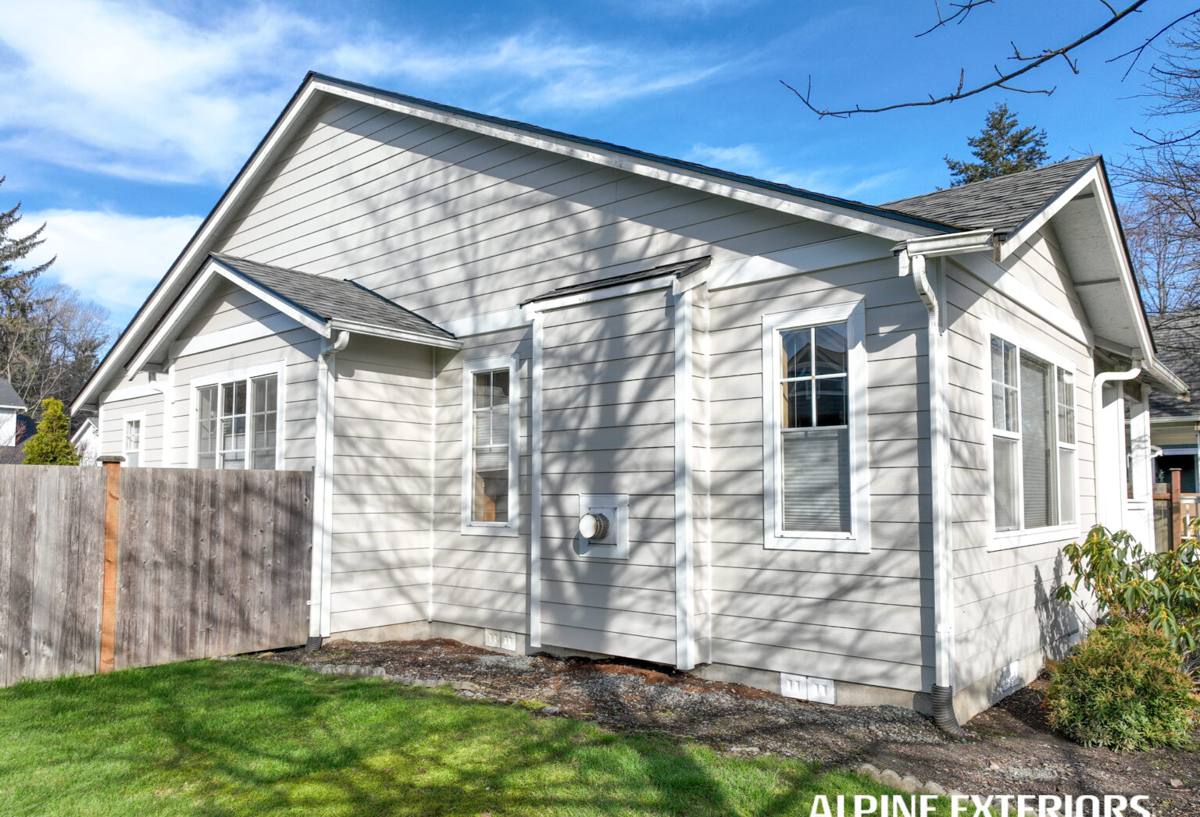
What a Correct Asphalt Shingle Roof Needs in This Climate
An asphalt shingle roof is a system, not a single product. In a climate with salt exposure, wind-driven rain, and heavy moss pressure, every layer of that system earns its keep:
- Underlayment: A synthetic or self-adhering underlayment that resists wind-driven water intrusion, not just standard felt, especially in valleys and along eaves.
- Ice and water barrier: Installed at eaves, valleys, and around penetrations, where wind-driven rain and moss buildup are most likely to force water backward under shingles.
- Flashing: Corrosion-resistant step flashing, counter-flashing, and drip edge — salt air is hard on cheap or bare metal, so the flashing grade matters as much as the shingle brand.
- Ventilation: Balanced intake and exhaust airflow so moisture from inside the home doesn't condense against the underside of the roof deck, which speeds up rot and shortens shingle life from below.
- Fastening: Correct nail placement and count for the wind exposure this area actually sees, not the manufacturer's minimum for a calmer climate.
Skip any one of these and the shingles themselves become almost irrelevant — water and moisture will find the gap.
Signs a Burlington Roof Needs Attention
Because so much of the damage out here starts at the edges, valleys, and flashing rather than in the open shingle field, problems can sit hidden for a while. Homeowners in this area should watch for:
- Moss or dark streaking concentrated on north-facing or shaded slopes
- Granules collecting in gutters or at downspout outlets
- Curling, cupping, or lifted shingle tabs, especially near ridges and edges
- Rust staining below metal flashing or exposed nail heads
- Soft spots, staining, or a musty smell in the attic near the roof deck
- Daylight visible around chimney or vent flashing from inside the attic
- Shingle granule loss that leaves the underlying mat looking shiny or bald
Any one of these on its own isn't an emergency. Several together, or any sign of active moisture in the attic, is worth a look before the next wet season.
Our Asphalt Shingle Roofing Process
Whether it's a full replacement or a section repair, the sequence matters more than the brand of shingle. Rushing or skipping steps is where most premature failures start.
- Inspection and assessment: We look at the whole system — deck condition, existing ventilation, flashing, and any moisture already trapped in the attic — before recommending replacement over repair or vice versa.
- Deck evaluation: Any soft, delaminated, or water-damaged sheathing gets replaced. Shingles installed over a compromised deck fail early no matter how good they are.
- Tear-off and prep: Old material comes off completely so we can check the deck and flashing conditions that were hidden underneath.
- Underlayment and ice/water barrier: Installed to the standard the local climate calls for, not the manufacturer's bare minimum.
- Flashing and edge metal: New or upgraded flashing at valleys, walls, chimneys, and penetrations — this is where most leaks originate, so it gets the most attention.
- Shingle installation: Correct exposure, nailing pattern, and fastener count for the wind and rain exposure this area sees.
- Ventilation check: Intake and exhaust balanced so the roof can dry from both sides.
- Final walkthrough: Cleanup, magnetic nail sweep, and a review of what was done and why.
Choosing a Shingle for This Kind of Exposure
Not every shingle line is built the same way, and the differences matter more in a salt-air, high-moisture climate than they do somewhere drier and calmer. The table below is a general guide, not a recommendation for any specific brand.
| Shingle Type | Typical Lifespan | Performance Notes for This Climate |
|---|---|---|
| 3-tab shingle | Shorter end of the range | Lower wind rating; can be a reasonable option on simple roof lines, but seams and tabs are more exposed to wind-driven rain |
| Architectural (laminated) shingle | Mid to long range | Heavier, better wind resistance, more resistant to lifting at edges and ridges — the more common choice for exposed sites |
| Algae-resistant (copper/zinc granule) shingle | Similar to standard architectural | Granule additive slows algae and moss staining on shaded, damp slopes — worth considering on north-facing sections |
| Impact-resistant shingle | Similar to standard architectural | Reinforced mat resists granule loss and cracking from debris; a consideration for exposed or tree-covered lots |
We install based on the roof's exposure, slope, and the client's budget and expectations — a steep, shaded, moss-prone slope calls for different specification than a simple, well-ventilated south-facing roof plane.
Why We're Selective About Low-End Materials
We won't install bargain-tier shingles or skip flashing upgrades to hit a lower price, and we're upfront about why: in this climate, the mat and granule quality of a low-end shingle usually shows its age within a handful of years, and thin flashing corrodes faster in salt air than it would somewhere drier. That's not a knock on any one brand — it's a maintenance and moisture-performance trade-off we'd rather explain up front than have a homeowner discover later.
Moss and Long-Term Roof Maintenance in Whatcom County
Moss is close to unavoidable on shaded roof slopes in this part of Washington, but it doesn't have to shorten a roof's life if it's managed instead of ignored. A few habits go a long way:
- Keep gutters and valleys clear so water doesn't sit against shingle edges
- Trim back overhanging branches to reduce shade and debris buildup
- Remove moss growth gently — never with a pressure washer, which strips granules and shortens shingle life
- Have shaded, north-facing slopes checked more often than sunnier sections
- Address small flashing or sealant issues before the next wet season, not after
A roof that gets a five-minute look once or twice a year almost always outlasts one that only gets attention when there's already a stain on the ceiling.
What Affects the Cost of a Burlington Roofing Project
Pricing depends on the specifics of each roof, but the same handful of factors drive most of the variation we see on jobs in this area:
| Factor | Why It Matters Here |
|---|---|
| Roof pitch and complexity | Steeper roofs and multiple valleys mean more flashing detail and labor time |
| Deck condition | Hidden rot from long-term moisture or moss adds repair scope once tear-off starts |
| Shingle class chosen | Architectural and algae-resistant lines cost more than basic 3-tab but hold up better here |
| Flashing and ventilation upgrades | Salt air and moisture pressure make it worth upgrading beyond the bare minimum |
| Access and site conditions | Tree cover, steep lots, and tight access all add time to tear-off and disposal |
We give straightforward, itemized estimates so homeowners can see exactly what's driving the number — not a flat per-square price that hides what's actually being installed.
Why It Matters That We Already Work Burlington
A crew that already works this specific area knows which slopes hold moss longest, which flashing details tend to fail first under driving rain, and how much ventilation a given attic actually needs versus what a generic spec sheet assumes. That's not something you get from a crew passing through from out of the area for a one-time bid. It shows up in the small decisions — where to add an extra course of ice and water barrier, which flashing gauge to use, how tight to set the ventilation balance — that a roof built for calmer, drier conditions elsewhere would miss.
We're not the only roofing option in Whatcom County, and we don't claim to be. What we can say is that we build every asphalt shingle roof for the conditions it will actually face here — salt air, sideways rain, and a moss season that doesn't take much of a break.
If your Burlington-area roof is showing its age, or you just want a straight answer on repair versus replacement, we're glad to take a look. Use the form below to request a free, no-pressure estimate.