 Chuckanut Exterior
 Windows Built for Burlington's Coastal Climate
Burlington homes sit close enough to the water and the Chuckanut hillside that windows take a beating most inland houses never see. Salt-laden air corrodes hardware and pits metal finishes faster than manufacturers' warranties assume. Driving rain, pushed sideways by wind off the bay, tests every seal and flashing detail around a window opening. And the long, wet moss season here doesn't just grow on roofs — it colonizes window sills, trim, and any wood surface that stays damp too long. A window that works fine in a dry climate can fail within a few years in this one if it wasn't specified and installed with these conditions in mind.
When we talk to Burlington homeowners about window replacement, the conversation almost always starts with a specific complaint: fogging between panes, a drafty spot near a sill, black staining on wood trim, or hardware that's seized up from corrosion. These aren't random defects — they're predictable outcomes of Whatcom County's climate meeting windows or installation work that wasn't matched to it.
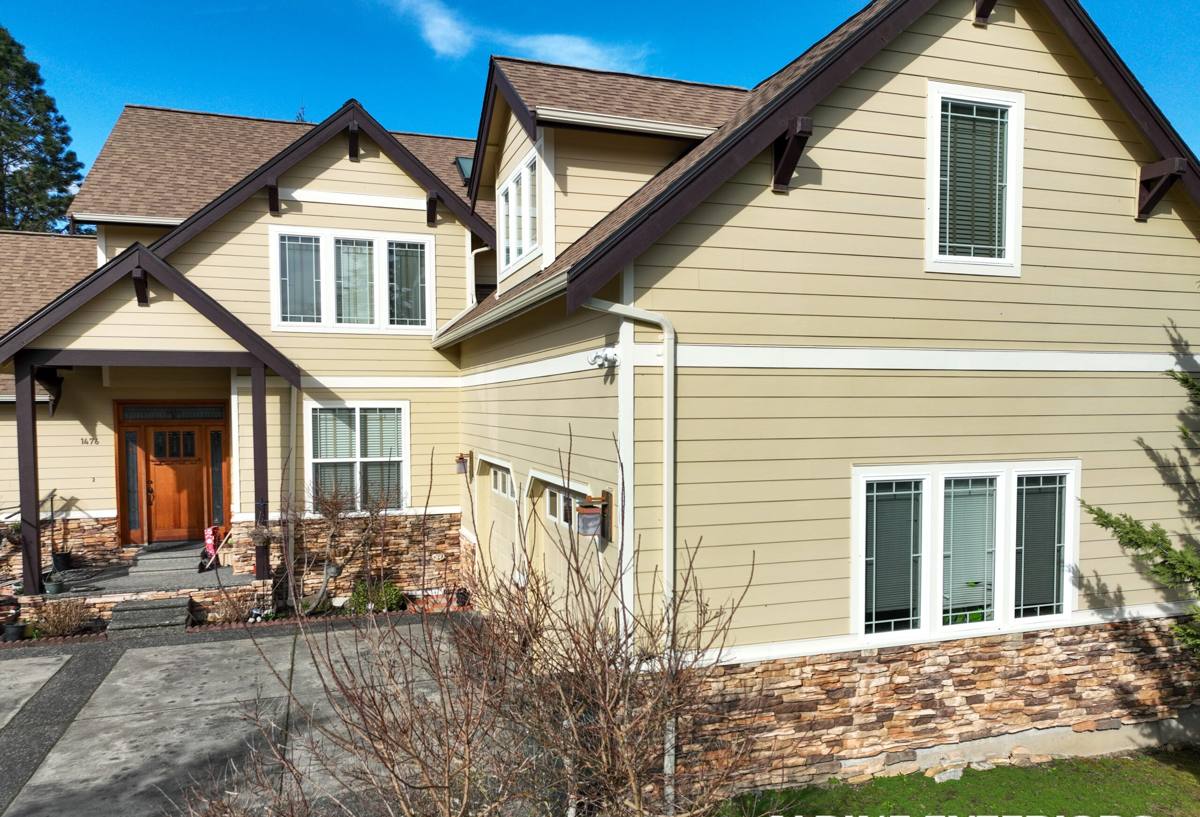
What Goes Wrong With Windows in This Area
Salt Air and Hardware
Cheaper cranks, hinges, and locks — especially on aluminum-framed or lower-grade vinyl units — corrode faster near the coast. Once hardware seizes or pits, the window either won't seal tightly or becomes difficult to operate, which owners often notice long before they notice the framing issues that caused it.
Driving Rain and Flashing
Most window leaks aren't glass failures — they're flashing and sealant failures. Wind-driven rain finds any gap in the water management layer around a window opening. A window can be installed perfectly plumb and still leak if the flashing tape, drip cap, and sill pan weren't integrated correctly with the house wrap underneath.
Moss and Trapped Moisture
Wood sills and trim in shaded, damp spots — common under eaves or on the north side of Burlington homes — hold moisture longer during our wet months. Moss and mildew take hold, and if the substrate underneath isn't sealed or ventilated properly, that moisture works its way into the wall assembly over time.
What a Correct Window Installation Actually Involves
A window replacement is a water-management job first and a glass-and-frame job second. Getting the visible parts right and skipping the hidden parts is how leaks show up two or three winters later, not immediately — which is exactly why it's easy for a rushed job to look fine at handoff.
- Removing the old unit and inspecting the rough opening and sheathing for rot or prior water damage before anything new goes in
- Repairing or replacing any damaged sheathing rather than covering it up
- Installing a proper sill pan to direct any water that gets past the window back outside
- Integrating flashing tape with the existing house wrap in the correct shingle-lap order, so water sheds down and out, not into the wall
- Shimming the window square, plumb, and level before fastening — an out-of-square frame stresses seals and hardware over time
- Insulating the gap between frame and rough opening with a low-expansion foam or backer rod, not just packed fiberglass
- Sealing the exterior with a compatible, paintable sealant rated for our climate, and finishing interior trim so no gaps are left for air or moisture
Skip any one of these steps and the window itself — no matter how good — is only as reliable as the weakest part of that chain.
Choosing the Right Window Material for Whatcom County Conditions
There's no single "best" window material for every home — it depends on exposure, budget, and how much upkeep you want to take on. Here's how the common options actually perform in a salt-air, high-rainfall environment like Burlington's.
| Material | Coastal/Salt-Air Performance | Maintenance | Typical Trade-Off |
|---|---|---|---|
| Vinyl | Good — won't corrode or rot, but quality varies widely by manufacturer | Low — occasional cleaning | Lower-end vinyl can warp or discolor with age; hardware quality matters more than the frame material |
| Fiberglass | Excellent — very stable, resists moisture and salt exposure well | Low | Higher upfront cost than vinyl |
| Wood-clad | Good exterior protection if the cladding stays intact; interior wood still needs care | Moderate to high — cladding seams and interior finish need periodic attention | Best look for some homes, but the highest long-term maintenance near salt air and moss-prone shade |
| Aluminum | Poor without a quality thermally-broken, coated frame — prone to pitting and corrosion near the coast | Moderate | We generally steer Burlington homeowners away from bare or lower-grade aluminum for this reason |
For most Burlington replacements, we recommend fiberglass or a well-built vinyl line as the practical baseline — they hold up to salt air and rain exposure with the least ongoing owner effort. Wood-clad is a legitimate choice for homeowners who want that look and are willing to keep up with the cladding seams and interior finish, particularly on more sheltered elevations.
Glazing and Energy Performance
Double-pane, low-E (low-emissivity) glass is the standard we install for a reason — it cuts heat loss and helps control condensation, which matters in a climate with as much humidity and temperature swing as ours. Argon-filled units add a modest efficiency boost for a reasonable cost. Triple-pane is worth discussing for north-facing rooms or homes with persistent condensation complaints, but it's not automatically the right call for every opening — the added cost doesn't always pencil out compared to a well-installed double-pane unit.
Condensation on the inside of glass is usually a humidity and ventilation issue inside the home, not a window defect. Condensation or fogging between the panes, though, means the seal has failed and the unit needs replacing — that's a manufacturing or installation issue, not something that can be fixed in place.
Egress and Code Considerations
Bedroom windows being replaced typically need to meet current egress requirements — minimum opening size and sill height for emergency escape. This is worth flagging early in a project, especially in older Burlington homes where original window openings sometimes predate current code. We check this during the estimate so there are no surprises once the order is placed.
Common Failure Points We See in Burlington Replacements
A lot of window callbacks we get asked to fix trace back to a short list of recurring issues:
- Flashing tape that wasn't lapped correctly with the house wrap, letting water track behind the siding instead of over it
- Caulk used as the primary water barrier instead of proper flashing — caulk is a backup, not a substitute
- Wood trim left unpainted or unsealed on cut ends, which lets moisture in and accelerates rot in our wet months
- Undersized or missing sill pans, especially on lower-floor windows that see the most wind-driven rain
- Reused old trim or flashing on a "quick" replacement, saving a little labor now at the cost of a leak later
Our Process
- On-site assessment — we look at existing window condition, framing, and any signs of past water intrusion before quoting anything
- Material and glazing discussion — matched to the specific exposure of each opening, not a one-size-fits-all recommendation
- Written estimate — clear on scope, materials, and what's included in the flashing and sealing detail, not just "window installed"
- Removal and inspection — old units come out, and we check the rough opening before anything new goes in
- Installation — sill pan, flashing integration, shimming, insulation, and sealing done in the correct order
- Interior and exterior finish — trim, paint-ready caulking, and hardware check
- Final walkthrough — operation check on every window, sight lines, and cleanup
Maintaining Windows Through the Wet Season
Even a correctly installed window benefits from basic upkeep in this climate. A short seasonal checklist:
- Wipe down and inspect exterior sills and tracks for moss or algae buildup before it stains or holds moisture
- Check and lightly lubricate hardware (cranks, hinges, locks) once a year to slow salt-air corrosion
- Look at exterior caulking lines each fall for cracking or gaps before winter rains set in
- Keep gutters and downspouts clear so water isn't sheeting down over window heads
- Watch for interior condensation patterns that suggest a ventilation issue rather than a window issue
Why Local Experience Matters
Window installation looks similar everywhere on paper — but a crew that's used to installing in Whatcom County's rain and salt exposure makes different calls on flashing detail, material selection, and sealant choice than a crew used to a drier inland climate. We've done this work across Chuckanut and the surrounding Burlington area long enough to know which elevations take the worst weather, which older homes tend to have outdated rough openings, and where a "standard" install needs an extra step to hold up here. That local pattern recognition is the difference between a window that looks right at handoff and one that's still performing correctly five winters from now.
Cost Factors to Expect
| Factor | Why It Affects Price |
|---|---|
| Window material | Vinyl, fiberglass, and wood-clad carry different unit costs and labor requirements |
| Number and size of openings | Larger or custom-shaped windows require more material and installation time |
| Condition of existing framing | Rot or water damage found during removal adds repair scope before the new window goes in |
| Glazing package | Double-pane low-E versus triple-pane or specialty coatings changes unit cost |
| Exposure and flashing complexity | Openings on the most weather-exposed elevations may need extra flashing detail or a sill pan upgrade |
| Trim and finish work | Matching existing interior or exterior trim adds labor beyond a bare window swap |
We're upfront about these variables during the estimate so you know what's driving the price, not just a bottom-line number.
If you're dealing with drafty, foggy, or hard-to-operate windows on a Burlington home, we're happy to take a look and walk you through what your home's specific exposure calls for. Fill out the form below for a free, no-pressure estimate.