 Chuckanut Exterior
 Why Burlington Decks Face Tougher Conditions Than Most
Burlington sits in the kind of Pacific Northwest microclimate that's hard on outdoor structures. Homes here deal with a steady mix of salt-tinged marine air, long stretches of driving rain, and a moss season that can run most of the year in shaded yards. A deck built the same way you'd build one in a dry inland climate simply doesn't hold up the same way out here. That's not a knock on any particular product — it's just physics. Wood fibers absorb moisture and swell and shrink with every wet-dry cycle. Metal fasteners corrode faster in salt-laden air. Shaded, north-facing surfaces stay damp long enough for moss and algae to get a foothold and never really let go.
When we build or replace a deck for a Chuckanut-area homeowner, we're building for those specific conditions, not for a national average. That shapes everything from the substructure to the board selection to how we handle drainage and fasteners.
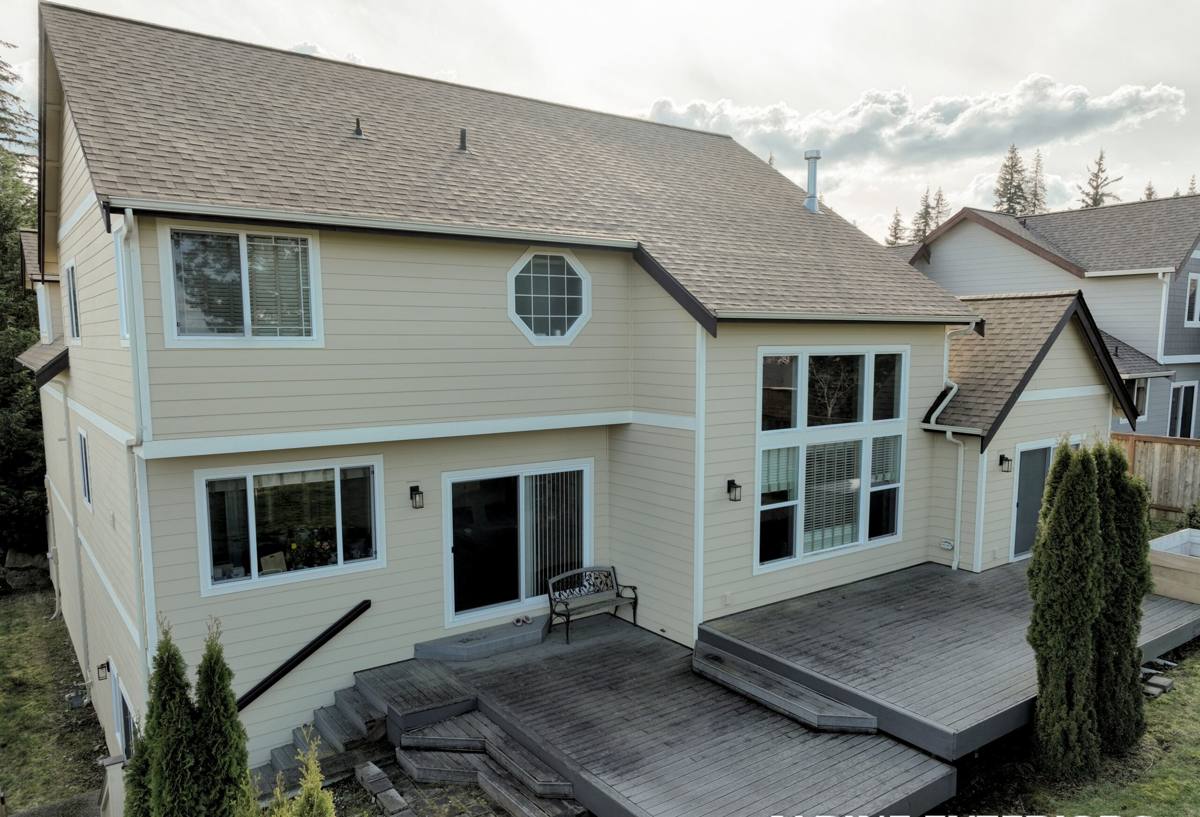
What the Regional Climate Actually Does to a Deck Over Time
Salt Air and Hardware
Proximity to Puget Sound and the Salish Sea means the air here carries more salt than most inland areas realize. Salt accelerates corrosion in exposed metal — screws, brackets, joist hangers, and railing hardware all wear faster than their generic ratings suggest if the wrong grade is used. Once a fastener starts rusting, it weakens the connection long before it looks like a problem on the surface.
Driving Rain and Drainage
Rain here doesn't fall straight down very often. Wind-driven rain gets pushed sideways and up under railings, ledger boards, and stair stringers — places a lot of decks aren't detailed to handle. Water that can't drain or dry out is the single biggest cause of premature deck failure in this region, and it's almost always a design or installation issue, not a material one.
Moss Season and Surface Traction
Between the shade from mature evergreens common in this area and the long stretch of wet, mild weather, moss and algae get a real head start on any deck surface that doesn't drain and dry quickly. Beyond the appearance issue, a mossy deck surface gets slick and stays slick, which is a real safety concern on stairs and landings.
Why We Use Composite Decking for Burlington Homes
Composite decking is made from a blend of wood fiber and recycled plastic, and most boards sold today are "capped" — meaning the core is wrapped in a protective shell that resists moisture absorption, staining, and fading. For a climate like this one, that matters more than almost any other factor. A capped composite board doesn't need annual sealing or staining, doesn't swell and crack the way raw wood can after repeated soaking, and resists the kind of surface staining that damp, shaded decks are prone to.
We're upfront about the trade-offs, because no product is right for every situation:
- Composite costs more upfront than pressure-treated wood, sometimes significantly.
- It won't ever look exactly like natural wood grain, even on higher-end boards.
- Lower-quality or uncapped composite products from years past had real heat and staining issues — a fair concern if you've heard bad stories about composite decking.
- It performs best when the substructure and drainage details underneath it are done correctly — composite decking doesn't fix a poorly built frame.
For most Burlington homeowners dealing with year-round moisture exposure, the reduced maintenance burden and moisture resistance make composite the more sensible long-term choice — but we'll walk through wood and PVC options honestly too, because the right call depends on your budget, your home's exposure, and how long you plan to stay in it.
The Part That Determines Whether the Deck Lasts: The Substructure
The decking boards get all the attention, but the framing underneath is what actually decides whether a deck lasts 10 years or 30. In a climate this wet, we pay particular attention to:
- Ledger board flashing — where the deck attaches to the house is the single most common source of hidden rot if it isn't flashed and sealed correctly.
- Joist protection — joist tape or an equivalent moisture barrier over the top of each joist keeps water from wicking into the wood core of the frame, even under a composite deck surface.
- Fastener grade — stainless or high-grade coated fasteners rated for coastal exposure, not generic hardware-store screws that will corrode faster in salt air.
- Airflow underneath — enough clearance and ventilation below the deck so the frame can actually dry out between rain events instead of staying damp for weeks at a time.
None of this is visible once the deck is finished, which is exactly why it's worth asking about before hiring anyone.
Choosing the Right Board and Fasteners for This Climate
There isn't one universally "best" decking material — there's a best fit for your specific deck, budget, and exposure. Here's how the main options compare for a coastal Whatcom County climate:
| Factor | Composite (capped) | Pressure-Treated Wood | PVC |
|---|---|---|---|
| Moisture resistance | High — resists swelling and rot | Moderate — needs regular sealing | Very high — fully synthetic |
| Ongoing maintenance | Low — periodic cleaning | High — sealing/staining every 1-2 years | Low |
| Upfront cost | Moderate to high | Lowest | Highest |
| Moss/algae resistance | Good, especially with textured caps | Poor without frequent cleaning | Good |
| Typical lifespan | 25-30+ years with proper install | 10-15 years, shorter in shaded/wet spots | 25-30+ years |
| Natural wood appearance | Good, varies by product line | Best (real wood grain) | Fair, more uniform look |
These are general industry ranges, not guarantees — actual lifespan depends heavily on installation quality, sun/shade exposure, and how well the substructure handles water.
Our Process, Start to Finish
Every Burlington-area deck project starts with an honest assessment, not a sales pitch:
- Site visit and assessment — we look at sun exposure, shade patterns, existing drainage, and the condition of any existing structure before recommending anything.
- Design and material discussion — we walk through composite, wood, and PVC options with real trade-offs, based on your budget and how you use the space.
- Permitting — we handle the paperwork with your local building department so the project is done to code, not around it.
- Substructure build — framing, flashing, joist protection, and fastener selection matched to coastal conditions.
- Decking installation — proper board spacing for drainage and expansion, hidden fastening where the product allows it, and clean edge and stair details.
- Final walkthrough — we go over basic care and answer questions before we consider the job done.
Maintenance Composite Decks in Burlington Actually Need
Composite decking cuts maintenance a lot compared to wood, but "low maintenance" doesn't mean "no maintenance," especially with this much rain and shade to contend with. A simple seasonal routine keeps a composite deck looking and performing the way it should:
- Sweep debris — needles, leaves, seed pods — out of board gaps regularly so water can keep draining freely.
- Rinse the surface a few times a year with plain water and a soft brush to stay ahead of algae and moss buildup, especially in shaded corners.
- Check gutters and downspouts near the deck so runoff isn't dumping extra water directly onto or under it.
- Inspect railing hardware and fasteners once a year for early signs of corrosion or looseness.
- Keep planters and furniture feet off direct contact where possible to avoid trapping moisture against the board surface.
Why Hiring a Crew That Already Works in Burlington Matters
A lot of what makes a deck last in this area isn't in the product spec sheet — it's knowing how the local conditions actually behave. A crew that regularly works in and around Burlington and the wider Chuckanut area already knows which yards hold moisture longest, which exposures get hit hardest by wind-driven rain, and how much shade from mature trees changes a maintenance plan. That local familiarity shows up in small decisions — joist spacing, drainage slope, fastener choice — that a crew unfamiliar with this specific climate might not think twice about.
It also means someone who can talk through your project in person, answer questions honestly, and stand behind the work after the truck leaves — not a crew passing through from out of the area for one job.
Get a Straight Answer About Your Deck
If you're planning a new composite deck or replacing one that's showing its age, we're happy to take a look and give you an honest read on what your home actually needs. Use the form below to request a free, no-pressure estimate — no obligation, just straight information.