 Chuckanut Exterior
 Roof Repair in Burlington, Built Around Whatcom County Weather
Burlington sits close enough to the water and to Chuckanut's forested slopes that its roofs take a different kind of beating than roofs further inland. Salt-laden air off the sound, driving rain that comes in sideways during winter storms, and a moss season that can run eight months or longer all add up to a specific set of failure patterns we see over and over on local homes. A roof repair here isn't just about patching a leak — it's about understanding why that leak happened in this climate, and fixing the actual cause instead of the symptom.
We work on roofs throughout the Burlington area regularly, which matters more than it sounds. A repair crew that mostly works drier inland markets will often miss the early signs of moss undermining shingles or salt corrosion eating through fasteners, because those aren't the problems they see every day. We see them constantly, so we know where to look first.
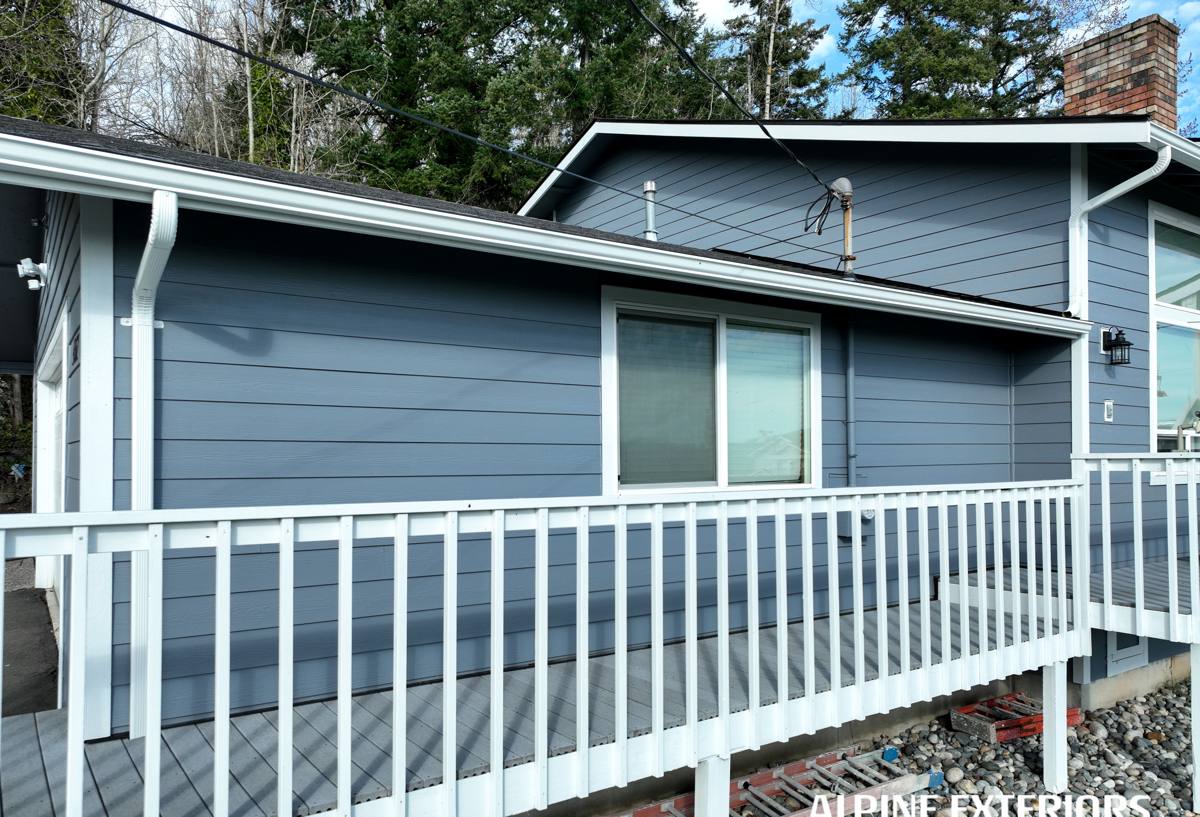
What Burlington's Climate Does to a Roof
Salt Air and Corrosion
Homes closer to the water pick up airborne salt that settles on metal roofing components — flashing, fasteners, gutter hardware, and any exposed metal trim. Over years, that salt exposure accelerates corrosion, especially on lower-grade or unprotected metal. Fasteners that back out or corrode are one of the most common hidden causes of slow leaks, because the hole they leave is small and easy to miss during a quick visual check.
Driving Rain
Storms coming off the water don't just drop rain straight down — they push it sideways and upward under normal wind conditions. That means water finds its way into gaps that would stay dry in a calmer climate: under shingle tabs, around vent boots, along step flashing at wall intersections, and through any seam that's even slightly open. A repair that only addresses the surface without checking underlayment and flashing in wind-driven-rain conditions tends to fail again in the next big storm.
Moss Season
Whatcom County's long wet season and shaded, tree-lined lots — common around Chuckanut and Burlington — create ideal moss growing conditions on north-facing and shaded roof slopes. Moss isn't just cosmetic. It holds moisture against the roofing material, lifts shingle edges as it grows, and its root-like rhizoids work into the granule surface of asphalt shingles over time. A roof with a heavy moss mat is usually holding more moisture, longer, than the same roof without it.
Signs a Burlington Roof Needs Repair
- Water stains on interior ceilings or upper walls, especially after a windy rainstorm rather than a calm one
- Granules collecting in gutters or at downspout outlets — a sign shingles are losing their protective surface
- Visible moss mats, especially on shaded or north-facing slopes
- Lifted, curled, or missing shingle tabs after a storm
- Rust streaks below metal flashing or fasteners
- Soft spots or sagging when walking the attic (never walk a roof deck that feels spongy)
- Daylight visible through the roof deck from inside the attic
- Higher-than-normal heating bills, which can point to a slow, hidden moisture problem in the attic insulation
What a Correct Roof Repair Actually Involves
A lot of roof "repairs" amount to caulking over a visible gap and calling it done. That approach might buy a season, but in a climate with this much wind-driven rain and moss pressure, it rarely holds. A repair that's actually going to last starts with finding the real source of the problem, which is often several feet away from where the water is showing up inside the house.
Our Inspection Process
- Interior check first — attic, ceilings, and walls near the suspected leak, tracing water paths back toward their entry point
- Exterior roof walk — checking shingle condition, flashing, vent boots, and valleys, with particular attention to shaded slopes for moss buildup
- Flashing and penetration check — chimneys, skylights, plumbing vents, and wall intersections are the most common failure points in wind-driven rain
- Fastener and metal condition check — looking for corrosion, especially on homes with more direct salt air exposure
- Underlayment assessment where shingles are lifted or missing, since damaged underlayment is often the real reason a small leak becomes a bigger one
The Repair Itself
Once we know the actual cause, the repair matches it — not a generic patch. That might mean replacing a section of shingles down to the deck, re-flashing a wall or chimney intersection properly instead of just adding sealant on top of old flashing, replacing corroded fasteners with the right material for coastal exposure, or a full moss treatment and removal pass paired with the repair so the same conditions don't just cause the problem again in a year or two.
Repair vs. Replacement: How We Make the Call
Not every roof problem needs a full replacement, and not every leak can be permanently solved with a patch. We look at the roof's overall age, how widespread the damage is, and how many separate problem areas exist before recommending one path or the other.
| Factor | Leans Toward Repair | Leans Toward Replacement |
|---|---|---|
| Roof age | Under 15 years, or well-maintained older roof | Near or past expected shingle lifespan |
| Damage extent | Isolated to one area or slope | Multiple areas, widespread granule loss |
| Moss condition | Light, surface-level, treatable | Heavy, long-term, shingles compromised underneath |
| Underlayment/deck | Intact where inspected | Soft, rotted, or repeatedly wet |
| Repair history | First or second repair on this roof | Repeated repairs to the same or nearby areas |
We'll always tell you honestly which side of that table your roof falls on. If a repair is the right call, we'll do the repair — there's no benefit to us in pushing a replacement a roof doesn't need yet.
Materials and Methods We Use for Coastal Conditions
Because of the salt air and moisture exposure common around Burlington, we're selective about the materials used in repair work, not just the labor. Corrosion-resistant fasteners, properly lapped flashing rather than sealant-dependent patches, and underlayment suited to a wet climate all factor into how we approach even a "small" repair. Cutting corners on any of these is exactly how a five-year-old repair turns into a new leak in year two.
We're also careful about how we handle moss removal during a repair. Aggressive pressure washing can strip granules and shorten a shingle roof's remaining life just as fast as the moss itself — so removal methods and any treatment applied are chosen to clear the moss without damaging the roofing material underneath it.
Why Local Experience on Burlington Roofs Matters
A roof repair crew that already works in and around Burlington has usually already dealt with the specific combination of problems this area produces — shaded moss-prone slopes, salt air corrosion, and wind-driven rain intrusion at flashing points. That familiarity shows up in faster, more accurate diagnosis: less time spent guessing, less chance of a callback for a leak that "moved" to a different spot because the first fix only addressed the surface.
It also means we're realistic about timing. Whatcom County's wet season isn't the best time to leave a roof partially open, and dry-window scheduling matters for getting a repair done right the first time rather than rushing it between storm systems.
What to Expect When You Call Us
- A straightforward phone or online conversation about what you're seeing — stains, missing shingles, moss, or a specific storm event
- A scheduled inspection, inside and out, with photos and a plain-language explanation of what we found
- A written estimate that separates repair scope from any optional items, so you know exactly what you're paying for
- A repair timeline that accounts for local weather, not a generic schedule
- A final walkthrough once the work is done, so you can see what was repaired and why
Maintenance That Extends the Life of a Repair
A repair holds up longer with a little ongoing attention, especially in a climate this wet. Keeping gutters clear so water isn't backing up under the roof edge, having moss treated before it builds into a thick mat, and getting a roof looked at after any major windstorm are all low-cost habits that reduce the chances of needing another repair call in the near future. We're happy to point out what to watch for on your specific roof during the inspection, whether or not you move forward with work right away.
If you're dealing with a leak, storm damage, or a moss problem on a Burlington-area roof, we're glad to take a look. The estimate is free, there's no pressure to sign anything on the spot, and you'll get a straight answer about whether you need a repair, a bigger fix, or nothing at all right now — just fill out the form below to get started.