 Chuckanut Exterior
 Burlington homes sit inside a service area we know well — close enough to open water to pick up salt-laden air on a regular basis, exposed enough to Pacific storm systems to take driving rain sideways into wall assemblies, and shaded enough on plenty of lots to grow moss through most of the year. This page is about one thing specifically: installing James Hardie fiber cement siding correctly on a Burlington home, and why that combination of product and installation matters more here than it would in a milder, drier part of the country.
What Burlington's Climate Puts Siding Through
Three conditions do most of the damage to exterior siding in this part of Whatcom County. Salt air moving inland corrodes exposed metal fasteners and trim faster than it would further from the water, and it accelerates the breakdown of lower-grade paint finishes over time. Driving rain from Pacific storm fronts doesn't fall straight down — wind pushes it sideways into every gap, seam, and under-caulked joint in a wall assembly, which is a very different stress than siding built for a drier, calmer climate ever has to handle. And moss, which needs shade and sustained dampness to establish itself, finds plenty of both on the north-facing walls and tree-lined lots common around Burlington.
Why This Isn't a One-Season Problem
None of these three conditions cause dramatic, visible failure in a single season. They work slowly — breaking down a finish coat, working moisture into a joint that wasn't sealed quite right, corroding a fastener a little more each wet season — until a homeowner notices a problem that's actually been building for years. That slow-accumulation pattern is exactly why the siding product and the installation detail matter more here than they would somewhere with a shorter, drier wet season.
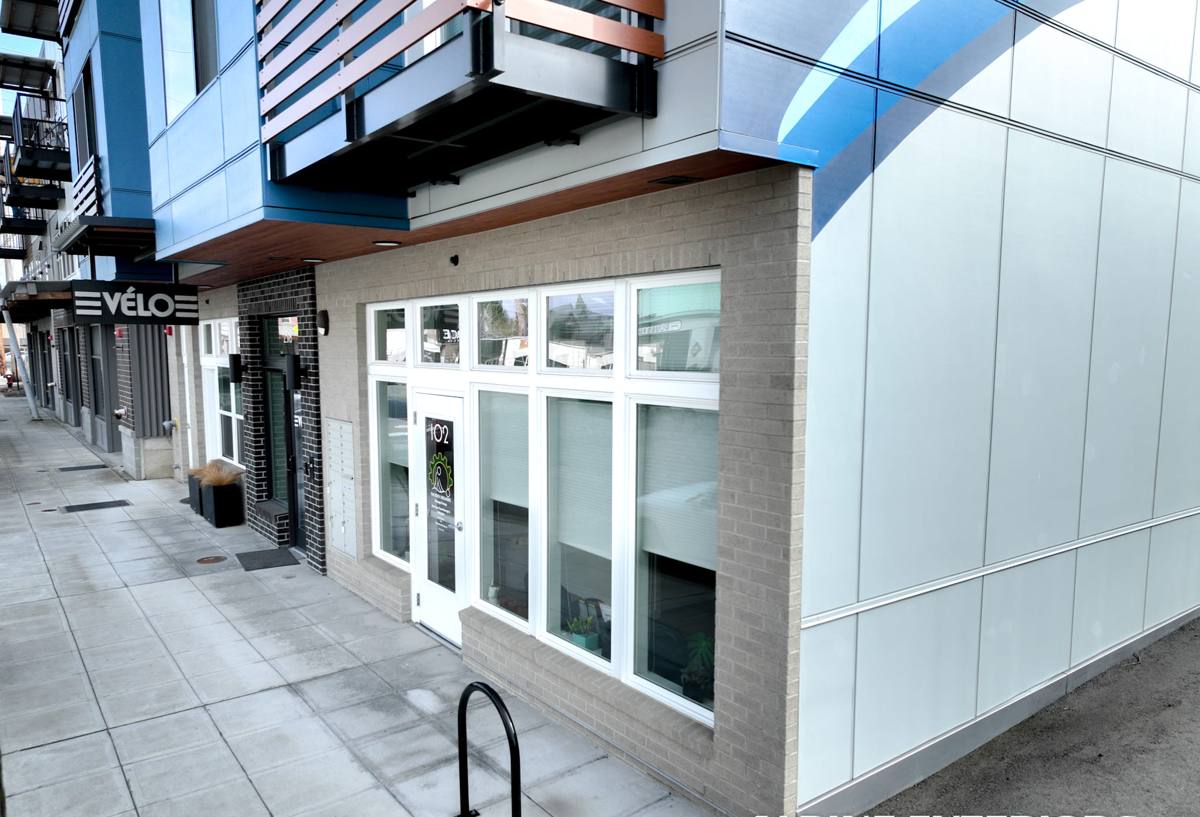
Why We Install Only James Hardie Fiber Cement in Burlington
We install one siding product, on every job, everywhere in our service area: James Hardie fiber cement. We don't install vinyl, LP SmartSide, Cemplank, Allura, primed spruce, or cedar, and that's a deliberate standard, not a limited catalog. Each of those products gets something right — vinyl is inexpensive and low-maintenance in mild conditions, engineered wood installs quickly and takes paint well, cedar has real natural character — but each one carries a trade-off we think matters too much in a climate like this to put our name on. Vinyl's seams and J-channels are exactly the kind of gap wind-driven rain works into over years. Wood-based products, however well treated at the factory, still depend on flawless field priming and caulking at every field cut to keep sustained moisture out of an organic substrate — a hard standard to hold across a full crew, on every job, for the life of the siding.
Built for Coastal Moisture, Not a National Average
Fiber cement sidesteps that core problem because it isn't organic — there's no wood substrate for trapped moisture to work into, and it doesn't feed moss and mildew growth the way wood-based siding can. James Hardie also engineers its HZ product lines around specific regional exposure rather than selling one generic formulation nationwide; homes in this part of Washington call for the HZ5 line built for cooler, wetter climates with real freeze-thaw cycling, not the formulation sold in the Southeast or Southwest. Paired with a factory-applied ColorPlus finish — baked on under controlled shop conditions instead of painted on-site in variable weather — the color holds and resists cracking longer than most field-applied finishes manage through a Burlington wet season.
What a Correct James Hardie Installation Involves
Fiber cement siding is only as good as the installation behind it, and that's especially true in a climate that punishes shortcuts. James Hardie itself publishes detailed installation specifications for a reason — the material performs as engineered only when those specs are followed, not approximated. On a Burlington home, that means:
- Correct clearance from grade, roofline, decks, and patios so the bottom edge of the siding never sits in standing moisture
- Flashing integrated at every window, door, and roof-wall transition before the siding goes on — not caulked over after the fact as a substitute
- Manufacturer-specified fastener type, spacing, and pattern matched to the specific Hardie product and local wind exposure
- Joint and butt-seam treatment with Hardie-approved sealant, adjusted for sun-exposed versus shaded, moss-prone wall faces
- Factory-finished ColorPlus edges and cut ends sealed with matching touch-up product rather than mismatched field paint
- Proper starter strip installation so the first course sits level and correctly clear of the foundation line
Skip any one of those steps and the siding may look fine for a year or two before the weak point shows up as a soft spot, a stain, or a callback nobody wanted to make. This is also where manufacturer training matters — a crew that installs Hardie regularly in this specific climate builds judgment about which details need extra attention on a shaded north wall versus an open south-facing one, judgment a generic spec sheet can't fully capture.
James Hardie Product Lines We Use in This Area
James Hardie makes several distinct profiles, and which one fits a given wall depends on the home's style, exposure, and existing trim details. We don't push one profile on every house — the table below covers the lines we install most often around Burlington and what each is suited for.
| Product Line | Profile | Best Suited For |
|---|---|---|
| HardiePlank | Horizontal lap siding, multiple reveal widths | Most single-family homes; the standard choice for full re-sides |
| HardiePanel | Vertical panel siding | Board-and-batten style homes, accent walls, gable ends |
| HardieShingle | Individual or panelized shingle profile | Craftsman-style homes, accent gables, dormers |
| HardieTrim | Fascia, corner boards, window and door trim | Finishing detail on any of the above, matched ColorPlus finish |
All four are engineered on the same fiber cement base and are rated for the same HZ5 climate exposure, so the choice between them is almost always about the home's architecture and existing trim style rather than performance in this climate — performance is consistent across the line.
Our Process for a Burlington James Hardie Project
Assessment and Scope
We start by walking the property and looking at the existing exterior wall by wall — checking for moisture damage behind current siding, evaluating flashing at windows and rooflines, and noting which walls get the most shade and moss exposure. That assessment shapes the written scope of work, including which Hardie profile fits the home and where extra flashing or drainage attention is needed.
Tear-Off and Prep
Removing the existing siding is also when hidden problems surface — water damage, rot, or under-sized flashing that wasn't visible from the outside. We address what we find before the new siding goes up rather than covering over an existing problem, since fiber cement installed over unresolved moisture damage doesn't fix that damage, it just hides it again.
Installation
Installation follows James Hardie's published specifications for clearance, flashing integration, fastening, and joint treatment, adjusted wall by wall for sun and shade exposure. This is the stage where the details listed above — starter strip, flashing sequence, fastener pattern — actually get executed, and where a crew's familiarity with this specific climate shows in the small judgment calls made on-site.
Final Walkthrough and Warranty Registration
Once installation is complete, we walk the finished exterior with the homeowner, point out anything worth knowing about maintenance going forward, and handle the paperwork to register the James Hardie product warranty. A correctly installed, properly registered warranty is part of what you're paying for — it's only worth what the installation behind it can support.
Cost Factors for a Burlington Hardie Siding Project
We don't publish blanket pricing because it wouldn't be an honest number — every home's condition, size, and trim complexity is different. The factors that actually move a project's cost up or down are consistent enough to lay out plainly, though.
| Factor | How It Affects Cost |
|---|---|
| Existing wall condition | Rot or moisture damage found during tear-off adds repair scope before new siding goes up |
| Home size and wall complexity | More corners, gables, and penetrations mean more flashing detail and labor time |
| Product line and profile | Board-and-batten or shingle-profile accents run higher than standard lap siding |
| Trim scope | Full HardieTrim package versus spot trim replacement changes material and labor scope |
| Access and site conditions | Tree cover, tight lot lines, and multi-story walls affect staging and labor time |
Why a Crew That Already Works Burlington Matters
A crew that installs Hardie siding across this part of Whatcom County repeatedly sees how differently a shaded, north-facing wall ages compared to an open, south-facing wall on the same street — and adjusts joint treatment and maintenance advice accordingly instead of applying one generic approach to every wall. That judgment comes from doing this work, on this material, in this specific climate, over and over — not from a spec sheet written for the country as a whole. It also means someone local is reachable years later if a warranty question comes up or a flashing detail needs a second look, rather than tracking down a crew that's moved on to another region.
Caring for James Hardie Siding After Installation
Correctly installed Hardie siding is low-maintenance, but "low" isn't "none," especially in a climate with a long moss season. A little seasonal attention goes a long way toward getting the full service life out of the material and finish.
- Keep gutters clear ahead of the wet season so overflow doesn't run down and soak siding and trim at the eaves
- Check shaded, north-facing walls periodically for early moss growth and remove it before it spreads or holds moisture against the surface
- Rinse siding occasionally with a garden hose to clear salt residue and general grime — avoid pressure washing directly at joints and seams
- Inspect caulked joints at trim, windows, and penetrations every year or two and address any gaps before wind-driven rain finds them
- Touch up any chips or scratches with Hardie-matched touch-up paint rather than a mismatched general exterior paint
If you're weighing James Hardie siding for a Burlington home, we're glad to take a look and give you a straightforward assessment of what your specific walls need — no pressure, no generic sales pitch. Reach out for a free estimate and we'll walk the property with you and talk through what we see.