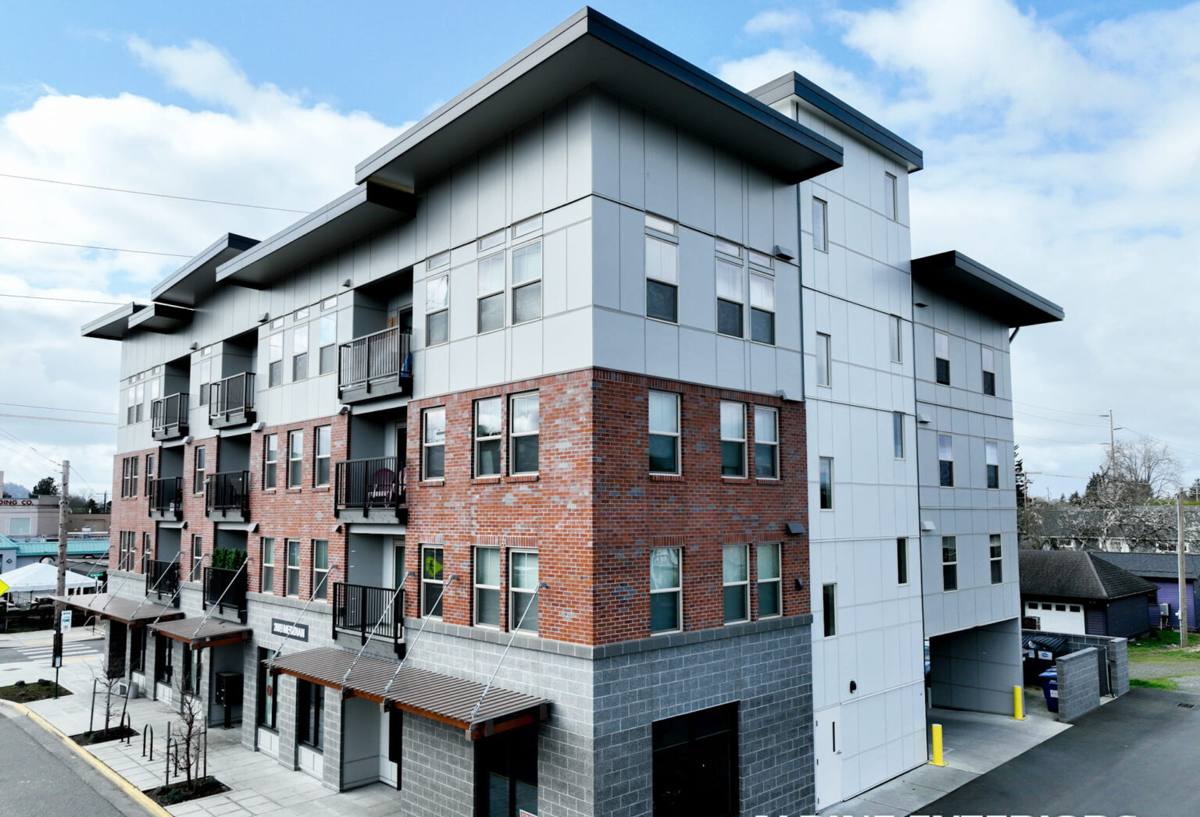
 Chuckanut Exterior
 Building New in Burlington: Why Window Installation Deserves Extra Attention
When a home is going up from the ground rather than having windows swapped into existing openings, the installation itself becomes part of the building envelope rather than a repair to it. That distinction matters more here than in a lot of places. Burlington sits along the Chuckanut corridor in the Skagit Valley, where salt-laden air off the Sound, long stretches of driving rain, and a moss season that can run most of the year put steady pressure on anything built into an exterior wall. New-construction windows give us a rare opportunity to get the moisture management right from the very first course of house wrap, instead of working around decisions someone else made years ago.
We work new-construction window packages for builders and owner-builders in the Burlington area on a regular basis, which means we're not learning the local climate on your project. We already know which details matter most here and where corners tend to get cut on production builds.
What This Regional Climate Actually Does to Windows
Salt Air
Proximity to Chuckanut Bay and the broader Puget Sound means airborne salt finds its way onto exterior surfaces, including window frames and hardware. Over years, that accelerates corrosion on lower-grade fasteners, cheap cranks and locks, and unprotected metal flashing. It doesn't ruin a window overnight, but it shortens the life of anything not built or finished for a marine-influenced environment.
Driving Rain
Storms in this part of Washington rarely come straight down. Wind-driven rain hits window walls at an angle, which means water is actively looking for the smallest gap around a nailing fin, a rough opening, or a poorly lapped piece of flashing tape. On a new build, this is the single biggest reason to slow down during the window install phase rather than rush to get the crew to the next task.
Moss and Prolonged Dampness
A moss season that stretches across most of the year isn't just a roof and siding problem — it's a sign of how long surfaces around here stay damp. Sills, exterior trim, and the transition between window and wall cladding need details that shed water quickly and don't trap it, because anything that holds moisture for weeks at a time becomes a growth surface eventually.
What a Correct New-Construction Window Install Involves
New-construction windows (as opposed to retrofit or "pocket" replacements) have a nailing fin and are set into a rough opening before the exterior cladding goes on. That gives us access to build proper drainage and flashing layers around the window rather than sealing over what's already there. Done right, the sequence looks roughly like this:
- Rough opening is checked for square, level, and correct sizing before the window ever shows up on site.
- A sloped sill pan is installed at the bottom of the opening so any water that gets past the window has somewhere to go — out, not into the wall.
- Self-adhered flashing tape is run at the sides and integrated with the water-resistive barrier (WRB) in the correct shingle-lap order, so water always drains down and over, never up and under.
- The window is set, shimmed for square, and fastened per the manufacturer's schedule — not just "close enough."
- Head flashing goes on last, lapped over the WRB above the window, sometimes with a separate kick-out or drip cap depending on the wall assembly.
- Sealant is used at specific, limited points — it's a backup to good flashing, never a substitute for it.
Every one of those steps is easy to skip on a tight production schedule, and every one of them is much harder (and more expensive) to fix once siding and interior finishes are in place. That's the real argument for getting it right the first time on a new build.
Choosing the Right Window for This Wall, Not Just This Budget
Builders and homeowners often come to us with a window brand or line already picked from a plan set or a showroom visit. We're glad to work with almost any manufacturer, but we do talk through frame material and glass package specifically in terms of how a house sitting near the Sound, exposed to driving rain and long damp stretches, will actually perform over the next 20-plus years.
| Frame Material | Moisture & Salt-Air Behavior | Maintenance | Typical Fit |
|---|---|---|---|
| Vinyl | Won't corrode or rot; performs well in coastal air | Low — occasional cleaning | Cost-conscious builds, rentals, most production homes |
| Fiberglass | Very stable through wet/dry and temperature swings; strong seal longevity | Low | Higher-end new builds, larger openings |
| Wood-clad (exterior clad) | Good if cladding and flashing are correct; interior wood offers a different look | Moderate — cladding protects, but joints need attention | Owners who want a wood interior look with a protected exterior face |
| Bare aluminum | Prone to corrosion in salt air unless well-finished; conducts cold, more condensation risk | Higher | We steer most clients away from this in our service area unless it's a thermally-broken, marine-rated product |
None of these is universally "the best" — it depends on the look you want, the budget, and how much upkeep you're willing to do. Our job is to lay out the honest trade-offs before the windows are ordered, since that's the only point in a new build where changing your mind is cheap.
Glass and Energy Performance
For this climate, we generally look for a lower U-factor (better insulating value) than the state energy code's bare minimum, along with a low-E coating tuned for a heating-dominated climate rather than a hot, sunny one. Argon-filled sealed units are standard on most new-construction packages we spec now, and they help meaningfully with both comfort and condensation resistance — condensation on the interior glass being a common complaint in damp, cooler months if the glass package is undersized for the house.
Coordinating Windows Into a Burlington Build Schedule
On a new build, window install timing affects the rest of the trades. We work with builders (or directly with owner-builders acting as their own GC) to land windows at the right point in the dry-in sequence — after the WRB is on and rough openings are framed correctly, before siding, trim, and interior finish work begins. A few things we flag early on every project:
- Rough opening sizes confirmed against actual window unit dimensions, not just plan drawings
- WRB installed and lapped correctly before window crews show up, so flashing integration isn't improvised on site
- A clear decision on sill pan material and method before the first window goes in
- Head flashing and any kick-out details specified for each elevation, especially where rooflines meet window walls
- Manufacturer fastening schedule followed for wind and structural load, not just "enough nails to hold it"
- A walk-through of every opening before siding starts, catching gaps while they're still cheap to fix
Why the Local Crew Matters Here
Window flashing details that work fine in a dry, low-wind climate can fail quietly in a place that gets sustained wind-driven rain off the Sound and a moss season long enough to mask small drainage problems until they've been running for months. A crew that only occasionally works this corridor may install a technically correct window with a flashing sequence better suited to a different region's weather. We work new construction in and around Burlington and the broader Chuckanut area regularly enough that these details aren't a special case for us — they're the baseline we build to on every job.
We also stand behind our installation work directly, separate from the manufacturer's product warranty. If a window is installed to spec and integrated correctly with the wall assembly, the two warranties (ours on labor and flashing, theirs on the unit itself) should never need to compete with each other to explain a leak.
What to Expect From Us on a New-Construction Window Job
We typically start with a walk of the plans or the framed shell, confirm rough openings, and talk through frame material and glass package based on the home's exposure — a window wall facing prevailing weather gets a different level of scrutiny than a sheltered elevation. From there we handle ordering coordination, sill and flashing detailing, the install itself, and a final check of every opening before cladding closes it up. Whether you're a builder looking for a window sub who won't slow down your schedule, or an owner managing your own new build in Burlington, we're happy to walk the site and talk specifics.
If you're planning a new build in the Burlington area and want windows installed with this climate in mind from the start, reach out for a free, no-pressure estimate — the form below only takes a minute.