 Chuckanut Exterior
 Decks in Burlington Face a Specific Kind of Wear
Burlington sits close enough to Chuckanut Bay and the surrounding Whatcom County waterways that decks here age differently than they would further inland. Salt-laden air moves through on a regular basis, corroding fasteners and hardware faster than most homeowners expect. Add in the long stretch of driving rain that defines a Pacific Northwest fall and winter, plus a moss season that can run from October through May, and you have a structure that's under constant low-grade attack even when nothing looks obviously wrong.
None of that means a deck is doomed. It means repair work here has to account for moisture cycling, corrosion, and organic growth in a way that a generic repair job in a drier climate wouldn't need to. A deck repaired correctly for Burlington conditions should hold up for years. One patched with the wrong fasteners or without addressing trapped moisture will fail again, usually in the same spot.
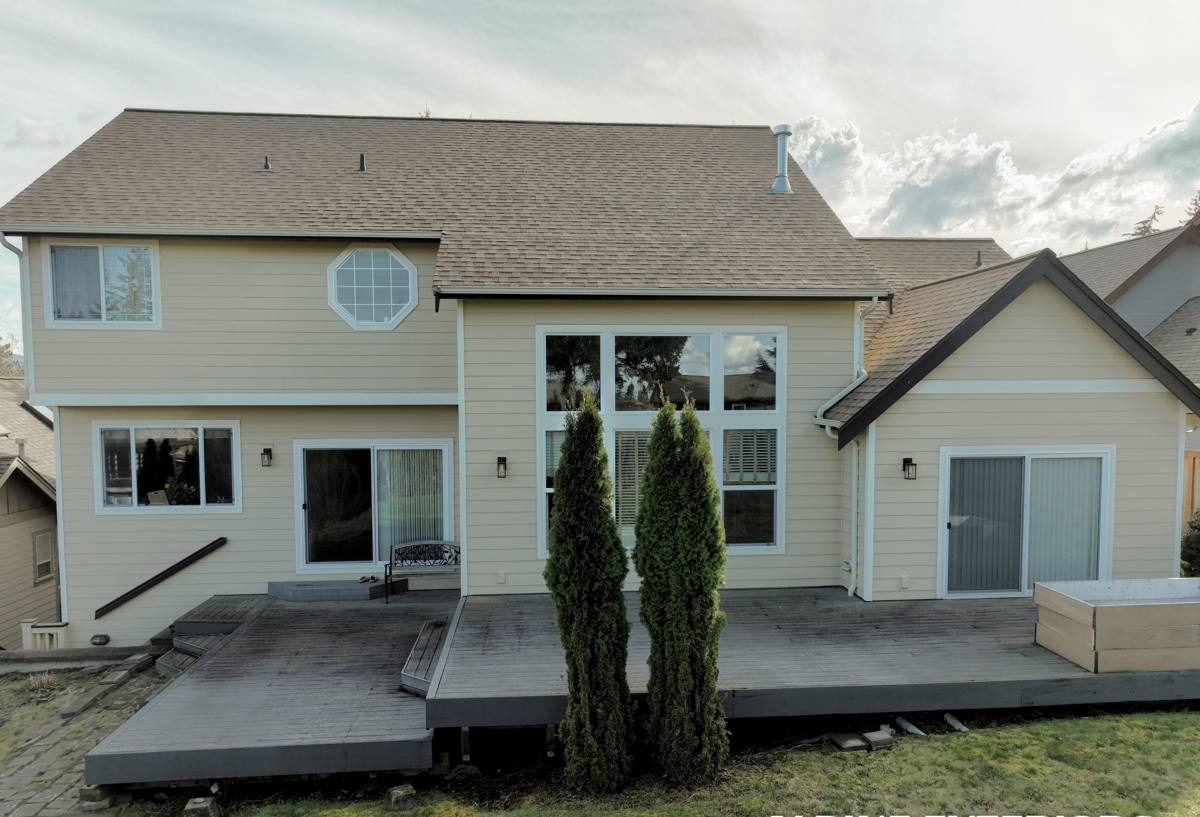
Signs a Burlington Deck Needs Repair
Most deck problems don't show up as a dramatic collapse — they show up as small, specific symptoms that get worse with each wet season. Catching them early is almost always cheaper than waiting.
- Boards that feel spongy, soft, or "give" slightly when you step on them
- Rust streaks bleeding out from nail or screw heads
- Persistent moss or dark algae staining on boards, especially on the shaded or north-facing side
- Gaps opening up between decking boards or around the ledger board where the deck meets the house
- Railings or posts that wobble more than they used to
- Visible cracking or splitting concentrated near fasteners
- A musty smell coming from underneath the deck
- Stairs that feel less solid than the rest of the structure
Any one of these on its own might just mean a board or two needs attention. Several together, especially near the ledger board or support posts, usually point to a moisture problem working its way through the structure.
What a Correct Deck Repair Actually Involves
It Starts Underneath, Not on the Surface
A deck that looks rough on top but is structurally sound underneath is a very different job than one where the surface looks fine but the framing is compromised. Before we touch a single board, we get underneath the deck and check the framing, the ledger board connection to the house, the posts, and the footings. This is where the real damage usually lives, and it's the part a surface-level repair skips.
The Ledger Board Deserves Extra Attention
The ledger board — where the deck attaches to the house — is the single most common failure point on decks in this climate. If it was installed without proper flashing, or if flashing has degraded over time, water gets trapped between the ledger and the house siding and rots both from the inside out. A repair that doesn't check and correct ledger flashing is a repair that will need to be redone.
Fastener Choice Matters More Here Than Elsewhere
Salt air accelerates corrosion on standard fasteners. Nails, screws, and structural hardware that might last decades in a dry inland climate can start rusting and weakening within a few seasons near Chuckanut Bay. We use stainless steel or heavy hot-dip galvanized fasteners rated for exterior and coastal-influenced use, not the coated deck screws sold as a general-purpose option at most hardware stores.
Board Replacement Is Selective, Not Wholesale
Sound boards get kept. Compromised ones get replaced, matched as closely as possible for material and thickness so the repair doesn't create a mismatched patchwork or an uneven walking surface. If enough boards are failing across the whole deck, we'll tell you honestly when a full re-decking makes more sense than piecing it together board by board.
Repair or Replace: How We Help You Decide
Not every deck problem calls for a full rebuild, and not every deck is worth patching indefinitely. The honest answer usually comes down to where the damage is and how far it's spread.
| Factor | Usually Points to Repair | Usually Points to Replacement |
|---|---|---|
| Framing condition | Solid, no rot at joists or beams | Rot or soft spots in multiple structural members |
| Ledger board | Sound, properly flashed | Rotted or improperly flashed against the house |
| Decking boards affected | A handful of boards, localized | Widespread wear across most of the surface |
| Age of the deck | Under 10-15 years, well maintained | Original construction well past typical service life |
| Fastener condition | Isolated rust or loosening | Corrosion throughout the structural connections |
| Footings and posts | Stable, no movement or settling | Shifting, settling, or undersized for current code |
We walk you through this assessment on site, in plain terms, and we won't push a full replacement when a targeted repair will genuinely hold up. We also won't recommend patching a deck that's structurally compromised just to save you money up front — that's a decision that tends to cost more later.
Our Deck Repair Process
- On-site assessment. We inspect the deck from top to bottom, including underneath, checking framing, ledger attachment, fasteners, and surface condition.
- Honest scope and estimate. You get a clear breakdown of what actually needs repair, what's optional, and what we'd flag for the future but isn't urgent yet.
- Moisture and rot remediation first. Any water intrusion issues, especially at the ledger board, get corrected before cosmetic work starts. Repairing the surface over an unresolved moisture problem just hides it temporarily.
- Structural repairs. Framing, posts, and hardware are repaired or replaced with corrosion-resistant materials suited to this climate.
- Decking and railing work. Damaged boards and railing components are replaced and matched to the existing deck as closely as possible.
- Final check. We walk the deck with you, point out what was done, and flag any maintenance items worth keeping an eye on going forward.
Handling Moss and Algae as Part of the Job
Moss and algae growth isn't just cosmetic in a climate like this. Trapped moisture under moss holds against the board surface far longer than open rain would, softening wood fibers over time. As part of most repair jobs, we clean affected surfaces and address drainage or airflow issues that are letting moisture and organic growth build up in the first place — not just scrub the visible green off the top.
Materials: Matching the Repair to the Climate
Wood and composite decking each have a place, and the right call depends on the deck you already have and what you're trying to accomplish with the repair.
If your existing deck is wood, we typically repair with comparable wood so the finished product looks and performs consistently, and we treat cut ends and exposed fastener points to slow moisture intake. If you're looking at a partial rebuild or considering a longer-term upgrade for high-wear sections like stairs, composite boards can reduce ongoing maintenance since they don't absorb moisture the way wood does — though composite comes with its own installation requirements around spacing and fastening that matter more, not less, in a wet climate. We'll walk through the trade-offs honestly rather than defaulting to whatever's easiest to install.
For hardware, we standardize on stainless steel or heavy-grade hot-dip galvanized connectors and fasteners across all repair work here, regardless of decking material. Given the salt air exposure common around Burlington and the Chuckanut Bay area, this isn't an upsell — it's the baseline we consider necessary for a repair to actually last.
Maintenance Between Repairs
A good repair buys you years, but a few habits stretch that further in this climate.
- Keep gutters and downspouts clear so runoff isn't draining directly onto or under the deck
- Sweep leaves and debris off the deck surface regularly through fall, when moss growth accelerates
- Check underneath the deck once or twice a year for standing water, soft framing, or new rust spots
- Reseal or restain wood decking on the manufacturer's recommended schedule, not just when it looks faded
- Trim back vegetation that's shading the deck and keeping it damp longer than the surrounding area
Why Local Experience in Burlington Matters
A contractor who works across Whatcom County regularly, rather than occasionally, has already seen how ledger boards fail near the water, which fastener grades actually hold up to salt air over time, and how long moss season really runs in this part of the state. That experience shows up in the decisions made on your deck — which board to save, which post to flag, which flashing detail not to skip. It's the difference between a repair that's built for the climate you're actually in and one that's built for a textbook.
If your deck in Burlington is showing soft spots, rust stains, moss buildup, or just doesn't feel as solid as it used to, we're happy to take a look and give you a straight assessment. Reach out for a free, no-pressure estimate using the form below.