 Chuckanut Exterior
 Siding Replacement in Burlington: Built for Whatcom County Weather
Burlington sits close enough to the water and low enough in the valley that homes here take on a specific combination of punishment: salt-tinged air moving in off the Sound, long stretches of driving rain through fall and winter, and a moss season that can run nine months out of the year on north-facing walls and anything shaded by fir or cedar trees. Siding that looks fine on a spec sheet in a dry climate often struggles here within a decade. A siding replacement in this neighborhood isn't just a cosmetic upgrade — it's a decision about what your walls will be fighting off every single day for the next 30-plus years.
We work Chuckanut and the surrounding Whatcom County communities regularly, and Burlington homes show up on our schedule often enough that we know the patterns: siding failing first on the weather-facing side, moss creeping up from the soil line, paint that won't hold past five or six years, and trim that rots out at the joints before the field siding even shows damage. None of that is unusual for this climate. It's predictable, and a correctly specified and installed siding system accounts for it from day one.
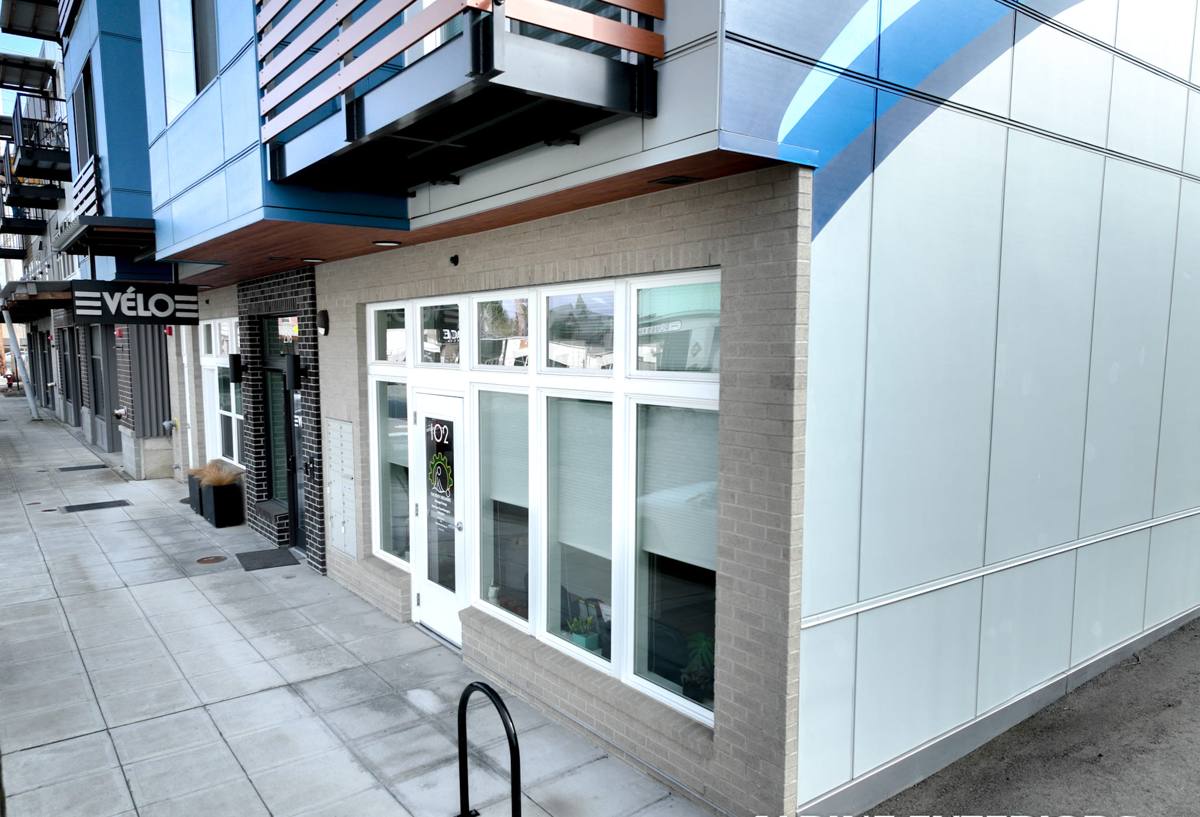
What Burlington's Climate Actually Does to Siding
Salt Air and Moisture Cycling
Even set back from the immediate shoreline, Burlington gets enough marine air moving through the valley to accelerate corrosion on fasteners and metal trim, and to keep humidity levels elevated against exterior walls for more of the year than inland towns see. Wood-based siding products absorb that ambient moisture, swell, and then dry out unevenly when the sun finally breaks through — a cycle that opens hairline cracks in paint and caulk far faster than manufacturers' literature usually admits.
Driving Rain
Storms here don't just fall straight down — wind-driven rain gets pushed sideways into wall assemblies, especially on west and south exposures. That means water testing the quality of every seam, every piece of flashing, and every inch of caulking on a home's exterior. A siding job that looks tight in dry weather can still leak during a real Whatcom County storm if the water-management details underneath weren't done correctly.
Moss and Organic Growth
Shade, moisture, and mild temperatures are exactly what moss and algae need to thrive, and a lot of Burlington lots have mature trees close to the house. Moss holds moisture against the siding surface long after the rest of the wall has dried, which is one of the most common causes of premature rot and paint failure we see on service calls in this area.
Why We Only Install James Hardie Fiber Cement
We've made a deliberate decision not to install vinyl, LP SmartSide, cedar, primed spruce, Cemplank, or Allura. That's not a marketing position — it's a professional standard based on what actually holds up in this specific climate over decades, not just years.
- Non-combustible core: James Hardie fiber cement is engineered to resist fire in a way wood-based and vinyl products simply cannot match.
- Moisture behavior: Fiber cement doesn't absorb and swell like engineered wood siding, which matters directly in a climate where the siding is wet more often than it's dry.
- Climate-engineered product lines: Hardie's HZ10 formulation is built specifically for climates like ours — freeze-thaw cycling, sustained moisture, and temperature swings.
- Factory-applied ColorPlus finish: A baked-on finish that resists fading and holds up against UV and moisture far longer than field-applied paint on wood siding.
- Warranty structure: A strong, transferable manufacturer warranty backs the product when it's installed to Hardie's specifications — something that matters at resale as much as it does the day the siding goes up.
Vinyl siding is inexpensive and low-maintenance in a narrow sense, but it's also prone to warping and cracking in temperature swings, fades unevenly, and simply melts under enough radiant heat — and it can't be repainted to refresh a tired-looking home. LP SmartSide, Cemplank, and Allura are wood-and-engineered-wood or fiber cement alternatives with their own trade-offs in moisture tolerance, factory finish quality, or long-term warranty support. Primed spruce and cedar look excellent when new but require an ongoing maintenance commitment — regular repainting, caulking, and moisture monitoring — that most homeowners underestimate until the siding is already failing. We'd rather tell a homeowner honestly why we won't install those products than sell something we don't believe will perform here.
What a Correct Siding Replacement Actually Involves
Siding replacement is not simply removing old boards and nailing up new ones. A job done right in this climate addresses everything underneath the visible surface:
- Tear-off and inspection: Removing the old siding reveals the actual condition of the sheathing, framing, and any existing water damage — which is common to find around window and door openings on homes that have seen 20-plus years of Whatcom County rain.
- Sheathing repair: Any rotted or compromised sheathing gets replaced before anything new goes up. Installing new siding over damaged sheathing just seals the problem inside the wall.
- Weather-resistive barrier: A correctly lapped and sealed house wrap goes down to manage bulk water before it ever reaches the sheathing.
- Flashing details: Windows, doors, and any wall penetrations get properly flashed so wind-driven rain is directed out and down, not trapped behind the siding.
- Rainscreen or proper drainage gap: Depending on the wall assembly, a drainage gap behind the siding lets any incidental moisture escape and dry rather than sitting against the back of the panel.
- Hardie installation to spec: Correct fastener type and placement, proper clearances from grade, decks, and rooflines, and manufacturer-specified gaps at joints and butt seams.
- Trim and caulking: Detail work at corners, trim boards, and penetrations, using sealants rated for the exposure this climate demands.
- Final inspection and cleanup: A walk-through of every elevation before we consider the job finished.
Signs a Burlington Home Needs Siding Replacement Soon
- Paint that's peeling, bubbling, or chalking within a few years of being applied
- Visible warping, cupping, or soft spots when you press on the siding
- Moss or algae staining that keeps returning no matter how often it's cleaned
- Cracked or missing caulk at seams, corners, and trim boards
- Rot at the bottom edge of siding near grade, decks, or downspouts
- Rising energy bills that suggest the wall assembly is no longer insulating or sealing properly
- Siding that's simply reached the end of its practical service life for its material type
Cost Factors for Siding Replacement
Every home is different, but the factors that move the price on a Burlington siding replacement are consistent. We won't quote a number without seeing the house, but here's what typically drives cost up or down:
| Factor | Why It Matters |
|---|---|
| Home size and number of stories | More square footage and taller walls mean more material and more labor, including staging or lift access on multi-story homes |
| Existing sheathing condition | Hidden rot found during tear-off adds repair scope that can't be priced until the old siding is off |
| Trim and architectural detail | Homes with more corners, dormers, gables, and trim work take longer to detail correctly |
| Siding profile and finish selection | Lap width, texture, and ColorPlus color selection affect material cost |
| Access and site conditions | Tight lots, mature landscaping, and steep grades can add time and equipment needs |
| Scope of work | Full siding replacement versus partial replacement on one or two elevations changes the total significantly |
Why Hiring a Crew That Already Works Burlington Matters
A siding job is only as good as the details nobody sees once it's finished — the flashing behind a window, the fastener spacing on every course, the drainage plane behind the panel. Those details are exactly where climate-specific experience pays off. A crew that's installed Hardie siding across Chuckanut and the surrounding Whatcom County towns has already seen how wind-driven rain finds weak points here, how moss behaves on shaded north walls, and how salt air affects fastener choice and trim materials over time. That's knowledge you can't get from a spec sheet, and it's the difference between a job that looks good at completion and one that still performs correctly ten and twenty years later.
Local, licensed, and insured crews are also easier to hold accountable — they're not driving in from out of the region for one job and disappearing. Being reachable for warranty questions, follow-up service, or simply a second opinion down the road is part of what you're paying for when you hire local.
Our Process, Start to Finish
- On-site assessment: We walk the exterior with you, note problem areas, and discuss what's driving the need for replacement.
- Written estimate: A clear, itemized proposal — no vague allowances, no surprise change orders for things we could have caught up front.
- Material selection: Choosing the right Hardie plank profile, texture, and ColorPlus color for the home's style and exposure.
- Scheduling: We work around Whatcom County's weather windows to minimize the time your home's walls are open to the elements.
- Installation: Tear-off, repair, weather barrier, flashing, and Hardie installation performed to manufacturer spec.
- Final walkthrough: We review the finished work with you before calling the job complete.
Ready to Talk About Your Home's Siding?
If your Burlington home is showing the wear that comes with years of salt air, driving rain, and moss, we'd be glad to take a look and walk you through what a correct James Hardie siding replacement would involve for your specific house — no pressure, no obligation. Fill out the form below for a free estimate.