 Chuckanut Exterior
 Why Decks in Columbia Wear Out Differently
If you own a home in the Columbia area near Chuckanut, you already know your deck doesn't age the way a deck does further inland. Salt-tinged air off the water, driving rain that comes in sideways more often than straight down, and a moss season that can stretch for most of the year all put extra stress on wood, fasteners, and finishes. A deck that would last two decades in a drier part of Washington can start showing real problems in half that time out here if it wasn't built with this specific climate in mind.
That's the core reason a deck replacement in this neighborhood isn't a one-size-fits-all job. The framing, the fasteners, the decking material, and even the footing depth all need to account for what the site actually experiences — not just what's code minimum or what's cheapest at the yard.
Salt Air and Fasteners
Homes closer to the water pick up airborne salt that accelerates corrosion on anything less than fully rated stainless or hot-dip galvanized hardware. We've seen decks where the boards themselves were still serviceable but the joist hangers, screws, or ledger bolts had corroded to the point of being a safety issue. That's a hidden failure mode — it doesn't show up until someone puts weight on the wrong spot.
Moss, Shade, and Drainage
Whatcom County's long wet stretch means moss and algae get a real foothold on any deck surface that doesn't dry out quickly, especially under tree cover or on the shaded side of a house. Moss holds moisture against the deck surface far longer than open rain does, which speeds up rot in wood decking and can leave composite surfaces slick and stained if they're not maintained. Site orientation, gap spacing between boards, and airflow underneath the deck all matter more here than they would in a drier climate.
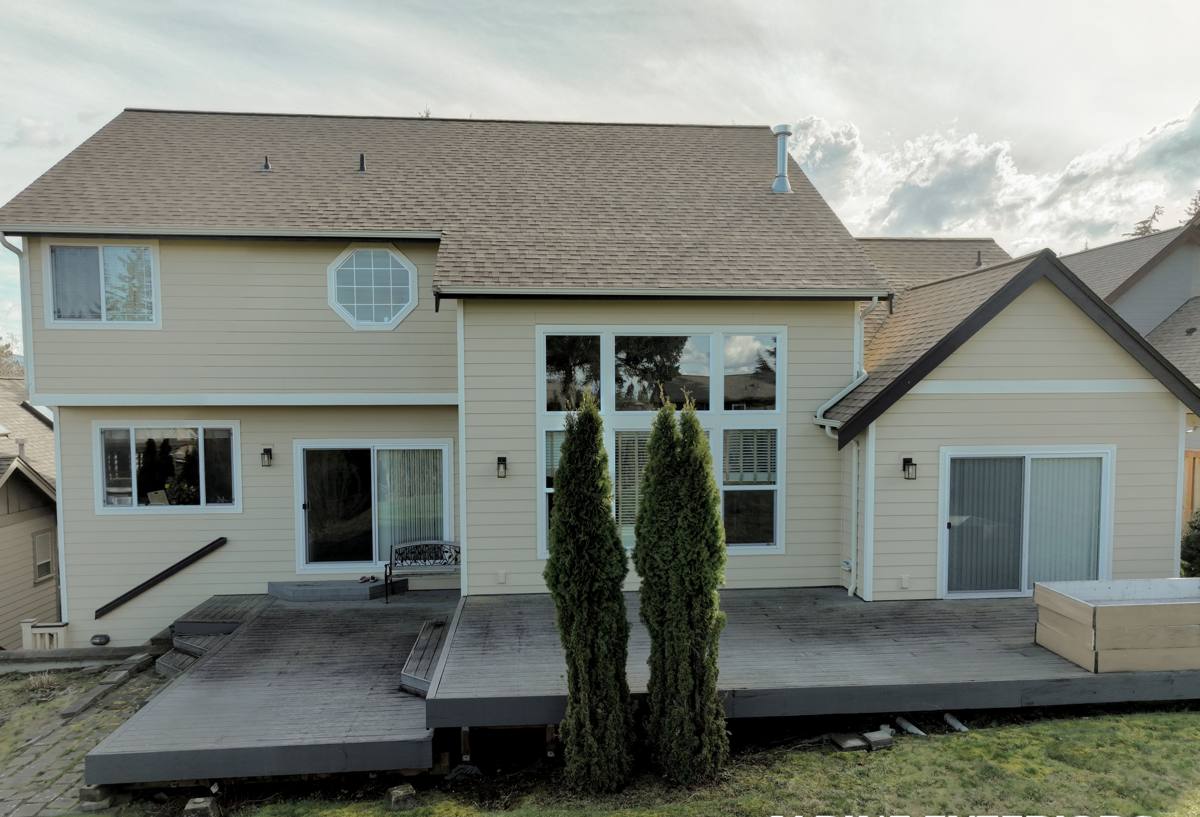
Signs It's Replacement Time, Not Repair Time
Not every tired-looking deck needs to come out. But there's a point where patching individual boards or re-securing a railing stops making sense — either because the structure underneath is compromised, or because the cost of ongoing repairs starts to rival a full rebuild. Here's what we look for when deciding which side of that line a deck is on.
- Soft, spongy, or discolored spots in the decking boards — especially near the house or in shaded corners
- Ledger board separation or gapping where the deck attaches to the house
- Visible rust streaks or corroded fasteners at joist hangers and railing posts
- Wobble or give in the railing when you lean on it — a structural and safety concern, not cosmetic
- Footings or posts that have shifted, settled, or show cracking
- Persistent moss or algae that keeps returning within weeks of cleaning
- Boards that were never properly spaced or fastened for this climate to begin with, even if the deck is relatively young
If a handful of these apply, a full or near-full replacement is usually the more honest recommendation — patchwork repairs on a structurally tired deck tend to cost more over a few years than doing it right once.
What a Correct Deck Replacement Involves
A deck replacement done right isn't just swapping old boards for new ones on the same frame. It's an opportunity to fix whatever caused the original deck to age poorly in the first place.
Framing and Structure
We evaluate the joists, beams, and posts independently of the surface decking. In this climate, framing lumber that's been exposed to years of rain and shade often has rot starting from the inside of connections outward, even when the outer wood looks fine. Any framing member that's compromised gets replaced, not patched, and we size and space joists to current structural standards rather than just matching what was there before.
Ledger Board and Flashing
The ledger board — where the deck attaches to the house — is one of the most common failure points we find on older decks in wetter parts of Washington. Without proper flashing to direct water away from the house band board, moisture works its way behind the ledger over years and rots both the deck attachment and the house framing behind it. Correct flashing detail here is non-negotiable on every replacement we do.
Decking Material Choices
There's no single "best" decking material for every homeowner — it depends on budget, maintenance appetite, and how much shade and moisture exposure the deck gets. We walk through the honest trade-offs rather than pushing one product.
| Material | Moisture & Moss Behavior | Maintenance | Typical Lifespan |
|---|---|---|---|
| Pressure-treated wood | Prone to moss/algae if not sealed regularly; can cup or split with repeated wet-dry cycles | Needs cleaning and sealing every 1-2 years in this climate | 10-15 years with upkeep |
| Cedar | Naturally rot-resistant but still needs finish maintenance to resist moss staining | Regular cleaning and re-staining | 15-20 years with upkeep |
| Composite decking | Resists rot but can stay damp longer under moss/debris if airflow is poor; surface can get slick | Periodic washing, low overall maintenance | 25-30+ years, manufacturer-warrantied |
| PVC/capped polymer | Best moisture resistance of the group; least prone to absorbing moss staining into the board itself | Lowest maintenance; occasional washing | 25-30+ years, manufacturer-warrantied |
We install both wood and composite/PVC systems. Our recommendation for a given home usually comes down to how shaded the deck site is and how much annual maintenance the homeowner actually wants to keep up with — a heavily shaded deck near mature trees is a much better candidate for a low-absorption composite or PVC board than for bare wood.
Footings and Drainage Built for This Ground
Whatcom County's wet season means soil conditions under and around footings matter more than they might in a drier climate. Footings need to be set to proper frost depth and on stable, well-draining ground — not just poured wherever the old ones happened to be. Where the site holds water or drains poorly, we address that as part of the replacement rather than building a new deck on top of a drainage problem that will just resurface in a few years.
Our Replacement Process
- On-site assessment of the existing deck, framing, ledger connection, and site drainage
- Honest recommendation on repair vs. full replacement, with the reasoning explained
- Material and layout discussion based on your home's shade, exposure, and maintenance preference
- Permit handling where required (see below)
- Demolition and disposal of the old structure
- Framing, ledger flashing, and footing work, inspected before decking goes down
- Decking, railing, and stair installation
- Final walkthrough so you understand what was done and how to maintain it
Permits in Chuckanut and Whatcom County
Deck work that's attached to the house or built above a certain height typically requires a permit under Whatcom County's building code, and inspections are usually required at key stages — footings, framing, and final. Requirements can vary depending on the specifics of the property, so we handle permit questions as part of the project rather than leaving homeowners to sort that out on their own. Skipping a required permit can create real problems later, from insurance issues to complications when you eventually sell the home.
Why a Crew That Already Works Columbia Matters
A contractor who works this specific area regularly already knows how the salt air, rain patterns, and shade conditions around Columbia affect deck materials and hardware choices — that's not something you can fully account for from a generic spec sheet. We've seen firsthand which fastener grades hold up here, which decking layouts drain well under the moss and tree debris this area gets, and where ledger and flashing details tend to fail on older homes nearby. That local pattern recognition is part of what you're paying for when you hire a local crew instead of a traveling or out-of-area company.
Living With a New Deck Through Moss Season
Even a well-built deck needs some ongoing care in this climate. A few habits go a long way toward protecting the investment:
- Sweep leaves and debris off the deck regularly, especially in fall — trapped organic matter is what feeds moss growth
- Rinse the surface periodically during the wet months rather than letting grime sit and set in
- Keep gutters and downspouts near the deck clear so runoff isn't draining directly onto or under it
- Reseal wood decking on the schedule recommended for the specific product used
- Address any new soft spots, gaps, or hardware corrosion early rather than waiting
If you're weighing whether your current deck needs a repair or a full replacement, we're happy to take a look and give you a straight answer either way. Reach out for a free, no-pressure estimate using the form below.