 Chuckanut Exterior
 Why Columbia Homes Need Siding Built for This Exact Climate
Columbia sits close enough to the water that salt air is a daily fact of life, not an occasional nuisance. Add Whatcom County's long stretch of driving rain and the moss season that follows it, and you've got a combination that punishes ordinary siding faster than most homeowners expect. Salt-laden air accelerates corrosion on fasteners and trim, wind-driven rain finds every gap and seam a siding job leaves behind, and shaded, damp conditions give moss and algae months at a time to take hold on north- and west-facing walls.
None of this is unique to one street or one style of house in Columbia — it's the baseline condition every exterior on this stretch of Chuckanut has to deal with. The siding material and the installation quality both matter more here than they would in a drier inland part of Whatcom County, because there's less margin for error before moisture starts working its way behind the cladding.
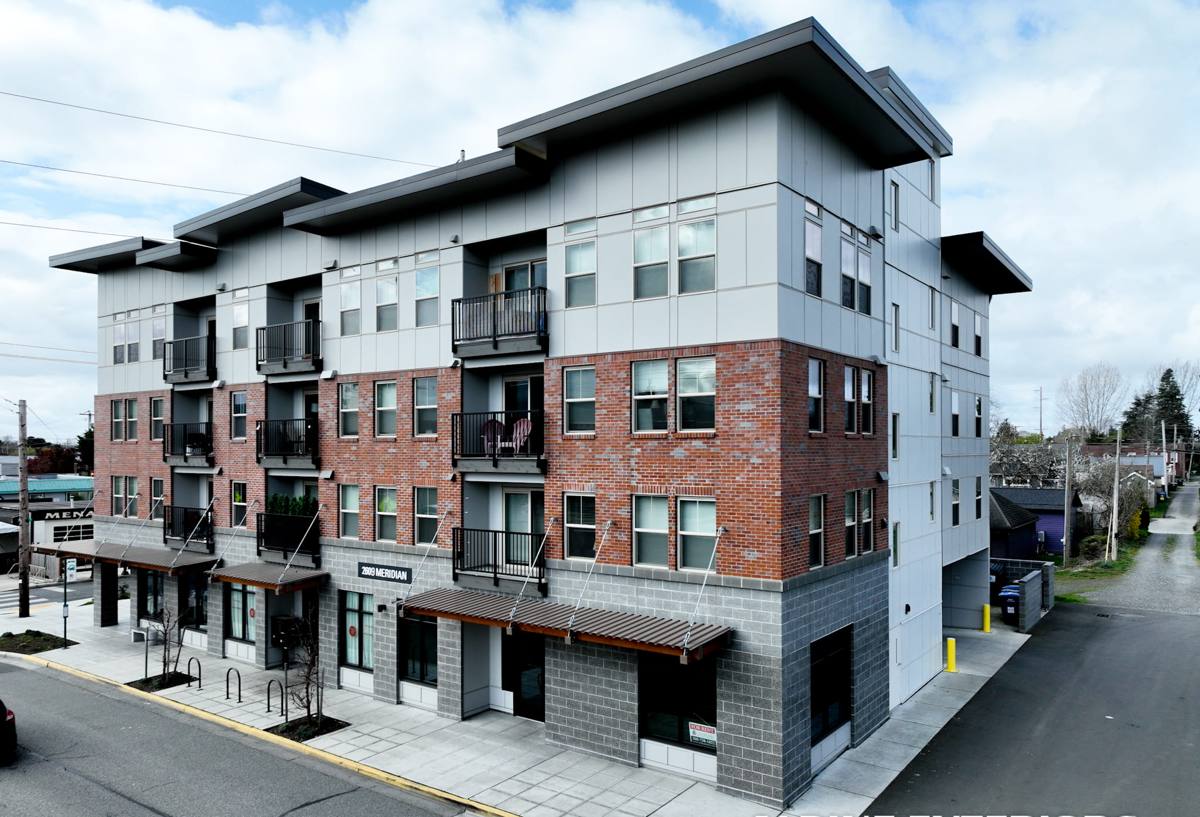
What "Correct" Fiber Cement Installation Actually Involves
Fiber cement siding is only as good as the install behind it. In a climate like Columbia's, a few details separate a job that lasts decades from one that starts showing problems in five or six years:
- Proper rain-screen or drainage plane behind the siding so any moisture that gets past the cladding has somewhere to go
- Correct fastener spacing and fastener material — stainless or coated fasteners rated for coastal exposure, not standard galvanized
- Manufacturer-specified gaps at butt joints, trim, and penetrations, sealed with the right sealant for the exposure
- Flashing detail at every window, door, and roofline intersection — the majority of siding failures we see start at a flashing gap, not a flat wall section
- Bottom clearance from grade, decks, and roof lines so splash-back and standing water don't sit against the board
Skip any one of these and you can still end up with moisture intrusion behind fiber cement, even though the material itself is doing its job. This is why we treat installation practices as seriously as the product choice — a great board installed poorly will still fail in a wet, salt-exposed environment.
Why We Install Only James Hardie in Columbia
We standardized on James Hardie fiber cement and don't install LP SmartSide, vinyl, Cemplank, Allura, or bare cedar and primed spruce. That's a deliberate call, not a brand preference for its own sake. In a climate defined by salt air and sustained damp, the trade-offs of those other products show up faster and cost more to manage:
| Material | How it holds up in Columbia's climate |
|---|---|
| Vinyl siding | Can warp or become brittle with temperature swings, and seams give wind-driven rain an entry point; doesn't hold paint if you ever want to change the color |
| Cedar / primed spruce | Needs regular refinishing to resist moisture and moss; damp coastal conditions shorten the interval between maintenance cycles considerably |
| LP SmartSide (engineered wood) | Performs well when perfectly maintained, but any cut-edge or fastener breach exposes wood fiber to moisture — a real risk in a high-rain, high-humidity zone |
| James Hardie fiber cement | Non-combustible, dimensionally stable in wet-dry cycling, factory-cured ColorPlus finish resists moss growth and salt exposure better than field-applied paint |
James Hardie's HZ5 product line is engineered specifically for climates like ours — cold, wet, and humid — with a formulation designed to resist moisture-related damage and hold its finish under exactly the conditions Columbia sees for much of the year. The ColorPlus factory finish also matters more here than in drier regions: a factory-baked finish resists the mildew and moss staining that field-applied paint struggles with in shaded, damp wall sections.
How Our Process Works for a Columbia Project
Assessment
We start by walking the exterior and identifying the areas most exposed to wind-driven rain and shade-driven moss — usually the north and west elevations, areas near mature trees, and anywhere existing siding shows staining or soft spots. We check existing flashing, trim condition, and whatever's happening behind the current cladding where we can access it.
Prep and Moisture Management
Before any new siding goes up, we address the water management layer — housewrap or rain-screen, flashing at penetrations, and any rot or damage found during tear-off. This step is where most long-term problems get prevented or missed, and it's not optional in a climate this wet.
Installation
Hardie boards go up per manufacturer spec: correct fastener type and spacing, proper joint gaps, and sealant matched to coastal exposure. Trim, corners, and butt joints get the same attention as the field of the wall, since those are the spots that fail first when corners get cut.
Final Detail and Walkthrough
We finish with a walkthrough covering caulking lines, paint touch-up at cut edges, and a look at drainage paths around the base of the walls, so water has somewhere to go once it hits grade.
Signs Existing Siding Is Losing the Fight in Columbia
Homeowners in this area tend to notice the same handful of warning signs. Catching them early keeps a repair from turning into a full tear-off:
- Persistent moss or algae growth that comes back within weeks of cleaning, especially on shaded walls
- Soft or spongy spots when you press on siding near the bottom edge or around window trim
- Paint that's bubbling, peeling, or chalking faster than it should on one side of the house
- Visible gaps or separation at butt joints and corner trim
- Rust streaking near fasteners or metal flashing
- Interior signs — musty smell, discoloration on interior walls near exterior corners
Any one of these on their own isn't necessarily an emergency, but in a salt-air, high-rainfall environment they tend to compound quickly once moisture finds a way in.
Living With Moss Season: What Fiber Cement Changes
Moss season in Whatcom County isn't going away, and no siding material makes a home immune to spore growth landing on a damp, shaded wall. What changes with correctly installed Hardie siding is how much that growth actually costs you. A factory-cured ColorPlus finish sheds surface growth more easily during routine cleaning than field-applied paint, and the board itself doesn't absorb moisture the way wood-based products can, so moss sitting on the surface isn't feeding into the material underneath. That's a meaningful difference over a 15- or 20-year span, even if the day-to-day cleaning routine looks similar.
Realistic Maintenance Expectations
Fiber cement isn't zero-maintenance, and we won't tell you otherwise. A yearly rinse-down on shaded elevations, periodic caulk inspection at trim and penetrations, and prompt attention to any impact damage will keep a Hardie exterior performing the way it's designed to in this climate.
What Drives the Cost of a Columbia Siding Job
| Factor | Why it matters here |
|---|---|
| Extent of existing damage | Rot or moisture damage found during tear-off adds repair scope before new siding goes up |
| House complexity | More corners, trim detail, and roof intersections mean more flashing and cutting |
| Siding profile and finish | Lap width, texture, and color selection affect material cost within the Hardie lineup |
| Access and site conditions | Slopes, waterfront exposure, or limited staging area can affect labor time |
| Drainage plane upgrades | Adding or improving a rain-screen system behind the siding is worth the cost in this climate but adds to the scope |
We give straightforward, written estimates after walking the actual house — not a phone-quote number pulled from square footage alone. Given how much local exposure conditions vary from one lot to the next in this area, an in-person look is the only honest way to price a job.
Why Local Installation Experience Matters
A crew that already works in Columbia and the surrounding Chuckanut area has seen which walls take the worst of the wind-driven rain, which yards hold shade long enough to grow moss year-round, and which flashing details tend to fail first in this specific exposure. That's not something a general contractor from outside the area picks up on a first visit — it comes from doing the work here repeatedly and seeing how houses in this climate actually age. It also means we're a known, reachable crew if a warranty question or maintenance question comes up years down the line, rather than a name from an out-of-area directory.
If you're weighing a siding replacement or want a second opinion on what's happening with your current exterior, we're happy to walk the house with you and give a straight assessment. Reach out for a free, no-pressure estimate using the form below.