 Chuckanut Exterior
 Windows Built for Columbia's Coastal Whatcom County Climate
Homes in the Columbia area take a steady beating from weather that's a little different than what you'd deal with further inland. Being close to the water around Chuckanut means salt-laden air working on metal hardware and finishes, driving rain that gets pushed sideways by wind off the bay, and a moss season that stretches longer than most homeowners expect. None of that is a problem for windows that were installed correctly. All of it is a problem for windows that weren't.
Window installation is one of those jobs that looks simple from the outside — pull the old one, set the new one, caulk the edges — and is anything but. In Whatcom County's wet climate, the difference between a window that lasts twenty-plus years and one that starts leaking in three comes down to what happens behind the trim, not what you see from the street. That's the part we focus on.
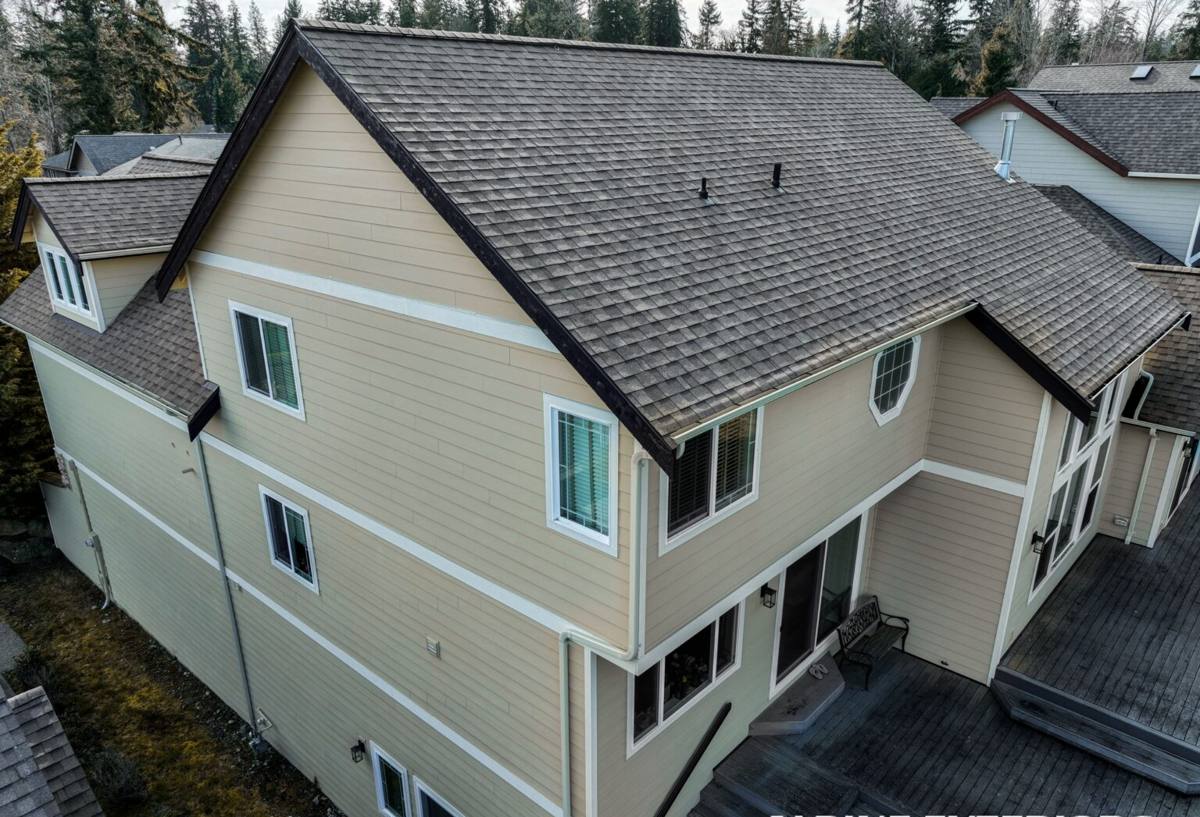
How to Tell Your Windows Are Losing the Battle
Most window failures don't announce themselves with a flood. They show up as small, easy-to-ignore signs first. If you're noticing any of the following in a Columbia home, it's worth having the windows looked at before the next wet season does more damage:
- Fogging or condensation between panes on double-glazed units (a sign the seal has failed)
- Soft or discolored wood trim around the frame, especially at the bottom corners
- Drafts you can feel with your hand even when the window is latched
- Difficulty opening, closing, or locking that wasn't there a year or two ago
- Visible gaps between the frame and siding, or paint/caulk that's cracked and pulling away
- Moss or dark streaking building up on the sill or below the window on the siding
- Rising heating bills without any other obvious explanation
Any one of these on its own might not mean much. Two or three together, especially on a wall that takes direct rain, usually means moisture has been getting past the window for a while.
What a Correct Window Installation Actually Involves
A window is only as good as the work done around it. We treat every installation as a weatherproofing job first and a window job second.
Removing the Old Window Without Damaging the Opening
The rough opening — the framed hole the window sits in — has to come out clean and dry. Rushing this step is how hidden rot gets missed, papered over, and left to keep spreading behind the new unit.
Checking and Repairing What's Underneath
Once the old window is out, we inspect the sill, jack studs, and header for water damage. In older Columbia homes, this is often where problems from years of exposure to driving rain finally show themselves. Any soft or rotted framing gets repaired before anything new goes in — installing a window into a compromised opening just resets the clock on the same failure.
Flashing and Weatherproofing Before the New Window Goes In
This is the single most important step and the one most likely to get skipped by a crew in a hurry. Proper flashing — sill pan, side flashing, and head flashing installed in the right order (bottom to top, each layer lapping over the one below) — is what actually keeps wind-driven rain from tracking behind the siding. Caulk alone is not a substitute for flashing; it's a backup, not the primary defense.
Shimming, Squaring, and Fastening
A window that isn't square in the opening will bind, won't seal evenly, and puts uneven stress on the frame over time. We shim and level it properly before fastening, so the sash operates smoothly for the life of the window.
Insulating and Sealing the Gap
The gap between the window frame and the rough opening gets filled with low-expansion foam or backer rod and sealant — never packed tight with fiberglass insulation alone, which does little to stop air movement and nothing to stop bulk water.
Interior and Exterior Finish Work
Trim, casing, and exterior caulking are finished to match the home, and every unit gets checked for smooth operation and a tight seal before we call the job done.
Choosing Window Materials and Styles That Hold Up Here
There's no single "best" window material — the right choice depends on your home's exposure, your budget, and how much upkeep you want to take on. In a salt-air, high-moisture area like Columbia, we weigh maintenance and moisture behavior heavily.
| Material | Moisture & Salt Air Resistance | Maintenance | Typical Lifespan |
|---|---|---|---|
| Vinyl | Very good — won't rot or corrode | Low — occasional cleaning | 20-30 years |
| Fiberglass | Excellent — dimensionally stable, resists warping | Low | 30-40+ years |
| Aluminum-clad wood | Good exterior protection, wood interior needs care | Moderate — interior finish upkeep | 20-30 years |
| All-wood | Requires diligent upkeep to resist rot in this climate | High — regular painting/sealing | Varies widely with maintenance |
We're generally cautious about recommending all-wood exterior windows for homes with direct rain and salt exposure near Chuckanut, not because wood can't perform, but because it demands a level of ongoing painting and sealing that most homeowners underestimate. If you love the look of wood, an aluminum- or fiberglass-clad option gives you that appearance on the interior with far less exterior maintenance risk. We'll walk through the honest trade-offs for your specific home rather than push one product line.
Our Window Installation Process in Columbia
- On-site assessment — we look at each window's condition, the framing around it, and how that wall is exposed to wind and rain.
- Measurement and product selection — exact measurements, plus a conversation about material, glazing, and style options that fit the home and your budget.
- Written estimate — clear scope and pricing before any work starts, no surprise add-ons mid-project.
- Prep and protection — interior and landscaping protected, materials staged, opening prepped.
- Removal, repair, and installation — old window out, any hidden damage repaired, new window flashed, set, and sealed per the process above.
- Finish work and walkthrough — trim completed, every window operated and checked with you before we consider the job done.
- Cleanup — job site left clean, old windows and debris hauled off.
Why a Crew That Already Works in Columbia Matters
Window installation isn't a one-size-fits-all job, and a crew that's worked other homes in the Columbia area brings a few real advantages. We already know how Whatcom County's building department and permitting process work for window replacements, so there's no learning curve that slows your project down. We've seen how homes of different ages and construction styles around here typically handle moisture, which means we know where to look for hidden rot before it becomes a bigger repair. And because we're local, we're not disappearing after the invoice clears — if a question comes up six months or six years later, we're still around to answer it.
That local track record matters more in a climate like this than in drier parts of the country. A window installed by someone unfamiliar with sideways rain and a long moss season might look fine on day one and still fail early because a flashing detail was skipped or a material choice wasn't suited to the exposure.
Cost Factors for Columbia Window Projects
Every home is different, so we don't publish flat pricing — but the main variables that drive cost on a typical project are:
- Number of windows and whether it's a full-home or partial replacement
- Window size, style (double-hung, casement, sliding, picture, etc.), and glazing package
- Material chosen — vinyl, fiberglass, or clad-wood carry different price points
- Condition of the existing framing and how much repair is needed once old windows come out
- Access and complexity — second-story or hard-to-reach openings take more time
We'll give you a clear, itemized estimate after seeing the windows in person, so you know exactly what you're paying for and why.
Protecting Your Investment After Installation
A correctly installed window is largely maintenance-free, but a little seasonal attention goes a long way in this climate. Keep gutters clear so overflow isn't running down onto window heads, rinse salt residue off frames and hardware periodically if you're close to the water, and do a quick visual check of exterior caulking once a year — catching a small crack early is a five-minute fix, not a repair job. Keeping moss from building up on sills and nearby siding also helps, since trapped moisture under moss growth is exactly the kind of slow, quiet damage that's hard to spot until it's advanced.
If you're weighing whether it's time to replace windows on a Columbia home, or you just want a straight answer about what a proper installation involves, we're happy to take a look and give you a free, no-pressure estimate — just fill out the form below.