 Chuckanut Exterior
 Siding in Columbia Has to Answer to the Weather, Not Just Look Good
Homes in the Columbia area near Chuckanut sit close enough to the water and the tree line that siding takes a beating most inland Washington homes never see. Salt-laden air off the bay works into seams and fasteners. Driving rain off Puget Sound hits west- and south-facing walls at an angle, not straight down, which means it finds every gap a lazy installation left behind. And the long, damp moss season here — stretching well beyond what most of the country calls "wet" — keeps exterior walls shaded and moist for months at a stretch. Siding that isn't built and installed for that combination doesn't fail gracefully. It cups, swells, delaminates, or grows a green film that never fully goes away no matter how often it's power-washed.
This page is specifically about James Hardie fiber cement siding installed on Columbia homes, in this climate, by a crew that treats those conditions as the design problem to solve — not an afterthought.
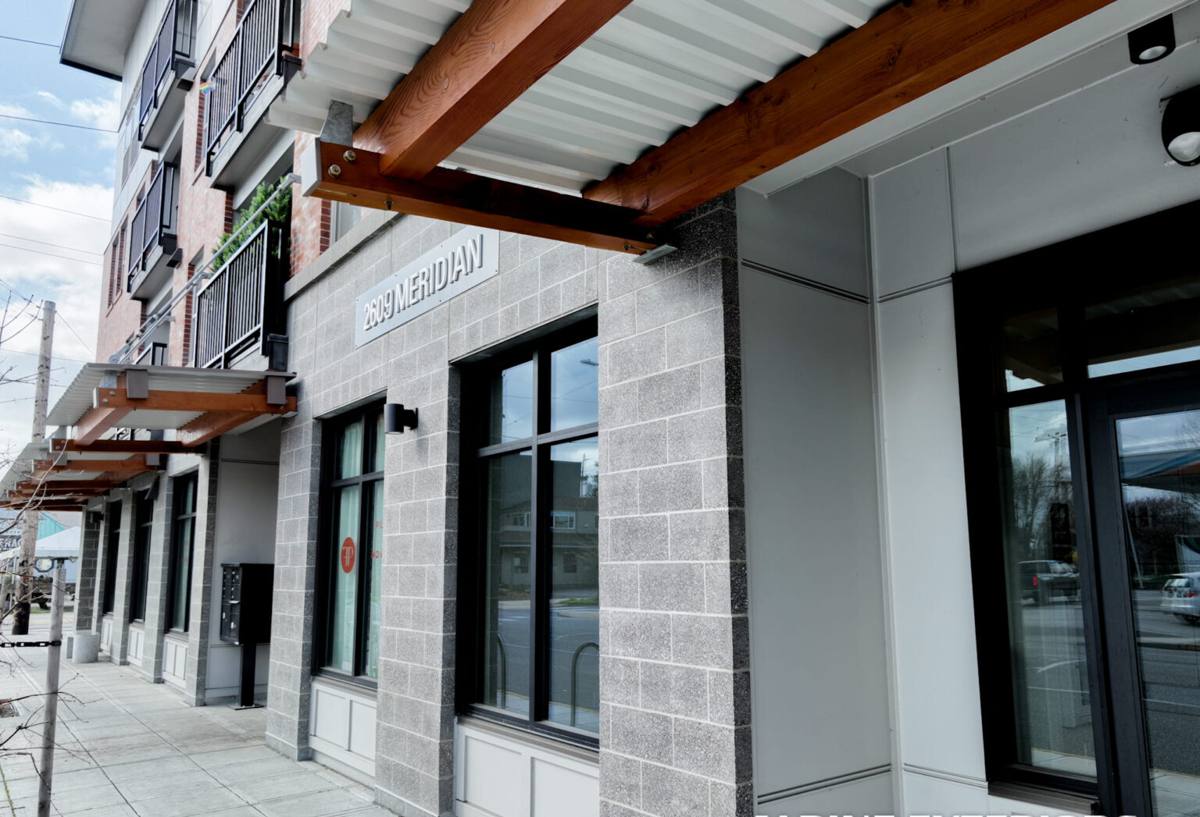
What Salt Air, Rain, and Moss Actually Do to a Wall
Each of these three factors stresses siding in a different way, and understanding the mechanism is what separates a correct installation from one that just looks correct on move-out day.
Salt air
Airborne salt is corrosive to exposed metal fasteners, flashing, and trim connectors. Over years, corroded fasteners lose holding power, and rust streaks bleed through paint film on lesser materials. It also accelerates the breakdown of organic materials like wood and some composite products, since salt holds moisture against the surface longer than it would otherwise sit.
Driving rain
Wind-driven rain doesn't just wet a wall — it pressurizes water into every horizontal lap, nail hole, and butt joint that isn't sealed or flashed correctly. A siding product that relies on face-sealing (caulk alone, with no drainage plane behind it) will eventually let water behind the cladding. Once that happens, the problem moves from the siding to the sheathing and framing, which is a far more expensive repair.
Moss and prolonged moisture
Shaded, north-facing, and tree-adjacent walls in Whatcom County stay damp for extended stretches during the fall, winter, and spring. Organic-based siding materials — wood, and to a lesser extent wood-fiber composites — are food for the mold and moss that thrive in that environment. Fiber cement isn't organic, so it doesn't feed the growth the way wood-based products do, but it still needs a maintained paint or factory finish to shed water and resist staining.
Why We Install Only James Hardie Fiber Cement
We don't install vinyl, LP SmartSide, Cemplank, Allura, primed spruce, or cedar. That's not a marketing position — it's a standard we've held to after years of seeing how each of those products actually performs once it's been through a few Whatcom County winters, not just how it performs in a showroom.
- Vinyl expands, contracts, and can warp in temperature swings, and it face-seals rather than truly sheds water at seams — a poor match for driving rain.
- LP SmartSide and other wood-strand composites are engineered wood products. Engineered wood is still wood at its core, and wood-based sidings depend heavily on unbroken paint film and sealed edges to keep moisture out; any breach and the substrate can swell or degrade, especially in a climate this wet.
- Cemplank and Allura are fiber cement competitors to Hardie. They're not inherently bad products, but Hardie's HZ5 climate-specific engineering, factory ColorPlus finish, and transferable warranty structure are the combination we've found most consistent in this exact climate, and standardizing on one system lets our crew install it correctly every time instead of relearning specs for four different products.
- Primed spruce and cedar are natural wood. They're beautiful when new, but they're organic material in a climate built to break organic material down — they need the most frequent maintenance of anything on this list and are the most vulnerable to the rot and moss issues described above.
James Hardie fiber cement is non-combustible, dimensionally stable across temperature and moisture swings, and finished at the factory under controlled conditions rather than relying entirely on job-site paint application. That combination is why it's the only product we put on Columbia homes.
Matching the Right Hardie Product to Columbia's Exposure
Not every wall on a Columbia home faces the same conditions, and James Hardie's product lines are engineered with that in mind. HZ5 is Hardie's climate-engineered formulation for regions with significant moisture exposure and freeze-thaw cycling — a reasonable fit for the Pacific Northwest's wet, moderate climate. We evaluate each elevation of a home individually: a west-facing wall catching direct storm exposure gets treated differently in terms of flashing detail and joint sealing than a sheltered, covered porch wall, even though both may use the same siding product.
| Material | Moisture resistance | Combustibility | Typical maintenance |
|---|---|---|---|
| James Hardie fiber cement (HZ5) | Engineered for wet/freeze-thaw climates | Non-combustible | Periodic caulk/finish check; no repainting for years with ColorPlus |
| Vinyl siding | Face-seals; limited drainage detailing | Combustible, can deform under heat | Low, but prone to warping/fading over time |
| LP SmartSide / wood composite | Depends on intact paint film | Combustible | Regular paint and edge-sealant upkeep |
| Cedar / primed spruce | Absorbent; vulnerable to prolonged damp | Combustible | Frequent repainting/staining and moisture monitoring |
What a Correct James Hardie Installation Actually Involves
The material is only half the equation. James Hardie's own installation manual is specific about clearances, fastening, and flashing precisely because the product performs as designed only when those details are followed — and in a high-moisture climate like Columbia's, shortcuts here are what cause callbacks two or three years down the road, not two or three months.
- Proper weather-resistive barrier and, where appropriate, a drainage gap behind the siding so any incidental moisture can escape rather than pool against the sheathing
- Correct minimum clearance between the bottom of the siding and grade, decks, roofing, and other horizontal surfaces
- Flashing installed above windows, doors, and any horizontal trim intersection — not caulk used as a substitute for flashing
- Fasteners driven to Hardie's specified pattern and depth, using corrosion-resistant nails or screws appropriate for a coastal-influenced climate
- Butt joints and panel seams treated per Hardie's specification, including sealant compatible with the ColorPlus finish where required
- Touch-up paint matched to the ColorPlus finish used only where the factory edge coating was cut or exposed, protecting the cut edge from moisture intrusion
Any one of these steps done wrong won't necessarily show up right away — which is exactly why it matters that the crew installing it has done this enough times, in this specific climate, to treat every one of them as non-negotiable rather than optional.
Our Process for a Columbia Siding Project
We keep the process straightforward and communicate at each stage, since most homeowners are trusting us with the single largest visible investment in their home's exterior.
- On-site evaluation: We walk the home, check each elevation's exposure, look at current siding condition and any moisture damage already present, and note anything unusual about the site — tree cover, drainage patterns, or wind exposure specific to that lot.
- Product and color selection: We help you choose the right Hardie product line and ColorPlus color, factoring in HOA or neighborhood considerations where relevant.
- Prep and removal: Old siding is removed, sheathing is inspected for hidden moisture damage, and any necessary repairs are made before a single new panel goes up — covering up a problem is not an option we consider.
- Weather barrier and flashing: This is the step most competitors rush. We don't.
- Installation to spec: Siding, trim, and accessories go up per James Hardie's fastening and clearance requirements.
- Final walkthrough: We review the finished work with you and confirm everything meets both our standard and Hardie's warranty requirements.
Why a Crew That Already Works in Columbia Matters
Siding installation isn't a one-size-fits-all trade. A crew that's already worked on homes in the Columbia area understands how the local exposure to salt air, storm direction, and moss growth patterns affects decisions like flashing detail, ventilation, and where extra attention is worth spending. That's different from general familiarity with "Pacific Northwest weather" — it's knowing how this specific stretch of Whatcom County behaves through a full year of seasons. It also means we're a known, reachable local business if you ever have a warranty question or want an inspection years down the line, not a crew that worked one job in the area and moved on.
Ongoing Care in a Marine-Influenced Climate
James Hardie siding with a ColorPlus finish is low-maintenance, not zero-maintenance. A yearly rinse-down to clear salt residue and organic buildup, a visual check of caulked joints and trim intersections, and prompt attention to any impact damage will keep the system performing the way it's designed to for decades. None of that is heavy work — it's the kind of walk-around inspection most homeowners can do themselves in twenty minutes.
What Affects the Cost of a Hardie Siding Project in Columbia
Every home is different, so we don't publish blanket pricing — but these are the real factors that move a quote up or down, and worth understanding before you get estimates from anyone.
| Cost factor | Why it matters |
|---|---|
| Home size and wall complexity | More square footage and more corners, gables, and trim details mean more labor and material |
| Condition of existing sheathing | Hidden moisture damage found during removal may need repair before new siding goes on |
| Product line (standard vs. HZ5) and profile | Lap, shingle, and panel profiles carry different material and labor costs |
| Trim, accessories, and color | Custom trim details and ColorPlus color selection affect material pricing |
| Access and site conditions | Tree cover, slope, and how close the home is to the water can affect staging and scheduling |
The most reliable way to know what your project will actually cost is a walkthrough of your specific home — general square-footage pricing you find online rarely accounts for the condition underneath the existing siding, which is often the biggest variable.
If you own a home in the Columbia area and you're thinking about siding, we're happy to come take a look, explain what we see, and give you a straightforward, no-pressure estimate. There's no obligation — just an honest assessment from a crew that installs one product because we believe it's the right one for homes in this climate.