 Chuckanut Exterior
 Why New Roofs in Columbia Need to Be Built Differently
Columbia sits close enough to the water that salt air is a daily fact of life, not an occasional nuisance. Combine that with the steady, driving rain that moves through Whatcom County for much of the year and a moss season that can stretch across several months, and you have a roofing environment that's genuinely tougher than what a roof in a drier inland climate has to deal with. A new roof installed here needs to be built with that reality in mind from the first nail, not patched later once problems show up.
We've installed and repaired roofs across Chuckanut and the surrounding neighborhoods long enough to know which materials, details, and installation habits hold up here and which ones fail early. This page walks through what a correct new roof installation looks like for a Columbia home, and why the details matter more here than they would somewhere with a milder, drier climate.
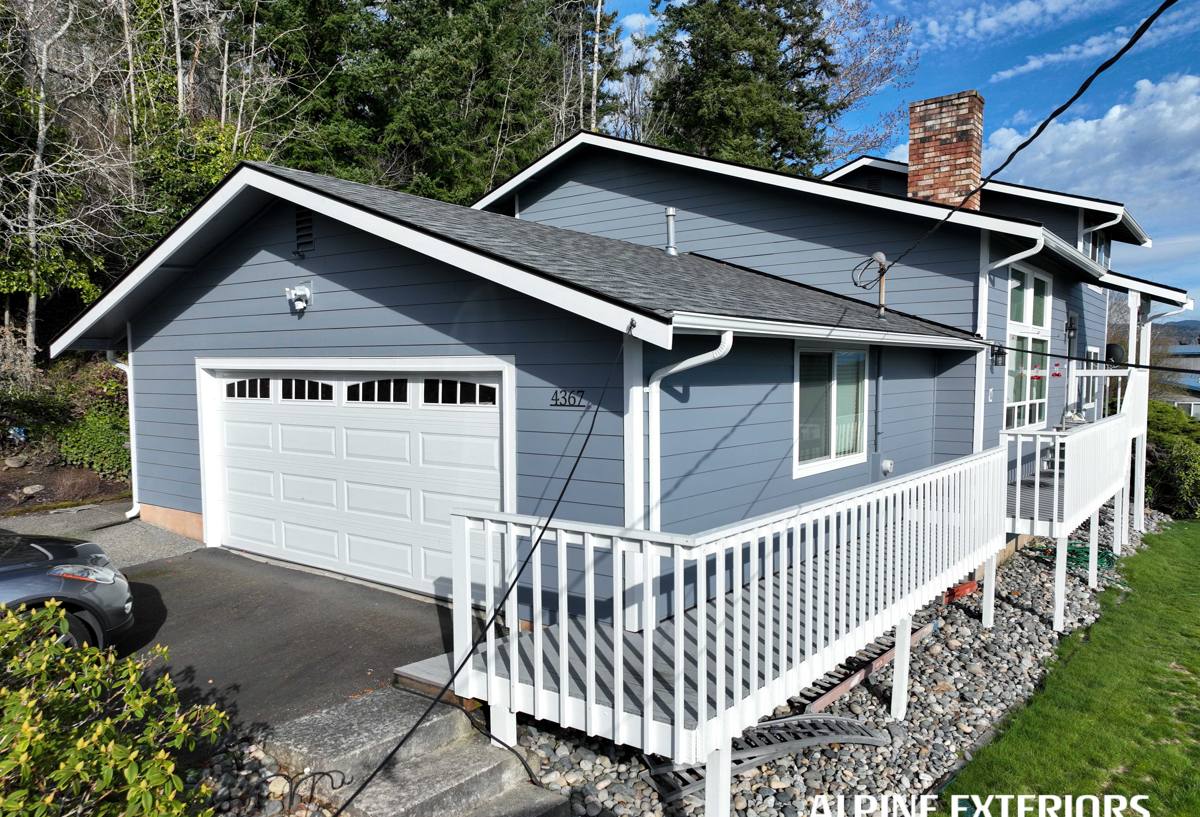
What Salt Air, Rain, and Moss Actually Do to a Roof
Salt Air
Airborne salt accelerates corrosion on any exposed metal — nail heads, flashing, gutter hardware, and fasteners. A roofing system that isn't specified with corrosion resistance in mind can start showing rust streaks and weakened fastener points years before it should. This is one of the most overlooked factors in roof longevity for homes near the water.
Driving Rain
Rain that comes in at an angle, pushed by wind off the water, doesn't just run down a roof surface — it gets driven up under shingle edges, around penetrations, and into any gap in flashing that a calmer climate might get away with. This is why underlayment quality and flashing detail work carry more weight in a Columbia installation than they would in a low-wind, straight-down-rain climate.
Moss
A long moss season means moisture sits on the roof surface longer, and moss itself holds water against shingles and roof decking. Left unmanaged, moss growth lifts shingle edges, traps moisture against the roof deck, and shortens the life of almost any roofing material. A roof design that ignores moss pressure is signing up for maintenance headaches down the road.
Choosing a Roofing System for Columbia's Conditions
There's no single "best" roofing material for every home — it depends on budget, roof pitch, architectural style, and how much long-term maintenance a homeowner wants to take on. Here's an honest comparison of the systems we most often install or discuss with Columbia homeowners.
| Material | Moss/Moisture Resistance | Salt Air Durability | Typical Lifespan | Maintenance Level |
|---|---|---|---|---|
| Architectural asphalt shingle | Good with proper ventilation and zinc/copper strips | Good with corrosion-resistant fasteners | 25-30 years | Moderate — periodic moss treatment |
| Standing seam metal | Excellent — sheds moisture, nothing for moss to grip | Very good with coated/coastal-rated panels | 40-60 years | Low |
| Synthetic/composite shingle | Good — resists moisture absorption | Good | 30-50 years | Low to moderate |
| Cedar shake | Requires diligent upkeep in wet, mossy climates | Fair — needs regular treatment | 20-30 years with upkeep | High |
For most Columbia homes, we lean toward architectural asphalt or standing seam metal, because both hold up well against the specific combination of moisture and salt exposure this area sees. Cedar shake can look great, but we're honest with homeowners about the maintenance commitment it requires in a climate this wet — it's not that the material is bad, it's that it demands more upkeep than a lot of people expect when they choose it.
What a Correct Installation Actually Involves
Full Tear-Off and Deck Inspection
We don't recommend layering a new roof over an old one, especially on a home exposed to this much moisture. A full tear-off lets us inspect the roof deck for soft spots, rot, or existing moisture damage that would otherwise get sealed in and hidden under a brand-new roof — a mistake that costs far more to fix later than it does to catch now.
Underlayment That Matches the Climate
We use synthetic or ice-and-water-shield underlayment in the areas most exposed to wind-driven rain — valleys, eaves, and around penetrations — rather than relying on minimum-code underlayment everywhere. This is one of the details that separates a roof built for Whatcom County weather from one built for a drier climate and shipped here without adjustment.
Flashing Detail Work
Flashing around chimneys, skylights, vents, and roof-to-wall transitions is where most leaks actually start — not in the open field of the roof. Correct step flashing, counter-flashing, and sealant work at these points matters more in a driving-rain climate, where water is actively being pushed into any weak point rather than just falling straight down onto it.
Corrosion-Resistant Fasteners and Hardware
Given the salt air exposure in Columbia, we specify fasteners, flashing, and hardware rated for coastal or near-coastal conditions rather than standard-grade materials. It costs a little more up front and saves the homeowner from premature rust staining and weakened attachment points years down the line.
Ventilation Built for Moisture Control
Proper intake and exhaust ventilation keeps the underside of the roof deck dry and helps prevent the trapped moisture that leads to premature decking failure and interior moss/mildew issues. A roof can be installed with excellent materials and still underperform if ventilation wasn't calculated correctly for the home's attic space.
Our Process for a Columbia Roof Installation
- On-site inspection and assessment — we look at the existing roof, deck condition, ventilation, and any moss or moisture damage before recommending anything.
- Material and system recommendation — based on your home's pitch, style, budget, and exposure, not a one-size-fits-all pitch.
- Written estimate — clear scope, materials, and cost breakdown before any work begins.
- Full tear-off and deck repair — replacing any compromised decking found during removal.
- Underlayment, flashing, and ventilation installation — done to the standard this climate requires, not just minimum code.
- Final roofing material installation — installed to manufacturer specification for full warranty coverage.
- Cleanup and final walkthrough — including a review of what was done and what maintenance to expect going forward.
What Drives the Cost of a New Roof
| Cost Factor | Why It Matters |
|---|---|
| Roof size and pitch | Steeper or larger roofs require more material and labor time |
| Material choice | Asphalt, metal, and composite systems carry different material and installation costs |
| Existing deck condition | Rot or soft decking found during tear-off adds repair cost but prevents bigger problems later |
| Number of penetrations | Chimneys, skylights, and vents each require additional flashing work |
| Access and site conditions | Difficult access, steep grades, or limited staging area can affect labor time |
We don't publish a flat price because every roof is different, but we always walk homeowners through exactly what's driving their number before any work starts — no surprises added mid-project.
Signs a Columbia Home May Need a New Roof Soon
- Shingles that are curling, cracking, or losing granules in visible patches
- Moss buildup that keeps returning shortly after cleaning
- Dark streaking or staining that doesn't wash off
- Soft spots or noticeable sagging when walking the roof or viewing from a ladder
- Water stains on interior ceilings or in the attic after heavy rain
- Rusted or deteriorating flashing around chimneys, vents, or skylights
- A roof approaching or past its material's expected lifespan
Any one of these on its own isn't necessarily an emergency, but a few together are usually a sign it's time for a real inspection rather than another round of patching.
Why a Crew That Already Works Columbia Makes a Difference
Roofing crews who mostly work drier, inland areas sometimes install roofs the same way they would anywhere else — because that's what they know. A crew that regularly works Columbia and the rest of Chuckanut has already seen what happens when underlayment, flashing, ventilation, or fastener choices aren't matched to salt air and driving rain. That experience shows up in the details that don't get noticed until years later, when a roof installed with shortcuts starts failing early and one installed correctly is still holding up.
We're not interested in selling a homeowner more roof than they need, or the cheapest possible system if it means cutting corners on flashing or underlayment. We're interested in a roof that's still doing its job in twenty or thirty years, because that's the roof we'd want on our own home in this climate.
If your Columbia home needs a new roof, or you're just not sure whether repair or replacement makes more sense, we're happy to take a look and give you a straight, no-pressure estimate — use the form below to get started.