 Chuckanut Exterior
 Roof Repair Built for Columbia's Conditions
The Columbia area sits close enough to the water that homes here take a different kind of beating than roofs a few miles inland. Salt-laden air moves through on the wind, driving rain comes in sideways during winter storms, and the tree cover that makes this part of Chuckanut so pleasant to live in also means shade, moisture, and a long moss season that never really lets a roof dry out completely. We repair roofs in this neighborhood regularly, and the failure patterns we see here are consistent enough that we've built our repair process around them rather than treating every call the same way a general contractor might in a drier part of the state.
A roof repair that works in Chuckanut isn't just about patching the spot that's leaking. It's about understanding why that spot failed in the first place — usually moisture that had nowhere to go, or a flashing detail that couldn't keep up with wind-driven rain — and fixing the underlying cause so the same call-back doesn't happen again in a year.
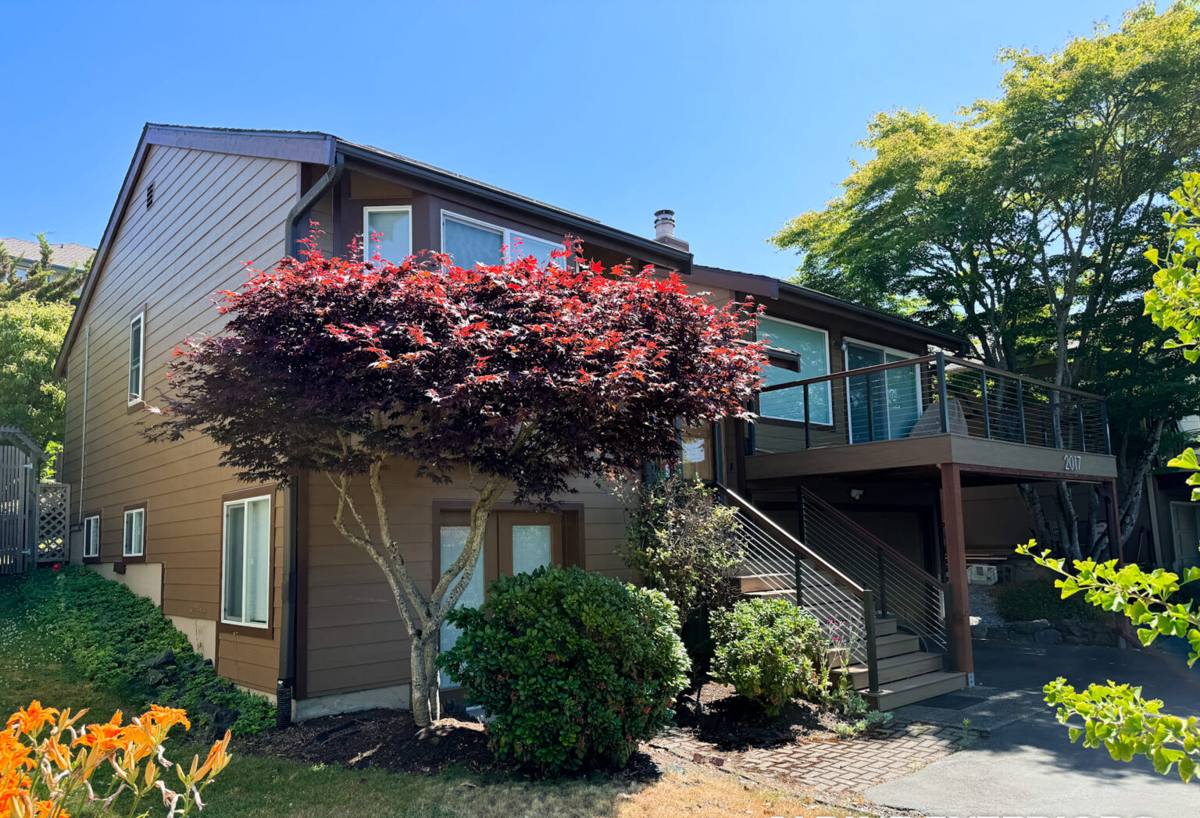
What Whatcom County's Climate Does to a Roof
Whatcom County doesn't get the kind of dramatic hail or ice-dam damage that shows up in other regions. Instead, roofs here fail slowly, from sustained exposure rather than single events. A few things drive most of the repair calls we get in and around Columbia:
Moss and Organic Growth
Moss doesn't just look bad — it holds moisture against the roofing material for weeks at a time, and on shaded, north-facing slopes near tree lines it can establish itself within a couple of seasons if it's never removed. Under moss mats, asphalt granules erode faster, wood shakes stay damp long enough to rot, and moss rhizoids can work their way under shingle tabs and lift them just enough to let water in during the next storm.
Salt Air and Metal Fatigue
Proximity to the water means airborne salt settles on exposed metal — flashing, fasteners, gutter hangers, vent caps. Over years, that accelerates corrosion in ways that don't show up as an obvious leak until a fastener finally lets go or a flashing seam opens up. We check metal condition closely on every repair, not just the roofing material itself.
Driving Rain and Wind Direction
Storms here often come with enough wind to drive rain sideways, which means water finds its way into details that would stay dry in a straight-down rain — chimney step flashing, skylight curbs, the transition where a lower roof meets a wall. A repair that only addresses the visible hole and ignores the flashing detail around it tends to fail again the next time the wind shifts.
Common Roof Repair Calls We See in Columbia
| Issue | What's Usually Happening | Typical Fix |
|---|---|---|
| Moss buildup on shaded slopes | Trapped moisture under moss mats, granule loss, lifted tabs | Careful moss removal, treatment, and shingle repair or replacement in affected areas |
| Leak around chimney or skylight | Corroded or improperly lapped step and counter flashing | Flashing removal and reinstallation with correct laps and sealant |
| Damaged or lifted shingles after a windstorm | Wind-driven rain gets under tabs that have lost seal or adhesive | Replace damaged shingles, reseal adjacent tabs, check underlayment |
| Gutter overflow staining fascia or siding | Clogged or undersized gutters can't keep up with heavy rain volume | Gutter clearing/repair paired with roof edge and drip edge inspection |
| Soft or discolored ceiling spots | Slow leak that's been present longer than the visible stain suggests | Trace leak path to source, repair roofing and any affected sheathing |
What a Correct Repair Actually Involves
A roof repair done right isn't a five-minute patch job. Our process on a typical Columbia-area repair looks like this:
1. Find the Real Source
Water doesn't always show up directly below where it entered. It can travel along rafters or sheathing before dripping somewhere else entirely. We trace the actual entry point rather than just patching the spot where the stain appeared inside.
2. Assess the Surrounding Material
If moisture has been present for a while, we check the sheathing and framing underneath the roofing for soft spots or rot before we ever put new material down. Patching over compromised decking just hides the problem for a season.
3. Match the Repair to the Existing Roof
Repairs should blend with what's already there in both material and installation method. We match shingle type, exposure, and fastening pattern so the repaired section performs the same as the rest of the roof — not like a patch that ages differently and fails first.
4. Address the Detail That Failed, Not Just the Symptom
If the leak came from a flashing detail, we rebuild that flashing correctly rather than just adding sealant over the old one. Caulk and roofing cement are short-term fixes; proper flashing is a long-term one.
5. Clean Up and Document
We remove debris, old material, and moss growth we cleared as part of the repair, and we'll walk you through what we found and what we did so you're not guessing about the condition of the rest of your roof.
Repair vs. Replacement: How We Help You Decide
Not every roof problem calls for a full replacement, and we don't push one when a targeted repair will genuinely hold up. At the same time, we won't recommend a repair on a roof that's close enough to the end of its service life that the money is better spent on replacement. A few things factor into that call:
- Age of the roof relative to its expected material lifespan
- How widespread the moss, granule loss, or flashing failures are versus isolated to one area
- Condition of the sheathing and framing underneath, if it's been exposed
- Whether the roof has had multiple prior repairs in different spots — a sign of systemic wear rather than a one-time issue
- Your timeline for staying in the home, since a repair on an aging roof is a shorter-term investment
We'll give you an honest read on where your roof falls, not the answer that happens to involve the biggest job.
Why Moss Management Matters More Here Than Most Places
In drier climates, moss is mostly a cosmetic issue. In Chuckanut, with shaded lots and a long stretch of wet months, it's a structural one if it's left alone. Moss growth that's allowed to mat over several seasons doesn't just sit on top of the roofing — it works its way under shingle edges, holds water against the surface long after a storm has passed, and accelerates the exact kind of granule loss and material breakdown that leads to leaks. Part of a proper repair in this area often includes moss removal and, where appropriate, a discussion about zinc or copper strips or periodic treatment to slow regrowth on shaded slopes. Skipping that step means the same section of roof is likely to be back on our schedule within a season or two.
Our Process, Start to Finish
- Inspection: We look at the whole roof, not just the reported leak, including flashing, vents, gutters, and any moss-affected areas.
- Honest assessment: You get a clear explanation of what's causing the problem and what your realistic options are — repair, targeted replacement of a section, or full replacement if that's genuinely the better call.
- Written estimate: A straightforward scope of work and price before anything starts.
- The repair itself: Matched materials, correct flashing details, and attention to the surrounding roof condition — not just the failure point.
- Walkthrough: We show you what was done and flag anything else worth keeping an eye on, so there are no surprises later.
A Quick Homeowner Checklist
Between visits from a roofer, there are a few things worth checking yourself, especially heading into the wetter months:
- Look for moss or dark streaking on shaded roof slopes, particularly under tree cover
- Check that gutters are clear and draining freely during heavy rain
- Watch for ceiling stains or musty odors in attic spaces after storms
- Note any granules collecting in gutters or at downspout outlets — a sign of shingle wear
- Check flashing around chimneys, skylights, and roof-to-wall transitions for visible gaps or rust
- Have the roof looked at after any significant windstorm, even if nothing looks obviously wrong from the ground
Why a Crew That Knows Columbia Makes a Difference
Roofing crews who don't regularly work this specific area sometimes miss the details that matter here — the shaded slopes that need extra attention for moss, the flashing details that need to hold up against wind-driven rain off the water, the salt exposure that ages metal faster than it would inland. We work in Columbia and the surrounding Chuckanut neighborhoods regularly enough to know which failure patterns to look for before they turn into bigger problems, and we build our repairs to hold up against the conditions this specific area sees year after year, not generic conditions from a manual written for somewhere drier.
If you've got a leak, a stretch of moss you're not sure about, or storm damage you want looked at, we're happy to come take a look. The estimate is free, there's no pressure, and you'll get a straight answer about what your roof actually needs — just fill out the form below to get started.